 Anacortes Siding
 Siding Built for Life on Guemes Island
Guemes Island sits right at the edge of the Salish Sea, and that location shapes everything about how a home's exterior ages here. Homes on the island face a combination most inland Skagit County properties don't: salt-laden air off the water, wind-driven rain that hits siding at an angle instead of straight down, and a wet season that stretches long enough for moss and algae to get a real foothold on north-facing walls and anything shaded by fir and cedar trees. If you own a home on Guemes, you've probably already noticed how differently your siding weathers compared to a friend's place further inland.
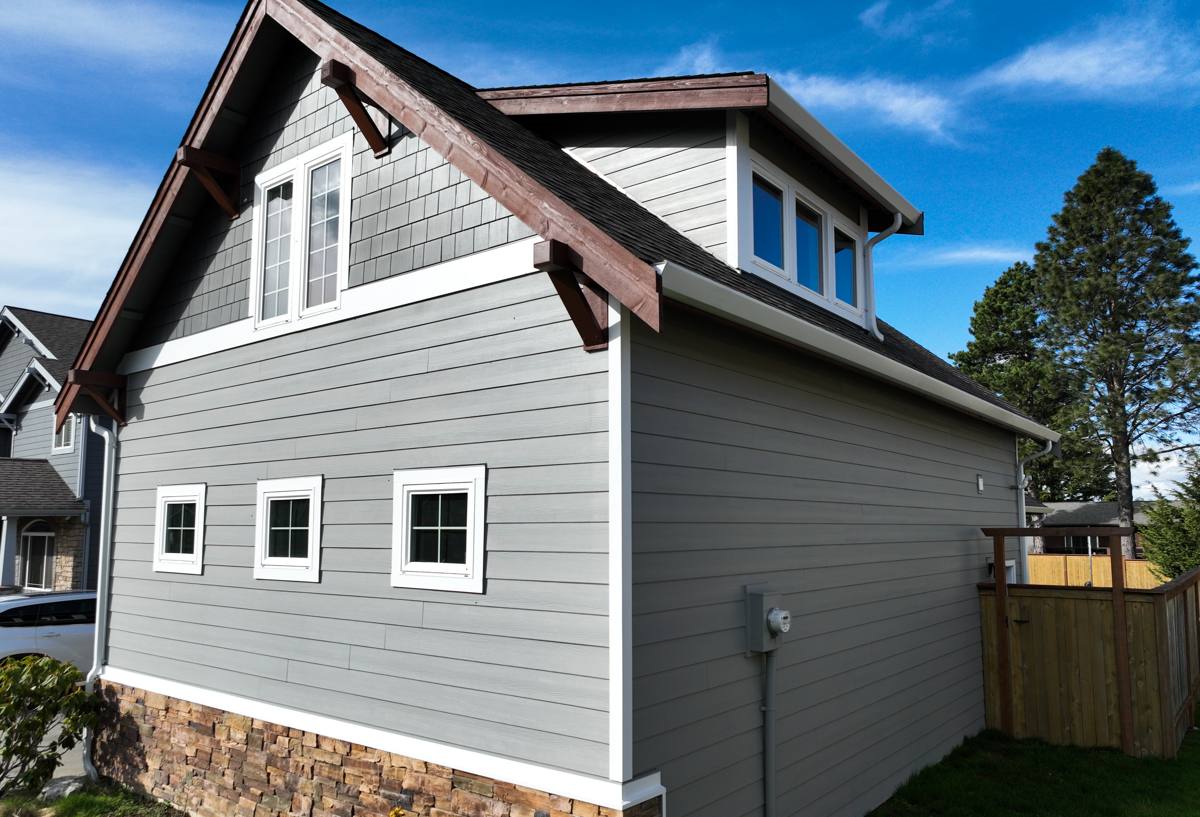
Anacortes Siding Replacement works this island regularly, and we've built our approach around what actually holds up out here — not what's cheapest to install or easiest to sell. That's why we install James Hardie fiber cement siding exclusively. We'll explain why below, but the short version is that Guemes Island's climate is unforgiving toward materials that absorb moisture, swell, or rely on paint film alone for protection.
What the Island Climate Does to Exterior Siding
Salt Air and Corrosion
Being surrounded by saltwater means airborne salt settles on every exterior surface, including siding, trim, and fasteners. Salt is hygroscopic — it pulls moisture out of the air and holds it against whatever surface it's on. Over years, that constant low-level dampness accelerates the breakdown of wood fibers, degrades cheap coatings, and corrodes fasteners that aren't rated for coastal exposure. Siding materials that aren't dimensionally stable or that depend on a thin factory coating tend to show their age faster in this environment.
Driving Rain and Wind Exposure
Guemes doesn't just get rain — it gets rain pushed sideways by wind coming off the water. That means siding on exposed elevations takes on more direct water contact than a sheltered wall in town would. Seams, laps, and butt joints matter more here because wind-driven rain finds any gap or weak point and works it over time. Installation quality — proper overlaps, correct fastening, sealed penetrations — is arguably more important on an exposed island lot than almost anywhere else in the county.
Moss, Algae, and a Long Wet Season
Shaded, north-facing, and tree-canopied walls on Guemes stay damp longer into the year than open, sun-exposed sides of the same house. That extended dampness is exactly what moss and algae need to establish. Once organic growth takes hold on a porous or absorbent siding surface, it holds moisture against the material and accelerates decay underneath. Siding that resists moisture absorption at the surface level simply doesn't give moss the foothold it needs.
Why We Standardized on James Hardie
After years of tearing off failed siding jobs across Skagit and Island County waterfront and near-waterfront properties, we made a decision: we only install James Hardie fiber cement siding. Not because it's the only decent product on the market, but because for this specific climate — salt exposure, driving rain, extended wet seasons — it's the one we're comfortable standing behind with a real warranty and our reputation.
What Makes Hardie Different
- Non-combustible fiber cement — won't feed a fire, which matters for insurance and peace of mind alike
- Dimensionally stable — doesn't swell, warp, or absorb water the way wood-based products can
- ColorPlus factory finish — a baked-on finish applied under controlled conditions, more consistent and durable than field-applied paint
- Climate-engineered HZ product lines — Hardie manufactures regional formulations specifically for wet, marine-influenced climates like ours
- Strong transferable warranty — backed by the manufacturer, not just our own workmanship guarantee
We get asked why we don't install vinyl, LP SmartSide, Cemplank, Allura, or primed wood siding. Each of those has legitimate uses in the right setting. Vinyl can crack and distort in temperature swings and doesn't hold up well to long-term UV and salt exposure. Engineered wood products, even treated ones, remain wood-based at the core — they're more sensitive to sustained moisture exposure than fiber cement, and a coastal island climate is a tough proving ground for that vulnerability. Other fiber cement brands may be reasonable products, but we've chosen to specialize in one system so our crews install it correctly every time, and so our warranty support stays simple and direct. Standardizing on one product means fewer installation variables and a crew that's genuinely expert in it, rather than spread thin across several systems.
How We Approach a Guemes Island Project
Getting materials, crew, and equipment to and from the island adds a logistical layer that mainland jobs don't have. We plan ferry schedules into the project timeline up front so delays don't stack up mid-job. We also pay close attention to site-specific exposure — a home tucked into trees on the leeward side of the island gets a different moisture and moss strategy than a place sitting exposed on a bluff facing open water.
What a Typical Siding Replacement Involves
- On-site assessment of existing siding, sheathing, and any hidden moisture or rot damage
- Removal of old siding and inspection/repair of the water-resistive barrier and sheathing underneath
- Installation of James Hardie panels or lap siding per manufacturer specifications, with attention to fastening pattern, clearances, and flashing details
- Sealing and detailing around windows, doors, and penetrations — the points most vulnerable to wind-driven rain
- Final inspection and cleanup
Because we also handle roofing, windows, and decks, we can flag related issues while we're already on site — a compromised roof edge or window flashing feeding moisture into a wall system is common on older island homes, and it's better caught during a siding project than discovered later.
Comparing Siding Options for a Coastal Property
| Material | Moisture Behavior in Marine Climate | Maintenance Burden | Typical Longevity |
|---|---|---|---|
| James Hardie Fiber Cement | Dimensionally stable, doesn't absorb and swell | Low — factory finish resists fading and chalking | Decades with proper installation |
| Vinyl | Doesn't rot, but can warp/crack with temperature and UV exposure | Low, but limited repair options if damaged | Variable, shorter in harsh coastal sun/salt |
| Engineered Wood (LP SmartSide, etc.) | Wood-based core, more sensitive to sustained moisture | Moderate — coating and edge sealing matter | Depends heavily on installation and maintenance |
| Cedar / Primed Spruce | Absorbs moisture, prone to swelling and rot over time | High — regular refinishing required | Shorter without diligent upkeep |
Why Hiring a Local Crew Matters
A crew that only sees Guemes Island a couple times a year doesn't build the intuition for which elevations need extra flashing attention, how the ferry schedule affects a project timeline, or which neighborhoods sit in enough tree cover that moss resistance should drive material choices. We're based in Anacortes and work Skagit County exteriors continuously, which means we've seen how different products and installation methods actually perform here — not in a showroom, but on real roofs and walls a few years down the road.
Local presence also matters for warranty support. If a question comes up two, five, or ten years after installation, you're calling a company that's still working in your area, not chasing down a contractor who's moved on.
Signs Your Guemes Island Home May Need New Siding
- Visible warping, buckling, or gaps between siding boards
- Persistent moss or algae growth that keeps returning after cleaning
- Soft spots or a "give" when you press on siding, especially near the bottom courses
- Peeling or bubbling paint that keeps recurring in the same spots
- Rising energy bills that may point to compromised insulation behind failing siding
- Visible fastener corrosion or staining running down from nail heads
Cost Factors Specific to Island Projects
Every siding project's cost depends on square footage, existing wall condition, and material selection, but island jobs carry a few additional factors worth knowing up front.
| Factor | Why It Affects Cost |
|---|---|
| Ferry logistics | Material and crew transport requires scheduling around ferry availability |
| Sheathing condition | Homes with long-term moisture exposure may need sheathing repair before new siding goes on |
| Wall exposure | Elevations facing open water or prevailing wind may need additional flashing detail |
| Access | Some island lots have limited equipment access, affecting labor time |
We provide a clear, itemized estimate after an on-site assessment so you know exactly what you're paying for and why — no vague allowances or surprise change orders.
Get a Free Estimate for Your Guemes Island Home
If your siding is showing its age, or you're planning ahead for a replacement, we're happy to come take a look and walk you through what we're seeing and why. There's no pressure and no obligation — just a straightforward assessment from a crew that knows what this climate does to a home's exterior and what it takes to build something that lasts against it. Reach out to schedule your free estimate using the form below.