 Anacortes Siding
 A Standard We're Willing to Explain, Not Just Follow
Most exterior contractors install whatever a homeowner asks for. We used to as well. Over enough jobs around Anacortes and the rest of Skagit County, we stopped installing several siding products entirely and standardized on James Hardie fiber cement. That's not a marketing position — it's what happens when you spend years re-caulking, repainting, and occasionally replacing siding that didn't hold up to this specific coastline, and you get tired of watching homeowners pay for it twice.
This page explains the reasoning plainly: what fiber cement is, why our local climate makes the choice sharper here than in drier inland markets, what we decided not to install and why, and what the James Hardie system actually involves once you get past the brand name.
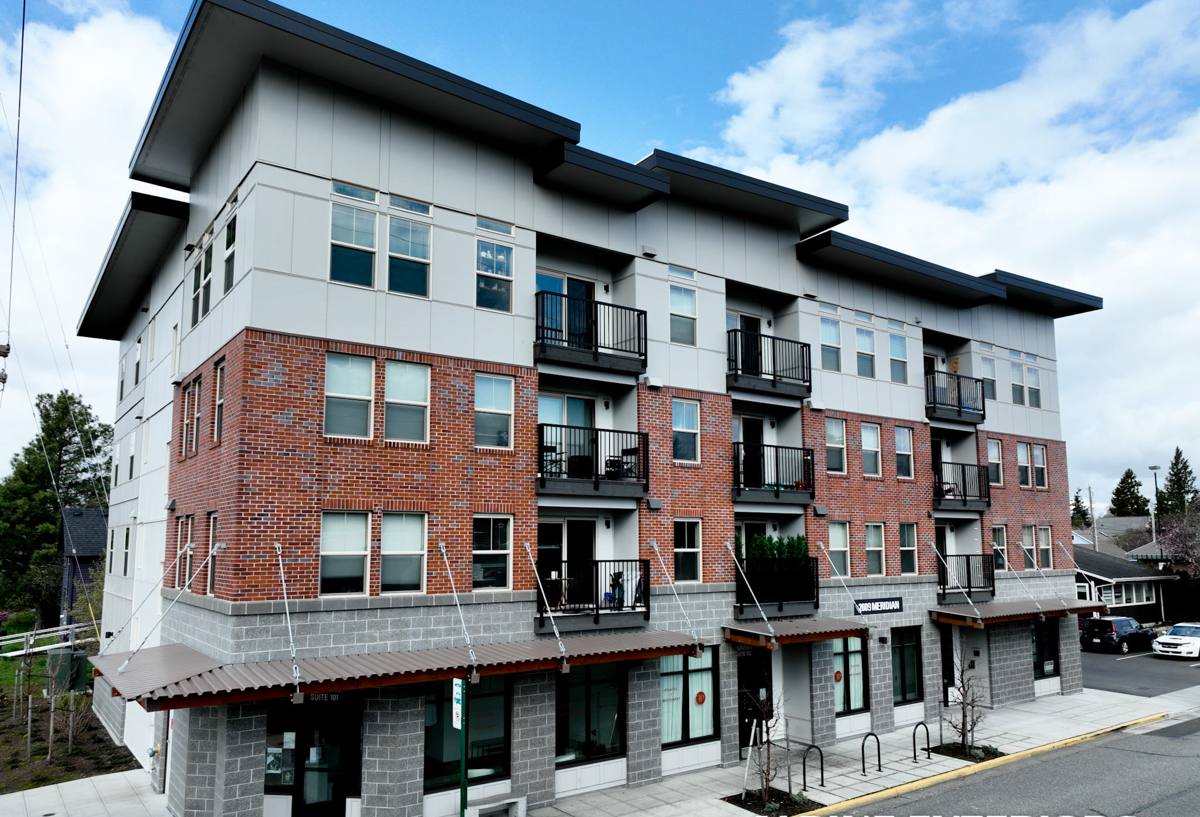
What "Fiber Cement" Actually Is
James Hardie siding is made from cement, sand, and cellulose fiber, cured into rigid boards, panels, or shingle-style pieces. It's not plastic (vinyl), it's not wood (cedar or primed spruce), and it's not wood-based composite (LP SmartSide). That distinction matters more than most product brochures explain.
Why the Material Class Matters More Than the Brand
Wood and wood-composite sidings are organic materials — they can absorb moisture, swell, and support fungal growth if water gets behind or into the material over time. Vinyl is a thin plastic shell that moves with temperature and can crack, fade, or warp under sustained UV and heat cycling. Fiber cement is dimensionally stable, doesn't burn, and doesn't feed rot or moss the way organic sidings can. In a marine climate like ours, that's the difference that shows up on a re-inspection ten or fifteen years out.
Why Anacortes' Climate Changes the Math
Anacortes sits on salt water, with Rosario Strait, Guemes Channel, and the Sound on nearly every side. That geography brings three things that are hard on exterior siding: salt-laden air, driving wind-driven rain off the water, and a long, damp moss season that runs from fall through spring across Skagit County.
Salt Air
Airborne salt accelerates corrosion of fasteners and metal trim, and it can degrade cheaper paint and coating systems faster than inland exposure would. Siding finishes need to hold up to that exposure for decades, not just look good at installation.
Driving Rain
Wind off the water doesn't just fall on a wall — it drives sideways into laps, seams, and butt joints. Any siding system with weak joints, gaps that trap water, or a substrate that swells when wet is going to show problems faster here than in a sheltered inland yard.
Moss and Sustained Dampness
Shaded, north-facing, and tree-adjacent walls around Anacortes stay damp for long stretches of the year. Organic and semi-organic siding materials are more hospitable to moss and mildew growth than cement-based board, and once moss establishes on a wall, it holds moisture against the surface and accelerates whatever degradation is already happening underneath.
What We No Longer Install, and Why
We don't install vinyl siding, LP SmartSide, Cemplank, Allura, primed spruce, or cedar. None of these are bad products in the abstract — each has legitimate uses and each has a track record somewhere. Here's our honest read on the trade-offs that led us to stop offering them on Skagit County homes.
Vinyl
Vinyl is inexpensive and low-maintenance in mild, dry climates. On a marine coastline, it expands and contracts more than fiber cement across our temperature swings, and its long-term color retention under UV and salt exposure is weaker than a factory-baked finish. It also can't be painted a dark color without risking heat-related warping, which limits design options homeowners in older Anacortes neighborhoods often want.
LP SmartSide and Other Wood-Strand Composites
LP SmartSide is engineered wood strand treated with a resin-saturated overlay. It performs reasonably well when installation is flawless and maintenance is kept up — caulking, touch-up paint, and prompt repair of any impact damage. In our experience, that maintenance discipline is hard to sustain over 15-20 years, and any breach in the factory coating gives moisture a path into a wood-based core. In a wet climate like ours, that's a real risk, not a hypothetical one.
Cemplank and Allura
Both are fiber cement competitors to James Hardie, and the base material class is sound. Our decision here is less about the material and more about consistency: color-match availability, factory finish warranty terms, and regional distribution and support have been stronger and more predictable with James Hardie in our market. We'd rather stock, warranty, and install one system we know cold than juggle several.
Primed Spruce and Cedar
Solid wood siding, painted or stained, can look excellent and has real heritage value on older homes. It also demands the most maintenance of anything on this list — repainting on a real cycle, vigilant caulking, and prompt attention to any moisture intrusion. In a county with our rainfall and moss pressure, that maintenance burden is significant, and skipping it for even a few years lets rot get a foothold that's expensive to fix.
The James Hardie System We Actually Install
James Hardie isn't a single product — it's a product line, and getting the right one matters.
Climate-Engineered HZ Formulations
James Hardie manufactures its fiber cement in different formulations (HZ5, HZ10, etc.) engineered for different climate zones. Western Washington falls in a wet-climate zone, and we specify the HZ formulation designed for that exposure — not a generic version meant for drier regions.
ColorPlus Factory Finish
Most of what we install uses James Hardie's ColorPlus finish — color baked onto the board at the factory under controlled conditions, rather than field-painted after installation. A factory finish is more consistent and more resistant to fading and chipping than most site-applied paint jobs, and it comes with its own finish warranty separate from the product warranty.
Board, Panel, and Shingle Profiles
James Hardie's lineup covers lap siding (the classic horizontal board look), vertical panel systems, and shingle-style profiles for accent areas or full facades. Which profile fits a given home depends on its architecture and the look a homeowner wants — we walk through the options during the estimate rather than defaulting to one look for every house.
Installation Is the Other Half of the Product
Fiber cement siding installed wrong will fail no matter how good the board is. This is the part manufacturer marketing tends to skip and where most siding failures we get called to inspect actually originate.
What Correct Installation Requires
- Proper water-resistive barrier and flashing details behind every board, especially at windows, doors, and roof transitions
- Correct fastener type and spacing — the wrong nails or screws corrode faster and can void the manufacturer warranty
- Manufacturer-specified clearances from grade, roof lines, and decks to keep the bottom edge of the siding out of standing water and splash-back
- Proper gapping and caulking at butt joints, sized for the material's expansion and contraction
- Field-cut edges sealed per manufacturer spec, since raw cut edges are more vulnerable to moisture than factory edges
James Hardie runs a factory-trained installer program, and we maintain that training. It's not a substitute for experience, but it does mean the crew on your wall has been through the manufacturer's own installation standards, not just general carpentry practice.
Warranty and Long-Term Cost, Side by Side
Sticker price on the material is only part of the cost picture. Maintenance labor, repaint cycles, and warranty coverage change the real cost over the life of the siding.
| Factor | Vinyl | Wood / Composite (LP, cedar, spruce) | James Hardie Fiber Cement |
|---|---|---|---|
| Material cost | Lowest | Mid | Mid to higher |
| Repaint / refinish cycle | Not paintable dark; fades over time | Every 5-10 years typically | ColorPlus finish warrantied for years, no repaint cycle required |
| Moisture/rot vulnerability | Low, but seams can trap water | Higher if maintenance lapses | Non-combustible, doesn't rot |
| Salt air / UV resistance | Moderate | Moderate, coating-dependent | Strong, factory-cured finish |
| Manufacturer warranty structure | Prorated, varies by line | Varies, often shorter on finish | Non-prorated product warranty plus separate ColorPlus finish warranty |
Warranty terms and pricing change over time and vary by product line, so we walk through current, specific numbers during an estimate rather than quoting figures that may be outdated by the time you read this.
Is James Hardie Right for Every Home?
We'll say it plainly: fiber cement isn't magic, and standardizing on one product doesn't mean it's the perfect fit for every situation. It's heavier than vinyl, which matters for structural considerations on some remodels. It requires proper fastening and cutting technique with the right tools and dust control, which is a labor and equipment cost. And if a homeowner's priority is the absolute lowest up-front price with no long-term maintenance plan, vinyl will still be cheaper on day one.
What we're telling homeowners is that for Anacortes and Skagit County's climate — the salt exposure, the driving rain, the moss season — the trade-offs consistently favor a non-combustible, dimensionally stable, factory-finished fiber cement system over the alternatives, and that's why it's the only one we put our name behind.
What an Estimate With Us Looks Like
We inspect the existing siding and wall assembly, talk through James Hardie profile and color options that fit the home's architecture (and any HOA or historic-district guidelines that apply), and give a written estimate that spells out the specific product line, installation scope, and warranty terms — no generic placeholder numbers.
If you're weighing a siding replacement in Anacortes or elsewhere in Skagit County, we're happy to walk your home, explain what we see, and give you a straightforward, no-pressure estimate using the free form below.