 Anacortes Siding
 Why Color Choice Is a Bigger Decision Here Than It Looks
Picking a siding color feels like the fun part of a project, right up until you realize how much the color you choose is going to be tested by where you live. A house on a quiet inland lot in a mild climate can get away with almost any finish. A house in Anacortes, sitting out on the water with salt air rolling off Rosario Strait and Guemes Channel, driving winter rain coming sideways off the Sound, and a long gray moss season that runs from fall through spring, is a different story. The finish on your siding isn't just decoration here — it's the first thing standing between your house and a genuinely tough marine climate.
That's why we spend real time with homeowners on color selection, not just product selection. The right color, applied the right way, will look the way you picked it for a very long time. The wrong approach — cheap paint, poor prep, a finish that isn't built for this environment — turns into a repaint job within a few years, and nobody wants that conversation twice.
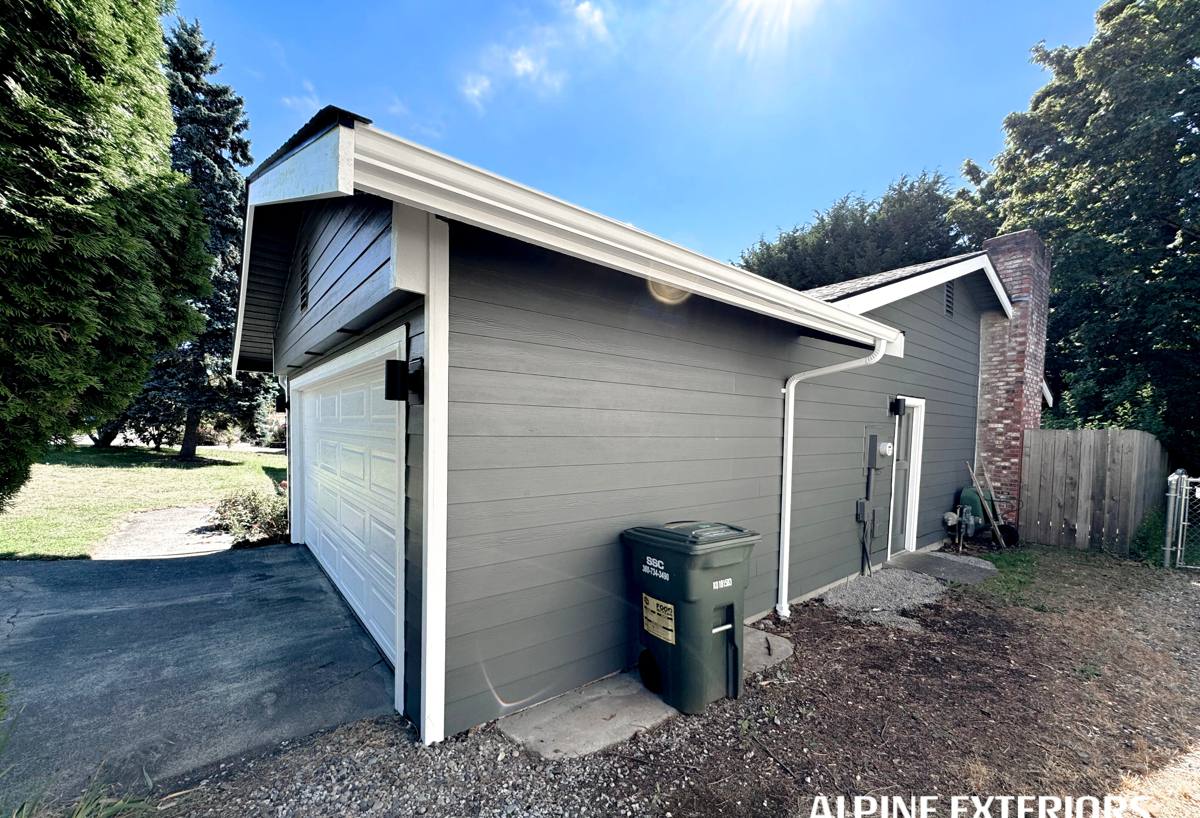
What ColorPlus Technology Actually Is
James Hardie's ColorPlus finish isn't paint brushed or sprayed on a jobsite. It's a multi-coat color system baked onto the fiber cement board at the factory, cured before the boards ever leave the plant. That matters for a few concrete reasons:
- The finish bonds to the substrate more uniformly than anything applied outdoors in variable weather conditions.
- Color consistency is controlled in a factory setting, not dependent on humidity, temperature, or job-site conditions the day of installation.
- It comes backed by a dedicated finish warranty separate from the substrate warranty, covering fading, chipping, and peeling of the factory finish itself.
- Touch-up product is formulated specifically to match, so small repairs after installation (a scratch, a nail hole) don't leave visible mismatched patches.
Field-applied paint on siding — whatever the substrate — is only as good as the weather conditions on the day it went on, the number of coats, and the prep work underneath. In a climate like ours, where you might get a dry install window followed by weeks of rain, that variability is a real risk. A factory-cured finish removes that variable entirely.
Factory Finish vs. Field-Applied Paint
| Factor | ColorPlus Factory Finish | Field-Applied Paint |
|---|---|---|
| Application conditions | Controlled factory environment | Dependent on jobsite weather that day |
| Coating consistency | Multiple even coats, cured before shipping | Varies by crew, product, and number of coats |
| Finish warranty | Dedicated finish warranty from Hardie | Typically manufacturer paint warranty only, if any |
| Repaint timeline | Long intervals, often well beyond a decade | Often needs attention within 5-8 years in wet coastal climates |
| Touch-up matching | Formulated touch-up product available | Depends on keeping records of original paint mix |
The Color Palettes: Statement Collection and Signature Collection
James Hardie organizes ColorPlus colors into collections, and understanding the difference helps you narrow choices faster instead of getting overwhelmed by swatches.
Signature Collection
This is the broader, most widely available palette — a range that spans classic whites, warm neutrals, cool grays, and a handful of deeper accent tones like blues, greens, and reds. Most Anacortes homes we work on land somewhere in this collection because it covers the full range of Pacific Northwest architectural styles, from craftsman to modern farmhouse to traditional coastal.
Statement Collection
A curated, more design-forward set of colors, often used for accent siding, board-and-batten sections, or homes going for a bolder, more distinct look. If you're doing a mixed-material exterior — horizontal lap on the body with a contrasting vertical accent panel — this is often where the accent color comes from.
Both collections are factory-finished the same way. The difference is curation, not quality.
Choosing Colors for Anacortes' Light and Landscape
Color reads differently here than it does in a sunnier, drier climate, and it's worth planning around that instead of being surprised by it after installation.
Overcast, Marine Light
Skagit County skies are gray and diffuse a large part of the year. Colors that look vibrant on a sample chip under direct sun can look flatter and cooler under our typical cloud cover. Warmer neutrals and mid-tone colors tend to hold visual interest better under gray skies than very pale whites or very dark charcoals, which can look either washed out or almost black depending on the light.
Evergreen and Water Backdrops
Many Anacortes lots sit against fir and cedar tree lines, water views, or both. Deep greens and blues from the Hardie palette tend to sit naturally against that backdrop rather than fighting it, while warm grays and soft taupes pair well with the region's natural stone and timber accents.
Neighborhood Context
Look at what's already on your street and in your specific Anacortes neighborhood, whether that's the older core near downtown, the waterfront areas, or newer development closer to the county line. A color that stands out tastefully is good; a color that clashes with an established streetscape isn't doing your resale value any favors.
Matching Trim, Fascia, and Accent Colors
ColorPlus isn't limited to the field of the house. Trim boards, fascia, and soffit material are available in coordinating pre-finished colors, which means you can plan a full exterior color scheme — body, trim, and accent — entirely in factory-finished material rather than mixing factory siding with field-painted trim.
A few practical considerations when planning the full scheme:
- High-contrast trim (a dark body with white or cream trim) shows dirt and moss growth on the trim lines faster in a wet climate, since those horizontal surfaces catch more standing moisture.
- Low-contrast schemes (body and trim in close tones) tend to hide the gradual weathering that happens between cleanings.
- Accent color on a single gable or entry feature reads best when it's a genuinely different hue, not just a lighter or darker version of the body color.
- Garage doors, gutters, and downspouts should be planned alongside the siding color, not as an afterthought once siding is already ordered.
Color and the Realities of Moss Season
Anacortes' long wet season means moss, algae, and general biological growth are a fact of life on north-facing walls, shaded areas, and anywhere water sits against a surface. Color choice doesn't prevent this, but it does affect how visible it is between cleanings.
Very light colors show green and black streaking sooner and more visibly. Mid-tone grays, greens, and browns tend to mask the early stages of growth longer, buying more time between exterior washes. None of this is a reason to avoid a light color you love — it's just useful to know going in, especially for the shaded, north-facing walls that are common on wooded Anacortes and Skagit County lots.
Regular gentle washing (a garden hose and soft brush, or a low-pressure rinse) is what actually keeps a ColorPlus finish looking new — not the color choice itself. Avoid high-pressure washing directly at the siding, which can drive water behind joints and damage caulking regardless of the finish underneath.
Warranty Considerations Tied to Color
One detail homeowners often miss: a field-painted fiber cement or wood product can void or limit its own warranty terms if it's repainted incorrectly, or the paint warranty is entirely separate from the siding warranty, leaving a gap in coverage. ColorPlus is structured differently — the finish warranty and the substrate warranty come from the same manufacturer and are designed to work together, and as long as installation follows Hardie's specifications, you're not stacking warranties from multiple companies and hoping they agree with each other if something goes wrong.
This is also why we only install James Hardie products start to finish. When one manufacturer stands behind both the board and the finish, there's a single, clear point of accountability — which matters a lot more once your house has been through a few Skagit County winters.
Getting the Installation Right, Not Just the Color
Even the best color choice, on the best product, underperforms if installation doesn't follow Hardie's specifications. Correct fastening, proper clearances at grade and roofline, caulking at joints with a Hardie-compatible sealant, and factory touch-up paint on any field cuts all directly affect how that ColorPlus finish holds up against our rain and salt air over the years. This is manufacturer-specified work, not a place to cut corners to save a little on labor.
A Practical Checklist Before You Commit to a Color
- View large color samples outdoors, in actual Anacortes overcast light, not just on a screen or under indoor lighting.
- Check the color against your roof, existing stonework, and any features that aren't changing.
- Consider how the color will read on shaded, north-facing walls versus sun-exposed walls.
- Plan trim and accent colors alongside the body color, not afterward.
- Confirm the finish and substrate warranties are from the same manufacturer.
- Ask your installer how they'll handle field cuts and touch-up to protect the factory finish.
If you're weighing colors for a siding project in Anacortes or elsewhere in Skagit County, we're happy to bring large-format samples out to your property, walk the color against your home in real daylight, and put together a straightforward, no-pressure estimate. There's no cost or obligation to have that conversation — just fill out the form below.