 Anacortes Siding
 Burlington sits in the flat, fertile stretch of the Skagit Valley, close enough to the water and to the marine weather patterns that roll in off the Salish Sea that homes here face many of the same exterior challenges as houses closer to the Anacortes waterfront. Add in the valley's fog, the seasonal flooding risk from the Skagit River drainage, and the long stretch of gray, damp months that define western Washington winters, and you end up with siding conditions that are genuinely demanding — even if Burlington doesn't get the postcard version of coastal weather. If you own a home here and you're thinking about siding, roofing, windows, or decking, it helps to understand what the local climate actually does to a house over time, and why the materials you choose matter more in Skagit County than they might somewhere drier.
What Burlington's Climate Does to a House
Burlington doesn't sit directly on Rosario Strait the way parts of Anacortes do, but it's close enough that salt-tinged marine air still reaches it regularly, especially with prevailing westerly winds. Combine that with Skagit County's average of well over 30 inches of annual rainfall, much of it as slow, soaking drizzle rather than short downpours, and you get an environment where moisture has a lot of time to work into any gap, seam, or crack in an exterior wall system.
The other big factor is shade and moisture retention. Burlington's residential streets are lined with mature trees, and many homes sit on lots with limited direct sun exposure for parts of the year. Shaded, damp siding is exactly what moss, algae, and mildew need to take hold. Add in cooler temperatures for much of the year that slow evaporation, and you have a near-perfect setup for organic growth on any siding material that isn't built to resist it.
Moss Season Is Longer Than Most Homeowners Realize
In Skagit County, moss and algae growth isn't a one-season problem — it can be active from fall through spring, and in shaded areas, nearly year-round. On wood-based siding products, moss doesn't just sit on the surface. Its root structure holds moisture against the substrate, which accelerates rot, especially at butt joints, corner boards, and anywhere caulking has started to fail. Over years, that moisture cycle is one of the most common reasons we see premature siding failure on Burlington homes.
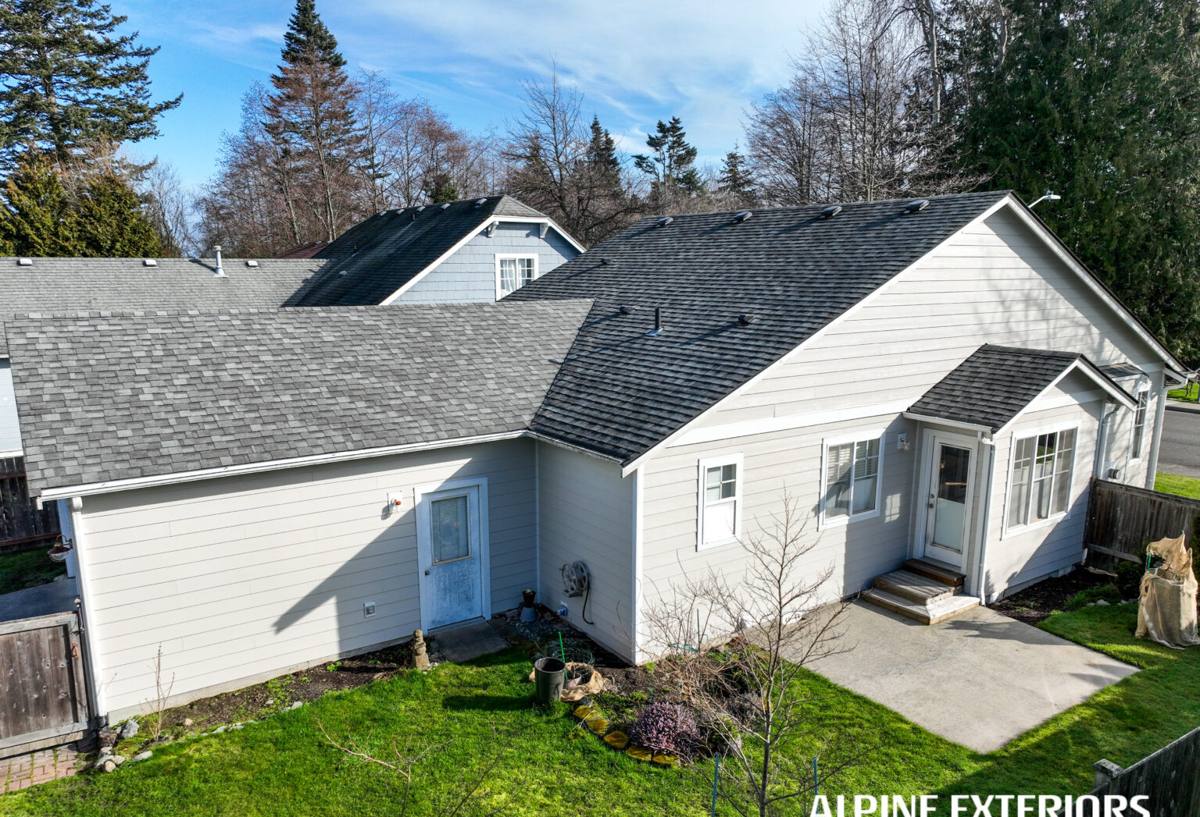
Why We Only Install James Hardie Fiber Cement Siding
Anacortes Siding Replacement made a deliberate decision to install James Hardie fiber cement siding exclusively — we don't install vinyl, LP SmartSide, primed spruce, cedar, or other fiber cement brands like Cemplank or Allura. That's not a marketing position; it's a standard we hold because of what we've seen play out on homes across Skagit County over years of siding and remodeling work.
Fiber cement is fundamentally different from wood-based or engineered-wood siding products because it's non-combustible and doesn't rely on a wax or resin coating to keep moisture out of the core material. In a climate like ours, where siding stays damp for extended stretches, that distinction matters. James Hardie's ColorPlus factory-applied finish also holds up differently than field-applied paint, which is a real consideration in an area where repainting every few years isn't something most homeowners want to budget for.
What We're Not Installing, and Why
We get asked fairly often why we don't offer vinyl or engineered wood siding, since both are common and less expensive up front. Here's the honest answer:
- Vinyl siding can perform reasonably well in dry climates, but it expands and contracts significantly with temperature swings, and in wind-driven rain it relies heavily on correct overlap and flashing detail to keep water out. It also isn't a heat-resistant material, which has become a bigger factor in Pacific Northwest wildfire-adjacent building codes.
- LP SmartSide and other engineered wood products use a wood-strand core with a resin-saturated surface. It's a genuine improvement over old-style hardboard siding, but it's still wood-based, meaning any breach in the surface coating — from a nail pop, impact damage, or failed caulk joint — gives moisture a path into a core material that can swell and deteriorate. In a high-moisture, long-moss-season climate like Skagit County's, that's a maintenance risk we're not willing to install and stand behind.
- Primed spruce and cedar are traditional, attractive options, but they require an ongoing paint and sealant maintenance cycle to perform, and that cycle only gets more demanding in a climate where the siding rarely gets a long, fully dry stretch to cure new coatings properly.
None of these are "bad" products in every context — they're just not what we consider the right long-term fit for houses that sit through Skagit County winters. James Hardie's HZ10 product line was specifically engineered for the moisture and freeze-thaw conditions common in the Pacific Northwest, which is a big part of why we standardized on it.
Siding Options for Burlington Homes
James Hardie's product lines give homeowners real design flexibility without stepping outside a material system built for this climate.
| Product Line | Style | Best Suited For |
|---|---|---|
| HardiePlank Lap Siding | Traditional horizontal lap, several width and texture options | Most single-family homes, classic and farmhouse styles common in the valley |
| HardiePanel Vertical Siding | Vertical panel, often paired with lap siding | Accent walls, gables, modern or mixed-material exteriors |
| HardieShingle Siding | Staggered or straight-edge shingle profile | Craftsman and cottage-style homes |
| HardieTrim Boards | Corner boards, fascia, window and door trim | Finishing detail work on any of the above |
All of these come with the ColorPlus factory finish system, which applies and cures the color coat under controlled conditions before the product ever reaches the jobsite — a real advantage over field-painting in a region where you can't always count on a dry week.
How Correct Installation Protects the Investment
Fiber cement siding performs the way it's engineered to only when it's installed correctly, and installation quality matters more in high-moisture climates than in dry ones. A few details we treat as non-negotiable on every Burlington-area project:
- Proper rainscreen or drainage plane behind the siding to let any incidental moisture escape instead of getting trapped against the wall sheathing
- Correct fastener placement and spacing, per manufacturer specification, to avoid butt-joint gaps that let water in
- Flashing at every window, door, and roofline penetration, since these are the most common failure points on any siding job regardless of material
- Proper caulking and sealant at joints, using products compatible with long-term UV and moisture exposure
- Adequate clearance between the bottom of the siding and grade, decks, or patios, so splashback and standing water don't sit against the material
A siding product is only as good as its installation. We've replaced plenty of siding — including other fiber cement brands — that failed early not because the material was flawed, but because it went up wrong.
Roofing, Windows, and Decks: The Full Exterior Picture
Siding doesn't perform in isolation. A roof with failing flashing sends water straight down behind the siding, a leaking or poorly sealed window rots the framing around it, and a deck that traps moisture against the house wall creates a chronic damp zone no siding material can fully resist. That's why we handle roofing, windows, and decks alongside siding — when we're on a Burlington property, we're looking at the whole building envelope, not just one component.
For homeowners planning a larger exterior project, it often makes sense to sequence roofing and window replacement ahead of or alongside siding work, since both tie directly into the flashing and moisture-management details that protect new siding underneath.
Deck Considerations in a Wet Climate
Decks in Skagit County face their own version of the moss and moisture problem — a deck surface that stays damp and shaded develops slippery growth and accelerates wood decay at ledger boards and joists. When we build or repair decks, we pay close attention to ledger flashing and the connection point where the deck meets the house wall, since that's a common spot for hidden water intrusion behind siding.
What a Free Estimate Looks Like
When we come out to a Burlington property, we're looking at more than just the siding surface. We check for existing moisture damage, evaluate flashing at windows and rooflines, look at grading and drainage around the foundation, and talk through which Hardie product line and color fit the home's style and the client's budget. We'll also flag any roofing or window issues we notice, since those often affect the siding scope and timeline.
Questions Worth Asking Any Contractor Before You Hire
- Are they licensed and insured to work in Washington State, and can they provide proof?
- Do they carry manufacturer certification for the specific siding product they're installing?
- Will they put the product line, colors, and installation specifications in writing before work starts?
- Do they handle flashing and moisture-management details, or just the visible siding install?
- Can they explain, specifically, why they recommend one siding material over another for your home and site conditions?
Getting Started
If your Burlington home's siding is showing moss buildup, soft spots, peeling paint, or you're just planning ahead for a project down the road, we're happy to take a look and give you an honest read on where things stand. There's no pressure and no cost to have us out — just a straightforward walkthrough and a written estimate you can take your time with.