 Anacortes Siding
 Siding Built for Skyline's Waterfront Exposure
Skyline sits up on the bluffs above Anacortes, with views out over Guemes Channel and the San Juans that come at a price: this is some of the most exposed real estate in Skagit County. Homes here catch wind and salt spray straight off the water, take driving rain from the southwest through the fall and winter, and sit under a marine layer that keeps siding damp longer than homes just a few miles inland. If you own a home in Skyline, you already know the difference between how your place weathers and how your cousin's house in the valley weathers. Siding here has to earn its keep.
We're a local exterior crew that works Anacortes and the rest of Skagit County, and we install one siding product: James Hardie fiber cement. That's not a marketing angle — it's a decision we made after years of tearing old siding off houses just like the ones on Skyline's bluffs and seeing exactly what salt air, standing moisture, and decades of moss growth do to materials that weren't built for it.
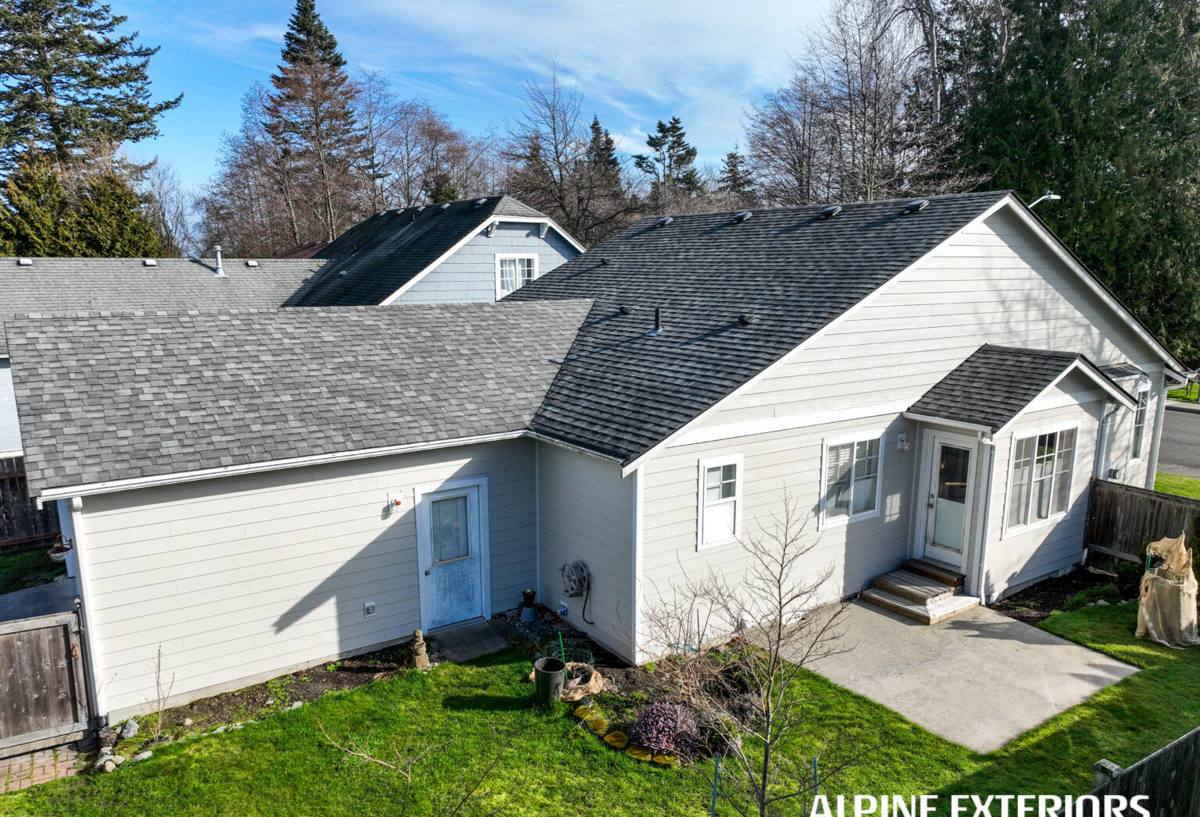
What the Skyline Climate Actually Does to Siding
Salt Air and Wind-Driven Moisture
Being elevated and close to the water means Skyline homes get more direct wind exposure than sheltered neighborhoods closer to downtown Anacortes. Wind carries salt-laden moisture onto exterior walls, and that combination accelerates corrosion on fasteners, staples, and any exposed metal trim. It also pushes rain sideways into laps, seams, and butt joints that would stay dry on a calmer site. Over time, siding materials that aren't dimensionally stable — meaning they swell, shrink, or absorb water at the edges — start to show gapping, cupping, or paint failure right where the wind hits hardest.
Long Moss and Algae Season
Skagit County's marine climate means shaded, north-facing, and tree-adjacent walls can stay damp for months at a stretch, especially from late fall through spring. That's exactly the environment moss, algae, and mildew thrive in. Wood-based and wood-composite sidings absorb moisture readily, and once organic growth gets a foothold in the surface, it holds even more moisture against the substrate — which is how you end up with soft spots, delamination, or rot showing up years before it should.
Temperature Swings and UV
Summers bring long hours of direct sun off the water, and the swing between damp winter mornings and dry summer afternoons puts real stress on paint film and caulking. Siding that isn't engineered to handle that cycling shows it first in fading, chalking, and cracked caulk lines at trim and window returns.
Why We Install Only James Hardie Fiber Cement
James Hardie fiber cement is non-combustible, dimensionally stable, and engineered specifically for the kind of weather Skyline sees. It doesn't absorb water the way wood or wood-composite products do, so it isn't a food source for moss and algae the same way, and it holds its shape through the wet-dry cycling that's constant in this climate. The factory-applied ColorPlus finish is baked on under controlled conditions and backed by its own finish warranty — a meaningfully different proposition than field-applied paint that has to cure in Skagit County's damp air and then hold up to salt exposure for a decade or more.
Hardie also builds region-specific product lines. Their HZ5 formulation is engineered for climates with more moisture and freeze-thaw cycling, which fits the Pacific Northwest better than a one-size-fits-all product. Combined with a transferable warranty that matters if you ever sell the house, it's the product we're willing to put our name behind on an exposed site like Skyline.
What We Won't Install Here, and Why
We don't install vinyl siding, LP SmartSide, primed spruce or cedar, or composite panel products like Cemplank or Allura — not because they're worthless products, but because none of them are the right fit for what we've seen this exposure do to a house.
- Vinyl can warp and become brittle in direct sun and temperature swings, and wind-driven rain can work behind panels at a wind-exposed site if the install isn't perfect.
- LP SmartSide and other wood-strand products are engineered wood — meaning they still rely on treated wood fibers and resin binders that can swell or delaminate at cut edges and fastener points if water gets in, which is a real risk in a marine-layer climate.
- Primed spruce and cedar are natural wood. They look great new, but they need repainting and caulk maintenance on a real schedule, and in a moss-prone, salt-air environment that maintenance window shrinks fast.
- Cemplank and Allura are also fiber cement, and reasonable products — we simply standardized on Hardie's specific formulations, factory finish process, and warranty structure rather than run two systems.
Every one of those products has a place somewhere. We just don't think a wind-exposed bluff lot in Anacortes is that place.
How the Job Works
Inspection and Assessment
We start by walking the exterior and identifying where the current siding is failing and why — worst exposure usually shows up on the southwest and windward walls first. We check the water-resistive barrier and flashing details at windows, doors, and roof-to-wall intersections, because siding is only as good as what's behind it.
Tear-Off and Substrate Repair
Old siding comes off, and we address any rot or damaged sheathing we find underneath before anything new goes up. On a site with Skyline's exposure, this step matters more than most — covering damaged sheathing with new siding just hides a problem that gets worse.
Weather Barrier and Flashing
We install a proper water-resistive barrier and correct flashing at every penetration and transition. This is the layer that actually keeps wind-driven rain out of the wall assembly, and it's where a lot of installation shortcuts show up years later as hidden rot.
Hardie Installation to Spec
James Hardie has specific installation requirements — fastener spacing, clearances at grade and roof lines, caulk joints, and panel gaps — and following them to the letter is what makes the manufacturer's warranty valid. We install to that spec, not to whatever's fastest.
Trim, Paint Touch-Up, and Final Walkthrough
We finish out trim details and do a final check with the homeowner before we consider the job done.
Comparing Siding Options for a Skyline Exposure
| Factor | James Hardie Fiber Cement | Vinyl | Wood / Engineered Wood |
|---|---|---|---|
| Moisture absorption | Very low | Doesn't absorb, but can trap moisture behind panels | Absorbs readily; prone to swelling |
| Moss/algae resistance | Good; doesn't feed organic growth | Fair; algae can grow on surface film | Poor; organic material feeds growth |
| Wind/impact durability | High | Can crack or warp under stress | Moderate; dents and splits |
| Finish life | Factory finish, long warranty | Color molded in, can fade/chalk | Field-applied paint, needs recoating |
| Fire resistance | Non-combustible | Combustible | Combustible |
| Typical maintenance | Low | Low, but repairs are visible | Regular painting and caulking |
Beyond Siding: The Whole Exterior Envelope
Siding doesn't work in isolation. If your roof, windows, or decking are letting water in above or beside the siding, even a perfect siding job won't keep the house dry. We handle roofing, windows, and decks alongside siding for exactly this reason — a Skyline home's roof edge, window flashing, and deck ledger connections all interact with the same wind and rain the siding has to shed. Addressing them together, rather than as separate contractors working in isolation, is how you actually solve a moisture problem instead of moving it.
Why a Local Crew Matters on This Site
A crew that mostly works inland doesn't see wind-exposed, salt-air jobs often enough to have strong opinions about flashing details, fastener choice, or how tight to run caulk joints on a bluff-top house. We're in Anacortes and around Skagit County regularly, which means we've seen how siding on Skyline-type sites actually ages — not just how it looks the day it's installed. That's the difference between a crew that installs to a generic spec and one that installs for the specific weather your house is going to face for the next 30 years.
What to Expect Cost-Wise
Every siding project's cost depends on the size of the home, the amount of tear-off and substrate repair needed, trim complexity, and how much of the water-resistive barrier and flashing system needs to be redone. Homes with rot damage from prior moisture intrusion cost more to correct properly than homes where the substrate is sound. We'll give you a clear, itemized number after we've actually looked at your walls — not a ballpark based on square footage alone.
Signs It's Time to Consider Replacement
- Visible moss or algae staining that comes back within a season of cleaning
- Soft or spongy spots when you press on the siding, especially near the bottom courses or window sills
- Paint that's peeling or bubbling rather than just fading
- Gaps opening up at seams, corners, or butt joints
- Warping, cupping, or visible separation from the wall
- Rising energy bills that suggest the wall assembly isn't sealing the way it should
If you're in Skyline or elsewhere around Anacortes and want a straight answer about what your siding is up against and what it would take to fix it right, we're happy to come take a look. The estimate is free, there's no pressure, and you'll get a clear explanation of what we find — fill out the form below to get started.