 Anacortes Siding
 Why Skyline Roofs Age Differently Than Roofs Inland
Skyline sits close enough to the water that the air itself is part of the maintenance equation. Salt-laden air off Fidalgo Island and the surrounding waterways accelerates corrosion on exposed metal — nail heads, flashing, and vent hoods — faster than the same materials would wear thirty miles inland. Add Anacortes's long, wet fall-through-spring stretch of driving rain, and you've got a roof that's under near-constant moisture load for a good chunk of the year. Then there's moss. Skagit County's mild, damp winters are ideal moss-growing conditions, and once moss gets a foothold on a shingle roof, it holds water against the surface, works its way under tabs, and shortens the life of even a good roofing job.
None of this means asphalt shingle roofing is a bad fit for Skyline — it's still one of the most practical, cost-effective roofing systems available, and it performs well here when it's installed with this specific climate in mind. The issue is that a lot of roofing problems we get called out to inspect in this neighborhood aren't shingle failures — they're installation shortcuts that a marine climate exposes faster than a drier one would.
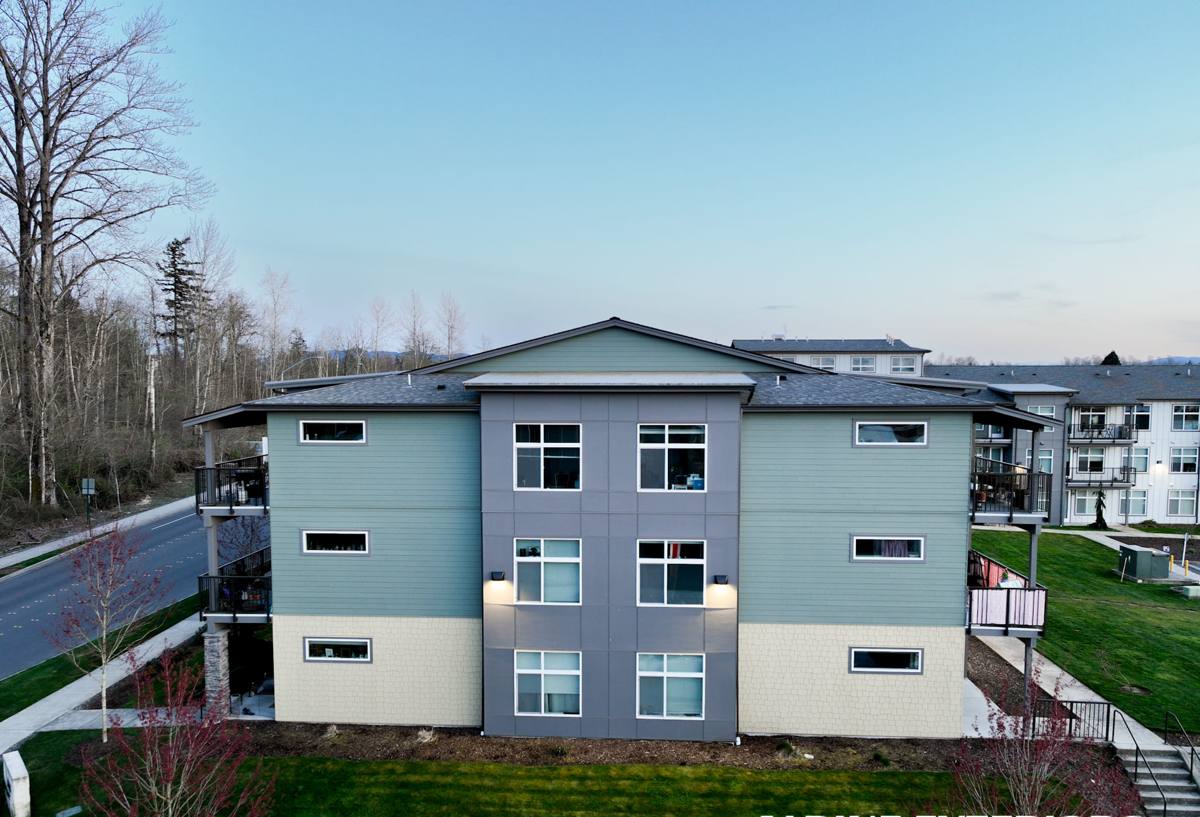
What a Correct Installation Actually Involves
Asphalt shingle roofing looks simple from the ground, which is part of the problem — the visible shingle layer is maybe a third of what determines how long the roof actually lasts. The rest is underlayment, flashing, and ventilation, and it's exactly the stuff that's easy to shortcut because nobody sees it once the roof is done.
Underlayment and Water Protection
Given how much wind-driven rain this area gets, we treat self-adhered ice-and-water shield as standard at valleys, eaves, and roof-to-wall transitions — not an upgrade. A synthetic underlayment across the rest of the field gives a second line of defense if wind ever drives rain up under a shingle tab, which happens more often on exposed or elevated lots than most homeowners expect.
Flashing That's Actually Sized and Sealed Right
Step flashing at walls, proper counter-flashing, and correctly lapped valley metal matter more here than in a dry climate, because a marginal flashing detail that might hold for years somewhere drier can leak within a season or two under sustained Anacortes rain. We also spec flashing metal and fasteners that hold up to salt exposure rather than the cheapest stock option, since corroding flashing is one of the more common hidden leak sources we find on roofs that are otherwise in decent shape.
Ventilation Sized for the Roof, Not Guessed At
Balanced intake and exhaust ventilation keeps the attic deck at close to outside temperature and humidity, which does two things: it protects the shingles from underside moisture and heat damage, and it reduces the ice-dam and condensation risk that comes with our damp winters. Undersized or unbalanced ventilation is one of the most common issues we find on older Skyline roofs during tear-off — usually not enough intake at the eaves relative to exhaust at the ridge.
Choosing a Shingle for a Marine Climate
Not every asphalt shingle product is built the same, and the differences matter more here than in a milder, drier region. The two things worth prioritizing for a Skyline home are algae resistance and wind rating.
| Feature | Why It Matters in Skyline |
|---|---|
| Algae-resistant (AR) granules | Copper- or zinc-infused granules slow the growth of the blue-green algae that causes dark streaking in damp, shaded roof sections common near the water |
| High wind rating (110+ mph) | Exposed or elevated lots near Fidalgo Island and Similk Bay see stronger gusts than sheltered inland lots |
| Impact/tear resistance class | Helps the shingle hold up to wind-driven debris during fall and winter storms |
| Manufacturer warranty structure | Look closely at what's prorated vs. fully covered, and whether algae staining is addressed separately from material defects |
We don't push premium shingle lines as an upsell — we point out where the upgrade actually earns its keep in this climate (algae resistance and wind rating) versus where it's mostly cosmetic, so you're spending the extra money where it matters.
How Our Process Works
- On-site inspection. We walk the roof (or use a ladder/drone where pitch or access makes that unsafe), check the decking condition from the attic side where possible, and look at existing ventilation.
- Written estimate. You get a clear breakdown of tear-off, materials, flashing work, and any decking repair — no vague allowances.
- Tear-off and decking check. Old roofing comes off down to the deck so we can actually see the sheathing condition, not guess at it from the top of a new layer.
- Underlayment and flashing installation. Ice-and-water shield at vulnerable areas, synthetic underlayment across the field, new flashing where the old flashing is worn, undersized, or corroded.
- Shingle installation to manufacturer spec. Correct nailing pattern and exposure — both of which affect wind resistance and warranty validity.
- Ventilation check and correction. We address intake/exhaust balance as part of the job, not as a separate line item discovered later.
- Final walkthrough and cleanup. Magnetic sweep for nails, haul-away of old materials, and a walk-through so you know what was done and why.
Moss, Algae, and What Ongoing Maintenance Should Look Like
A well-installed asphalt shingle roof in Skyline still needs periodic attention — that's just the reality of a mossy, marine climate, not a sign something was done wrong. The goal is catching small issues before they become leaks.
- Have moss removed by hand or with a soft-wash method rather than pressure-washed, which can strip granules and shorten shingle life
- Keep gutters clear of needles and debris so water isn't backing up under the eave line during heavy rain
- Trim back overhanging branches to reduce shade and debris buildup, since both encourage moss growth
- Have zinc or copper control strips considered at the ridge if moss has been a recurring problem on a particular roof
- Schedule a walk-through inspection every couple of years, and after any major windstorm, to catch lifted or damaged shingles early
- Avoid foot traffic on the roof except when necessary — shingles are more brittle in cold weather and can crack underfoot
Signs a Skyline Roof Needs Attention
Because leaks often show up somewhere other than where the actual failure is, it's worth knowing the early warning signs rather than waiting for a stain on the ceiling.
- Granules collecting in gutters or at downspout outlets, which signals accelerated shingle wear
- Dark streaking on north-facing or shaded slopes — usually algae, not necessarily a structural issue, but worth addressing before it spreads
- Visible moss buildup, especially in valleys or along the lower courses where water sits longest
- Curling, cracked, or missing shingle tabs after a windstorm
- Rusted or lifted flashing around chimneys, vents, or wall intersections
- Daylight visible through the roof deck from inside the attic
What Affects the Cost
Every roof is different, but the same handful of factors drive most of the price variation we see on Skyline homes.
| Factor | Why It Changes the Price |
|---|---|
| Roof pitch and access | Steeper roofs and homes on sloped or view lots require more safety equipment and labor time |
| Number of existing layers | Tear-off of multiple old layers takes longer and generates more disposal cost than a single-layer tear-off |
| Decking condition | Soft or water-damaged sheathing found during tear-off needs to be replaced before new roofing goes down |
| Roof complexity | Valleys, dormers, skylights, and multiple roof planes all add flashing work and labor |
| Shingle tier chosen | Standard three-tab, architectural, and premium algae-resistant lines are priced differently by the manufacturer |
| Ventilation upgrades | Adding or correcting intake and exhaust ventilation is sometimes needed and adds modest cost |
We'll walk through which of these apply to your specific roof during the estimate, so the number you get reflects your home rather than a generic average.
Why It Matters to Hire a Crew That Already Works Skyline
A roofer who mostly works drier, inland areas isn't necessarily going to under-build your roof on purpose — but they also may not default to marine-climate details like extended ice-and-water coverage, corrosion-resistant flashing hardware, or moss-conscious ventilation choices unless you specifically ask. A crew that regularly works Anacortes and the surrounding Skagit County waterfront neighborhoods treats those details as standard practice, because we've seen what happens on the roofs that skip them.
There's also a practical side to local work: familiarity with typical lot access and roof configurations in this area, realistic scheduling around our wet season rather than promising timelines that don't hold up once weather rolls in, and being reachable afterward if a question comes up — not a crew that did one job in the neighborhood and moved on.
Asphalt Shingle Roofing vs. Other Options for Skyline Homes
Asphalt shingles remain the most common roofing choice in this area for good reason — reasonable upfront cost, a wide range of style and color options, straightforward repairs if damage happens, and solid performance when installed correctly for the climate. Metal roofing and other systems have their place, but they come with different cost, maintenance, and installation considerations that are worth a separate conversation if you're weighing options rather than set on shingles. For most Skyline homes, a properly installed, algae-resistant architectural shingle roof offers the best balance of upfront cost and long-term performance against salt air, rain, and moss.
If you're thinking about a new roof or want a second opinion on one that's showing its age, we're happy to take a look and give you a straightforward assessment — no pressure, no upsell script. Use the form below to request a free estimate for your Skyline home.