 Anacortes Siding
 Bow sits in the quieter, more rural stretch of Skagit County between Anacortes and the Skagit Valley, where farmland runs down close to tidal water and the tree line breaks open onto Samish and Padilla Bay. It's a different setting than the denser parts of Anacortes proper — bigger lots, more open exposure, and homes that often sit with a clear shot toward the water and whatever weather is coming off it. We do exterior work throughout this part of Skagit County, and Bow is one of the areas where the local climate makes a real, visible difference in how a home's siding, roof, windows, and deck hold up over time.
What the Bow Area Does to a House
Homes around Bow deal with weather from more than one direction. Salt-laden air off the bay travels further inland than most people expect, especially during fall and winter storms, and it works on anything metal — fasteners, flashing, hardware — faster than it would a few miles inland. Driving rain, meaning wind-pushed rain that hits a wall at an angle instead of falling straight down, is a regular occurrence out here on open, exposed lots, and it finds any seam, gap, or shortcut in the exterior assembly that wouldn't matter in calmer conditions. On top of that, western Skagit County lives with a long moss season for a good portion of the year, and shaded rooflines and north-facing walls around Bow tend to hold onto that moisture longer than a home in full sun.
None of this means a house in Bow is destined for problems — plenty of homes here have held up for decades with the right materials and reasonable upkeep. It does mean the details matter more than they would in a milder, more sheltered spot, and a generic approach to siding, roofing, windows, or decks tends to show its weak points sooner here than it would somewhere less exposed.
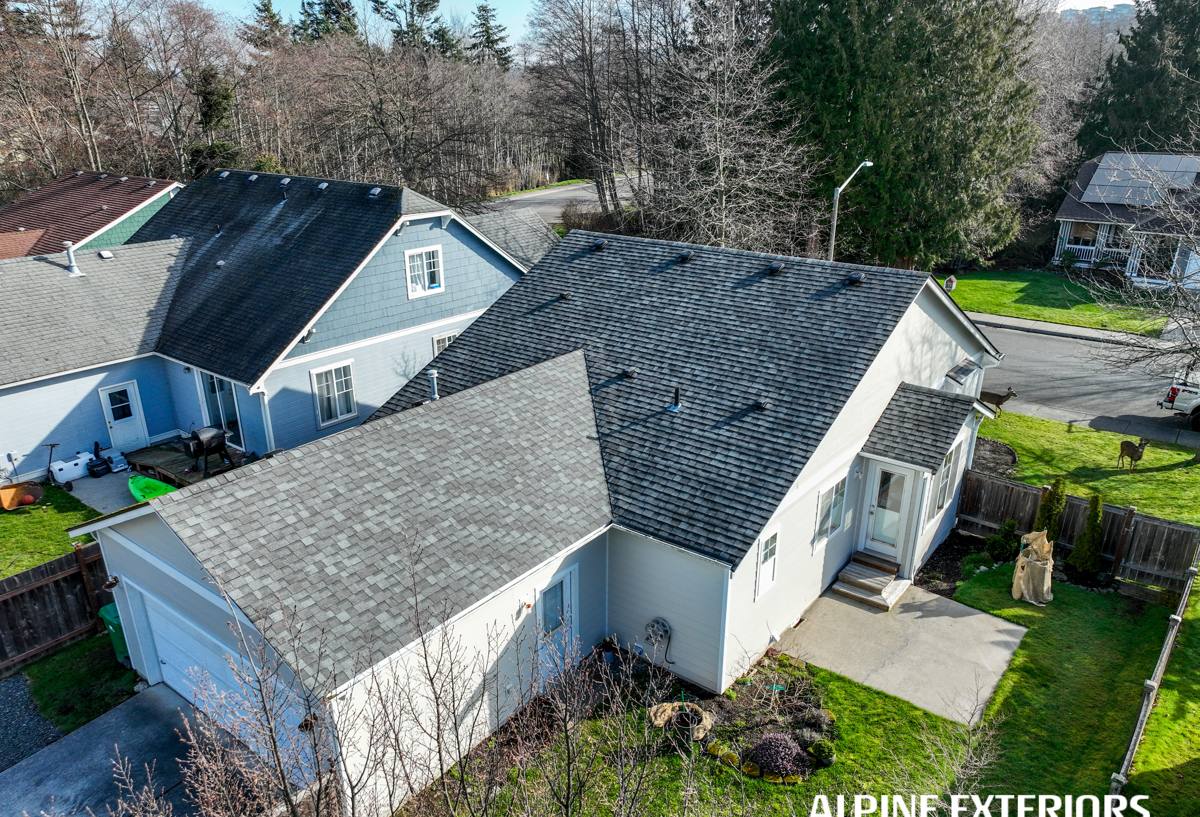
Why We Only Install James Hardie Siding
We install James Hardie fiber cement siding exclusively. We don't install vinyl, LP SmartSide, Cemplank, Allura, primed spruce, or cedar, and that's a standard we've settled on after seeing how these materials actually perform under the kind of salt air and sustained moisture that a place like Bow gets on a regular basis.
Vinyl siding isn't a moisture barrier by itself — it depends entirely on what's behind it staying intact, and it can go brittle over years of UV and salt exposure. Engineered wood products like LP SmartSide use a wood-strand core, which performs fine when everything is sealed correctly, but is genuinely vulnerable if water reaches a cut edge, fastener hole, or damaged spot — a real risk on a property that regularly takes wind-driven rain. Primed wood and cedar can both look excellent, but they ask for an ongoing maintenance commitment — recoating, caulk renewal, moss and mildew treatment — and that schedule only gets tighter in a climate like this, not looser. None of these products are bad in every setting. We've simply made a professional call that we're not going to install something on a Bow home that we don't believe will hold up long-term on this stretch of coastline.
What Hardie Gets Right for This Climate
James Hardie's fiber cement doesn't have an organic core for moisture to work into, so it doesn't rot the way wood-based siding can when water finds a way in. It's also non-combustible, which matters given the dry-season wildfire risk that shows up periodically across Western Washington. The ColorPlus factory finish is baked on under controlled conditions rather than applied on site, which holds up better than field-applied paint against the wet-dry cycling a Bow property sees more of than an inland home would.
Hardie Product Lines for a Bow Property
| Product Line | Best Use | Why It Fits Here |
|---|---|---|
| HardiePlank Lap Siding | Most homes, traditional and farmhouse styles common in Bow | Wide color range, smooth or cedar-textured finish, proven in coastal climates |
| HardiePanel Vertical Siding | Gables, accent walls, outbuildings | Clean modern lines, pairs well with lap siding on mixed-style properties |
| HardieTrim Boards | Window surrounds, corners, fascia | Resists the swelling and rot that plague wood trim in wet, exposed settings |
| HZ5/HZ10 Climate-Engineered | Homes with direct water or wind exposure | Formulated specifically for wetter, harsher climate zones like the Pacific Northwest coast |
Roofing for Wind-Driven Rain and Moss
A roof around Bow deals with the same directional weather as the siding, just overhead. Wind-driven rain works its way under shingles and around flashing at a much higher rate than rain falling straight down, so the details that matter most are the ones a homeowner doesn't see during a sales pitch — correctly lapped flashing at valleys and penetrations, proper underlayment, and attic ventilation that lets moisture escape instead of condensing where it can't. Moss is a near-constant presence on shaded and north-facing roof planes in this part of the county, and left alone it holds moisture against the roofing surface and can work under shingle edges over time.
Because roofs out here carry more moisture load than a sheltered inland home, problems tend to show up first in predictable spots: valleys, chimney and skylight flashing, and whichever slope faces the prevailing weather off the water. Granule buildup in gutters, streaking beyond ordinary moss, and soft or spongy spots near penetrations are worth checking before they turn into an interior leak.
Windows: Where Most Water Problems Actually Start
On an exposed property like many around Bow, windows are one of the more common failure points, and it's rarely the window unit itself that's at fault — it's flashing and installation around the opening that were rushed or done to a lesser standard. A poorly flashed window on a wall catching wind and rain off open water is a direct path for moisture into the wall cavity, and that kind of leak can go unnoticed for years before it shows up as damage inside. We pay close attention to sill pan flashing, head flashing, and proper integration with the weather-resistive barrier and the siding around it — details that don't show up in a sales brochure but decide whether the work actually lasts.
- Condensation, drafts, or fogging between panes on weather-facing windows usually signals a failed seal
- Window trim and casing on the exposed side of a house typically shows wear — peeling paint, soft wood, visible gaps — before the rest of the exterior does
- Replacing windows is a good opportunity to correct flashing details that may have been shortcut on the original installation
- Older single- or early dual-pane windows lose more heat than people expect during Skagit County's long, damp winters
Decks Built for Rural and Marine Exposure
Deck framing and fasteners take a real beating in this climate — sustained moisture, salt-influenced air, and long stretches without much drying time between rain events all work against untreated lumber and standard-grade hardware. Ledger board attachment, proper flashing where the deck meets the house, and corrosion-resistant fasteners matter as much as the decking material itself. A deck can look fine on the surface and still have a compromised ledger connection or rusting hardware underneath if it wasn't built with this kind of exposure in mind.
Decking Material Comparison
| Factor | Wood Decking | Composite Decking |
|---|---|---|
| Moisture resistance | Depends on species and finish; needs regular sealing | Resists moisture absorption without ongoing sealing |
| Moss and mildew | Organic surface supports growth if maintenance lapses | Less hospitable to organic growth, though not fully immune |
| Maintenance | Annual or biennial sealing/staining recommended | Periodic cleaning; no sealing or staining required |
| Upfront cost | Generally lower | Generally higher |
| Long-term cost | Higher over time with sealing and board replacement | Lower ongoing cost, longer typical service life |
Either approach can perform well around Bow as long as the framing and fastening underneath are done correctly. The decking material is what a homeowner sees; the structure underneath is what determines how long it actually lasts.
Why a Local Crew Matters in a Place Like Bow
Bow isn't a dense grid of similar houses — it's a mix of farmhouses, water-adjacent properties, and homes tucked against tree lines, each sitting a little differently relative to wind, sun, and water exposure. A crew that works this part of Skagit County regularly develops a feel for which walls take the worst of the weather, which roof slopes hold moss the longest, and which flashing details actually matter versus which ones are just code minimums. That kind of judgment comes from doing this work on homes like these repeatedly, not from a general contractor occasionally driving out from somewhere else.
It also means fewer surprises with permitting, access on larger rural lots, and the practical logistics — driveway length, outbuildings, well or septic locations — that come up more often on Bow properties than on a typical in-town lot.
What to Check Before Hiring for Exterior Work Out Here
- Ask specifically how the contractor handles wind-driven rain and flashing, not just which siding brand they carry
- Confirm fasteners and hardware are rated for coastal or marine-adjacent exposure, not standard-grade only
- Get a clear answer on both the manufacturer's material warranty and the contractor's own workmanship warranty
- Ask how window and door flashing integration is handled, since that's where most long-term leaks originate
- Verify the contractor is licensed, bonded, and insured to perform exterior work in Washington State
What This Means for Your Home
Every property around Bow sits a little differently relative to the bay, the surrounding farmland, and prevailing weather, and the right scope of work depends on the specific house — its age, orientation, and the real condition of the current siding, roof, windows, or deck. We're not going to recommend a full exterior overhaul when a targeted repair will do, and we're not going to install a material we don't believe will hold up on this stretch of the county. If you're trying to figure out what your Bow home actually needs, we're glad to take a look and give you a straight answer.
If you'd like an honest read on your home's exterior, reach out for a free, no-pressure estimate. We'll walk the property, talk through what we see, and lay out options that fit the house and the budget — no pressure either way.