 Anacortes Siding
 Edison Is a Different Kind of Exposure
Edison sits in one of the more distinct pockets of Skagit County — low, flat farmland running right up against tidal water, with the kind of open exposure that doesn't give a house much shelter from weather moving in off the Sound. If you own a home in or around Edison, you already know the wind doesn't politely stop at the property line, and the fog that sits over the fields in the morning doesn't burn off nearly as fast as it does a few miles inland.
That combination — salt-tinged air, driving rain that comes in sideways more often than straight down, and a moss season that can run half the year — is hard on exterior materials. It's especially hard on siding that wasn't engineered with this kind of climate in mind. We've built our business around understanding exactly what Skagit County's coastal-adjacent weather does to a house over ten, twenty, thirty years, and around installing one product system that's built to take it.
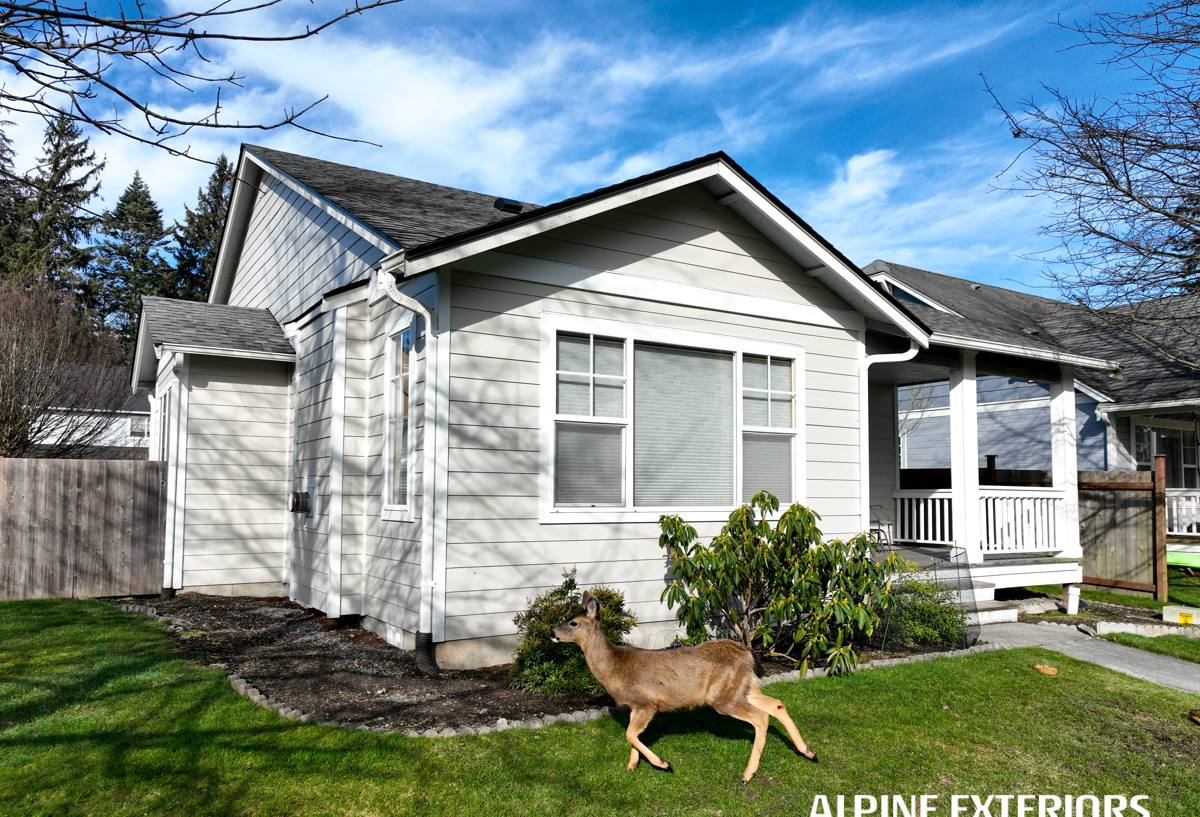
What Edison's Climate Actually Does to a House
Salt Air and Moisture Combined
Edison's proximity to Samish Bay and the surrounding tidal flats means homes here get a low, steady dose of salt-laden air, especially with a west or southwest wind. Salt air alone isn't the main enemy — it's salt air combined with the near-constant moisture of a Pacific Northwest winter. Together they accelerate corrosion of fasteners and trim, and they keep porous or absorbent siding materials damp longer than they'd stay in a drier inland climate.
Driving Rain
Open farmland doesn't slow wind down the way a forested or built-up neighborhood does. Rain in Edison tends to arrive at an angle, which means it hits wall surfaces — not just roofs — with real force. Any weak point in a siding system's water management (a poorly lapped joint, a caulked seam that was never supposed to be relied on for waterproofing, a butt joint that wicks moisture) gets tested every storm season, not just occasionally.
Moss, Algae, and Shade
Between the farmland fog, the tree lines along the water, and the simple fact that this part of Skagit County doesn't get a lot of drying sun in the winter months, moss and algae growth on siding is a near-constant issue for local homeowners. On some materials this is cosmetic. On others, sustained moisture trapped under moss growth becomes a real path to rot and material failure.
Why We Standardized on James Hardie Fiber Cement
We install James Hardie fiber cement siding exclusively. We don't offer vinyl, LP SmartSide, Cemplank, Allura, primed spruce, or cedar as alternatives — not because those products don't have a place in the industry, but because after years of exterior work in this exact climate, we decided we didn't want to keep installing materials that ask homeowners to fight the weather instead of shed it.
Fiber cement is non-combustible, dimensionally stable in wet-dry cycling, and doesn't rely on paint film alone to keep moisture out the way wood-based products do. James Hardie's ColorPlus finish is baked on at the factory under controlled conditions, which gives it better fade and chip resistance than field-applied paint, and their HardieZone system engineers specific product formulations for different regional climates — including the wetter, cooler conditions we deal with here in Western Washington. When we say we standardized on one product, this is why: it's the one system we've found holds up consistently against everything a house near Edison sees in a year.
What We Chose Not to Install, and Why
| Material | What it gets right | Why we don't install it here |
|---|---|---|
| Vinyl siding | Low upfront cost, easy availability | Can warp or crack in temperature swings, seams are a moisture entry point, doesn't hold up to impact as well as fiber cement |
| LP SmartSide | Engineered wood, better than raw lumber | Still wood-based — end grain and cut edges are vulnerable to moisture intrusion if not sealed and maintained meticulously |
| Cedar | Natural look many homeowners love | High maintenance burden in wet climates — refinishing cycles, rot risk, and combustibility |
| Primed spruce / raw wood panel | Lower material cost | Primer is not a finish coat; requires prompt painting and ongoing upkeep to avoid moisture damage |
| Cemplank / Allura | Also fiber cement, similar core material | We standardized on one manufacturer's engineering, warranty structure, and factory finish rather than mixing systems |
Common Siding Problems We See Around Edison
- Moss and algae staining concentrated on north- and west-facing walls, especially near tree lines or low-lying, shaded lots
- Paint failure and bubbling on wood or wood-composite siding where moisture has gotten behind the paint film
- Soft or delaminating panels at the bottom courses, where splash-back and standing moisture do the most damage over time
- Corroded or failing fasteners and trim in older installations, accelerated by the salt content in the air
- Gaps at butt joints and corners that have opened up as wood-based siding expands and contracts with the seasons
- Caulk failure at seams that were never designed to be a home's primary line of water defense
Most of these aren't dramatic emergencies when we catch them early — they're slow, cumulative problems that get more expensive to fix the longer they're left alone. A yearly walk-around of your own siding, especially after the wet season, catches most of this before it becomes structural.
How We Approach a Siding Project in Edison
Initial Assessment
We start with an on-site look at the whole exterior, not just the siding — because in this climate, siding, roofing, trim, windows, and decks all interact with the same moisture pressures. We check for soft spots, moss buildup, flashing condition, and how water is actually moving around your house in a storm, not just where it's supposed to go on paper.
Planning Around Your Home's Exposure
A house on an open, wind-exposed lot near the water gets detailed the same way structurally, but we pay extra attention to fastening patterns, flashing at penetrations, and water management details on the walls that take the worst of the weather. Not every wall on a house faces the same conditions, and the installation should reflect that.
Installation to Manufacturer Spec
James Hardie siding performs the way it's rated to perform only when it's installed correctly — proper clearances from grade and roof lines, correct fastener type and spacing, proper flashing and weather-resistive barrier integration behind the panels, and joints treated the way the manufacturer's instructions actually call for. A lot of the difference between a Hardie installation that lasts decades and one that runs into problems early comes down to details most homeowners never see once the job is finished.
Final Walkthrough
We walk the finished exterior with you, point out anything worth knowing for future maintenance, and make sure you understand what's covered under warranty and what ordinary upkeep looks like going forward.
Beyond Siding: The Rest of the Exterior
Siding doesn't work in isolation. A roof that's shedding water improperly, windows with failed seals, or a deck holding moisture against the house all put extra load on your siding system, even if the siding itself is installed correctly. Because we handle siding, roofing, windows, and decks, we can look at your home's exterior as one connected system instead of treating each component separately.
Roofing
Roof condition directly affects how water sheds off your home and where it ends up on the walls below. A roofline that's shedding water onto a wall it wasn't designed to hit will accelerate wear on that section of siding regardless of what it's made of.
Windows
Window flashing and siding integration is one of the most common failure points in older Northwest homes. When we replace siding around existing windows, we check that flashing and integration details are actually doing their job — and we can replace windows at the same time when it makes sense to.
Decks
Decks attached to the house create a spot where moisture, debris, and shade all concentrate right against the exterior wall. A deck built or maintained without that in mind can quietly undermine even good siding.
James Hardie Product Lines and What They're Suited For
| Product Line | Best Suited For | Notes for This Area |
|---|---|---|
| HardiePlank lap siding | Traditional horizontal siding look | Most common choice for full re-sides in Skagit County; wide range of ColorPlus finishes |
| HardiePanel vertical siding | Board-and-batten or modern vertical looks | Popular for accent walls, gables, and contemporary exterior updates |
| HardieShingle | Shingle-style aesthetic without wood's maintenance burden | Good option for homeowners wanting a traditional coastal look with less upkeep |
| HardieTrim | Corner boards, fascia, window and door trim | Matches the siding system for consistent water management at joints |
All of these are manufactured with the HardieZone system, which engineers the product for regional climate conditions rather than treating the whole country the same. That's a meaningful difference in a climate like ours, where sustained damp is more of a threat than extreme heat or cold.
Cost Factors Homeowners Should Know
We don't publish blanket per-square-foot pricing because every home is different, but the main factors that move a siding project's cost are consistent from job to job:
- Total square footage and the complexity of your home's shape (corners, gables, and dormers add labor)
- Condition of the substrate underneath the existing siding — whether sheathing repair or replacement is needed
- Product line and profile selected (lap, panel, shingle) and trim detailing
- Accessibility of the site and height of the walls
- Whether roofing, window, or deck work is bundled into the same project
The only way to get an accurate number is a site visit — we'd rather look at your specific house than give you a figure that doesn't mean anything once we see the actual conditions.
Why a Local Crew Matters in a Place Like Edison
Edison isn't a big market, and it doesn't get the same attention from larger regional contractors that busier parts of Skagit County or Whatcom County do. A crew that works this area regularly knows what the wind does to a wall facing the open flats, understands how differently a shaded, low-lying lot near the water behaves compared to a house up on higher, drier ground a few miles away, and shows up prepared for the actual conditions instead of a generic checklist. That local familiarity shows up in the details — flashing choices, fastening patterns, and where we pay closer attention on your specific property.
Maintaining Your Siding After Installation
James Hardie siding is low-maintenance compared to wood-based alternatives, but "low-maintenance" isn't "no-maintenance," especially in a climate that grows moss as readily as this one does. A simple annual routine goes a long way:
- Rinse siding gently once or twice a year to clear pollen, dust, and early moss growth before it takes hold
- Keep gutters clear so overflow isn't running down wall surfaces
- Trim back vegetation and tree limbs that shade siding and keep it damp longer than it needs to be
- Check caulking at trim and penetrations periodically, and have any gaps addressed promptly
- Walk the exterior after major storms to catch any impact damage or dislodged trim early
If you're weighing a siding replacement — or thinking about roofing, windows, or a deck alongside it — we're happy to come take a look at your home in Edison and talk through what actually makes sense for your property. There's no pressure and no cost to get our assessment; fill out the form below to get started.