 Anacortes Siding
 Exterior Work Built for the Ship Harbor Waterfront
Ship Harbor sits right where Fidalgo Island meets the open water, in the shadow of the Anacortes ferry terminal and within sight of the San Juan Islands shipping lanes. It's one of the most exposed pockets of Anacortes, and the homes here carry the marks of that exposure: chalky paint, streaked trim, moss creeping up north-facing walls, and siding that ages faster than it should. We've worked on enough houses in this stretch of Skagit County to know that "general Pacific Northwest weather" advice doesn't quite cover it here — Ship Harbor gets its own combination of salt air, wind-driven rain, and short winter drying windows that wears down the wrong exterior materials in a hurry.
This page covers what we actually see on Ship Harbor homes, how our siding, roofing, window, and deck work is adapted for this specific microclimate, and why we standardized on one siding product instead of offering a menu of options.
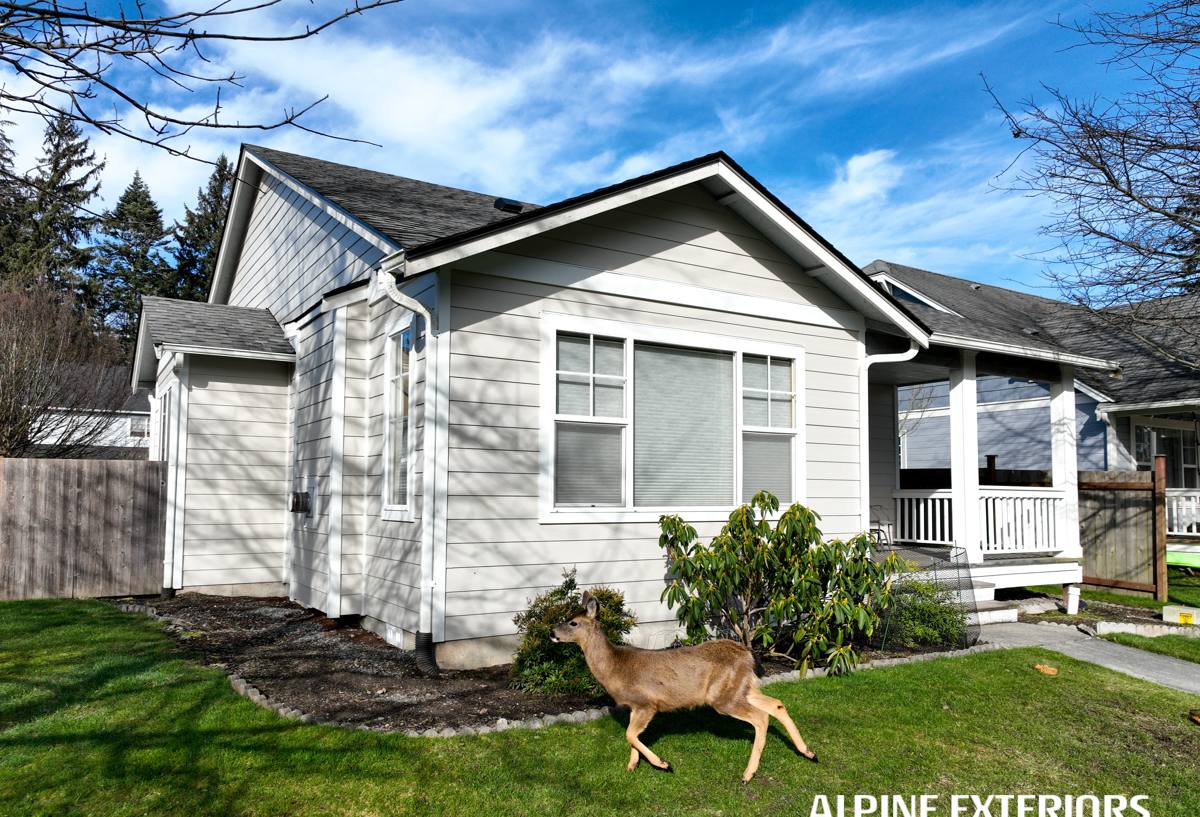
What the Ship Harbor Climate Does to a House
Salt Air and Marine Moisture
Proximity to open water means airborne salt is a constant, low-grade factor here — more than it is a few miles inland in Anacortes. Salt-laden air accelerates corrosion on fasteners, flashing, and any exposed metal trim, and it speeds up the breakdown of paint films on wood and composite sidings that weren't engineered with coastal exposure in mind. It's rarely dramatic; it's cumulative, showing up as premature fading, chalking, and fastener bleed over five to ten years instead of twenty-plus.
Driving Rain Off the Strait
Storms coming off Rosario Strait and the Strait of Juan de Fuca don't just drop rain straight down — they push it sideways into west- and south-facing walls. That means lap siding, window flashing, and butt joints on this side of the island take on more wind-driven water than a sheltered inland lot would ever see. Any weak point in the water-management details of a wall — a poorly lapped joint, a caulked-instead-of-flashed seam — gets tested more often and more aggressively in Ship Harbor.
A Long, Stubborn Moss Season
Between the marine humidity and the tree cover on many Ship Harbor lots, moss and algae have a long growing season here — often close to year-round on shaded north walls and roof valleys. Moss holds moisture against a surface, which is bad news for wood-based siding and asphalt shingles alike. It's manageable, but it means exterior surfaces here need to shed water and dry out quickly, not just resist it once.
Siding: Why We Only Install James Hardie
We install James Hardie fiber cement siding exclusively. We don't offer vinyl, LP SmartSide, Cemplank, Allura, primed spruce, or cedar as options — not because those products don't have a place in the market, but because after years of exterior work in exactly this kind of coastal, wet, moss-prone environment, we don't think they hold up as well as Hardie does, and we'd rather stand behind one product we trust completely than offer a menu that includes ones we don't.
Why This Matters More in Ship Harbor Specifically
- Non-combustible core: Fiber cement doesn't feed a fire the way wood-based products can, which matters anywhere but is a straightforward risk-reduction win regardless of exposure.
- Engineered for moisture cycling: Hardie's HZ5 product line is formulated for cold, wet climates and repeated wet-dry cycling — the exact stress pattern a marine-adjacent lot like Ship Harbor produces.
- Factory-applied ColorPlus finish: The finish is baked on at the factory under controlled conditions, which holds up to salt air and UV exposure far better than field-applied paint on wood or composite siding, and it doesn't need repainting every few years to stay protected.
- Dimensionally stable: Fiber cement doesn't swell, cup, or rot the way wood-based sidings can when they take on repeated moisture — a real factor on the windward walls facing the strait.
To be fair to the alternatives: vinyl is inexpensive and low-maintenance in mild conditions, LP SmartSide is easier and lighter to install than fiber cement, and cedar has a natural look a lot of homeowners love. Those are real advantages. But vinyl can warp and fade faster under sun and salt exposure, engineered wood products remain more moisture-sensitive at cut edges and seams than fiber cement, and cedar demands a maintenance commitment — regular refinishing, moss treatment, caulk inspection — that most homeowners underestimate until they're a few years in. On a Ship Harbor lot, those trade-offs show up sooner than they would inland.
Hardie Product Lines We Install
| Product | Best Use | Why It Fits Ship Harbor |
|---|---|---|
| HardiePlank lap siding | Most wall areas | Traditional look, engineered for wet climates, wide color range |
| HardiePanel vertical siding | Accent walls, gables, modern designs | Clean lines, fewer horizontal joints to detail against wind-driven rain |
| HardieTrim | Corners, window and door surrounds | Matches the siding's moisture and salt resistance at vulnerable trim points |
| HardieShingle | Accent or full shingle-style siding | Cedar-shake appearance without cedar's maintenance burden |
Roofing for the Same Conditions
The roof and the siding on a Ship Harbor home fight the same battle, so we approach them together. Wind-driven rain off the strait pushes water up under shingle laps and into valleys more aggressively here than on a sheltered inland roof, which makes proper underlayment, ice-and-water shield at vulnerable transitions, and correctly lapped step flashing at every wall intersection non-negotiable. Moss is the other constant issue — we pay close attention to ventilation and to keeping tree-shaded sections of roof able to dry between rain events, since a roof that stays damp is a roof that grows moss and ages faster.
Windows: Sealing Out Wind and Salt
Older windows on Ship Harbor homes often show it first at the seals and the frame edges — condensation between panes, drafts on windy nights, hardware that's started to corrode from salt exposure. When we replace windows, the flashing and sealing details around the rough opening matter as much as the window unit itself, because a well-built window installed with a poor water-management detail will still leak on a wall that's taking rain sideways off the water. We tie window flashing into the broader wall water-management plan rather than treating it as a separate job.
Decks: Built to Handle Salt Air and Standing Moisture
A lot of Ship Harbor properties are built to take advantage of the water views, which means decks that see real sun, real wind, and real salt spray. Fastener corrosion is the most common failure point we see on older coastal decks — galvanized hardware that was fine inland starts showing rust streaks and weakening well ahead of schedule near open water. We build and repair decks with corrosion-resistant fasteners and connectors suited to marine-adjacent exposure, and we pay attention to drainage and airflow underneath so ledgers and joists aren't sitting in trapped moisture through the wet season.
How We Handle a Ship Harbor Project
- On-site assessment: We look at wall orientation relative to prevailing wind and rain, existing moisture damage, moss patterns, and flashing condition before recommending anything.
- Honest scope: If only one exposed wall needs attention now and the rest can wait, we'll say so. If hidden rot means the scope has to grow, we'll show you before proceeding, not after.
- Correct installation to manufacturer spec: Hardie's warranty and performance depend on installation done to spec — proper clearances, fastening patterns, and joint treatment. We don't cut corners there.
- Coordination across trades: When siding, roofing, and window work overlap on the same project, we sequence and detail them together so water-management continuity isn't broken at the seams between trades.
Signs a Ship Harbor Home Needs an Exterior Assessment
- Moss or dark streaking on north- or shade-facing siding and roof sections
- Paint that's chalking, peeling, or fading noticeably faster on the water-facing side of the house
- Rust staining around fasteners, flashing, or deck hardware
- Soft spots, swelling, or visible seams opening up on wood-based or composite siding
- Drafts, fogging, or hardware corrosion around older windows
- Deck boards or connectors showing early wear on the side facing the water
Why a Local Crew Matters Here
Ship Harbor isn't a generic Pacific Northwest lot — it's a specific microclimate within Anacortes, and the difference between a wall that's protected for thirty years and one that's failing in eight often comes down to details that only show up when a crew has actually worked this exact stretch of coastline: how the wind pushes rain in off the strait, how long moss really takes to establish on a shaded wall here, which flashing details hold up to salt air and which don't. We're a Skagit County crew that works this area regularly, not a traveling outfit passing through Anacortes for one job.
If you'd like an honest look at what your Ship Harbor home's exterior actually needs — siding, roofing, windows, or a deck — we offer a free, no-pressure estimate. Use the form below to get started.