 Anacortes Siding
 Flounder Bay's Exterior Sits Right at the Edge of the Weather
Flounder Bay is one of those pockets of Anacortes where the marine environment isn't background noise — it's a daily condition your house has to stand up to. Being close to the water means more direct exposure to salt-laden air, wind-driven rain coming off Rosario Strait and the surrounding waterways, and the deep shade from evergreens that keeps north- and west-facing walls damp long after a storm has passed. Siding here doesn't get a break between weather events the way it might a few miles inland. It's a good area to be honest about what a home's exterior is actually up against, and to choose materials and installation practices accordingly.
We're a Skagit County crew, and Flounder Bay is a neighborhood we know from doing the work, not from a map. That matters because the right approach to a siding job here isn't identical to what we'd recommend for a home in a drier, more sheltered part of Anacortes.
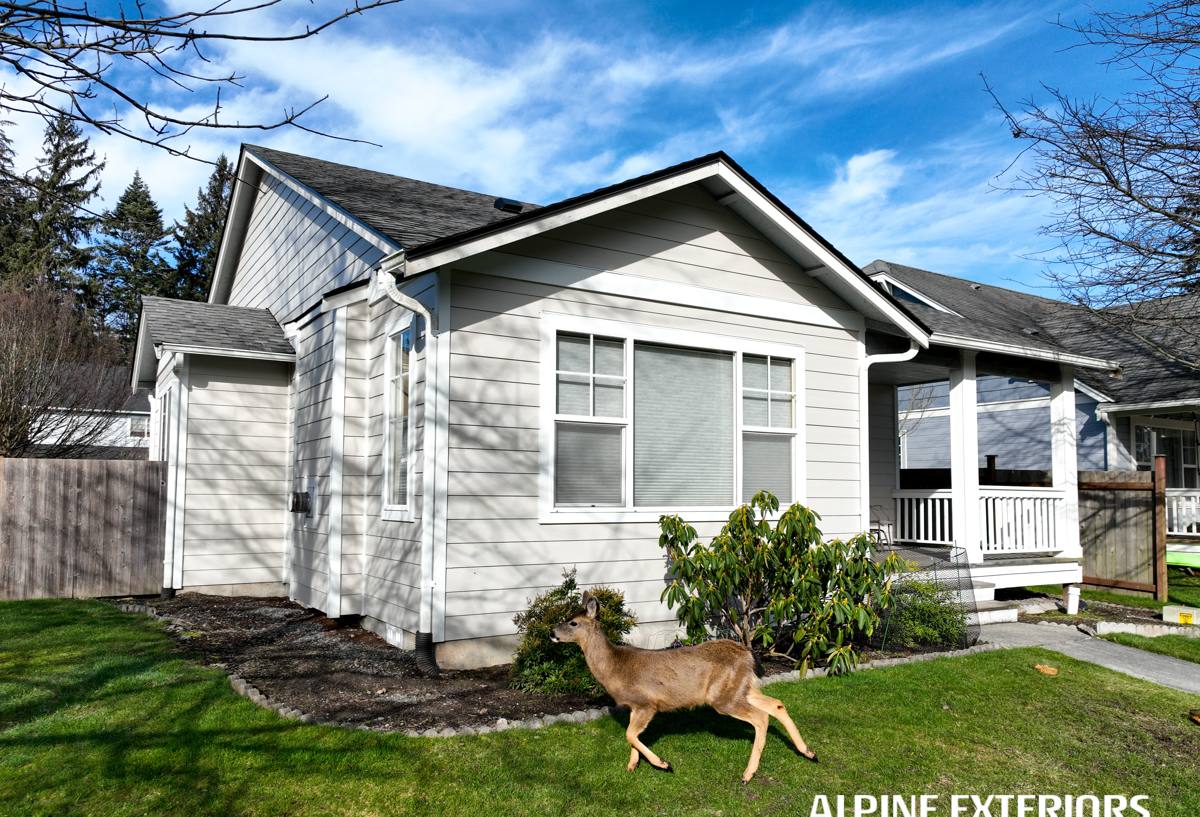
What Salt Air, Rain, and Moss Actually Do to Siding
Salt Air
Airborne salt is corrosive to exposed metal fasteners, flashing, and trim, and it accelerates the breakdown of finishes that aren't engineered to resist it. On siding materials with a painted or coated surface, salt exposure combined with UV and moisture cycling tends to show up first as chalking, fading, and premature finish failure — especially on faces that get the most direct exposure off the water.
Driving Rain
Wind-driven rain doesn't just wet a wall surface, it pushes moisture sideways and upward into laps, seams, and any gap in the water-management details. Over time, siding materials that absorb water or swell at cut edges and fastener points are more vulnerable in a driving-rain environment than materials engineered to shed water and resist moisture intrusion at those same weak points.
Moss and Shade
The trees that make Flounder Bay a nice place to live also mean long stretches of shade on parts of most homes. Shaded, damp siding is where moss, algae, and mildew take hold first. On some materials that's mostly a cosmetic problem you can pressure-wash away. On others — particularly wood-based products — sustained moisture under a moss mat can contribute to rot at the surface and, eventually, deeper into the material if it's not caught.
Why We Only Install James Hardie Fiber Cement
We made a decision as a company to install one siding system: James Hardie fiber cement. We don't install vinyl, LP SmartSide, Cemplank, Allura, or primed spruce or cedar siding, even though all of those products have a place in the broader market and each has homeowners who are satisfied with them. Our reasoning isn't about running down other manufacturers — it's about what we've found holds up best, with the least maintenance burden, in exactly the kind of environment Flounder Bay sits in.
- Non-combustible material — fiber cement doesn't contribute fuel to a fire the way wood-based sidings can, which matters in a region where wildfire risk is a real seasonal consideration.
- Engineered for moisture, not just painted against it — Hardie's fiber cement formulation resists swelling, cracking, and moisture-driven damage far better than wood or wood-composite substrates in a wet climate.
- Factory-applied ColorPlus finish — baked-on over multiple coats, it's built to resist fading and chalking longer than field-applied paint, which is a meaningful advantage against UV plus salt air.
- Climate-engineered HZ product lines — Hardie makes region-specific formulations, and the HZ5 line is built for the kind of wet, marine-influenced climate we have on the west side of Washington.
- A strong, transferable warranty — backed by a large, established manufacturer, which is worth something when you're planning to own the home for decades or sell it down the line.
None of this means other products are without merit. Vinyl is inexpensive and low-maintenance in mild climates. Wood has a look some homeowners specifically want. LP SmartSide and other engineered-wood products have improved their moisture resistance over the years. But for a marine environment like Flounder Bay, we don't think those trade-offs make sense, so we don't install them — we'd rather stand behind one system we trust fully than offer several we have reservations about.
How We Approach a Siding Job in a Marine-Exposed Neighborhood
Water Management First
Before a single piece of siding goes up, we're thinking about how water moves down and off the wall — weather-resistant barrier, flashing at every window, door, and penetration, proper lap and gap spacing, and kick-out flashing wherever a roof line meets a wall. Fiber cement is only as good as the water-management system underneath it, and in a driving-rain environment those details are what actually prevent problems years down the line.
Fastening and Finish Details
James Hardie publishes specific fastening and clearance requirements — including gaps at grade, decking, and roof lines, and corrosion-resistant fastener specs — that exist precisely because of environments like this one. Skipping or shortcutting those details is one of the most common ways an otherwise good product underperforms. We follow manufacturer installation specs because they're written for conditions like Flounder Bay's, not despite them.
Working Around Existing Vegetation and Shade
We can't move the trees, and most homeowners don't want us to. What we can do is make sure siding is installed with the ventilation and drainage gaps it needs so shaded, damp walls can still dry out between rain events, rather than staying wet against the substrate.
Beyond Siding: The Rest of the Exterior Envelope
Siding doesn't work in isolation — it's one piece of an exterior system that also includes the roof, windows, and any attached decks, and in a wet, salt-exposed neighborhood those components all face similar stress. We handle roofing, windows, and decks in addition to siding, which means we can look at a Flounder Bay home's exterior as a whole rather than treating each component as a separate problem. A window that's leaking at the flashing, a roof edge that's channeling water onto a wall, or a deck ledger that's trapping moisture against the siding can all undermine even a well-installed fiber cement job if they're not addressed together.
Signs a Flounder Bay Home Might Need Siding Attention
- Persistent moss or algae growth that returns quickly after cleaning, especially on shaded or north-facing walls
- Paint that's chalking, peeling, or fading noticeably faster on the sides of the house facing the water
- Soft spots, visible swelling, or delamination at seams and corners
- Rust staining running down from fasteners or flashing
- Visible gaps or separation at trim, corners, or window and door surrounds
- A noticeably musty smell near exterior walls, which can indicate moisture getting behind the siding
Cost Factors for a Flounder Bay Siding Project
Every home is different, and we don't quote sight-unseen, but these are the main variables that drive cost on a fiber cement siding project in this area:
| Factor | Why It Matters |
|---|---|
| Home size and wall complexity | More corners, dormers, and roof intersections mean more flashing details and cutting |
| Current siding removal | Tear-off and disposal adds labor and dump costs versus new construction |
| Extent of moisture or rot damage found underneath | Sheathing repair is common once old siding comes off in a wet climate |
| Hardie product line chosen | Lap, shingle, and panel profiles carry different material and labor costs |
| Access and site conditions | Tree cover, slopes, and tight lot lines affect staging and scaffolding needs |
| Trim, fascia, and detail work | Corner boards, window trim, and fascia replacement add scope beyond flat wall siding |
Why a Local Crew Matters Here
A siding contractor working in Flounder Bay needs to understand the specific mix of exposure the neighborhood sees — not treat it the same as a sheltered lot on the other side of Anacortes. We're a Skagit County-based crew, which means we're familiar with the local permitting process, the way weather actually moves through this part of the county across the seasons, and the kinds of moisture and rot issues that show up most often when old siding comes off homes near the water. That local knowledge shapes real decisions on a job site — where to add extra flashing attention, which walls need the most drainage consideration, and how to sequence work around this area's rain patterns.
Get a Straightforward Estimate
If you're noticing moss buildup, fading paint, or general wear on your Flounder Bay home's siding, we're happy to take a look and give you an honest read on what's going on and what it would take to fix it right. The estimate is free, there's no pressure, and if James Hardie fiber cement isn't the right fit for your project for some reason, we'll tell you that too. Use the form below to get started.