 Anacortes Siding
 Why Moisture Is the Real Enemy of Siding
Siding fails for a lot of reasons, but almost all of them trace back to one thing: water finding a way into the wall assembly and staying there. Sun fades paint, wind can loosen a panel, but it's moisture — trapped, repeated, unable to dry out — that actually rots wood, delaminates board products, and breeds the algae and moss stains that make a house look neglected before its time. Understanding how water moves through a wall, and how different siding materials respond to it, is the single most useful thing a homeowner can know before repairing or replacing siding.
There's a difference between bulk water (rain hitting the wall directly) and vapor (moisture that migrates through materials as humidity). A good siding system has to manage both — shedding bulk water to the outside while still letting incidental moisture that gets behind it escape rather than get trapped against sheathing and framing.
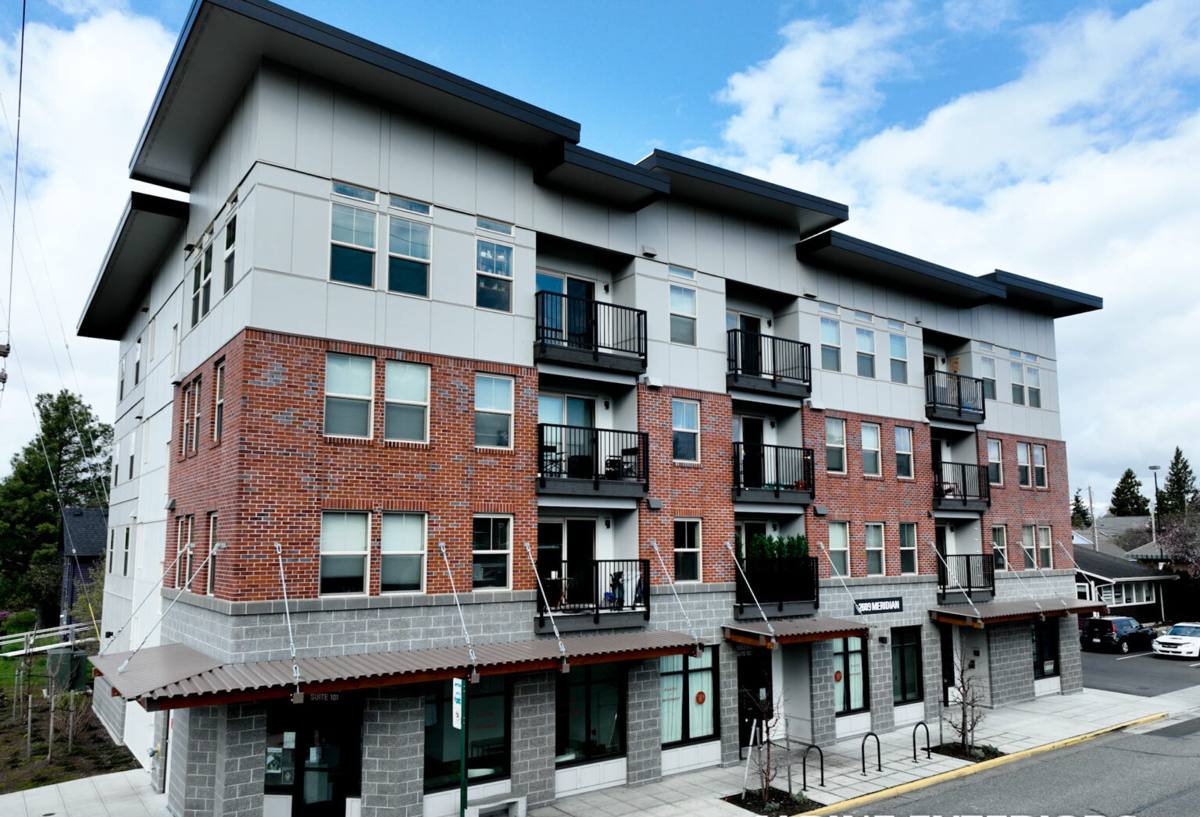
Why Anacortes and Skagit County Are Tougher on Siding Than People Expect
Salt Air
Anacortes sits surrounded by saltwater — Guemes Channel, Fidalgo Bay, Rosario Strait. Salt-laden air corrodes exposed metal fasteners, flashing, and trim faster than it would inland, and it accelerates the breakdown of paint films and caulk joints. Homes closer to the water see this first, but it's a factor island-wide.
Driving Rain
Storms coming off the Strait of Juan de Fuca and Rosario Strait often arrive with real wind behind them, which pushes rain sideways into wall surfaces rather than letting it fall straight down and shed off. Driving rain finds every gap in a lap joint, every under-caulked penetration, and every place where flashing was skipped or done wrong — water that would never be a problem in a calm rain becomes a real intrusion point in a wind-driven one.
Moss and Shade Season
Skagit County's tree cover, long wet winters, and short summers mean a lot of exterior walls — especially north-facing ones and anything under a fir or cedar canopy — stay damp for months at a time. That's exactly the environment moss, algae, and mildew need to take hold, and once they're established on a wall they hold moisture against the surface even longer, which speeds up whatever's happening underneath.
How Rot Actually Gets Started
Rot rarely starts because a wall got rained on. It starts because water got in and had no way back out, and it kept happening in the same spot for months or years. The most common entry points we see on Anacortes homes:
- Butt joints and seams where two pieces of siding meet, especially if they weren't back-primed or properly caulked
- Window and door penetrations without correct flashing or with flashing that was installed out of sequence
- Deck ledger boards and railing posts that penetrate the siding and wall plane
- Bottom edges near grade where siding sits too close to soil, mulch, or a deck surface and never fully dries between rains
- Failed caulk at trim boards, corners, and fixture penetrations — caulk is a maintenance item, not a permanent seal
- Roof-to-wall intersections where step flashing or kickout flashing is missing or undersized
Once water gets behind siding at any of these points, what happens next depends heavily on what the siding itself is made of — which is the part most homeowners never get told until something's already rotting.
How Different Siding Materials Actually Handle Moisture
This is where material choice stops being about looks and starts being about physics. Wood-based products absorb water into their fiber structure; fiber cement does not, because it isn't organic material to begin with.
| Material | Core Composition | Moisture Behavior | Common Moisture-Related Issue |
|---|---|---|---|
| Cedar / primed spruce | Solid wood | Absorbs and releases water repeatedly; swells and shrinks with humidity | Cupping, splitting, rot at joints and bottom edges |
| Engineered wood (OSB-based) | Wood strands + resin | Resists water better than solid wood when intact, but edges and cut ends are vulnerable if not sealed and maintained | Edge swelling, delamination if moisture reaches the substrate |
| Vinyl | PVC plastic | Doesn't absorb water itself, but isn't a true water barrier — it relies entirely on what's behind it, and it can trap moisture against the wall if the assembly isn't ventilated correctly | Hidden rot in sheathing behind the panels, invisible from outside |
| Fiber cement (James Hardie) | Cement, sand, cellulose fiber | Non-combustible and dimensionally stable; doesn't swell, absorb, or rot the way organic materials do | Failures are almost always installation-related (caulk, flashing, clearance), not material-related |
None of this means every cedar or engineered-wood home in Anacortes is doomed to rot — plenty of them are maintained carefully and last a long time. It means the margin for error is smaller, and the maintenance commitment is higher, with organic and moisture-sensitive materials than with fiber cement.
Why We Standardized on James Hardie
We install James Hardie fiber cement exclusively, and moisture behavior is the biggest reason why. Because the core material is cement-based rather than wood-based, it doesn't provide food for rot fungus and it doesn't swell or delaminate the way wood and wood-composite products can when they take on water. Hardie's HZ5 product line is specifically engineered for wetter, more variable climates like ours, and the factory-applied ColorPlus finish is baked on under controlled conditions — a more consistent, durable bond than field-applied paint, which matters in an area where UV, salt air, and rain all attack a finish at once.
That doesn't mean fiber cement is maintenance-free or installation-proof. It still needs correct flashing, proper clearances, and quality caulking at joints and penetrations — no siding material overrides bad installation. What it does mean is that when installation is done right, the material itself isn't the weak link.
Warning Signs Worth Checking Now
Most rot is discovered late because it happens behind the siding, out of sight, until paint starts failing or a soft spot shows up. A walk around the house once or twice a year, especially before and after the wet season, can catch problems while they're still cheap to fix.
- Paint that's peeling, bubbling, or alligatoring in one specific area rather than uniformly
- Soft or spongy siding when pressed, especially near the bottom courses or below windows
- Visible gaps, cracks, or missing caulk at joints, corners, and trim
- Dark staining, streaking, or a musty smell near an exterior wall on the inside of the house
- Moss or algae buildup that keeps returning in the same spot within weeks of cleaning
- Siding that sits directly against soil, mulch beds, or a deck surface with no visible gap
- Warping, buckling, or separation at butt joints
Any one of these on its own might be minor. Several together, or any of them combined with visible rot, usually means it's worth having someone look at what's happening underneath, not just at the surface.
Repair or Replace?
Not every moisture problem means a full re-side. A localized rot pocket caused by one bad flashing detail can sometimes be cut out, the underlying issue fixed, and the section patched or replaced. But a few things tip the decision toward full replacement:
- Rot showing up in multiple, unrelated locations rather than one isolated spot
- Siding original to a home built more than 20-25 years ago, especially wood or older composite products
- Sheathing or framing damage discovered once siding is opened up, not just surface staining
- A homeowner who's tired of repainting or recaulking every few years and wants to stop the maintenance cycle for good
An honest inspection should tell you which situation you're actually in before any work starts — not just quote a full tear-off by default.
What You Can Do Regardless of Siding Material
Some moisture management is on the homeowner, no matter what's on the walls:
- Keep gutters clean and downspouts directing water away from the foundation, not splashing back onto siding
- Maintain a visible gap between siding and grade, mulch, or hardscaping — don't let landscaping creep up the wall
- Trim back trees and shrubs that keep a wall section shaded and damp
- Recaulk failing joints promptly rather than waiting for a full paint cycle
- Wash off moss and algae buildup before it's established for a full season
If you're noticing any of these warning signs on your Anacortes home, or you're just tired of fighting moss and repaint cycles every few years, we're happy to take a look. We offer free, no-pressure estimates and can tell you honestly whether you're looking at a repair or a full replacement.