 Anacortes Siding
 Siding Built for Similk Beach's Waterfront Exposure
Similk Beach sits along the water on the south end of Fidalgo Island, close enough to Similk Bay and the tidal flats near Deception Pass that salt air is simply part of daily life here. Homes in this part of Anacortes take a different kind of beating than houses just a few miles inland in Skagit County. The combination of salt-laden air, wind funneling off the water, and the region's long, wet moss season means exterior materials get tested constantly, not just during the occasional storm.
We're an Anacortes-based exterior contractor, and Similk Beach is inside our regular service area. That matters more than it might sound like — a crew that works this shoreline routinely knows which walls take the worst weather, where moss and mildew set in first, and how differently a house facing the water performs compared to one tucked back in the trees.
What the Climate Actually Does to Siding Here
Salt Air and Coastal Moisture
Airborne salt is corrosive to metal fasteners and hard on any siding material that isn't dimensionally stable. Over years, homes close to Similk Bay see faster degradation of caulking, trim, and lower-grade siding products than homes even a short distance inland. Wood-based products are especially vulnerable because they absorb moisture readily, and repeated wet-dry cycling in a salt environment accelerates rot at seams, corners, and butt joints.
Driving Rain and Wind Exposure
Western Washington's rain doesn't just fall — much of it arrives sideways during winter storms, driven by wind off the Salish Sea. Waterfront and near-waterfront properties like those in Similk Beach get more of this wind-driven rain than sheltered inland lots. That means siding here needs to perform well at seams, laps, and penetrations, not just resist standing water. Poor installation details that might go unnoticed on a protected inland home can fail quickly on an exposed Similk Beach wall.
Moss, Algae, and the Long Wet Season
Skagit County's siding season is short and its wet season is long. From fall through spring, north- and west-facing walls in shaded or waterfront settings stay damp for extended stretches, which is exactly what moss and algae need to take hold. Once organic growth establishes on a porous or absorbent siding surface, it holds moisture against the material and accelerates whatever damage is already underway underneath.
Why We Only Install James Hardie Fiber Cement
We made a deliberate decision to install James Hardie fiber cement siding exclusively — not vinyl, not LP SmartSide, not Cemplank or Allura, not primed spruce or cedar. For a place like Similk Beach, that decision comes down to how each of those materials actually behaves under sustained coastal exposure, not marketing claims.
- Vinyl can warp, fade, and become brittle with prolonged UV and temperature cycling, and it doesn't offer the same impact resistance or paintable finish flexibility homeowners often want on a coastal property.
- Wood-based siding (LP SmartSide, primed spruce, cedar) is an engineered or natural wood product at its core. Even with treated strand board or naturally rot-resistant cedar, wood siding depends heavily on maintained caulking and paint film to keep moisture out — a maintenance burden that's tougher to stay ahead of in a salt-air, high-moisture environment.
- Other fiber cement brands (Cemplank, Allura) are legitimate fiber cement products, but we standardized on James Hardie specifically for its factory-applied ColorPlus finish, its regionally engineered HZ5 product line, and the strength of its transferable warranty backing.
Fiber cement itself is non-combustible and dimensionally stable — it doesn't expand and contract with moisture the way wood does, and it isn't UV-brittle the way vinyl can become. James Hardie's HZ5 formulation is engineered for the Pacific Northwest's freeze-thaw and moisture cycling, which is the exact stress pattern a Similk Beach home experiences every winter.
How ColorPlus Factory Finish Fits Waterfront Homes
One detail that matters more near the water than almost anywhere else: paint performance. Field-applied paint on any siding material is only as good as the prep, the product, and the reapplication schedule — and salt air shortens the useful life of most exterior paint jobs. James Hardie's ColorPlus technology is a factory-baked finish applied and cured under controlled conditions, which gives it more consistent adhesion and color retention than a job-site paint job, along with a dedicated finish warranty separate from the product warranty. For a home exposed to constant salt and wind, that's a meaningful difference in how long the siding looks like it did on day one.
Siding Comparison for Similk Beach Conditions
| Material | Salt Air Durability | Moisture/Rot Risk | Maintenance Burden |
|---|---|---|---|
| James Hardie Fiber Cement | Strong | Low — non-combustible, dimensionally stable | Low; factory finish, periodic washing |
| Vinyl Siding | Moderate; can fade/warp over time | Low direct rot risk, but seams can trap moisture | Low, but limited repair/refinish options |
| LP SmartSide / Engineered Wood | Moderate | Higher if caulking/paint isn't maintained | Moderate to high |
| Cedar / Primed Spruce | Lower without diligent upkeep | Higher — natural wood, absorbs moisture | High; regular refinishing needed |
Roofing, Windows, and Decks for the Same Exposure
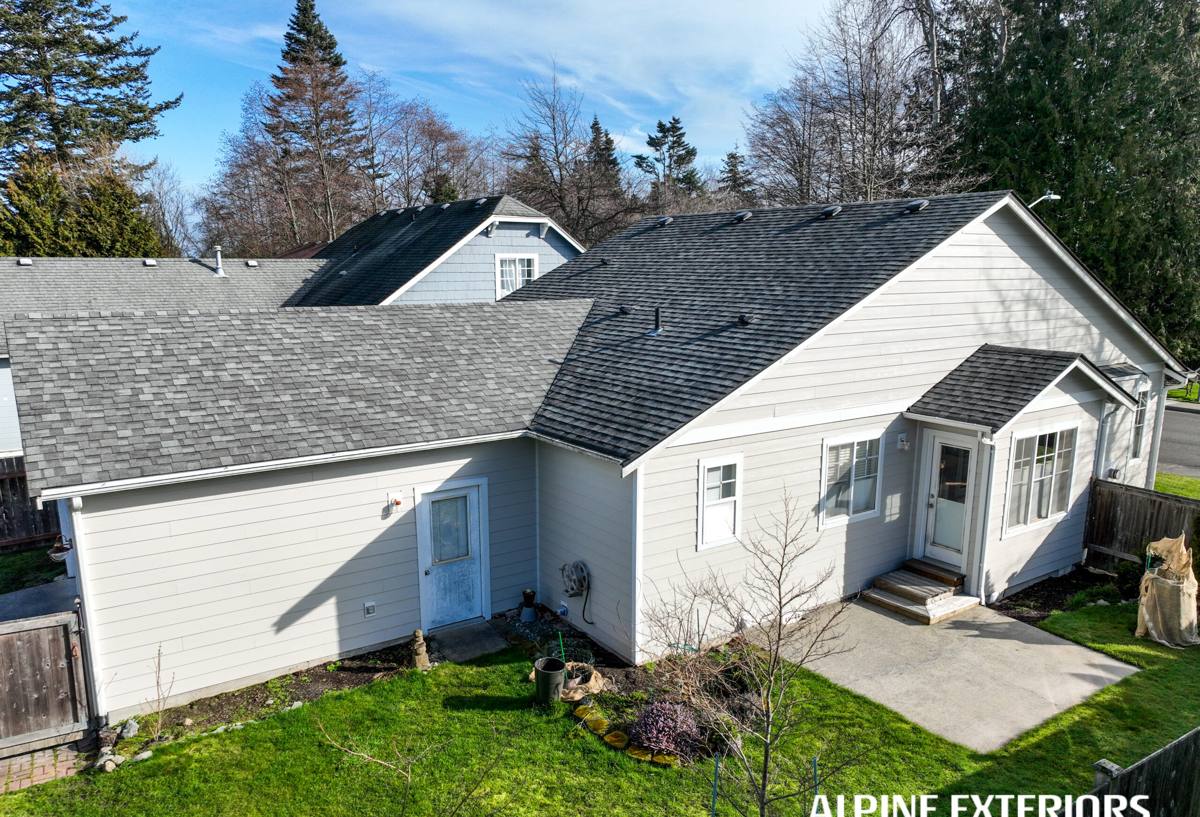
Siding is only part of how a Similk Beach home holds up against the weather. We also handle roofing, window replacement, and decks, and we approach all of them with the same coastal exposure in mind. Roofing near the water needs attention to ventilation and flashing details that keep driving rain from working its way under materials. Windows in this area benefit from tighter seals and glazing that stands up to wind-driven moisture, not just cosmetic upgrades. Decks facing the water take direct sun, salt, and rain simultaneously, which is a tough combination for fasteners and structural wood alike. Handling all four trades under one crew means the flashing, trim, and transitions between roof, walls, windows, and deck ledgers get treated as one connected system instead of four separate contractors' work meeting at odd angles.
What Correct Installation Looks Like Here
James Hardie siding performs the way it's rated to perform only when it's installed to the manufacturer's specifications — and in a wind- and rain-exposed location like Similk Beach, installation details carry more weight than they would on a sheltered inland lot.
- Proper starter strip and clearance from grade, decks, and roof lines to prevent wicking
- Correct fastener type, spacing, and penetration depth for HZ5 panels
- Weather-resistant barrier and flashing integration at every window, door, and penetration
- Properly lapped and sealed joints, especially at inside and outside corners exposed to wind-driven rain
- Adequate gaps and sealant at butt joints to allow for material movement without trapping moisture
Why a Local Crew Matters Here
Similk Beach isn't a place where a generic install crew from outside the area gets the details right on the first pass. Wind direction off the bay, which walls take the brunt of winter storms, how fast moss establishes on shaded exterior surfaces — that's knowledge built from working this specific stretch of Skagit County repeatedly, not from a general contractor's playbook. As an Anacortes-based company, we're not driving in from Seattle or Bellingham for a one-off job; we're back in this area regularly, which also means warranty and service calls don't involve tracking down a contractor who's moved on to the next region.
Planning a Siding Project in Similk Beach
Every property here is a little different depending on how exposed it is to the water, how much tree cover it has, and the age and condition of the existing siding. A few things worth thinking through before a project starts:
- How much direct wind and rain exposure does the home get from its bay-facing sides versus its sheltered sides?
- Is there existing moss, algae, or moisture staining that signals a wall assembly problem beneath the siding?
- Are the windows, trim, and roofline being addressed at the same time, or is siding the sole scope?
- What's the realistic timeline given the wet season — is there a dry-weather window that works best for the install?
We walk through all of this on site, look at the specific exposure your home faces, and give a straightforward assessment of what's going on with the current siding before recommending anything.
Get a Free Estimate for Your Similk Beach Home
If you're weighing a siding, roofing, window, or deck project on your Similk Beach property, we're happy to take a look and give you an honest read on what your home needs and what it would cost to do right. There's no pressure and no obligation — just fill out the form below to schedule a free estimate.