 Anacortes Siding
 Serving Homes Throughout Sedro-Woolley
Sedro-Woolley sits up the Skagit River valley from our home base in Anacortes, and while the two towns share a county and a climate, they don't sit in exactly the same weather pattern. Anacortes gets more of the direct salt air off Fidalgo Bay and Rosario Strait. Sedro-Woolley, tucked closer to the foothills, deals with its own version of the same problem: a lot of standing moisture, a long stretch of overcast months, and the kind of humidity that lets moss and mildew get comfortable on north-facing walls and shaded rooflines. We work both areas regularly, and we size up every job on its own terms rather than assuming one town's conditions apply to the other.
What doesn't change between Anacortes and Sedro-Woolley is the basic math of exterior materials in Skagit County. Anything on the outside of a house here is going to see months of driving rain, repeated freeze-thaw cycles in the colder snaps, and a moss season that can run from fall through spring. Materials that aren't built for that combination show it early — chalking paint, soft trim, siding that swells at the seams. We install siding, roofing, windows, and decks with that reality in mind, and we don't cut corners on the parts of the job that matter once the weather starts working against the house.
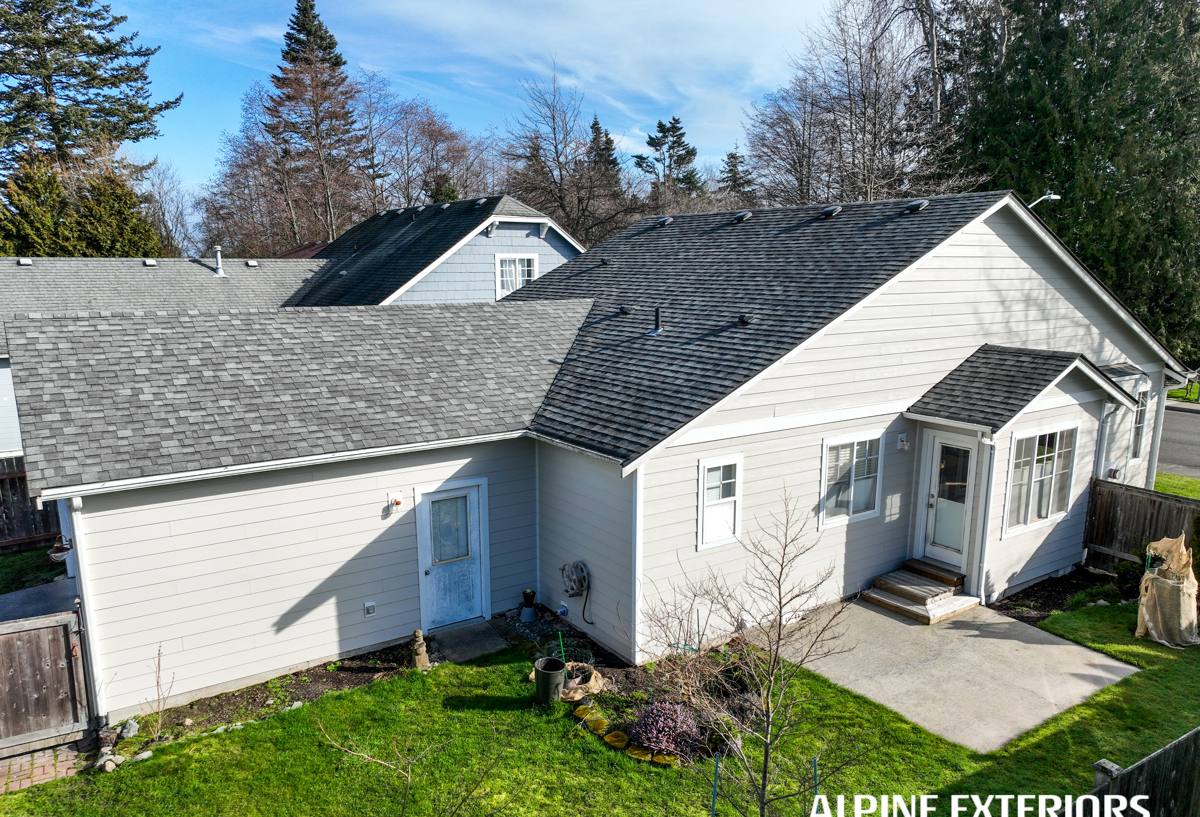
What Sedro-Woolley Homes Deal With
Moisture That Doesn't Let Up
The Skagit Valley holds onto moisture longer than people expect. Even without direct rain, overcast days and river-valley humidity keep exterior surfaces damp for extended stretches. Wood-based siding products absorb that moisture at the seams and cut edges, swell, and eventually start to rot from the inside out — often before it's visible from the ground.
Moss and Organic Growth
Shaded roof planes, north walls, and anything under tree cover in Sedro-Woolley tends to grow moss faster than homeowners want to deal with. Moss holds moisture against the surface underneath it, which accelerates whatever damage is already happening. Materials and finishes that resist that buildup, or at least don't feed it, hold up noticeably longer.
Temperature Swings and Seasonal Movement
The valley sees a wider temperature range than the immediate coast — colder mornings, warmer summer afternoons. Siding and trim expand and contract with those swings. Products that aren't engineered for it can develop gaps, warping, or fastener pull-through over a few seasons.
Why We Install Only James Hardie Fiber Cement
We made a decision a while back to stop installing several common siding products — vinyl, LP SmartSide, primed spruce, cedar, and comparable fiber cement alternatives — and put James Hardie on every siding job instead. That wasn't a marketing choice. It came out of watching how these products actually perform on Skagit County homes over years, not just in the first season after install.
Vinyl is inexpensive and easy to install, but it's a plastic product that becomes brittle in cold snaps and can warp or buckle when it takes direct sun after a cold morning — exactly the kind of swing this valley produces. Wood-based products like primed spruce and cedar look good going up, but they need consistent, ongoing maintenance to keep water out of end grain and seams; miss a maintenance cycle in a wet climate and the damage compounds fast. Other fiber cement brands may be reasonable products, but we standardized on one manufacturer so we can install, warranty, and maintain everything to a single, consistent spec — no guessing which product went on a given wall five years ago.
James Hardie fiber cement is non-combustible, holds a factory-applied ColorPlus finish that resists fading and chalking far longer than field-applied paint, and comes in HZ5 formulations engineered specifically for cold, wet climates like ours. It doesn't absorb water the way wood does, it doesn't become brittle in cold weather the way vinyl does, and it carries a strong transferable warranty when installed to Hardie's spec — which matters if you ever sell the house.
| Material | Moisture Behavior | Maintenance | Typical Trade-off |
|---|---|---|---|
| James Hardie fiber cement | Does not absorb/swell; factory-sealed edges when installed correctly | Low — occasional wash, no repainting cycle for the finish | Higher upfront cost than vinyl |
| Vinyl siding | Doesn't absorb water, but panels can warp/buckle with temperature swings | Low, but damage often means full panel replacement | Can look and perform "plastic" in cold/hot swings |
| Wood/cedar/primed spruce | Absorbs moisture at seams and cut edges; prone to rot in wet climates | High — repainting and sealing on a recurring cycle | Best classic look, but highest long-term upkeep |
| LP SmartSide (engineered wood) | Resists moisture better than raw wood, but seams/cuts still need sealing diligence | Moderate — depends heavily on install quality and upkeep | Sensitive to installation and caulking maintenance |
Roofing for the Valley
Roofs in Sedro-Woolley take on the same moss and moisture load as siding, just from above. We look at ventilation, flashing details around valleys and penetrations, and moss-resistant materials or treatments where appropriate. A roof that traps moisture underneath shingles or lets moss roots work into the surface is a roof that needs replacing years earlier than it should. We handle full roof replacements and repairs as part of the same exterior work we do on siding, so the roofline and the wall assembly get evaluated together rather than as two disconnected projects.
Windows That Match the Climate
Old or poorly sealed windows are one of the most common places we find moisture getting into a wall system in this part of Skagit County. Condensation between panes, failed seals, and gaps around frames let humid valley air in and let conditioned air out. When we replace windows, we're looking at proper flashing integration with the new siding, not just swapping glass — the window opening is one of the most failure-prone details on any exterior, and it needs to be done right the first time.
Decks Built for Wet Ground and Wet Air
Decks in Sedro-Woolley sit in the same damp, shaded conditions that grow moss on roofs and walls. Ledger board attachment, proper flashing where the deck meets the house, and drainage underneath the structure all matter more here than they would in a drier climate. We build and repair decks with those details as the priority, not as an afterthought to the visible boards on top.
What Local Actually Means Here
Being a local Skagit County crew means we've seen how these houses age in this specific climate — not a generic Pacific Northwest climate, but the particular combination of valley humidity, coastal influence, and moss pressure that shows up here. It also means we're not driving in from out of the area for a bid and then disappearing if something needs a follow-up visit. When we tell a Sedro-Woolley homeowner what's happening with their siding, roof, windows, or deck, it's based on what we actually see in this region year after year.
What We Check on a Sedro-Woolley Exterior Assessment
- Moss and organic growth on siding, trim, and roofline, especially on shaded and north-facing surfaces
- Soft spots, swelling, or discoloration at siding seams and butt joints
- Caulking and sealant condition around windows, doors, and penetrations
- Flashing at rooflines, deck ledger boards, and window openings
- Paint or finish condition — chalking, peeling, or fading that signals a failing exterior coating
- Signs of moisture intrusion at the foundation line and lower wall sections
- Overall ventilation behind siding and under roofing, where moisture can get trapped
What to Expect From a Project
A siding, roofing, window, or deck project starts with a walk-through of the exterior so we can see what's actually going on, not just what's visible from the driveway. From there we put together a scope and a straightforward estimate — what needs full replacement, what can be repaired, and why. For siding specifically, that means talking through Hardie's product lines and colors, and what correct installation involves: proper clearances, fastening patterns, flashing integration, and finish work at trim and corners. Cutting corners on any of those details is exactly how a good product ends up performing like a bad one.
Get a Straightforward Estimate
If you're noticing moss buildup, soft siding, a roof that's showing its age, drafty windows, or a deck that needs attention, we're happy to come take a look. The estimate is free, there's no pressure attached to it, and you'll get a straight answer about what your home actually needs — just fill out the form below to get started.