 Anacortes Siding
 Siding Built for West Anacortes Conditions
West Anacortes sits close enough to the water that homes here take a different kind of beating than houses further inland in Skagit County. Salt-laden air moves through the neighborhood on a regular basis, wind-driven rain finds its way into every gap and seam a builder left behind, and the long stretch of gray, damp months each year gives moss and mildew plenty of time to take hold on north-facing walls and anything shaded by trees. Siding in this part of Anacortes isn't just a cosmetic layer — it's the first line of defense against a climate that never really lets a house dry out completely.
We install James Hardie fiber cement siding exclusively. That's not a marketing angle — it's a decision we made after years of servicing homes in this exact climate and seeing which products actually held up and which ones needed constant attention. This page walks through what West Anacortes homes typically face, how we approach siding work in this neighborhood, and why we standardized on one product line instead of offering the usual menu of options.
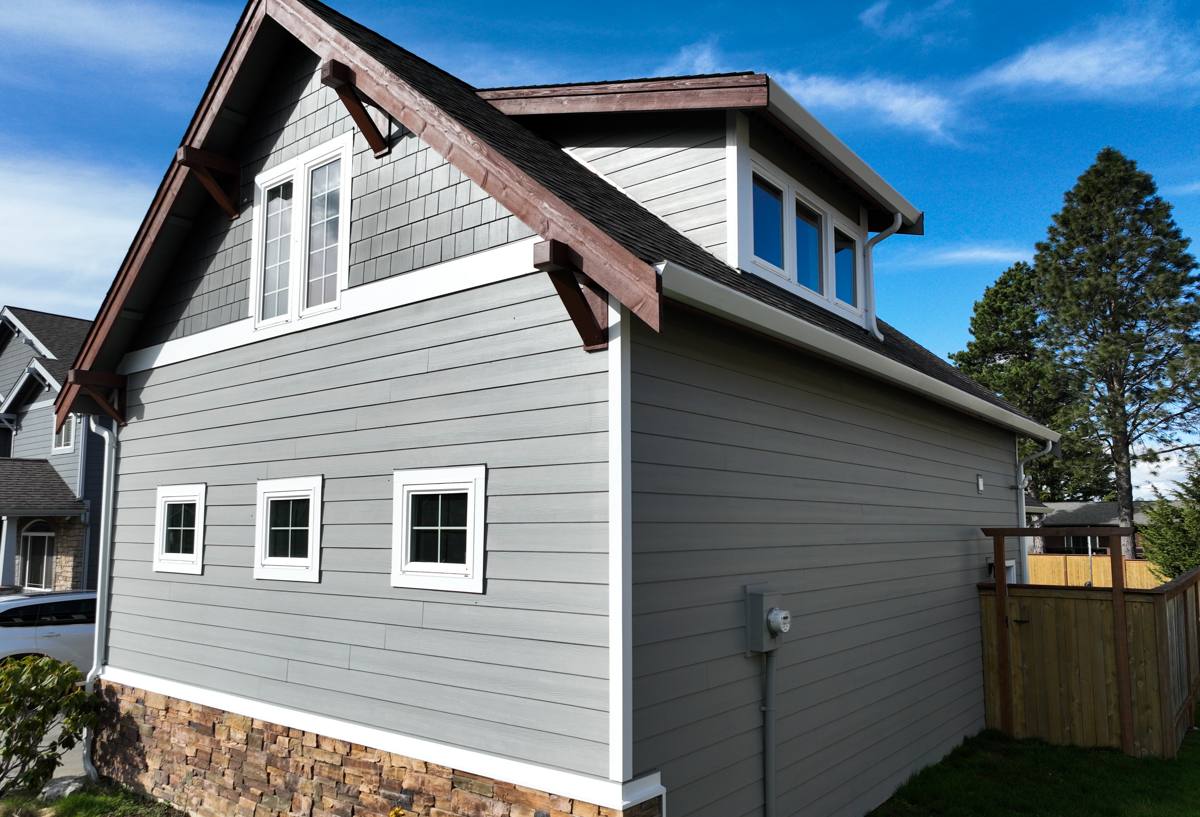
What the Local Climate Does to Siding
Salt Air and Corrosion
Proximity to Puget Sound means airborne salt settles on exterior surfaces, fasteners, and trim more than most homeowners realize. Over years, salt exposure accelerates corrosion on lower-grade fasteners and can degrade certain coatings and finishes faster than manufacturers' general climate ratings assume. It's one of the reasons fastener selection and flashing details matter as much as the siding material itself.
Driving Rain and Wind-Driven Moisture
Storms coming off the water don't just drop rain straight down — wind pushes it sideways into wall assemblies, especially around windows, corners, and anywhere the original construction skimped on flashing. Siding that swells, delaminates, or wicks moisture at the edges turns a manageable rain event into a slow, hidden problem behind the wall.
The Moss Season
Anacortes gets a genuinely long moss and algae season compared to drier parts of the state. Shaded siding, especially on north and east elevations under tree cover, stays damp for extended stretches, which gives organic growth time to establish. Some siding materials handle that dampness fine; others absorb moisture into the substrate itself, which is a very different and more serious problem than a surface stain.
Why We Only Install James Hardie
Homeowners in this neighborhood are often surprised when we tell them we don't offer vinyl, LP SmartSide, Cemplank, Allura, primed spruce, or cedar as installation options. Each of those has legitimate uses and reasonable arguments in its favor — we're not going to pretend otherwise. But after weighing installation sensitivity, long-term moisture behavior, and how each product actually performs in a coastal Skagit County climate over a 15-to-30-year window, we settled on James Hardie fiber cement as the one product we're willing to put our name behind.
What Makes It Different
- Fiber cement is non-combustible, which matters given wildfire smoke seasons have become a regular part of Pacific Northwest summers
- The ColorPlus factory finish is baked on under controlled conditions, rather than field-applied paint that depends on weather at the time of installation
- Hardie's HZ5 product line is engineered specifically for climates with significant moisture exposure — relevant for a neighborhood that sits close to the water
- It doesn't require the recurring caulking, repainting, and moisture-sealing maintenance that wood-based and some engineered wood products need
- The warranty is transferable, which matters to homeowners who may sell within the coverage period
None of this means other products are junk — it means we made a professional call that, for the climate West Anacortes sits in, one product consistently gives homeowners fewer callbacks and less maintenance over the life of the siding. When installed to spec, with correct flashing, fastening, and clearances, it's the product we've seen hold up best against salt air, wind-driven rain, and a long wet season.
How We Approach a West Anacortes Project
Assessment Before Anything Else
Every project starts with a walk-around of the home, looking at elevation exposure, existing moisture damage, moss patterns, trim condition, and how the original siding was flashed around windows and penetrations. In a neighborhood this close to the water, we pay particular attention to lower wall sections and anywhere siding meets grade, deck ledgers, or roof-to-wall transitions — those are the spots that take the most punishment over time.
Installation Details That Actually Matter
Fiber cement siding is only as good as its installation. Correct fastener spacing, proper clearance from grade and roof lines, and properly lapped house wrap and flashing are what keep water out — the siding material itself is only part of the system. We follow Hardie's installation specifications closely because deviating from them is the single most common reason any fiber cement job underperforms, regardless of who made the product.
Working Around Existing Conditions
Older homes in this area sometimes have layers of prior siding, outdated flashing details, or moisture damage hidden behind the current exterior. We don't just install over problems — if we find rot, inadequate flashing, or moisture intrusion during tear-off, we address it before new siding goes up, rather than sealing an existing issue behind a new wall.
Beyond Siding: Roofing, Windows, and Decks
Siding doesn't work in isolation. A roof that's shedding water improperly, windows with failing seals, or a deck ledger that's trapping moisture against the wall can undermine even a well-installed siding job. We handle roofing, window replacement, and deck work alongside siding because the building envelope is one connected system, and treating it that way — rather than patching one component and ignoring the rest — is what actually keeps a West Anacortes home dry through the wet months.
Where These Systems Intersect
Roof overhangs affect how much wind-driven rain hits your siding in the first place. Window flashing has to integrate correctly with the siding around it or you get leaks at the frame regardless of how good the siding is. Deck ledgers attached directly to a wall are a common point of hidden moisture damage if not flashed correctly. Addressing these together, rather than as separate unrelated projects, is part of why a local crew that understands the whole envelope matters more here than in a milder climate.
Comparing Siding Options for This Climate
| Factor | James Hardie Fiber Cement | Vinyl | Untreated Wood / Primed Spruce |
|---|---|---|---|
| Moisture absorption | Very low; engineered for wet climates | Doesn't absorb, but can trap moisture behind panels | Absorbs moisture readily, prone to rot |
| Salt air resistance | Strong with factory finish | Can become brittle over time in coastal exposure | Finish breaks down faster near salt air |
| Maintenance | Periodic washing; no repainting for years | Low maintenance but can crack, fade | Regular repainting and sealing required |
| Fire resistance | Non-combustible | Melts/deforms under heat | Combustible |
| Typical lifespan (Pacific NW) | 30+ years with proper install | 20-30 years, variable | 10-20 years without diligent upkeep |
Cost Factors Homeowners Should Understand
Every West Anacortes home is different, so we don't quote broad numbers without seeing the property, but a few factors consistently drive cost on siding projects in this neighborhood:
- Whether existing siding needs full tear-off versus what condition the sheathing and house wrap are in underneath
- How much trim, window, and corner detail work the home has — more architectural detail means more labor
- The home's exposure to wind and salt air, which can affect fastener and flashing specifications
- Whether hidden moisture damage or rot is discovered once old siding comes off
- Site access — some lots in this area have limited staging space, which affects scheduling and labor
What to Look for in a Local Contractor
Skagit County's coastal microclimate isn't the same as siding a home in Eastern Washington or even inland Puget Sound. A contractor who doesn't regularly work in areas with this level of salt exposure and moss growth may not flash or fasten with those conditions in mind. Ask any contractor bidding your project how they handle moisture management at wall penetrations, what fastener specifications they use, and whether they're a Hardie-certified installer if fiber cement is what you're considering. A crew that's done this work up and down the Anacortes area repeatedly will recognize the failure points specific to this climate faster than one working from a generic playbook.
If you're weighing your options for a West Anacortes home — whether it's full siding replacement or a broader look at your roof, windows, and deck as one system — we're happy to walk the property with you and give an honest read on what your home actually needs. Reach out for a free, no-pressure estimate using the form below.