 Anacortes Siding
 Siding Repair Built for Flounder Bay's Marine Exposure
Flounder Bay sits on the water, and that changes what a siding repair actually needs to accomplish. Homes here don't just deal with ordinary Pacific Northwest rain — they take on salt-laden air off the water, near-constant wind exposure, and long stretches of shade and dampness that keep moss and algae active most of the year. A repair that would hold up fine a few miles inland can fail fast on a home that sits closer to the shoreline, because the underlying causes of the damage are different.
When we get called out to a Flounder Bay property, we're not just patching what's visible. We're looking at why that section of siding failed in the first place, because if the cause isn't addressed, the same spot will be back on our schedule in a year or two.
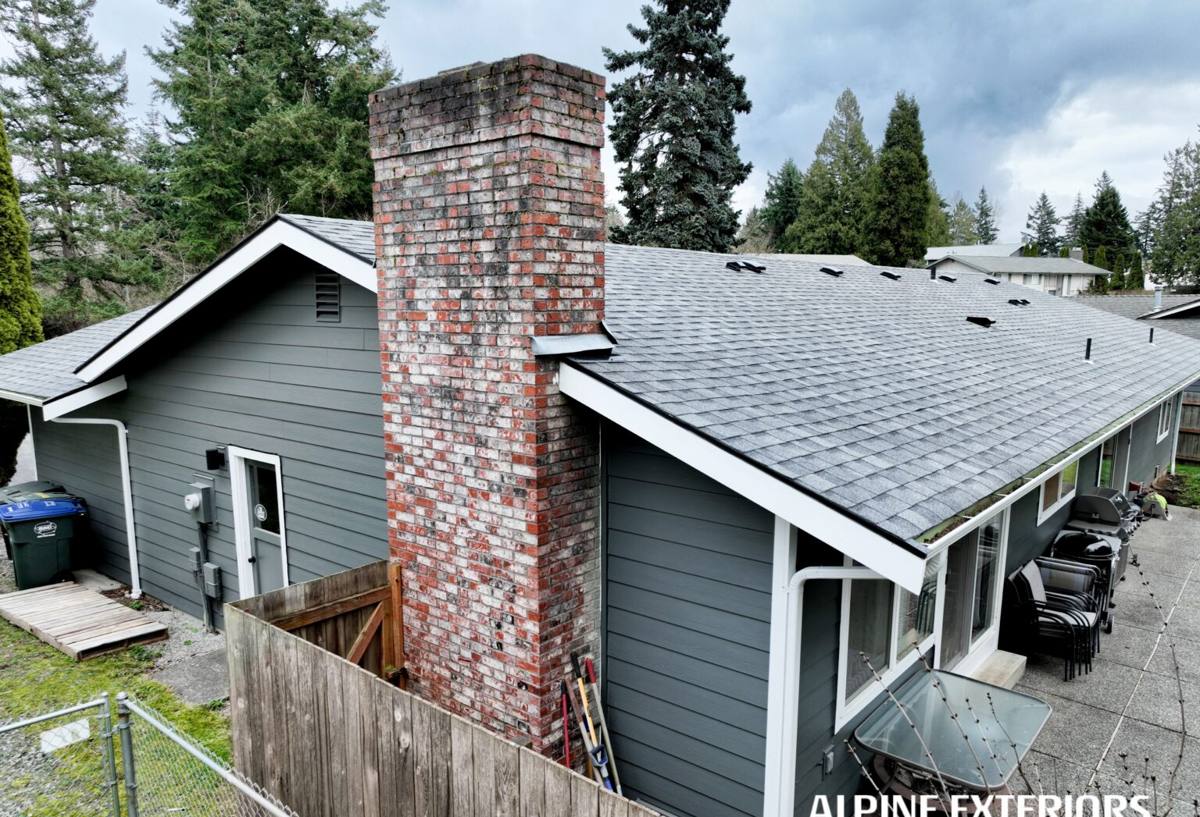
What Anacortes' Climate Does to Siding Over Time
Skagit County's marine climate is mild compared to a lot of the country, which is part of why people love living out here — but "mild" doesn't mean gentle on a house. Three things drive most of the siding repair calls we get in waterfront neighborhoods like Flounder Bay:
Salt Air
Airborne salt from Puget Sound and the surrounding waterways accelerates corrosion on anything metal — fasteners, flashing, trim caps, and hardware. Once a fastener starts to corrode, it can loosen or streak the siding around it, and that's often the first visible sign something's wrong underneath.
Driving Rain
Wind off the water doesn't just bring rain straight down — it drives it sideways into wall assemblies, working moisture into laps, seams, and any gap in the caulking or flashing. Over years, that's how water finds its way behind siding that looks fine from the ground.
A Long Moss Season
Shaded, damp conditions for much of the year let moss and algae take hold on siding surfaces, especially on north-facing walls and anywhere tree cover blocks the sun. Moss holds moisture against the surface far longer than open air would, which is exactly the condition that causes rot in wood-based products and finish breakdown in lower-quality siding.
Signs a Flounder Bay Home Needs Siding Repair
Most homeowners notice a problem well before they know what's causing it. Here's what we typically find when we go out on an inspection in this area:
- Dark streaking or staining below fasteners, trim, or seams — often a sign of corroding hardware or water tracking down from a failed joint
- Soft or spongy spots when you press on the siding, especially near the bottom courses or around window and door trim
- Visible cracking or splitting, particularly after a hard freeze following a wet stretch
- Bubbling, peeling, or chalky paint that keeps coming back no matter how often it's touched up
- Persistent moss or algae growth that returns quickly after cleaning
- Gaps opening up at butt joints, corners, or where siding meets trim, flashing, or the foundation
- A musty smell or visible staining on interior walls that back up to an exterior wall with known siding issues
Any one of these on its own might just need monitoring. Several together, especially near ground level or on a wall that takes direct weather off the water, usually means active moisture intrusion that's worth a proper look before it spreads.
What a Correct Repair Actually Involves
A siding repair isn't just cutting out a damaged board and nailing in a new one. Done right, it's a small construction project with the same attention to water management as a full installation. Here's what we check and address on every repair:
Diagnosing the Real Cause
Before we touch anything, we figure out how water got in — a failed caulk joint, missing or damaged flashing, a fastener that backed out, or a design detail that's been funneling water into one spot for years. Replacing the board without fixing the entry point just delays the next repair.
Checking the Water-Resistive Barrier
Once siding is removed, we inspect the house wrap or building paper behind it. If that barrier is torn, improperly lapped, or missing where it should be doubled up (like inside corners or around penetrations), we repair or replace it before anything goes back up. This layer is what actually keeps a home dry — the siding is the first line of defense, not the only one.
Flashing and Trim Details
Windows, doors, and horizontal trim are common failure points because they interrupt the plane of the wall. We make sure flashing is properly lapped (upper layers over lower layers, always shedding water downward and outward) and that any sealant used is appropriate for the material and exposure, not just a quick bead to make it look finished.
Matching Materials and Fasteners
Mixing incompatible materials or using the wrong fastener for a coastal environment is how new problems get built into an "old" repair. We use fasteners rated for the exposure and, wherever we're patching into James Hardie fiber cement, we match reveal, profile, and factory finish so the repair doesn't stand out as a patch job five years down the road.
Our Repair Process
| Step | What Happens |
|---|---|
| 1. On-site inspection | We walk the exterior, check moisture readings where relevant, and identify every affected area — not just the spot you called about |
| 2. Diagnosis and honest scope | We explain what's causing the damage and give you a straight answer on whether it's a targeted repair or a sign of a larger problem |
| 3. Written estimate | Clear scope, materials, and price before any work starts — no surprise change orders for things we should have caught up front |
| 4. Removal and inspection behind the siding | We check the water-resistive barrier and framing condition before closing anything back up |
| 5. Repair and reinstallation | Proper flashing, correct fasteners, and color/reveal-matched James Hardie material where we're patching into existing siding |
| 6. Final walkthrough | We review the completed work with you and point out anything worth keeping an eye on going forward |
Repair or Replace? Weighing the Real Cost Factors
Not every damaged section needs a full re-side, and we won't push you toward one you don't need. But there's a point where patchwork repairs cost more over time than addressing the whole wall or elevation. Here's how we think through it:
| Factor | Leans Toward Repair | Leans Toward Replacement |
|---|---|---|
| Extent of damage | Isolated to one or two areas | Spread across multiple walls or elevations |
| Age of existing siding | Newer material, otherwise sound | Original siding is decades old or already at end of service life |
| Cause of damage | A single fixable defect (one flashing failure, one damaged board) | Systemic issue — barrier failure, chronic moisture, widespread rot |
| Material match | Can source a close match to existing product | Existing siding is discontinued, faded, or a product we won't warranty a patch into |
| Underlying wall condition | Sheathing and framing are sound | Sheathing shows rot or damage once opened up |
If we open up a wall and find the problem is bigger than what brought us out there, we'll tell you plainly — including if a repair genuinely is the right call and a full replacement would be overkill. That honesty is worth more to a homeowner long-term than always steering toward the bigger job.
Why We Repair With James Hardie Fiber Cement
This company installs and repairs with James Hardie fiber cement exclusively. In a marine environment like Flounder Bay, that's not a brand preference — it's a practical decision. Fiber cement doesn't absorb water the way wood-based products can, it's non-combustible, and Hardie's ColorPlus factory finish is engineered to hold up against UV and moisture exposure far longer than field-applied paint. For repair work specifically, that matters because a patched-in section needs to weather the same as the surrounding material for years, not just look right on installation day.
Hardie's HZ5 product line was engineered for climates with exactly this kind of moisture and freeze-thaw exposure, which lines up well with what a waterfront home in Skagit County actually deals with. When we splice new material into an existing wall, using the same manufacturer's system — same substrate, same finish process — gives you a repair that behaves consistently with what's already there instead of introducing a weak point where two different products meet.
Why Hiring a Crew That Already Works Flounder Bay Matters
Siding repair in a waterfront neighborhood isn't identical to repair work three miles inland, even within the same city. A crew that regularly works Flounder Bay and the surrounding Anacortes waterfront has already seen how wind direction, sun exposure, and proximity to the water play out on specific walls and elevations — which sides of a house take the worst of the driving rain, where moss builds up fastest, and which older repair approaches don't hold up out here.
That local pattern recognition shows up in small but real ways: knowing to check corrosion-prone fastener locations first, not being surprised by what's behind the siding once it's opened up, and setting expectations accurately from the first visit instead of discovering the real scope halfway through the job. It also means showing up prepared for the access and weather-window realities of working on the water, rather than treating every job like it's in a standard subdivision.
A Straightforward Checklist Before You Call Anyone
- Walk your exterior and note any streaking, soft spots, cracking, or persistent moss — write down which walls and roughly how high
- Check for a musty smell or staining on interior walls that back up to those same exterior areas
- Get more than one opinion if a contractor recommends a full replacement without explaining what they found behind the siding
- Ask what water-resistive barrier and flashing work is included in a repair quote — not just the visible siding
- Ask what siding material will be used to patch in, and whether it will be color and reveal matched to your existing siding
- Confirm the contractor is licensed, insured, and familiar with marine/coastal exposure repairs specifically
If you're seeing any of the warning signs above on a Flounder Bay home, it's worth having a local crew take a look before it turns into a bigger repair. We offer free, no-pressure estimates — we'll tell you honestly what we find and what it actually needs, whether that's a targeted repair or something more.