 Anacortes Siding
 Why Decks in Edison Wear Differently Than Decks Inland
Edison sits close to the water, which means homes here deal with a combination of conditions that inland Skagit County properties simply don't face as often. Salt-laden air moves in off the Sound and the bay, driving rain comes in sideways during fall and winter storms, and the long stretch of gray, damp months between October and April keeps every horizontal surface wet far longer than it should be. That combination is hard on wood, hard on fasteners, and hard on anything with a seam or a joint. A deck built the same way you'd build one in a drier part of the state simply won't hold up the same way out here.
None of this means a deck can't last for decades in Edison. It means the repair work has to account for what's actually attacking the structure, not just patch the symptom. That's the difference between a repair that buys you a season or two and one that buys you years.
Signs Your Deck Needs Attention
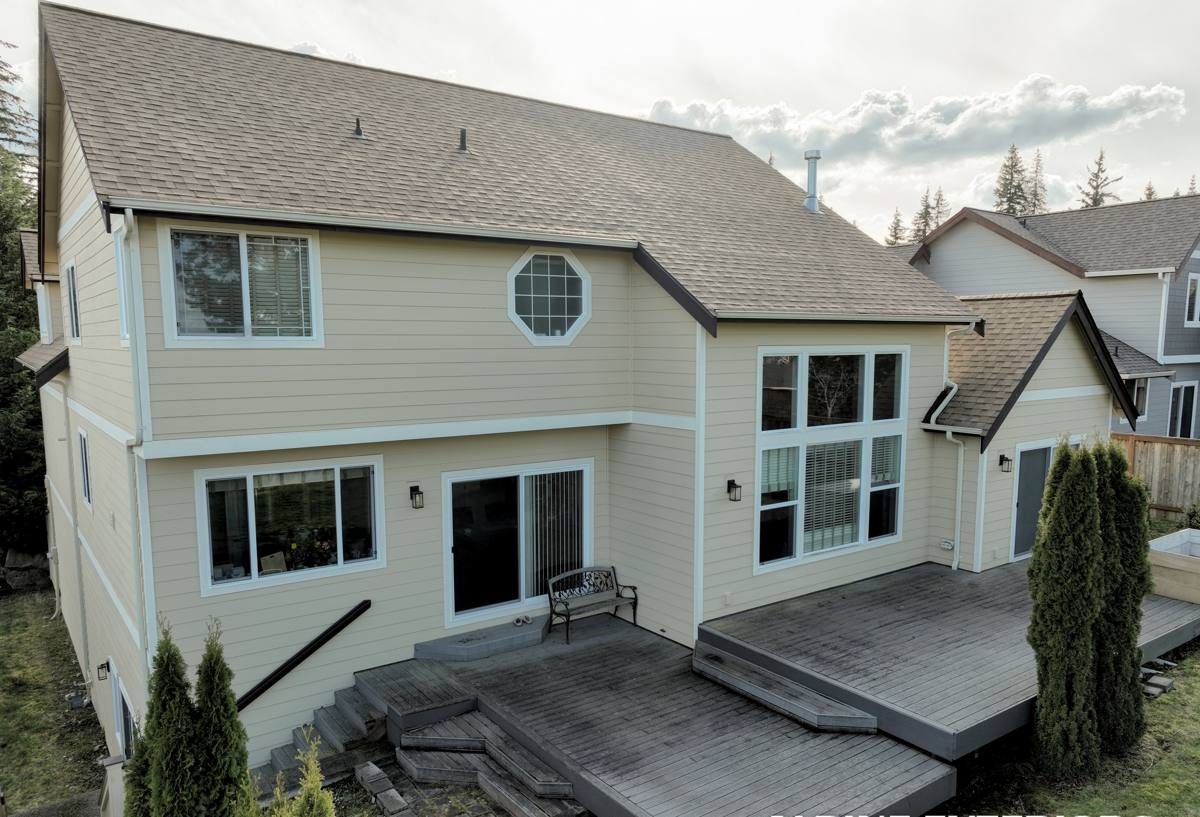
Most deck problems don't show up as one dramatic failure. They show up as small, easy-to-ignore signs that add up over a wet winter or two. Walk your deck and check for these:
- Soft or spongy spots underfoot, especially near the house or at board edges
- Railings or posts that wiggle more than they used to
- Fasteners that have popped up, rusted, or left dark streaking on the boards around them
- Gaps opening up between deck boards, or boards that have started to cup or crown
- Green or black buildup on boards, stair treads, or the underside of the structure that doesn't scrub off easily
- Any separation where the deck's ledger board meets the house — even a hairline gap
- Stairs that feel less solid than the rest of the deck
- Standing water that doesn't drain within an hour or so after rain
Any one of these on its own might be minor. Two or three together, especially involving the ledger board or the framing underneath, usually mean it's worth having someone look at the structure, not just the surface.
Repair or Replace? What We Actually Look At
Homeowners often assume any deck problem means a full teardown. In our experience, that's rarely true — most decks we're called out to in Edison can be repaired if the framing underneath is sound. The decision comes down to a handful of factors:
| Factor | Usually a Repair | Usually a Replacement |
|---|---|---|
| Framing & joists | Solid, no soft spots when probed | Soft, rotted, or previously water-damaged |
| Ledger board connection | Tight to the house, properly flashed | Separating, unflashed, or improperly fastened originally |
| Decking boards | Isolated bad boards, rest is sound | Widespread cupping, splitting, or rot across the deck |
| Age of structure | Under 15-20 years, built to code | Older, undersized framing, or unpermitted original build |
| Railings & posts | Loose but attached to solid wood | Posts rotted at the base or footing |
The honest answer is that we won't know for certain until we get underneath the deck and probe the framing with a screwdriver or moisture meter. A deck can look rough on the surface but be structurally fine, or look fine on top while hiding a rotted ledger connection. That inspection is the first real step of any job we take on.
What a Correct Deck Repair Actually Involves
Structural Framing Comes First
Before anything cosmetic happens, we check the framing — joists, beams, posts, and especially the ledger board where the deck attaches to the house. This is the part of the deck most likely to be hiding water damage, because it's the hardest area for rain to drain away from and the easiest for a homeowner to overlook. If the ledger connection isn't properly flashed to shed water away from the house band board, that gets corrected as part of the repair, not left for next time.
Fasteners and Hardware
In a salt-air environment, the fasteners holding a deck together often fail before the wood does. Standard galvanized screws and nails can corrode faster here than they would twenty miles inland, which shows up as rust streaking, weakened grip, and eventually popped fastener heads. Any repair we do uses hardware rated for coastal exposure — stainless steel or high-grade coated fasteners and structural connectors — because replacing a board with the wrong screws just means doing the job again in a few years.
Decking Boards and Railings
Individual boards that are cupped, split, or soft get pulled and replaced rather than flipped or patched — flipping a board just puts the damaged face down where you can't see it fail. Railings and posts get the same scrutiny: a railing that wobbles is often a symptom of a rotted post base, not a loose bolt, and we'll tell you which one it actually is before we fix it.
Material Choices That Make Sense for This Climate
We get asked often whether wood or composite decking is the "right" choice for a repair. Both have a place, and the honest answer depends on what you're trying to solve.
Pressure-treated lumber is the most common decking material in this region and, when properly maintained, holds up well. Its trade-off is that it needs periodic sealing or staining to shed the moisture it sees for roughly half the year — skip that maintenance in a wet climate like this and boards will cup and gray faster than they would somewhere drier.
Composite decking costs more upfront and doesn't need annual sealing, which appeals to a lot of homeowners tired of the maintenance cycle. Our professional standard here is that composite still needs a well-ventilated, properly sloped substructure underneath — composite boards resist rot themselves, but the framing under them doesn't, and trapped moisture under composite decking can hide a problem longer before it's noticed. We won't install composite over framing that isn't set up to drain and breathe correctly, because that trades a visible maintenance chore for an invisible one.
For a repair rather than a full rebuild, we'll often match your existing material so the fix blends in and the whole deck ages consistently, unless the existing material is part of what's failing.
Our Repair Process
- On-site inspection. We walk the deck, probe the framing, check the ledger connection, and identify exactly what's failing and why — not just what's visible.
- Honest assessment. You get a plain explanation of what needs to happen: repair scope, what it won't fix, and whether replacement makes more sense for any section.
- Written estimate. Clear pricing before any work starts, broken out by what's being repaired.
- Framing and structural repair. Any compromised joists, ledger flashing, or posts get corrected first — this is the part that actually determines how long the repair lasts.
- Decking, railings, and hardware. Boards and railing components are replaced with coastal-rated fasteners and connectors.
- Final walkthrough. We check the deck with you before calling the job done, including drainage and any spots that need ongoing attention.
Why a Crew That Already Works in Edison Matters
A lot of deck problems in this area trace back to a structure that was built to a generic spec rather than for the conditions it actually sits in. A crew that regularly works Edison and the surrounding Skagit County waterfront knows to check the ledger flashing first, knows which fasteners hold up and which ones don't, and knows that a deck here needs a drainage plan for standing water in a way a deck in a drier climate doesn't. That's not something you can fully substitute with a generic checklist — it comes from having repaired enough decks in this specific environment to know where they actually fail.
We also know the practical side: what Skagit County generally expects for permitting on structural deck work, and how to build a repair that won't need to be redone the first time an inspector or a future buyer's inspection looks closely at the framing.
Keeping a Repaired Deck Sound Going Forward
A good repair extends the life of a deck, but the same conditions that caused the original problem are still there year-round. A few habits make a real difference:
- Sweep debris and standing leaves off the deck before the wet season settles in — trapped organic matter holds moisture and feeds moss growth
- Rinse off algae and moss buildup before it gets a foothold, rather than after boards have already started to stain or soften
- Check the ledger board area once a year for any new gap or dark staining
- Re-seal or re-stain wood decking on the schedule the product calls for — skipping a cycle in this climate costs more than it saves
- Make sure gutters and downspouts near the deck aren't dumping extra water onto it
None of this requires special equipment or a big time investment — it's the difference between a deck that needs minor attention every few years and one that needs a major repair sooner than it should.
Get an Honest Look at Your Deck
If your deck has a soft spot, a wobbly railing, or you're just not sure whether it needs a repair or a full rebuild, we're glad to come take a look. The estimate is free, there's no pressure attached to it, and you'll get a straight answer about what's actually going on underneath — use the form below to get started.