 Anacortes Siding
 Siding Repair Built for Similk Beach's Shoreline Exposure
Homes along Similk Beach sit closer to open water than most of Anacortes, and that changes what siding has to survive day to day. Wind carries salt spray off Similk Bay and Skagit Bay onto exterior walls, driving rain hits the west- and south-facing elevations at an angle instead of straight down, and the tree cover common on this part of Fidalgo Island keeps shaded wall sections damp long after a storm has passed. None of that is dramatic on its own, but stacked together over years, it is exactly the combination that finds every weak point in a siding system — a gap at a butt joint, a cracked caulk line, a fastener that backed out a sixteenth of an inch.
Siding repair in a location like this is not just patching a hole. It is diagnosing why that spot failed while the rest of the wall held up, and fixing the actual cause so the repair lasts as long as the siding around it.
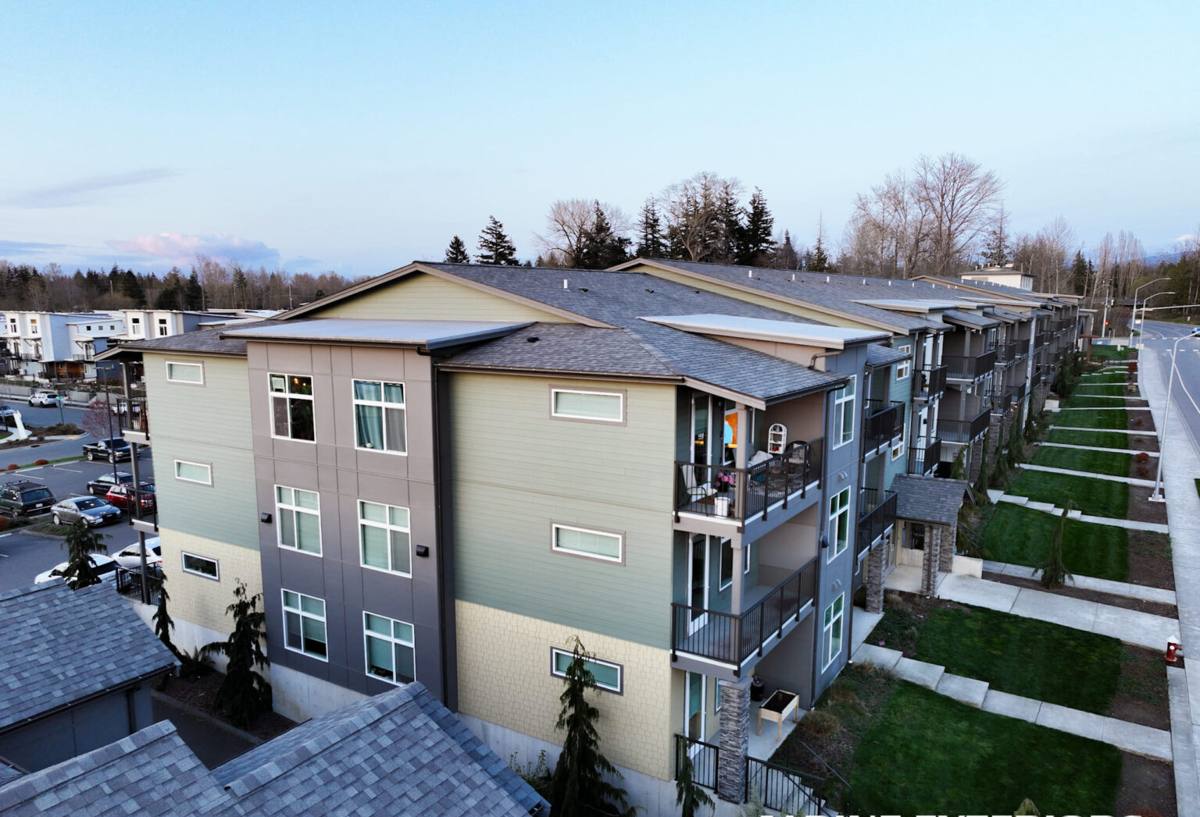
What Salt Air, Rain, and Moss Actually Do to Siding
Salt Air
Airborne salt is corrosive to exposed metal — nail heads, flashing edges, trim fasteners — and it accelerates the breakdown of caulking and paint film faster than inland exposure does. On wood-based and engineered wood products, salt-laden moisture also speeds up fiber swelling at any point where the factory coating has been compromised.
Wind-Driven Rain
Water blown sideways during a Pacific storm doesn't behave like water falling straight down. It gets pushed up under laps, into seams, and behind trim that would stay dry in a calmer climate. Siding systems rely on proper lap spacing, flashing, and house wrap detailing to manage that — and any shortcut taken during the original installation shows up here first.
Moss and Sustained Moisture
Skagit County's long wet season, combined with shaded, low-airflow wall areas common near mature trees, gives moss and algae months at a time to establish on siding surfaces. Beyond the cosmetic staining, moss holds moisture directly against the cladding, which is a problem for any material that isn't fully engineered to resist it.
Signs a Similk Beach Home Needs Siding Repair
Most siding failure is quiet at first. By the time it's obvious from the driveway, moisture has usually been getting behind the cladding for a while. Homeowners in this area should watch for:
- Soft or spongy spots when you press on a wall section, especially near the bottom courses
- Visible cracking, buckling, or separation at panel seams and butt joints
- Paint or finish that's bubbling, peeling, or chalking unevenly across the wall
- Dark streaking, green film, or moss growth concentrated on shaded or north-facing walls
- Nail heads that have backed out, popped through the finish, or show rust staining
- Gaps opening up around window and door trim
- A musty smell near an exterior wall inside the house — often the first real warning sign
What a Correct Siding Repair Actually Involves
A repair that's done right starts before anyone touches the siding itself.
1. Find the Water Path, Not Just the Damage
Cracked or stained siding is a symptom. The repair has to trace where water is actually getting in — a failed flashing detail, a gap in the house wrap, a caulk joint that opened up — because replacing the visible board without addressing that path just buys a few more years before the same spot fails again.
2. Check What's Behind the Cladding
Once siding is pulled back, the house wrap, sheathing, and framing underneath need a real look. If moisture has been getting in for a while, there can be soft sheathing or early rot that has to be dealt with before new siding goes back on — patching over a compromised substrate is how small repairs turn into bigger problems two winters later.
3. Match Material and Finish Correctly
A patch that doesn't match the surrounding siding in profile, exposure, and finish stands out and can also perform differently in weather. This matters more with a factory-finished product, where matching the coating batch and color is part of doing the repair properly.
4. Reinstall to Manufacturer Spec
Fastener spacing, lap dimensions, clearance from grade and roof lines, and joint treatment all affect how well a repaired section resists wind-driven rain going forward. A repair that skips these details to save time is really just deferring the next repair.
Repair or Replace? How We Help Similk Beach Homeowners Decide
Not every problem area means the whole house needs new siding, and not every "small crack" is actually small once you're behind the wall. The honest answer depends on how much of the wall system is affected and what's causing it.
| Situation | Typical Cause | Usual Recommendation |
|---|---|---|
| Isolated cracking or impact damage on a few boards | Physical damage, settling, or a single failed fastener | Targeted repair with matched material |
| Moss and staining with siding still solid underneath | Shade, low airflow, wet season buildup | Clean, treat, repair caulk/finish as needed |
| Soft spots or damage clustered around one elevation | Localized flashing or house wrap failure | Section repair including underlying wrap/flashing fix |
| Widespread cracking, buckling, or soft sheathing across multiple walls | Systemic moisture intrusion or original installation issues | Full or majority replacement |
| Siding is original, aging, and repairs keep recurring | Material nearing end of service life | Replacement is usually more cost-effective long term |
We'll tell you plainly which category your home falls into rather than defaulting to the bigger job.
Our Siding Repair Process
- On-site inspection. We look at the damaged area and the wall system behind it, not just the surface.
- Written scope and estimate. You get a clear explanation of what's causing the damage and what fixing it involves — no vague line items.
- Removal and substrate check. Affected siding comes off, and we assess sheathing, house wrap, and flashing before anything goes back on.
- Correct rebuild. Any compromised material underneath gets addressed first, then new siding is installed to manufacturer spec with proper flashing and joint detailing.
- Finish match and cleanup. Repaired sections are matched as closely as possible to the surrounding siding, and the site is left clean.
Why We Only Repair With James Hardie Fiber Cement
Homeowners sometimes ask us to patch a damaged section using whatever siding is already on the house — vinyl, LP SmartSide, cedar, or primed spruce. We don't do that, and it's worth explaining why rather than just saying no.
Repairs on those materials are fighting the same weaknesses that likely caused the damage in the first place: vinyl flexes and cracks with temperature swings and impact, engineered wood products depend on an unbroken factory seal that's easy to compromise during a repair cut, and untreated wood species need ongoing maintenance to resist the moisture this climate produces for months at a time. A repair is only as good as the material it's made from, and patching a moisture-prone product in a high-moisture environment is a short-term fix at best.
James Hardie fiber cement is what we install instead — for full jobs and, where it's structurally sound to integrate, for repair sections. It's non-combustible, dimensionally stable, and engineered specifically for wet climates through Hardie's HZ5 product line, which is built for regions with sustained moisture exposure like Western Washington. The ColorPlus factory finish resists fading and chipping far better than field-applied paint, and Hardie backs it with a strong transferable warranty. When we repair a Hardie-sided home, we're not fighting the material — we're working with something engineered for exactly this environment.
What Happens If Siding Repairs Get Put Off
Deferred siding repair rarely stays a small problem. Water that's getting behind cladding continues to work on the sheathing and framing whether or not anyone is looking at it, and in a climate that stays wet for much of the year, that damage compounds faster than in drier regions. A repair that would have cost a modest amount addressed early can turn into sheathing replacement, insulation replacement, or interior drywall repair if it's left through another wet season. Catching it early is almost always the cheaper path.
Why Hiring a Crew That Already Works in Similk Beach Matters
Siding repair isn't identical everywhere. A contractor who mostly works drier, inland areas may not instinctively account for the wind-driven rain patterns or moss-prone shade conditions that shape how siding fails near the water in Anacortes. A crew that regularly works this part of Skagit County already knows which elevations tend to take the worst weather, what moss buildup usually means for the wall underneath, and how to detail flashing so a repair actually holds up through the next wet season rather than reopening the same problem. That local pattern recognition is part of what makes a repair last.
If you're seeing cracking, staining, soft spots, or moss buildup on your siding, we'll come take a straightforward look and give you a free, no-pressure estimate — including an honest answer on whether it's a repair or something bigger.