 Anacortes Siding
 Siding in Conway: Built for Skagit County's Wet, Salt-Touched Climate
Conway sits in the low-lying delta country of Skagit County, close enough to Skagit Bay and the Skagit River to feel the effects of both salt air and standing moisture for much of the year. Homes here deal with a combination that's tougher on exterior materials than most inland Washington towns ever see: near-constant humidity, driving rain off the water, and a moss and algae season that can stretch from fall through spring. If you own a home in or around Conway, your siding isn't just cosmetic — it's the first line of defense against a climate that never really dries out.
Anacortes Siding Replacement serves Conway as part of our regular Skagit County service area. We're not a national franchise dispatching a different crew every visit — we're a local operation that understands what this specific stretch of low country does to wood, vinyl, and cheaper fiber cement products over time. That local knowledge shapes every recommendation we make, starting with the fact that we install only one brand of siding.
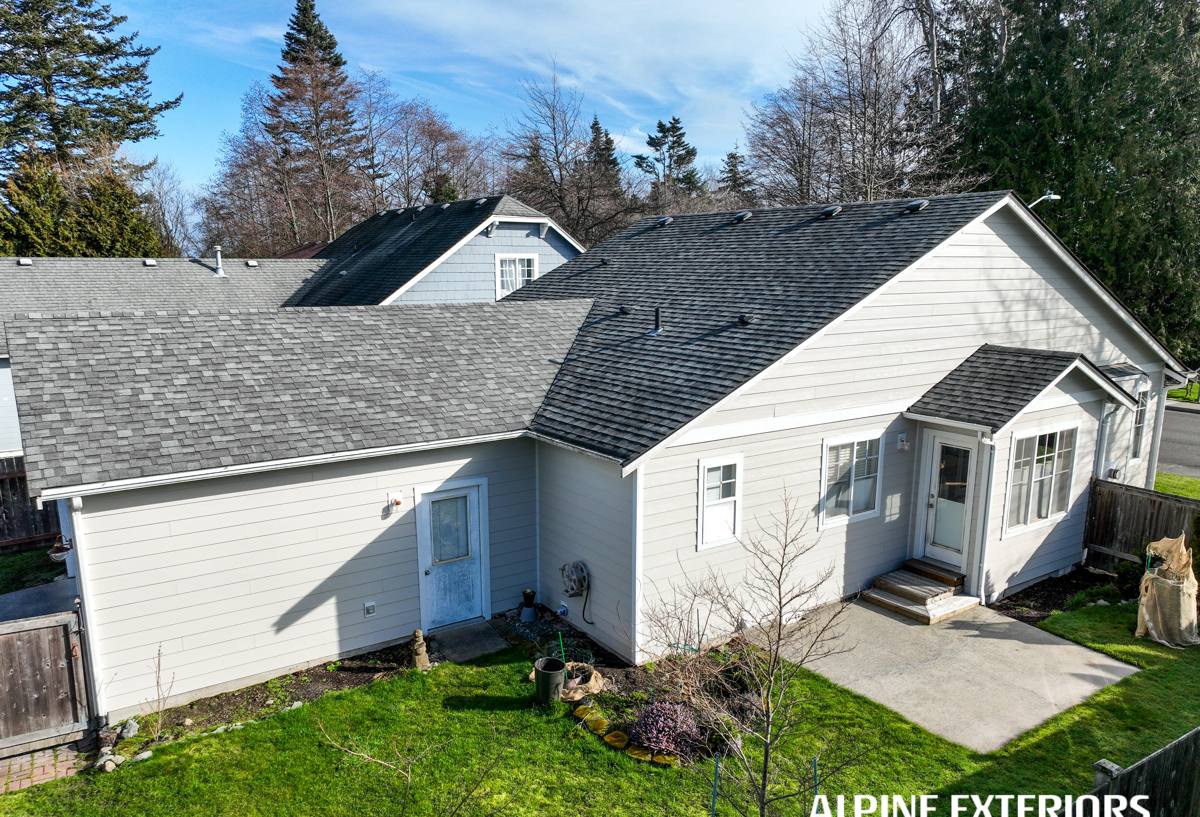
What Conway's Climate Actually Does to a House
Salt Air and Corrosion
Proximity to Skagit Bay means airborne salt reaches Conway homes more than most people expect, even several miles inland. Salt-laden moisture accelerates corrosion on fasteners, flashing, and any exposed metal trim. It also breaks down cheaper paint films and caulking faster than a dry-climate product ever anticipated in its design life.
Driving Rain and Wind-Driven Moisture
Storms moving through this part of the county often bring rain sideways, not straight down. That means water gets forced into joints, laps, and seams that a calmer climate would never test. Siding systems with weak seams, poor caulking joints, or moisture-sensitive cores are the ones that fail first under this kind of exposure.
Moss, Algae, and the Long Wet Season
Between the river lowlands and the marine air, Conway rarely gets a long enough dry stretch to fully shed moisture from siding surfaces. That's exactly the environment moss and algae need. On wood-based or fiber-composite products with absorbent cores, sustained dampness isn't just a cosmetic staining issue — it's an entry point for swelling, delamination, and eventual rot.
Why We Only Install James Hardie Fiber Cement
We get asked regularly why we don't offer vinyl, LP SmartSide, cedar, or other fiber cement brands like Cemplank or Allura. The honest answer is that we made a standard based on what actually holds up in this climate over decades, not what's cheapest to install or easiest to sell.
- Non-combustible core: James Hardie fiber cement doesn't burn, warp, or ignite from embers — a meaningful advantage as wildfire smoke seasons have become more common across Washington.
- Engineered for wet marine climates: Hardie's HZ5 product line is specifically engineered for regions with high moisture exposure, which describes Conway almost exactly.
- ColorPlus factory finish: A baked-on finish applied under controlled conditions resists fading and chalking far longer than field-applied paint, and it isn't dependent on the weather conditions on installation day.
- Dimensional stability: Fiber cement doesn't expand and contract with humidity the way wood-based products do, which means fewer cracked caulk joints and less nail popping over time.
- Transferable warranty: A strong, transferable warranty backing the product matters to homeowners who may sell within the warranty period — it protects resale value, not just the original owner.
Vinyl siding is inexpensive and low-maintenance in the sense that it doesn't need painting, but it's also a thin, flexible material that can warp under close-up west-facing sun exposure and doesn't offer the fire resistance or rigidity of fiber cement. LP SmartSide and other wood-strand products perform reasonably in drier regions, but their engineered-wood core is more vulnerable to sustained moisture exposure than a true cement-based product — and sustained moisture is Conway's default condition for much of the year. Cedar is a beautiful, traditional choice, but it demands a maintenance commitment — regular refinishing, sealing, and vigilance against rot — that most homeowners underestimate until they're several years in. We'd rather put a product on your home that we know will still look right in fifteen years than sell you something that looks great on day one.
How a Siding Project Works for Conway Homeowners
1. Inspection and Assessment
We start by walking the exterior, checking for signs of moisture intrusion, rot at trim and corners, failing caulk joints, and any areas where water has clearly been pooling or wicking. On a rural or semi-rural property, we also look closely at ground clearance and drainage around the foundation, since Conway's flat, low-lying terrain doesn't always drain away from a house on its own.
2. Addressing What's Underneath
Siding is only as good as what's behind it. If we find compromised sheathing, inadequate house wrap, or flashing that's been letting water in for years, we address that before a single new panel goes up. Installing new siding over hidden rot just hides the problem for another season.
3. Installation to Manufacturer Spec
James Hardie's product performance depends heavily on correct installation — proper nailing patterns, clearances, joint treatment, and caulking. We install to the manufacturer's specification, not a shortcut version, because that's what keeps the warranty valid and the product performing the way it's engineered to.
4. Cleanup and Walkthrough
We finish with a full site cleanup and a walkthrough so you know exactly what was done and what to expect going forward.
Beyond Siding: Roofing, Windows, and Decks
Siding rarely fails in isolation. A leaking roof, a failed window seal, or a rotting deck ledger board often shows up first as a siding problem, because water finds the path of least resistance and that path frequently runs down behind the exterior cladding. Because we handle roofing, windows, and decks in addition to siding, we can look at your home's whole exterior envelope at once rather than patching one system while ignoring the ones connected to it.
For Conway homes specifically, that matters more than usual. Roof-to-wall flashing details, window head flashing, and deck ledger connections are all common points where wind-driven rain finds a way in. A crew that only does siding might replace the cladding and never notice the roof flashing that's actually causing the damage underneath.
Comparing Siding Options for a Conway Home
| Factor | Vinyl | LP SmartSide / Wood-Based | Cedar | James Hardie Fiber Cement |
|---|---|---|---|---|
| Moisture resistance in marine climate | Moderate | Lower — absorbent core | Lower — needs upkeep | High — engineered for wet climates |
| Fire resistance | Low — melts/warps | Low — combustible | Low — combustible | High — non-combustible |
| Maintenance | Low, but limited repair options | Moderate to high | High — regular refinishing | Low — factory-cured finish |
| Typical lifespan with proper install | 20-30 years | 15-25 years | Varies widely with upkeep | 30+ years |
| Salt air / coastal durability | Fair | Fair to poor | Fair with upkeep | Strong |
Cost Factors for Siding Replacement
Every home is different, but a few factors consistently drive the scope and cost of a siding project in this area:
- Total square footage and the number of stories
- Amount of trim, corner detail, and architectural complexity
- Condition of the existing sheathing and house wrap underneath
- Extent of any hidden moisture or rot damage found during tear-off
- Siding profile and Hardie color/finish selection
- Site access, especially on rural Conway lots with longer driveways or limited staging space
We won't quote a number sight unseen, and we're wary of any contractor who does. A real estimate comes after an actual look at your home.
What to Ask Before Hiring an Exterior Contractor
- Are you licensed and insured to work in Washington, and can you provide proof?
- Who is the manufacturer-certified installer on my project specifically?
- What does your workmanship warranty cover, separate from the manufacturer's product warranty?
- Will you address any rot or moisture damage found during tear-off, or just cover it up?
- Can you walk me through your installation process step by step?
A local crew that's worked throughout Skagit County — not just in denser parts of Anacortes but in outlying areas like Conway — will have direct experience with the drainage, wind, and moisture patterns specific to this stretch of the county. That's not something a crew from outside the region picks up quickly.
Why Local Matters for Conway Homeowners
Conway is smaller and more spread out than Anacortes proper, and that changes what homeowners need from a contractor. You want a crew that shows up when scheduled, understands rural site access, and isn't going to disappear if a warranty question comes up two years down the road. We service this whole corner of Skagit County regularly, which means we're not learning the area's climate quirks on your project — we already know them.
If your current siding is showing chalking, cracking, soft spots, or persistent moss growth that pressure washing won't fully clear, that's usually a sign the material underneath is starting to lose the fight against the climate. Catching it early keeps a siding issue from becoming a structural one.
If you'd like a straightforward look at your home's exterior — siding, roof, windows, or deck — we're happy to come out for a free, no-pressure estimate and walk you through exactly what we see and what your options are.