 Anacortes Siding
 Siding Built for Skyline's Exposed, View-Facing Lots
Skyline sits up and out — elevated above the flatter parts of Anacortes, with many homes oriented to take in open water and mountain views. That same exposure that makes the views worth having also means the siding on these homes works harder than siding on a sheltered, tree-lined lot across town. Wind off the water hits these facades with less to slow it down, salt-laden air settles on siding and trim year-round, and the long Pacific Northwest wet season keeps walls damp for weeks at a stretch. Siding replacement here isn't a cosmetic project — it's a decision about what's going to hold up against that exposure for the next several decades.
This page covers what Skyline homes specifically need from a siding replacement, what a correct installation involves, how we run the job, and why it matters that the crew doing the work already understands this neighborhood's conditions.
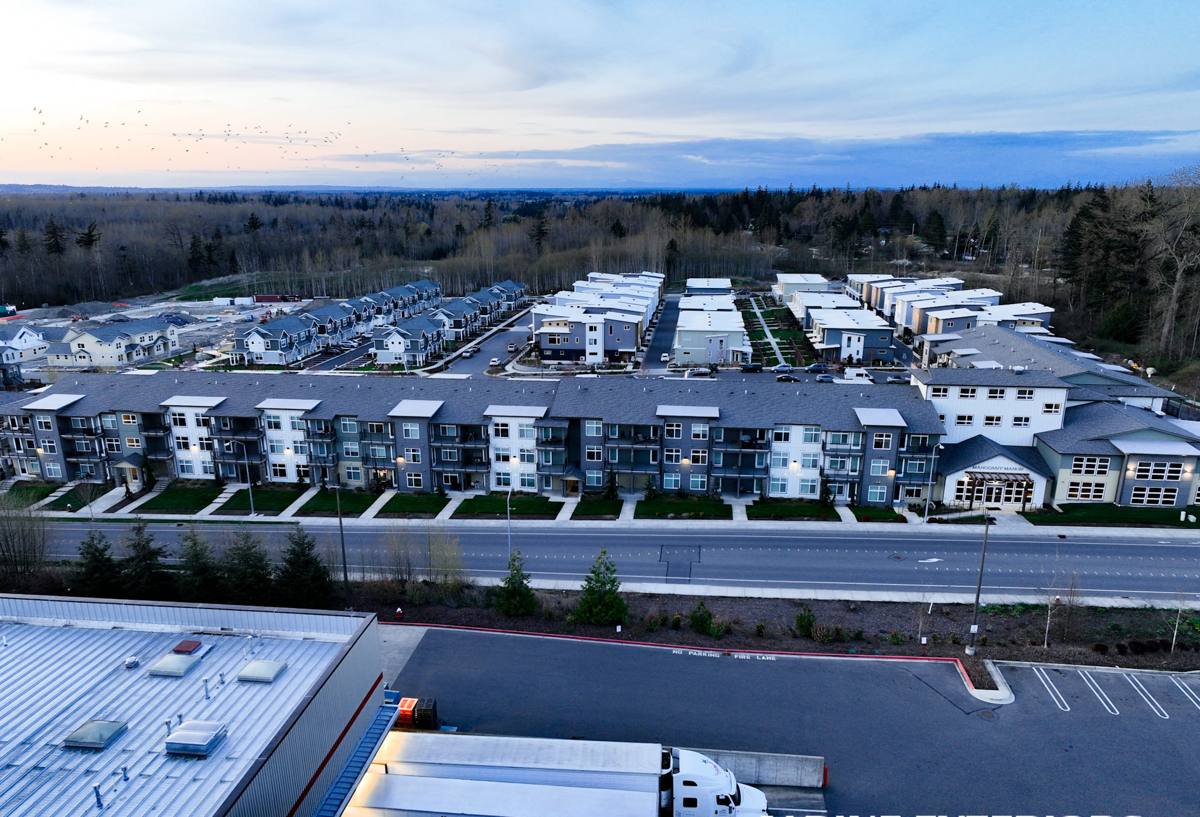
What Anacortes' Marine Climate Does to Siding on Elevated Lots
Salt Air and Corrosion
Being this close to the water means airborne salt is a constant, low-grade presence — settling on siding surfaces, working into fastener heads, and accelerating corrosion on anything not rated for it. On an exposed, elevated lot like the ones common in Skyline, that salt exposure is generally higher than it is for homes set back or shielded by tree cover. Over years, this shows up as rust streaking at nail heads, pitted or corroded trim fasteners, and premature failure of paint films that weren't built to handle it.
Wind-Driven Rain at Elevation
Skagit County gets plenty of straight-down rain, but the more damaging pattern for siding is wind-driven rain — rain pushed sideways into a wall assembly under pressure. Elevated, view-facing homes catch more of this than sheltered ones, because there's less terrain and fewer structures to break the wind before it reaches the house. Wind-driven rain finds every gap in flashing, every under-caulked joint, and every place where the water-resistive barrier wasn't lapped correctly. On a standard lot this might cause a slow, minor problem. On an exposed Skyline lot, a small installation flaw gets tested constantly and fails faster.
Moss and Algae Season
Western Washington's long, mild, wet stretch from fall through spring is prime moss and algae season, and siding that stays damp for extended periods gives both a place to take hold. Shaded or north-facing walls, and any siding with a surface that holds moisture rather than shedding it, are the first to show green-black staining. This is partly cosmetic, but sustained moss growth also holds moisture against the siding surface, which is exactly the condition that shortens the life of a wall assembly.
Signs Your Skyline Home's Siding Is Overdue for Replacement
Not every siding problem calls for full replacement — some are fixable with repair or repainting. But certain signs point to a wall assembly that's past patching and into replace-it territory:
- Persistent moss, algae, or dark staining that returns within months of cleaning
- Cracked, warped, or bowed siding panels or lap boards, especially on wind-exposed walls
- Paint that's peeling, bubbling, or chalking heavily rather than just fading
- Soft or spongy spots when you press on the siding, a sign of moisture damage underneath
- Visible gaps at seams, corners, or around windows and doors
- Rust streaking from fastener heads or corroded trim pieces
- Rising heating bills with no other obvious cause, suggesting a compromised weather barrier
- Siding that's original to a home built more than 20-25 years ago, particularly wood or older composite products
If you're seeing two or more of these, it's worth having the wall assembly looked at — not just the siding surface, but what's behind it.
What a Correct Siding Replacement Actually Involves
Siding replacement done right is a system, not a swap. Skipping any layer of that system is where most premature failures come from, and it's especially unforgiving on a lot that catches this much wind and rain.
Tear-Off and What It Reveals
Full tear-off is the only way to actually see the sheathing, framing, and existing weather barrier. This is when we find out whether there's hidden rot, whether prior flashing was installed correctly, and whether the sheathing itself needs repair before anything new goes back on. Covering over existing problems with new siding just delays the failure and hides it deeper.
Sheathing Repair
Any damaged or rotted sheathing gets cut out and replaced before the weather barrier goes on. This step gets skipped by lower-bid contractors because it adds time and material cost — but installing new siding over compromised sheathing means the new siding is fighting a losing battle from day one.
Weather-Resistive Barrier and Flashing
A correctly lapped weather-resistive barrier, paired with proper flashing at every window, door, and horizontal transition, is what actually keeps wind-driven rain out of the wall assembly. Kick-out flashing where rooflines meet walls, head flashing above openings, and correctly lapped barrier seams matter more on an exposed elevated lot than almost anywhere else in the county, because that's exactly where wind-driven rain concentrates its pressure.
Drainage and Ventilation
Modern siding installation should include a drainage gap or rainscreen approach that lets any moisture that does get behind the siding drain and dry out, rather than sitting trapped against the sheathing. This is one of the most meaningful upgrades over how homes were often built decades ago, and it directly addresses the damp, moss-prone conditions common here.
Fasteners and Finish
Corrosion-resistant fasteners, installed at the manufacturer's specified pattern and depth, matter in a salt-air environment in a way they simply don't a few hundred miles inland. Fastener choice and placement is one of the most common places we see prior installations cut corners.
Our Siding Replacement Process, Start to Finish
- Assessment — We walk the home, check the current siding and visible trouble spots, and talk through what you're seeing and what you want out of the replacement.
- Tear-off — Old siding comes off down to the sheathing so we can see the actual condition of the wall assembly.
- Sheathing repair — Any rot or damage gets cut out and replaced before we move forward.
- Weather barrier and flashing — New barrier goes on correctly lapped, with flashing detailed at every window, door, and transition.
- Hardie installation — Siding goes on to manufacturer specification: correct fastener pattern, clearances, and joint treatment.
- Trim and finish — Trim, corners, and finish details are completed to match the home's design.
- Cleanup and walkthrough — Site is cleared of debris and we walk the finished work with you before calling the job done.
Why We Install Only James Hardie Fiber Cement
We standardized on James Hardie fiber cement siding across every job we do, and Skyline's conditions are a good illustration of why. Fiber cement is non-combustible, doesn't feed moss and algae the way some organic-based siding materials can, and holds up to sustained damp exposure far better than wood-based products. Hardie's ColorPlus factory finish is baked on under controlled conditions, which gives it better fade and wear resistance against constant wind and salt exposure than field-applied paint typically achieves.
Hardie also builds specific product lines engineered for different moisture climates, including versions built for the wetter, harsher conditions found in coastal and marine environments like ours. That's a meaningful distinction for an exposed Skyline lot versus a sheltered inland one, and it's part of why we spec siding by the home's actual exposure rather than treating every job the same.
We don't install vinyl, LP SmartSide, primed wood, or cedar. That's a deliberate standard, not a lack of options — we've chosen to put one product system on every home we work on because we can stand behind how it performs here, warranty it properly, and install it to a consistent spec every time.
What Affects the Cost of a Skyline Siding Replacement
| Factor | Why It Matters |
|---|---|
| Home size and wall complexity | More square footage and more corners, gables, and transitions mean more material and labor |
| Sheathing condition | Hidden rot found at tear-off adds repair work not visible from a curb estimate |
| Siding profile and trim detail | Lap width, panel style, and trim complexity affect both material and install time |
| Height and access | Multi-story or steep-lot homes, common on elevated Skyline properties, need more scaffolding and staging |
| Color and finish | Factory-finished ColorPlus options versus field-painted trim carry different costs |
| Existing damage | Moisture damage behind old siding, if present, needs to be repaired before new siding goes on |
Every one of these varies by home, which is why we walk the property before giving a real number rather than quoting off square footage alone.
Why Hiring a Crew That Already Works Skyline Matters
A contractor who's already worked on elevated, view-facing homes in this neighborhood understands things a crew coming in cold doesn't: how much harder the wind and rain hit these walls compared to a sheltered lot, how steep driveways and tighter staging areas change how equipment gets set up, and what permitting through the City of Anacortes and Skagit County actually requires for a project like this. That familiarity shows up in fewer surprises, better sequencing around weather windows, and a crew that isn't guessing at how to detail flashing for this specific kind of exposure.
It also matters for accountability. A local crew with an ongoing presence in Anacortes has a reputation to maintain in this community — that's a different incentive than an out-of-area outfit that won't be back this way again.
If your Skyline home's siding is showing its age, or you just want an honest read on what condition your walls are really in, we're glad to come take a look. The estimate is free, there's no pressure, and you'll get a straight answer about what your home actually needs — just fill out the form below to get started.