 Anacortes Siding
 Why Fidalgo Island Roofs Wear Out Differently
A roof on Fidalgo Island doesn't age the same way a roof does thirty miles inland. Homes here sit close enough to saltwater that airborne salt settles on shingles, flashing, and fasteners year-round, quietly accelerating corrosion on anything metal that isn't rated for it. Add in the driving, wind-blown rain that comes off the water during fall and winter storms, and you get moisture pushed sideways into laps and seams that a roof built for calmer weather was never designed to handle. Then there's the long moss season — Skagit County's mild, wet winters give moss and algae months to establish themselves on north-facing slopes and shaded valleys, and once they take hold they hold water against the roofing material long after the rain has stopped.
None of this means a roof on Fidalgo Island needs to be exotic or overbuilt. It means the details — underlayment choice, fastener material, ventilation, and flashing work — have to be right for this specific environment. A roof replacement done to a generic spec will often look fine for a few years and then fail early in exactly the ways a marine climate roof tends to fail: rusted fasteners, lifted shingle tabs, moss-driven granule loss, and soft decking at the eaves.
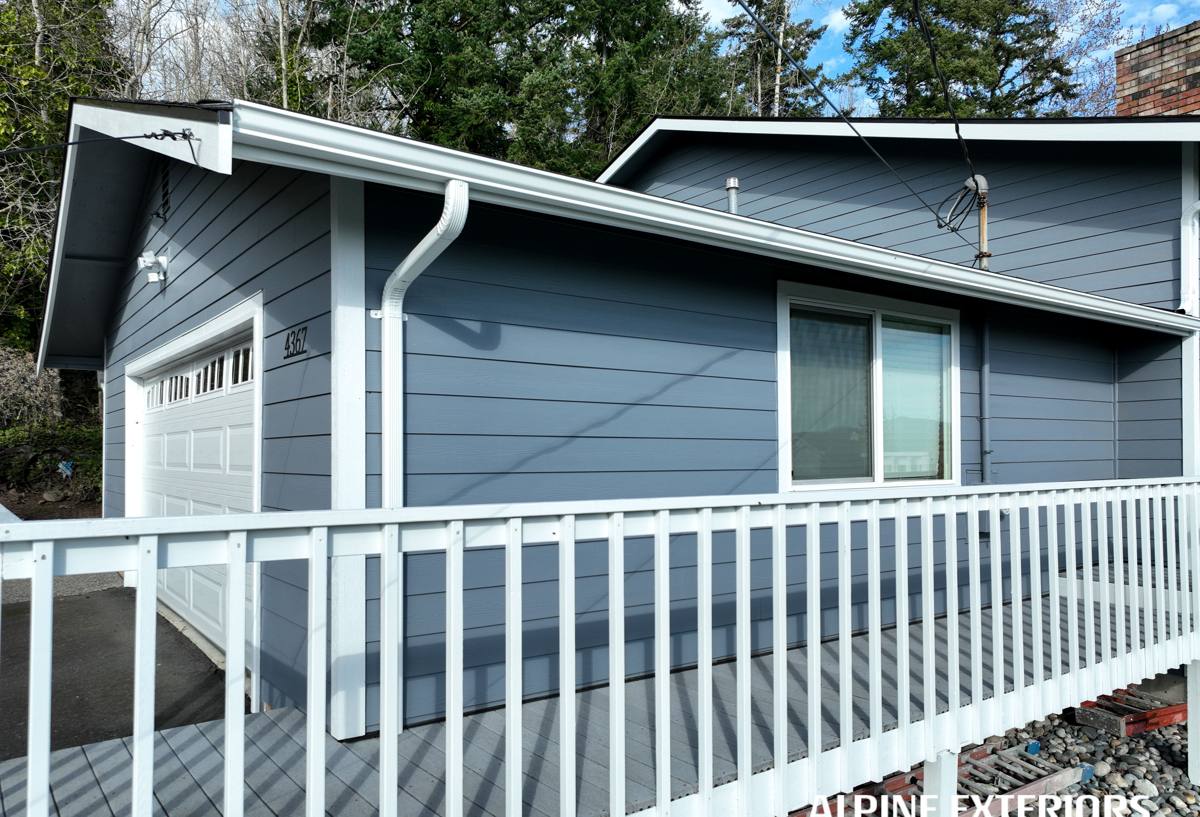
Signs a Fidalgo Island Roof Needs Replacement, Not Another Repair
Roof repair has its place, and a good contractor will tell you honestly when a repair is the right call. But there's a point where patching individual problems costs more over time than doing the job once, correctly. Common signs we look for on local homes include:
- Granule loss heavy enough that you can see bare, shiny patches on asphalt shingles, especially on south and west-facing slopes that take the most sun and rain
- Moss or algae that keeps returning within a season or two of cleaning, which usually points to a roof that's holding moisture rather than shedding it
- Curling, cupping, or cracked shingles, particularly on a roof that's already 18-20+ years old
- Rust streaking from nails, flashing, or metal vent caps — a common early sign of salt-air corrosion
- Soft or spongy decking near eaves and valleys, which usually means water has been getting underneath the roofing for a while
- Daylight visible through the roof deck from inside the attic, or insulation that's damp or matted
- Multiple past repairs in different areas within a few years of each other
If you're only seeing one or two isolated issues on an otherwise sound, younger roof, repair is often the more honest answer, and we'll say so. Replacement makes sense when the roofing material itself is nearing the end of its service life or when the underlying deck and moisture barrier are compromised.
What a Correct Roof Replacement Involves Here
Tear-off and deck inspection
A proper replacement starts with a full tear-off down to the deck, not an overlay. Overlaying new shingles on top of old ones traps moisture, hides deck damage, and shortens the life of the new roof — it's not something we do. Once the old roofing is off, we inspect the sheathing for soft spots, delamination, or rot, particularly around valleys, chimneys, and eaves where water has the most opportunity to sit. Any damaged decking gets replaced before anything new goes down.
Moisture barrier and underlayment
Given how much driving rain and wind-blown moisture this area sees, underlayment choice matters more here than in drier climates. We install self-adhering ice-and-water membrane along eaves, valleys, and around every roof penetration — the spots most exposed to wind-driven rain — and synthetic underlayment across the remaining field for a durable, water-resistant layer beneath the roofing material.
Flashing and penetrations
Flashing is where most roof leaks actually originate, not the shingle field itself. We use corrosion-resistant flashing at chimneys, skylights, vent pipes, and wall intersections, and we replace flashing during a full replacement rather than reusing old pieces that have already been exposed to years of salt air.
Ventilation
Balanced intake and exhaust ventilation keeps the attic space dry and temperature-stable, which slows moss growth on the roof surface and prevents condensation-driven rot in the deck from the inside. This is one of the most overlooked parts of a roof replacement, and it's addressed in more detail below.
Material Options for a Salt Air, High-Moss Climate
There's no single "best" roofing material for every home — the right choice depends on your roof's exposure, your home's style, and your budget. Here's how the common options compare for a Fidalgo Island home specifically:
| Material | How It Handles Salt Air | How It Handles Moss | Typical Lifespan Here |
|---|---|---|---|
| Architectural asphalt shingle | Fine with stainless or coated fasteners; standard-grade galvanized fasteners corrode faster near the water | Benefits from copper or zinc strips and regular cleaning; algae-resistant (AR) shingles reduce staining | 20-25 years with proper ventilation |
| Standing seam metal | Needs a marine-grade or coated finish (e.g., Kynar) and stainless fasteners; uncoated or low-grade metal corrodes noticeably faster this close to saltwater | Sheds moss far better than shingles due to smooth, steep-shedding surface | 40-50+ years with the right coating and fasteners |
| Synthetic/composite shingle | Generally resists salt corrosion well since it's not a metal product | Similar moss resistance to asphalt; benefits from the same preventive measures | 30-40 years, varies by product |
We'll walk through these trade-offs with you honestly rather than pushing whichever product has the best margin. If a lower-grade metal roofing option isn't rated for coastal exposure, we'll say so upfront — not because the product is bad everywhere, but because it's the wrong fit for this specific environment, and we'd rather tell you that before installation than have you find out from early corrosion.
Our Roof Replacement Process
- On-site assessment — we inspect the existing roof, attic ventilation, and decking condition, and take measurements
- Written estimate — a clear scope of work and pricing, with material options explained so you can compare them apples-to-apples
- Scheduling around weather — we plan tear-off and dry-in around Skagit County's rain patterns to minimize the window the deck is exposed
- Tear-off and deck repair — full removal of old roofing, deck inspection, and replacement of any damaged sheathing
- Underlayment, flashing, and ventilation installation — the moisture-management layer that determines how the roof performs over the next 20-30 years
- Roofing material installation — installed to manufacturer specifications, which matters for warranty coverage
- Cleanup and final walkthrough — magnetic sweep for debris, gutter check, and a walkthrough so you know what was done and why
Ventilation and Moisture: The Overlooked Factor in a Long Moss Season
Most homeowners think about the roofing material and skip past ventilation, but it's often the difference between a roof that stays clean and dry for two decades and one that grows moss again within a couple of years of a professional cleaning. Poor attic ventilation traps warm, moist air against the underside of the roof deck. That warmth speeds snowmelt and frost cycling unevenly across the roof, and it keeps the deck slightly warmer and damper than it should be — conditions moss and algae spores are happy to colonize. Balanced ridge and soffit (or equivalent) ventilation lets air move continuously through the attic space, which keeps the roof surface closer to ambient temperature and meaningfully slows regrowth. We evaluate and correct ventilation as part of every full replacement, not as an upsell add-on.
Why Hire a Crew That Already Works Fidalgo Island
Roofing crews that mostly work inland don't always think about salt-air fastener corrosion, wind exposure at higher, more open lots, or how quickly moss reestablishes itself in this specific microclimate. A crew that already works Fidalgo Island and the greater Anacortes area brings a few practical advantages:
- Familiarity with local wind exposure patterns and which slopes and elevations take the worst of it
- Knowledge of which fastener and flashing grades actually hold up near saltwater, based on what we've seen fail versus what's held up
- Established relationships with local material suppliers, which helps with lead times and availability
- An understanding of Skagit County permitting requirements and inspection scheduling
- Accountability — we're not a traveling crew that's hard to reach if a warranty question comes up two years later
Cost Factors to Expect
Every roof is different, and we won't quote a number without seeing the roof, but a few factors consistently move the price up or down on Fidalgo Island projects:
| Factor | Why It Matters |
|---|---|
| Roof pitch and access | Steeper roofs and homes with difficult access require more safety setup and labor time |
| Layers of existing roofing | Removing multiple old layers takes longer and increases disposal cost |
| Deck condition | Rotted or soft sheathing found during tear-off adds material and labor to replace it properly |
| Material choice | Asphalt, synthetic, and metal roofing carry different material and installation costs |
| Roof complexity | Valleys, dormers, skylights, and chimneys all add flashing detail work |
| Ventilation upgrades | Adding or correcting intake/exhaust ventilation is a smaller cost during replacement than as a standalone project later |
In general, a straightforward asphalt shingle replacement on a modest, accessible roof sits at the lower end of the range, while metal roofing, steep or complex rooflines, and significant deck repair push costs higher. We'll break down exactly where your project falls during the estimate, in plain language, so you're not left guessing what you're paying for.
Maintaining Your Roof After Replacement
A correctly installed roof still benefits from basic upkeep in this climate. A short annual routine goes a long way toward protecting the investment:
- Clear debris from valleys and gutters each fall before the heavy rains arrive
- Have moss or algae growth addressed early, before it spreads or holds moisture against the surface
- Check attic ventilation isn't blocked by insulation or storage after any attic work
- Have flashing around chimneys, skylights, and vents visually checked every couple of years
- Address any granule buildup in gutters or downspouts, which can signal shingle wear
If something looks off between routine checks — a stain on a ceiling, a shingle you notice on the ground after a windstorm — it's worth a call before it becomes a bigger repair. Catching small issues early is almost always cheaper than waiting.
If your roof is showing its age or you're just not sure whether it needs repair or full replacement, we're happy to take a look and give you an honest answer. Reach out below for a free, no-pressure estimate on your Fidalgo Island home.