 Anacortes Siding
 Oak Harbor's Climate Puts Extra Stress on Siding
Oak Harbor sits on Whidbey Island, just across Deception Pass from Fidalgo Island and the rest of the Skagit County coastline our crew is based in. Homes here deal with the same core problem that every waterfront and near-waterfront community around the Salish Sea deals with: siding gets attacked from more directions than it does further inland. Salt-laden air off the water accelerates corrosion on fasteners and trim, wind-driven rain finds its way into laps and joints that would stay dry in a calmer climate, and the long gray stretch of fall through spring keeps exterior surfaces damp enough, long enough, for moss and algae to take hold and stay there.
None of that is unusual for this part of Washington. What it means practically is that siding material and installation quality matter more here than they would in a drier, more sheltered part of the state. A product that performs fine in a low-humidity climate can struggle on a home exposed to steady moisture and salt air for months at a time. That's the lens we bring to every Oak Harbor siding replacement: not just "does it look good going up," but "will it still be doing its job in fifteen or twenty years of this specific weather."
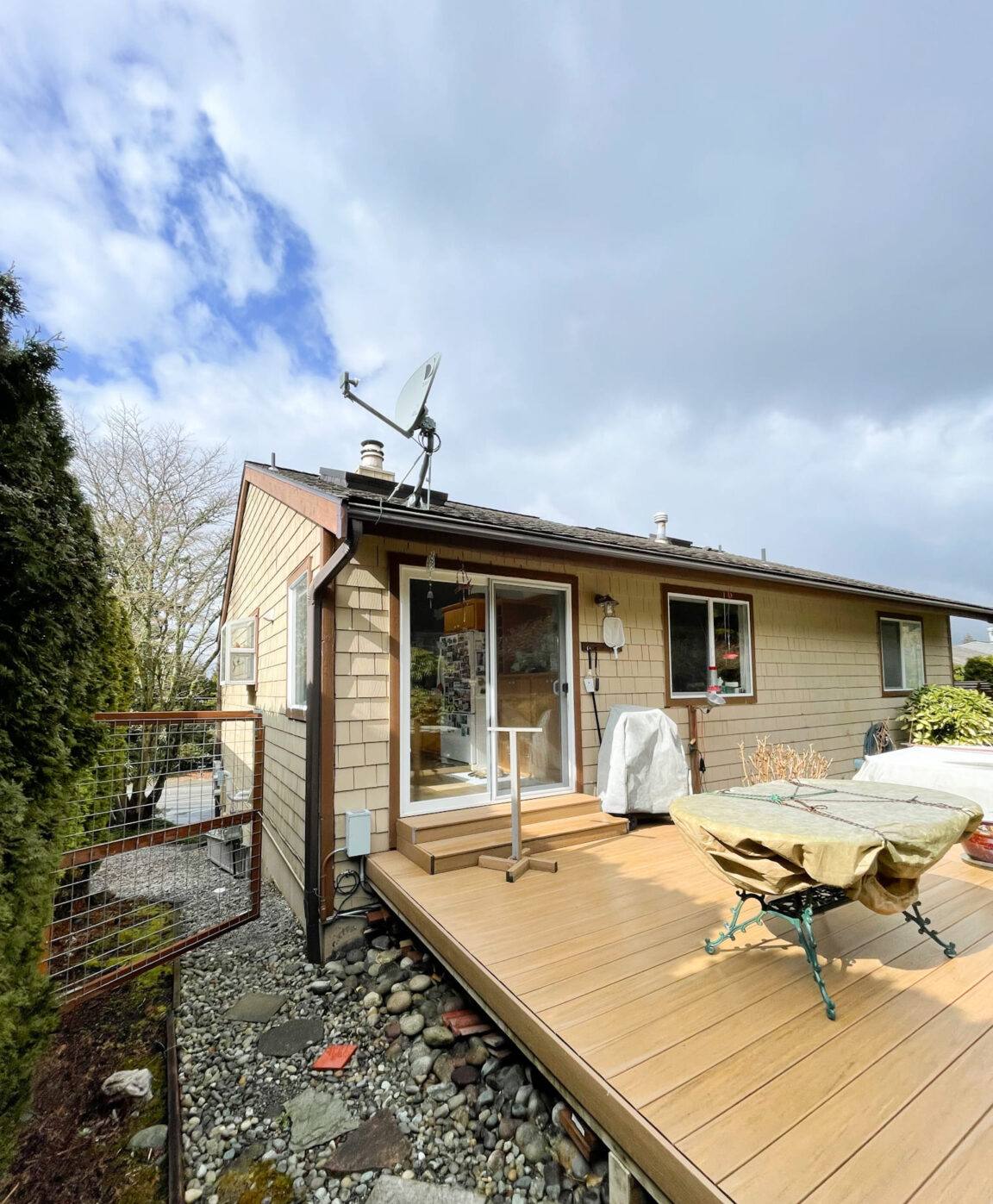
Signs an Oak Harbor Home Needs Replacement, Not Another Repair
Repairs make sense when the damage is isolated and the siding underneath is still sound. Replacement becomes the right call when the problems are spread out or point to something happening behind the siding, not just on the surface. Some signs we look for on inspections in this area:
- Soft or spongy spots when you press on the siding, especially near the bottom courses and around window and door trim
- Persistent moss or dark streaking that comes back within a season or two of cleaning
- Visible warping, cupping, or separation at the seams between boards or panels
- Paint that's failing in patches rather than evenly across the wall, which often points to moisture pushing out from behind
- Rust staining running down from nail heads or metal trim
- Rot or soft framing discovered once a small area of siding is pulled back
- Siding that's simply reached the end of its practical service life and is costing more in repeated patch repairs than a replacement would
If you're only seeing one or two of these in a contained area, a repair may genuinely be the right, honest answer — we'll tell you that rather than push a full replacement you don't need. When the damage is spread across multiple walls or the sheathing underneath shows signs of moisture intrusion, patching becomes a short-term fix on a longer-term problem.
Why We Only Install James Hardie Fiber Cement Here
We install one siding system: James Hardie fiber cement. That's a deliberate standard, not a lack of options. We don't install vinyl, LP SmartSide, Cemplank, Allura, primed spruce, or cedar, and in a climate like Oak Harbor's, the reasoning is straightforward.
Vinyl
Vinyl is inexpensive and low-maintenance in mild, dry climates, but it's a poor match for sustained wind exposure and it doesn't hold up structurally the way fiber cement does — it can warp, crack in cold snaps, and fade unevenly over time. It also isn't fire-resistant, which matters as wildfire smoke and dry-season fire risk have become a bigger concern even in the Pacific Northwest.
Wood and engineered wood (LP SmartSide, cedar, primed spruce)
Wood-based products look great new, but they're organic material in a climate that stays damp for months at a stretch. That combination is exactly what feeds moss growth and, eventually, rot — especially at butt joints, corners, and anywhere caulking has started to fail. Keeping wood siding performing well here means staying on top of painting, caulking, and moisture checks on a schedule most homeowners don't want to manage indefinitely.
Other fiber cement brands (Cemplank, Allura)
These are legitimate fiber cement products, but we've standardized on James Hardie specifically for its ColorPlus factory finish, its HardieZone engineering, and the strength of its transferable warranty. Consistency in the product line lets us install to spec every time and back the work with a manufacturer warranty that actually holds up.
James Hardie fiber cement is non-combustible, engineered for moisture exposure, and finished at the factory with ColorPlus Technology — a baked-on finish that resists fading and holds up to UV and salt air better than field-applied paint. It's also manufactured in region-specific HardieZone formulations; the HZ5 product line is engineered for climates like ours, with freeze-thaw cycles, sustained moisture, and coastal exposure factored into the material itself.
What a Correct Siding Replacement Job Actually Involves
Tear-off and inspection
We don't install new siding over old. Full tear-off lets us see the sheathing and framing underneath, which is the only way to actually know whether there's hidden rot or moisture damage. Anything we find gets repaired before new siding goes up — installing over a compromised wall just hides the problem for a few more years.
Moisture management
This is the step that separates a siding job that lasts from one that fails early, and it's especially important in a climate that gets as much driving rain as this region does. A correct installation includes a weather-resistant barrier, properly lapped and taped seams, and flashing at every window, door, and horizontal transition so water is directed out and away from the wall assembly rather than trapped behind it.
Installation to manufacturer spec
James Hardie publishes specific fastening patterns, gap and clearance requirements, and caulking guidance for a reason — installing outside those specs is the single most common cause of premature failure and voided warranties on fiber cement siding. That means correct nail placement and spacing, proper clearance from grade, decks, and roof lines, and factory-matched caulk and touch-up paint at cut edges so the ColorPlus finish stays protected.
Cost Factors for Oak Harbor Siding Replacement
Every home is different, so we won't quote a number without seeing the property, but these are the variables that move the price up or down on most jobs in this area:
| Factor | Why It Matters |
|---|---|
| Home size and wall complexity | More square footage and more corners, dormers, and trim details mean more material and labor time |
| Condition of the sheathing underneath | Rot or water damage found during tear-off adds repair work before new siding can go on |
| Siding profile chosen | Lap siding, shingle-style panels, and board-and-batten each carry different material and labor costs |
| Trim and accessory work | Window and door trim, corner boards, and fascia replacement are often bundled with a siding job |
| Site access | Steep lots, limited driveway access, or tight setbacks can affect staging and labor time |
| Paint versus factory finish | ColorPlus factory-finished boards cost more upfront but eliminate the need for a full repaint later |
Broadly, fiber cement replacement costs more upfront than vinyl and less than most premium wood systems over the life of the siding, once you factor in the maintenance and repainting that wood-based products require to keep performing in this climate.
Our Process, Start to Finish
- On-site inspection — we walk the home, check the current siding and, where accessible, the condition underneath, and talk through what we're seeing
- Written estimate — a clear scope and price based on the actual condition of your home, not a generic per-square-foot guess
- Material selection — choosing the Hardie profile and ColorPlus color that fits the home and any HOA or neighborhood guidelines
- Tear-off and sheathing repair — removing the old siding and fixing anything compromised underneath before moving forward
- Weather barrier and flashing installation — the moisture-management layer that protects everything installed after it
- Siding installation to spec — fastening, spacing, and caulking done to James Hardie's published requirements
- Final walkthrough — reviewing the finished work with you before we call the job done
Why a Crew That Already Works Oak Harbor Matters
Oak Harbor and the surrounding Whidbey Island area are close enough to our Anacortes base for us to work here regularly, and that regularity matters more than it might seem. A crew that's worked the area already understands how exposed a given lot is likely to be, how permitting and inspection tend to run in this part of the county, and how to plan around the wind and rain patterns that can shut down exterior work on short notice elsewhere in the Puget Sound region. It also means we're not learning the local building department's requirements on your project — we've already been through that process on other homes nearby.
There's also a simple accountability piece. A contractor who plans to keep working in this area has every reason to do the job right the first time and stand behind it afterward, rather than treating it as a one-off drive-in job.
Caring for Your New Siding
James Hardie siding is low-maintenance compared to wood, but "low-maintenance" isn't "zero-maintenance," especially in a climate that grows moss well. A periodic gentle rinse to keep organic growth from taking hold, prompt attention to any caulking that starts to crack or pull away, and keeping vegetation and sprinklers from holding moisture against the wall will go a long way toward getting the full service life out of the material. Because the color is baked into the ColorPlus finish at the factory, you're not signing up for a repaint cycle the way you would with field-painted wood siding — touch-up is only needed at cut edges or if the surface is damaged.
If your siding is showing wear, moss that won't stay gone, or damage you're not sure is cosmetic or structural, we're happy to take a look and give you a straight answer about whether repair or replacement makes sense — no pressure either way. Fill out the form below for a free estimate on your Oak Harbor home.