 Anacortes Siding
 Windows Built for Skyline's Weather, Not Just the Showroom
Skyline sits close enough to the water that homes here take a different kind of weathering than houses further inland in Skagit County. Salt-laden air moves through the neighborhood most of the year, wind-driven rain finds its way into gaps that would stay dry elsewhere, and the long gray stretch of moss season keeps everything damp for months at a time. Windows that were fine when a house was built twenty or thirty years ago are often the weakest point in the building envelope by the time we get a call — not because they were bad windows, but because nothing holds up forever against this combination of salt, moisture, and constant temperature swings between marine air and sun.
Energy-efficient window replacement in Skyline isn't just about lowering a power bill, though that's part of it. It's about closing off the places where moist air gets into wall cavities, where old seals have given up, and where single-pane or early dual-pane glass is doing almost nothing to keep the house comfortable. Done right, new windows solve a comfort problem, a moisture problem, and an efficiency problem all at once.
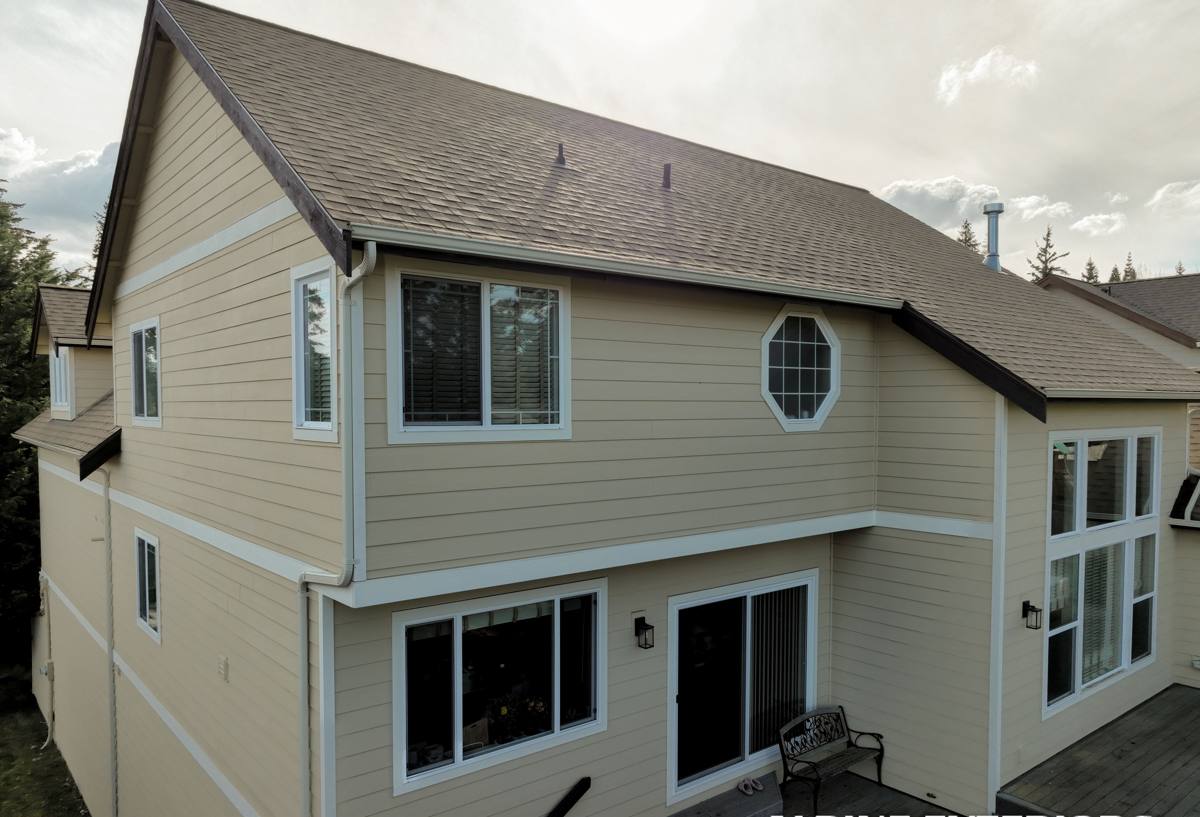
What "Energy-Efficient" Should Actually Mean for This House
Every window sold today gets called energy-efficient. That label means very little on its own — what matters is whether the specific glass package and frame are matched to how this house sits and what direction it faces. A few numbers worth understanding before you shop:
- U-factor — measures how much heat escapes through the window. Lower is better for our climate, where keeping heat in matters more than keeping it out.
- Solar Heat Gain Coefficient (SHGC) — measures how much solar heat passes through the glass. West- and south-facing rooms in Skyline can benefit from a lower SHGC to avoid overheating on the rare sunny afternoon; north-facing rooms usually don't need that trade-off.
- Air infiltration rating — how much air leaks through the window assembly itself. In a place that gets driving rain and gusty marine wind, a tight infiltration rating matters as much as the glass performance.
A window that's technically "Energy Star rated" but installed with a weak sealing job will still leak air and let moisture behind the trim. The product spec sheet only tells half the story — the installation tells the rest.
How Salt Air, Driving Rain, and Moss Season Actually Damage Windows
Salt Air
Airborne salt accelerates corrosion on hardware, fasteners, and metal window components. It also breaks down certain sealants and finishes faster than they'd wear inland. Over years, that shows up as pitted hardware, stiff or failing locks, and finishes that chalk and fade ahead of schedule.
Driving Rain
Wind-driven rain doesn't just hit a window head-on — it gets pushed sideways and upward into any gap in the flashing or trim. Older windows, or windows that were installed without proper flashing details, let water track behind the siding and into the wall framing. By the time that shows up as a soft spot or a stain on an interior sill, the damage has usually been building for a while.
Moss Season
The long stretch of damp, low-light months in Skagit County keeps wood trim, sills, and siding around windows wet for extended periods. Moss and algae hold moisture against the surface longer than open air would, which is hard on wood components specifically and speeds up rot in any spot where caulking has already failed.
None of these three forces alone is usually dramatic — it's the combination, repeated year after year, that wears out a window system well before its glass ever technically "fails."
Frame Material: What Holds Up Here vs. What Struggles
| Frame Material | How It Handles This Climate | Maintenance |
|---|---|---|
| Vinyl | Good moisture and salt resistance, no corrosion risk, stable performance in most Skyline settings | Low — occasional cleaning |
| Fiberglass | Excellent dimensional stability in temperature swings, strong resistance to moisture and salt air | Low |
| Wood-clad | Attractive interior look, but the wood core is vulnerable if cladding seals fail near a wet sill or moss-prone spot | Higher — needs monitoring at joints and sills |
| Aluminum | Prone to corrosion in salt air over time unless it's a marine-grade or well-finished product; also conducts heat, hurting efficiency | Moderate to high |
We're not going to tell a homeowner a given manufacturer's product is "bad" — plenty of frame materials perform fine when they're installed and maintained correctly. But our standard for a house in Skyline leans toward vinyl or fiberglass for most replacements, because they hold up with the least maintenance against the specific combination of salt, rain, and damp season this neighborhood gets. Where a wood-clad or aluminum window is the right call for appearance or an architectural match, we'll say so — and we'll be upfront about the extra attention that choice needs going forward.
Signs Your Current Windows Are Working Against You
- Drafts you can feel near the frame, especially during wind-driven rain
- Condensation building up between panes (a sign the seal has failed)
- Sills or trim that feel soft, discolored, or show early rot
- Hardware that's stiff, corroded, or hard to lock
- Rooms near exterior windows that are noticeably harder to heat than the rest of the house
- Visible daylight or gaps around the frame when the window is closed
- A noticeable jump in heating costs without any other explanation
Any one of these on its own might not mean much. Two or three together usually means the window system — not just the glass — has reached the end of its useful life.
What a Correct Installation Actually Involves
The window unit itself is only part of the job. Most of the long-term performance and moisture protection comes from how it's installed:
- Removing the old unit carefully to inspect the framing, sill, and sheathing underneath for hidden rot or moisture damage before anything new goes in.
- Repairing any damaged framing or sheathing found during removal — installing a new window into a compromised opening just locks the problem behind new trim.
- Flashing the opening correctly, with attention to how water is directed away from the sill and down the exterior wall, not into it — this step matters more here than almost anywhere else given how often driving rain hits these walls sideways.
- Setting the window plumb, level, and square, with proper shimming so the frame isn't under stress that will eventually crack seals or bind hardware.
- Sealing and insulating the gap between the window frame and the rough opening with the right materials — not just a bead of caulk around the trim.
- Finishing the exterior trim and siding tie-in so water sheds properly and there's no exposed gap for moss or moisture to take hold.
Skip any one of these steps and the window itself can be a great product and still underperform — or worse, trap moisture behind the wall where nobody sees it until there's a real problem.
Our Process for a Skyline Window Replacement
We start with a walk-through of the house, looking at each window's condition, orientation, and any signs of moisture damage already present — not just measuring for replacement units. From there we talk through frame material and glass package options based on that specific house, not a one-size answer. Once the work begins, every opening gets inspected for hidden damage as the old window comes out, repaired if needed, then flashed, set, and sealed following the same sequence every time — no shortcuts on the parts nobody sees once the trim goes back on. We clean up as we go and walk the finished openings with the homeowner before calling the job done.
Why a Crew That Already Works Skyline Matters
A contractor who works around Anacortes regularly has already seen how this specific stretch of coastline treats a house — which window orientations take the worst of the driving rain, how fast moss builds back on north-facing trim, which older window brands and installation styles from past decades tend to fail first out here. That's not something you get from a spec sheet. It shows up in small decisions on the job: how tight the flashing overlap needs to be, which sealants actually hold up against salt air over years instead of months, and where to pay extra attention on a house that's taken on water before. Skagit County's marine climate isn't unusual by regional standards, but it's specific enough that experience with it directly translates into fewer callbacks and windows that actually perform the way their spec sheet promised.
What This Typically Depends On
| Factor | Why It Affects the Job |
|---|---|
| Number and size of openings | More or larger windows means more material and labor |
| Frame material chosen | Vinyl, fiberglass, and wood-clad carry different material costs |
| Condition of existing framing | Hidden rot or moisture damage found during removal adds repair work |
| Glass package | Upgraded low-E coatings or gas fills add cost but improve performance |
| Trim and siding tie-in | Matching existing trim details or siding can add finish work |
We won't quote a price without seeing the house, but we'll always walk you through which of these factors are driving the number so there are no surprises.
If your Skyline home has windows that feel drafty, show condensation between the panes, or just haven't been touched since the original build, we're happy to take a look. Reach out for a free, no-pressure estimate using the form below — we'll walk the house, answer your questions honestly, and give you a clear picture of what makes sense before any work begins.