 Anacortes Siding
 Windows in March Point Work Harder Than Windows Inland
March Point sits out on the water side of Anacortes, which means its homes catch weather that inland Skagit County neighborhoods simply don't deal with. Salt-laden air off Fidalgo Bay and Padilla Bay corrodes hardware and dulls finishes faster than dry-climate manufacturer specs ever account for. Wind-driven rain off the water finds gaps that would stay dry in a sheltered yard. And the long, wet moss season here keeps siding and trim damp for weeks at a stretch, which means any window opening that isn't properly flashed and sealed becomes a slow leak into the wall cavity behind it long before anyone notices a stain on the drywall.
None of that means March Point homes need exotic materials or gimmicks. It means the installation has to be done correctly, with the right products for a marine environment, by someone who understands how water actually moves around a window opening in this climate. That's the whole job, and it's where most window problems in this area actually start — not with the window itself, but with how it was put in.
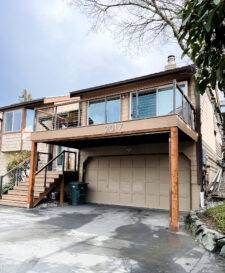
Signs a March Point Home Needs Window Attention
Homeowners usually call us for one of two reasons: the windows are old enough that they're simply worn out, or something about a newer window is behaving badly. Both are common out here. Worth checking for:
- Fogging or a hazy film between the panes of a double-pane window — the seal has failed and the insulating gas is gone
- Wood trim or sills that feel soft, look discolored, or have visible mold or moss growth at the base of the window
- Hardware — locks, cranks, hinges — that's pitted, stiff, or corroded even though the glass itself looks fine
- Drafts you can feel with a hand near the frame on a windy day, especially during a driving rain out of the southwest
- Paint or caulk that's cracked and pulling away from the frame, which is usually the first visible sign a seal has already failed underneath
- A window that was replaced within the last decade but still shows water staining on the interior sill — a sign the installation, not the window, is the problem
That last point matters more than most homeowners expect. We regularly find newer, decent-quality windows failing early because the flashing or sealant behind the trim was never adequate for this much wind-driven rain. A good window installed wrong will leak. A modest window installed right will outlast it.
What a Correct Installation Actually Involves
Setting a window into a rough opening looks simple from the outside, but the parts nobody sees are what determine whether the window lasts 25 years or leaks in year three. In a marine climate like March Point's, we pay particular attention to:
Flashing and Water Management
Every opening gets a proper flashing sequence — sill pan, jamb flashing, and head flashing — installed so water is always directed out and down, never trapped behind the siding. This is the single most important step for a house exposed to driving rain off the bay, and it's the step most often skipped or done halfway on a rushed job.
Sealing and Insulation
Gaps around the frame get sealed with the right materials for the location — not just caulk smeared over the trim, but backer rod and sealant sized correctly for the gap, plus low-expansion foam or insulation in the cavity so the window isn't just weathertight but also isn't a cold spot on the wall in January.
Fastening and Structural Fit
The window has to be shimmed level, plumb, and square before it's fastened, and fastened per the manufacturer's schedule — not "close enough." An out-of-square window stresses the frame, wears the hardware faster, and can crack the seal on the glass unit years before it should fail.
Hardware and Finish Selection
Given the salt air here, we steer homeowners toward corrosion-resistant hardware finishes and frame materials that don't require constant upkeep to keep their appearance and function. It's a small decision at the time of installation that saves a lot of frustration five years in.
Choosing a Window Frame Material for This Climate
There's no single "best" frame material for every house — it depends on your home's style, your budget, and how much upkeep you want to take on. Here's how the common options actually perform in a Skagit County marine environment:
| Frame Material | Salt Air / Moisture Performance | Maintenance | Typical Trade-Off |
|---|---|---|---|
| Vinyl | Doesn't corrode or rot; handles moisture well | Low — occasional cleaning | Fewer color options, can look plain on some home styles |
| Fiberglass | Excellent — very stable, resists moisture and temperature swings | Low | Higher upfront cost than vinyl |
| Aluminum | Prone to corrosion pitting in salt air unless properly coated | Moderate to high near the water | Thin sightlines, but a poor fit for this specific climate without upgraded finishes |
| Wood / Wood-Clad | Attractive but vulnerable where cladding is breached or seals age | High — regular inspection and refinishing | Best appearance for period homes; needs real upkeep in this climate |
Our default recommendation for most March Point homes is vinyl or fiberglass, simply because they hold up to salt air and moss-season moisture with the least ongoing work. Where a homeowner wants the look of wood — say, on an older or architecturally distinct home — we'll talk through what that maintenance commitment really looks like out here before anyone commits to it. That's a house-by-house conversation, not a one-size answer.
Our Window Installation Process
The process itself isn't complicated, but skipping steps is exactly how leaks and premature failures happen. This is roughly what a job looks like:
- On-site assessment of existing windows and openings, including a look at the surrounding trim and siding for hidden moisture damage
- Measurement and product selection based on your home's exposure, style, and budget — not a one-size push toward whatever's easiest to install
- Careful removal of the old window and inspection of the rough opening framing before anything new goes in
- Repair of any rot or water damage found in the opening — this gets fixed before the new window goes in, not covered up
- Sill pan and flashing installation, sized and sequenced for wind-driven rain exposure
- Setting, shimming, and fastening the new window level, plumb, and square
- Sealing, insulating, and finishing the interior and exterior trim
- Final operation check — every window gets tested for smooth operation and a tight seal before we call the job done
What Window Installation Costs Depend On
We won't quote a number here that doesn't mean anything without seeing your house, but the main factors that move the price are consistent enough to explain in general terms:
| Factor | Why It Matters |
|---|---|
| Number and size of windows | More openings and larger units mean more material and labor |
| Frame material chosen | Vinyl, fiberglass, and wood-clad carry different material costs |
| Condition of existing openings | Rot or water damage found during removal adds repair time before installation can proceed |
| New construction vs. replacement | Replacing into an existing opening is typically faster than a full frame-out |
| Trim and finish work | Matching existing interior or exterior trim adds labor beyond the window itself |
| Access and story height | Second-story or hard-to-reach windows take more time and equipment |
The most reliable way to get a real number is a walkthrough, which is exactly what a free estimate is for — no pressure, just an honest look at your specific windows and openings.
Why It Matters That We Already Work in March Point
A crew that mostly works drier, inland jobs can install a fine-looking window that still leaks here within a couple of winters, simply because they under-built the flashing detail or picked hardware that wasn't rated for salt exposure. That's not a knock on their skill — it's a knock on assuming every job in Skagit County sees the same weather. It doesn't.
Working regularly in and around Anacortes and the waterfront neighborhoods means we're not guessing at how much wind-driven rain a west-facing window will see, or how fast salt air pits unprotected hardware. We build for the conditions this specific area actually produces, not a generic spec sheet.
Keeping Your Windows Performing After Installation
A correctly installed window still benefits from a little seasonal attention, especially given the moss and moisture this area sees for a good chunk of the year:
- Rinse salt residue off frames and glass periodically, especially on wind-exposed sides of the house
- Check exterior caulk lines once a year for cracking or separation, particularly after a hard winter
- Clear moss or debris from window sills and adjacent trim before it holds moisture against the wood or frame
- Operate every window through its full range at least seasonally so hardware doesn't seize up from disuse
- Watch for condensation between panes — it means a seal has failed and the unit needs attention, not just cleaning
If you're noticing drafts, fogged glass, soft trim, or you're simply planning ahead for a home in March Point, we're happy to take a look. A free, no-pressure estimate gets you an honest read on what your windows actually need — use the form below to get started.