 Anacortes Siding
 Deck Repair Built for Skyline's Weather, Not Just Any Deck
Skyline sits close to the water on the edge of Anacortes, and that location cuts both ways. The views are part of why people love it here — and the same marine exposure that makes the setting beautiful is what wears a deck out faster than it would a few miles inland. Salt-laden air, driving rain off the Sound, and a moss season that can stretch from October through May all put steady pressure on wood and fasteners. A deck that looks fine from the yard can be hiding soft framing, corroded hardware, or a ledger connection that's been slowly failing behind the siding for years.
We repair decks throughout Anacortes and Skagit County, and Skyline jobs have their own pattern to them. Homes here tend to sit on sloped or elevated lots with more wind exposure than a sheltered inland yard, and decks are often the main outdoor living space for a good chunk of the year. When we come out for a repair call in this neighborhood, we're not just patching what's visibly broken — we're checking the things that fail quietly first.
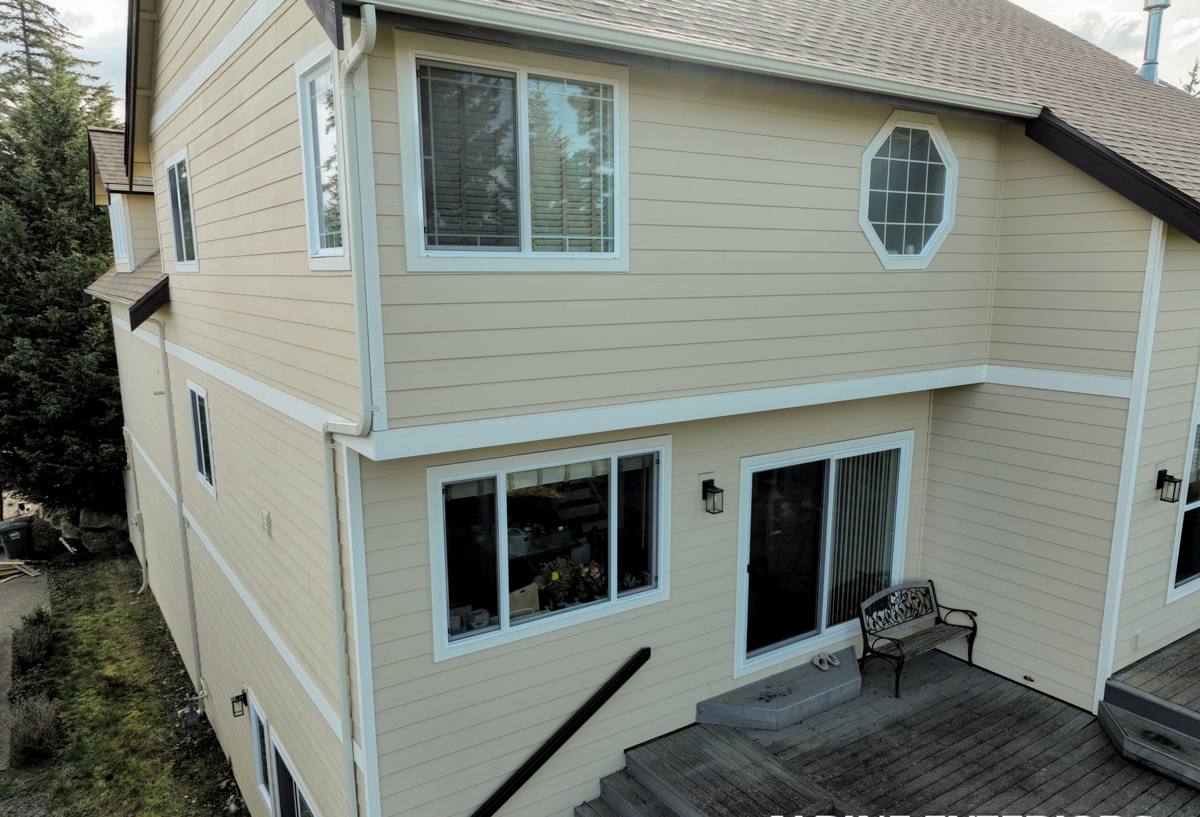
Why Decks in This Climate Fail the Way They Do
Most deck problems we find in Skyline trace back to moisture that had nowhere to go. Wood itself can handle rain — what it can't handle is standing water, trapped moisture, or repeated wet-dry cycling in spots that never fully dry out between storms.
Salt Air and Fastener Corrosion
Coastal air accelerates corrosion on nails, screws, and joist hardware — even galvanized fasteners rated for exterior use have a shorter working life this close to salt water. Corroded fasteners lose their grip strength gradually, which is why a railing or stair tread can feel solid one season and suddenly wobbly the next.
Moss, Algae, and Surface Breakdown
Anacortes gets enough overcast, damp stretches that moss and algae find a foothold on almost any horizontal wood surface that isn't cleaned and sealed regularly. Beyond looking bad, a mossy deck surface holds moisture against the wood grain and becomes genuinely slick and dangerous underfoot — especially on stairs.
The Ledger Board Connection
The ledger board — where the deck attaches to the house — is the single most important structural connection on most decks, and it's also the one most likely to be compromised by water intrusion if it wasn't flashed correctly when the deck was built. Driving rain that gets behind poorly flashed ledger boards can rot both the ledger and the rim joist behind it long before anything looks wrong on the surface.
Signs Your Skyline Deck Needs Repair
Some of these are obvious. Others take a trained eye or a screwdriver test to catch before they become a safety issue.
- Soft or spongy spots when you walk across the decking boards
- Railings or posts that flex, wobble, or feel less rigid than they used to
- Visible gaps, rust streaks, or pulled fasteners at the ledger board
- Persistent green or black staining that won't scrub off with normal cleaning
- Stair stringers that creak, bounce, or show cracking at the cut notches
- Gaps opening up between decking boards and framing, or boards cupping
- A musty smell coming from underneath the deck or around the ledger area
- Visible daylight or water staining on the underside of the deck after rain
If you're seeing more than one or two of these, it's worth having someone check the framing before you plan a summer's worth of use around it.
What a Correct Deck Repair Actually Involves
Deck repair gets treated as a cosmetic job more often than it should be. Replacing a few boards that look bad is easy — the harder, more important part is figuring out whether the problem underneath those boards is structural, and fixing that first.
Inspection Before Anything Else
We start by getting underneath the deck and checking the framing directly: joists, beams, posts, footings, and the ledger connection. We're looking for soft wood, rust, movement at connection points, and any place water has been sitting or draining wrong. This is also where we check whether the original build met current attachment standards, since older decks — especially ones built before local code updated ledger and railing requirements — sometimes need those connections brought up to a safer standard as part of the repair.
Structural Repairs Come First
Rotted joists get sister boards or full replacement, not just a screw and a shrug. Ledger connections that show water damage get opened up, repaired with proper flashing, and reattached with corrosion-rated hardware sized for the load. Undersized or corroded joist hangers get swapped for the right hardware. None of this is visible once the decking goes back down, but it's the difference between a repair that lasts and one that just delays the next call.
Surface and Finish Work
Once the framing is sound, we address the decking itself — replacing damaged boards, resetting fasteners, and dealing with any moss or algae buildup at the source rather than just pressure-washing over the problem. For wood decks, that usually means a proper clean, brightening treatment where needed, and a quality exterior sealant or stain rated for our rain exposure, applied when the wood is actually dry enough to accept it.
Railings and Stairs
Railings and stair stringers get their own check, since these are the components most tied to safety and most likely to have loosened fasteners from corrosion or wood movement. We tighten, reinforce, or rebuild these to hold up to regular use and current safety expectations, not just to look fixed.
Repair or Replace? How We Help You Decide
Not every deck problem calls for a full rebuild, but not every deck is worth patching either. The honest answer depends on how much of the structure is still sound.
| Factor | Usually Points to Repair | Usually Points to Replacement |
|---|---|---|
| Framing condition | Isolated soft spots, most joists solid | Widespread rot across joists and beams |
| Ledger connection | Sound or repairable with reflashing | Significant rot at the house connection |
| Age of structure | Under 15-20 years, built to reasonable standards | Older structure with outdated framing methods |
| Decking surface | Some boards worn, framing underneath solid | Decking and framing both deteriorated |
| Code compliance | Railings/stairs need minor bring-up-to-code work | Major structural changes needed to meet code |
We'll always tell you plainly which category your deck falls into, and why — including when a repair is the more sensible, lower-cost choice, and when spending on repairs would just be deferring an inevitable rebuild.
Material Choices for Deck Repairs
When boards need replacing, the material decision matters more in this climate than in a drier one.
Wood Decking
Cedar and pressure-treated lumber remain solid, cost-effective choices for repairs, especially when matching existing decking. The trade-off is maintenance: wood needs cleaning and resealing on a regular schedule to hold up against our rain and moss exposure. Skip that upkeep for a couple seasons and you're back to the same problems that brought you to a repair in the first place.
Composite Decking
Composite boards resist moisture absorption and won't rot the way wood can, which makes them a strong option for full deck surface replacements or larger repair sections. They still need occasional cleaning to keep moss and algae from building up on the surface, but they remove wood rot from the maintenance equation for the decking itself — though the framing underneath still needs to be real, properly treated lumber, since composite decking doesn't solve a structural problem underneath it.
We'll walk through both options honestly based on your existing deck, your budget, and how much upkeep you actually want to keep up with — there's no single right answer for every home.
Keeping a Skyline Deck in Good Shape Between Repairs
A little regular maintenance goes a long way toward stretching the time between repair calls, especially given how much moss season we deal with here.
- Sweep debris and standing leaves off the deck surface regularly, especially in fall
- Clean moss and algae off boards at the first sign of growth, not after it's established
- Check railings and stair treads for looseness a couple times a year
- Look underneath the deck occasionally for water staining, soft wood, or rust at hardware
- Reseal or restain wood decking on the schedule the product actually calls for, not "when it looks bad"
- Keep gutters and downspouts near the deck clear so runoff isn't draining directly onto it
Why a Local Crew Matters for This Kind of Work
Deck repair in Anacortes isn't quite the same job as deck repair somewhere dry and inland. A crew that works Skagit County regularly already knows how salt air affects fastener choice, how long moss season really runs here, and what ledger flashing needs to look like to actually hold up through a full winter of driving rain. That's the difference between a repair that gets you through one season and one that holds up for the next decade.
We also know the local permitting and inspection expectations for structural deck work, which matters when a repair crosses into rebuild territory or touches railings and stairs that need to meet current safety requirements. Showing up already familiar with how homes in this area are built — and how the weather here treats them — means less guesswork and a repair that's sized correctly the first time.
Get a Straight Answer on Your Deck
If your deck in Skyline is showing soft spots, loose railings, stubborn moss, or just doesn't feel as solid as it used to, we're happy to take a look and tell you honestly what it needs — repair, partial rebuild, or otherwise. We offer free, no-pressure estimates, so you can get a clear picture of the work and the cost before deciding anything. Use the form below to get in touch and we'll set up a time to come take a look.