 Anacortes Siding
 Windows Built for a Waterfront Neighborhood
Ship Harbor sits close enough to the water that the weather here isn't quite the same as a few miles inland in Skagit County. Homes in this part of Anacortes take a steadier dose of salt-laden air, wind-driven rain that hits siding and window frames sideways instead of straight down, and a long, damp moss season that keeps everything outside wet for months at a time. Windows are one of the first things to show the wear from that environment — sashes that swell and stick, seals that fog with condensation, frames that chalk and pit years before they should.
Replacing windows on a Ship Harbor home isn't the same job as replacing them on a house in a drier part of the county. The materials, the flashing details, and the hardware all need to account for salt exposure and constant moisture. This page covers what that actually means in practice — what a correct window job involves out here, what to look for in materials and glass, and how we approach the work.
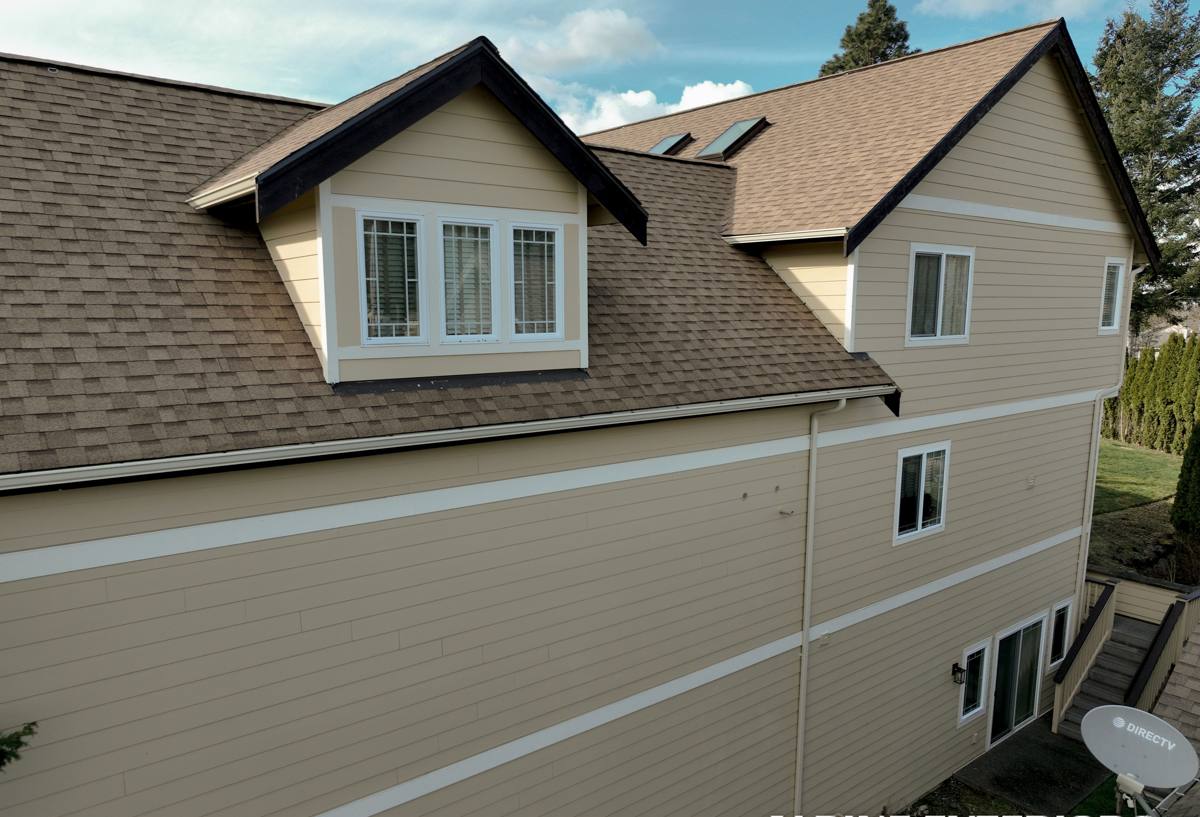
What Salt Air and Driving Rain Actually Do to Windows
It helps to understand the specific failure patterns before talking about the fix.
Salt Air
Airborne salt is corrosive to unprotected metal. On windows, that shows up first in the hardware — hinges, cranks, locks, and screws — long before it affects the frame itself. Aluminum window frames without a marine-grade finish are especially prone to pitting and white oxidation (chalking) near the water. Vinyl and fiberglass don't corrode the same way, which is part of why we steer most Ship Harbor customers toward those materials, but the metal components inside any window — springs, balances, fasteners — still need to be rated for coastal use.
Driving Rain
Wind off the water doesn't just fall on a window, it pushes against it. That means water gets forced into gaps that would stay dry in a calmer setting. If the flashing, sill pan, and sealant details around a window aren't done correctly, driving rain will find its way behind the trim and into the wall framing — often for years before anyone notices the damage, because it shows up as rot inside the wall, not as an obvious leak.
Moss Season
Western Washington's long wet season means anything with a horizontal surface — a sill, a sloped trim board, a mulled window unit's mullion — stays damp for extended stretches and can grow moss or algae. That moisture retention is hard on wood components and can trap water against a frame that isn't designed to shed it quickly.
What a Correct Window Installation Includes
A window is only as good as the opening it's installed into. Swapping an old sash for a new one without addressing the surrounding assembly is the single biggest reason window replacements fail early in coastal conditions. A proper job includes:
- Removing the old window down to the rough opening and inspecting the framing, sheathing, and sill for hidden rot or moisture damage before anything new goes in
- Installing a sloped sill pan so any water that does get past the exterior seal drains back outside instead of pooling
- Applying flashing tape and a proper weather-resistive barrier integration around the full perimeter of the opening, lapped correctly so water sheds downward and outward
- Setting the window plumb, level, and square, with shims that won't compress or rot over time
- Sealing and insulating the gap between the window frame and rough opening — not just caulking the exterior trim
- Finishing the exterior with backer rod and a high-quality, paintable or color-matched sealant rated for exterior exposure
Skipping any of these steps might not show up as a problem right away. It shows up two or three winters later, when driving rain finds the gap nobody sealed.
Choosing Frame Materials for a Coastal Property
There isn't one "correct" window material for every house, but some hold up better than others this close to salt water. Here's how the common options compare for a Ship Harbor setting:
| Material | Salt Air Performance | Maintenance | Notes |
|---|---|---|---|
| Vinyl | Very good — won't corrode or rust | Low — occasional rinsing | Most cost-effective option; quality varies a lot by manufacturer, so frame thickness and reinforcement matter |
| Fiberglass | Excellent — very stable, resists pitting | Low | Handles temperature swings and moisture with minimal expansion or contraction; higher upfront cost |
| Wood-clad | Good on the exterior if the cladding is intact | Moderate to high | Interior wood offers a traditional look but any breach in the exterior cladding invites moisture into the wood core |
| Aluminum | Poor unless marine-rated | High near the water | Prone to pitting and corrosion in salt air unless specifically finished for coastal exposure; we generally don't recommend standard aluminum this close to the water |
We're not tied to one brand or product line. Our job is to walk through these trade-offs honestly and help you land on the material that fits your home's exposure, your budget, and how much upkeep you actually want to do.
Hardware Matters As Much As the Frame
Even a good frame can be let down by cheap hardware. On coastal replacements we pay close attention to hinges, cranks, and locking mechanisms rated for corrosion resistance — stainless steel or coated components rather than bare mild steel. It's a small line item that has an outsized effect on how the window operates five or ten years from now.
Glass and Seal Performance
The glass package affects comfort, energy use, and how well the window resists condensation — a real issue in a damp climate where interior humidity meets a cold exterior surface.
Double-Pane vs. Triple-Pane
Double-pane, low-E, argon-filled glass is a solid standard for most Anacortes homes and performs well against our marine climate. Triple-pane adds another layer of insulation and can help with condensation resistance and sound reduction, which some homeowners near the water appreciate given wind noise, but it comes at a higher cost and added weight on the frame and hardware. We'll talk through whether the upgrade makes sense for your specific exposure rather than upselling it by default.
Seal Failure
Fogging between panes means the seal has failed and the insulating gas has escaped — it's not fixable, only replaceable. In a wet, temperature-swinging climate, seal life is shortened by constant moisture exposure and freeze-thaw cycling, which is one more reason the quality of the initial install (not just the glass unit itself) matters so much.
Our Process for a Ship Harbor Window Project
- On-site assessment. We look at existing window condition, framing, and any signs of past moisture intrusion before recommending anything.
- Material and glass selection. We walk through frame material, glass package, and hardware options suited to your home's specific exposure to wind and salt air.
- Opening prep and inspection. Old windows come out, and we check the rough opening and sheathing for hidden damage before installing anything new.
- Flashing and sill pan installation. This is the step that determines whether your new windows actually keep driving rain out for the long haul.
- Window setting and sealing. Plumb, level, square, properly insulated, and sealed inside and out.
- Exterior trim and finish work. Backer rod, sealant, and trim finished to match your home's existing exterior.
- Final walkthrough. We check operation on every window — smooth opening, closing, and locking — before calling the job done.
Signs Your Current Windows Need Attention
Not every window issue means a full replacement, but these are worth having looked at:
- Fogging or moisture visible between the panes of glass
- Sashes that stick, won't stay open, or are hard to lock
- Visible corrosion or white chalky buildup on metal frames or hardware
- Soft or discolored trim or sill material around the window
- Drafts you can feel near the frame even when the window is closed
- Moss or dark staining building up on horizontal trim or sills
- Condensation forming on the interior glass regularly during cooler months
Keeping New Windows Performing Long-Term
Even the right materials installed correctly benefit from a little seasonal attention in this climate. Rinsing salt residue off frames and glass periodically, keeping weep holes clear of debris and moss so water can drain, and checking exterior sealant for cracking every year or two will meaningfully extend the life of the installation. We're happy to point out what to watch for on your specific windows once they're in.
Why Local Experience Matters for This Job
A window crew that mostly works drier, inland jobs may not think twice about flashing details or hardware corrosion resistance — because on most of their jobs, it doesn't matter much. Out here, it's the difference between a window that's still performing well in ten years and one that's letting water into the wall by year three. Working regularly on homes exposed to Anacortes' marine climate means we're not guessing at how salt air, wind-driven rain, and a long wet season will treat a given material or installation detail — we've seen how it plays out and we build accordingly.
If your Ship Harbor home needs new windows or you're not sure whether your current ones are still doing their job, we're glad to take a look. Reach out for a free, no-pressure estimate using the form below.