 Anacortes Siding
 Skagit Valley Weather Doesn't Forgive Bad Siding
Mount Vernon sits inland in the Skagit Valley, but it shares the same wet, marine-influenced weather pattern that defines this whole corner of Washington. Long stretches of steady rain, low valley fog, and humidity that lingers on shaded walls and under eaves are just part of the year here. You don't need to be right on the water for that moisture to matter — driving rain finds its way behind loose trim and open seams just as easily forty minutes inland as it does on the coast.
That's why siding that looks fine on installation day can start failing quietly within a few years: swelling seams, soft corners, moss creeping up from the base of the wall, paint that won't hold past one winter. A siding installation done right for this climate isn't just about appearance. It's about how the wall assembly handles water, humidity, and the long moss season that Skagit County homeowners deal with every year.
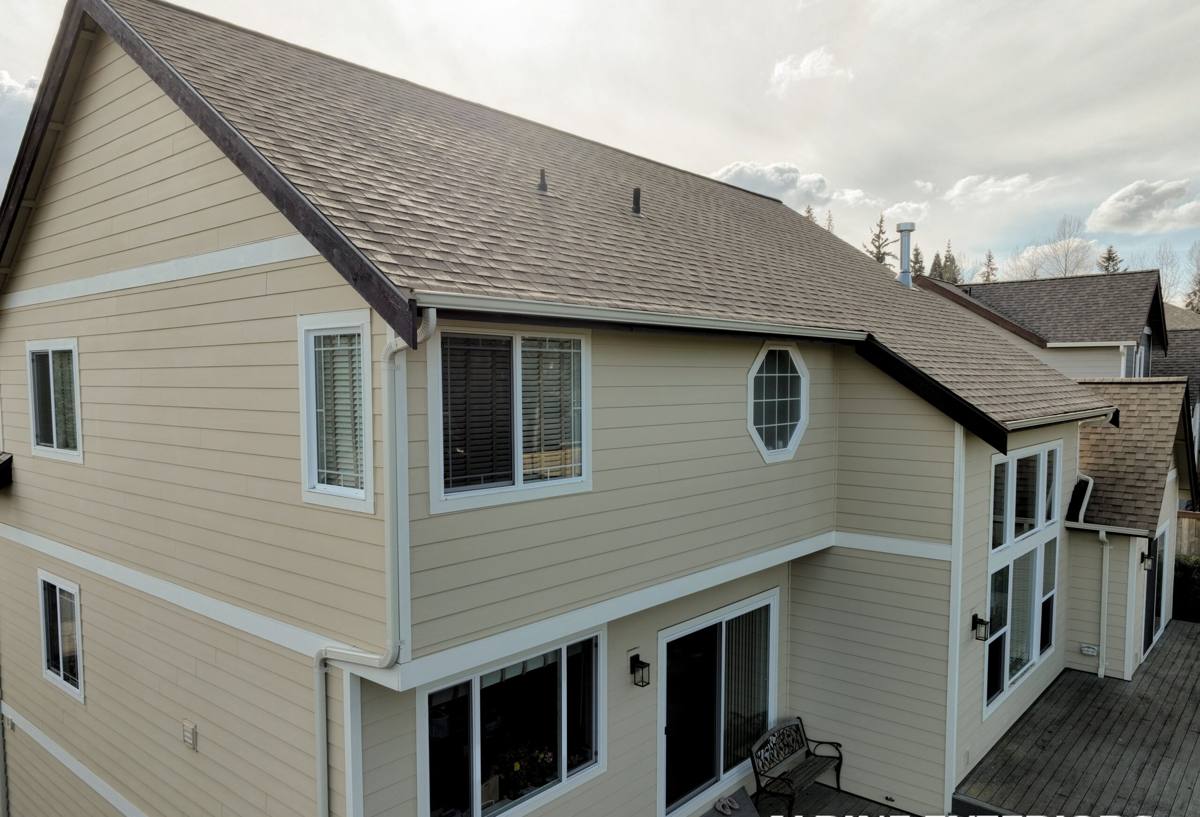
What Mount Vernon Homes Actually Need From a Siding Job
Homes in and around Mount Vernon see a mix of exposure conditions — some sit close to tree lines and get heavy shade most of the day, others are more open and take the brunt of wind-driven rain during winter storms. Both situations create real demands on siding:
- Shaded, tree-lined lots hold moisture longer, which is exactly what moss and algae need to establish and spread across a wall.
- Open, wind-exposed sides of a house take driving rain at an angle, which pushes water into gaps at trim, corners, and butt joints that wouldn't see water in a calmer climate.
- Valley fog and morning dew keep humidity elevated even on days without rain, which is hard on any siding material that swells or absorbs moisture.
- Temperature swings between damp mornings and warmer afternoons stress joints and caulk lines over time.
A siding system for this area has to manage water at the surface, behind the surface, and at every seam — not just look good from the street.
Why We Install Only James Hardie Fiber Cement
We made a deliberate decision as a company to install James Hardie fiber cement siding exclusively. We don't install vinyl, LP SmartSide, Cemplank, Allura, primed spruce, or cedar. That's not a marketing position — it's a standard we hold because of what we see happen to homes in this climate over time.
James Hardie fiber cement is non-combustible, which matters given how much wildfire smoke and fire risk conversation has become part of Pacific Northwest summers. It holds its factory-applied ColorPlus finish for years without the homeowner needing to repaint on the same schedule wood-based products often require. And Hardie engineers specific product lines for different climate zones — including HZ10 formulations built for wetter, colder regions like ours — rather than selling one generic product everywhere. Combined with a strong transferable warranty when installed to spec, it's the product we're comfortable standing behind on a Mount Vernon or Anacortes home for the long haul.
Hardie Compared to Other Siding Options
Homeowners researching siding replacement in Skagit County usually run into the same handful of materials. Here's an honest comparison of how they hold up against the conditions this area actually produces.
| Material | Moisture Behavior | Maintenance | Fire Rating | Typical Lifespan |
|---|---|---|---|---|
| James Hardie fiber cement | Engineered for wet climates; won't swell or rot | Low — factory finish, no repainting cycle | Non-combustible | Decades with correct install |
| Vinyl | Sheds water on the surface but seams and edges can let moisture in behind it | Low upfront, but cracks and fades over time | Combustible, can warp near heat sources | Variable, shorter in harsh exposure |
| LP SmartSide (engineered wood) | Wood-based; sensitive to sustained moisture at cut edges and seams | Moderate — needs field-applied finish maintained | Combustible | Depends heavily on installation quality |
| Cedar / primed spruce | Natural wood; absorbs moisture, prone to rot without diligent upkeep | High — regular sealing, staining, or painting | Combustible | Shorter without consistent maintenance |
Every product on that list has a place in the market and reasonable arguments in its favor. We're not here to trash them. We simply concluded, after years of doing exterior work in this exact climate, that fiber cement gives homeowners the best long-term outcome for the least ongoing hassle.
Where Vinyl and Wood-Based Sidings Tend to Struggle Locally
Vinyl's biggest weakness isn't the material itself — it's what happens at the seams and behind the panels over time as caulking ages and gaps open, letting the valley's humidity work its way in unnoticed. Engineered wood and cedar carry a different risk: they're wood at their core, and wood plus sustained Skagit Valley moisture plus a missed maintenance cycle is a predictable combination. Fiber cement sidesteps both problems by not being organic material in the first place.
What a Correct Siding Installation Involves
The material only performs as well as the installation underneath it. A correct James Hardie install for a Mount Vernon home includes several steps that are easy to skip and hard to notice once the siding is up:
- Full removal of old siding and inspection of the sheathing underneath for hidden rot or water damage before anything new goes on.
- A continuous weather-resistive barrier (house wrap) installed correctly, lapped in the right direction so water sheds downward and outward.
- Proper flashing at every window, door, and roofline transition — the single most common failure point on poorly installed siding jobs.
- Fastening patterns and clearances that follow James Hardie's published installation specifications exactly, not a generalized approach borrowed from another siding product.
- Correct clearance from grade, decks, and roof surfaces so the bottom edge of the siding never sits in standing water or snow.
- Caulking only at the joints Hardie specifies — over-caulking traps moisture just as often as under-caulking lets it in.
Skip any one of these steps and you can end up with a home wearing a good product installed poorly — which fails just as fast as a cheap product installed carefully.
Our Process, Start to Finish
- On-site assessment. We walk the home, check current siding and sheathing condition, and note exposure — sun, shade, wind direction, and drainage around the foundation.
- Scope and product selection. We put the plan in writing, including which James Hardie plank or panel style and climate-engineered HZ line fits the home.
- Permitting. We handle the paperwork required for the job before any tear-off begins.
- Tear-off and prep. Old siding comes off, sheathing is inspected and repaired where needed, and the weather-resistive barrier goes on correctly the first time.
- Installation to spec. Siding, trim, and flashing go on following James Hardie's installation requirements, not shortcuts.
- Final walkthrough. We inspect the finished work with the homeowner and address anything before calling the job done.
- Warranty registration. We make sure the manufacturer warranty paperwork is filed correctly so it's actually in effect if you ever need it.
Signs a Mount Vernon Home May Need New Siding
Homeowners often wait longer than they should because siding damage is easy to miss from a distance. Watch for these signs, especially heading into another wet season:
- Moss or algae staining that comes back within a season or two of cleaning
- Soft, spongy, or bubbling spots when you press on the siding surface
- Paint that peels or blisters faster than it used to
- Visible gaps, warping, or separation at corners and trim joints
- A musty smell near exterior walls or noticeably higher heating bills in winter
- Cracked or missing caulk lines around windows and doors
Any one of these on its own might be minor. Several at once usually means water has been getting behind the siding for a while.
Why a Crew That Already Works in Mount Vernon Matters
Siding installation isn't one-size-fits-all across Skagit County. A crew that regularly works both Anacortes and Mount Vernon knows the difference between a job that needs coastal-grade detailing for salt air exposure and a job that needs to prioritize drainage and shade-driven moisture control in a valley setting. That familiarity shows up in small decisions — how much clearance to leave at grade, where to pay extra attention to flashing, which HZ product line makes sense for a given lot — that a crew unfamiliar with the area might not think twice about.
There's also a practical side: a local crew is easier to reach if a question comes up after the job is done, and has a reputation in the area worth protecting. That accountability matters as much as the product on the wall.
If your Mount Vernon home is due for new siding, or you're just trying to figure out what shape yours is in, we're happy to take a look. Reach out for a free, no-pressure estimate using the form below.