 Anacortes Siding
 Decks Built for La Conner's Waterfront Climate
La Conner sits close to open water, and that changes what a deck has to put up with compared to a deck built further inland in Skagit County. Salt-laden air moves off the water and settles on every exposed surface, wind-driven rain comes in sideways during fall and winter storms, and the shaded, damp stretches of the year give moss and algae plenty of time to take hold. A deck built without those three things in mind will show problems early — usually corroding hardware, soft spots at the ledger board, or a slick, green film on the decking by the second winter.
We build and replace decks for homes in and around La Conner and Anacortes, and we design every deck around this specific combination of salt exposure, heavy rain, and long moss season rather than treating it like a generic outdoor build.
Salt Air and Metal Fasteners
Salt air accelerates corrosion on anything less than fully rated hardware. Standard galvanized fasteners can start showing rust streaks within a couple of seasons in a coastal setting, and once a fastener starts to corrode, it weakens the connection it's holding — often long before the problem is visible from the surface. We use stainless steel or high-grade coated fasteners and structural hardware rated for coastal or treated-lumber exposure on every deck we build near the water, not just the visible surface screws.
Driving Rain and Ledger Connections
The ledger board — where a deck attaches to the house — is the single most important structural connection on most decks, and it's also the point most vulnerable to wind-driven rain. Water forced sideways by wind can work its way behind an improperly flashed ledger and sit against the house rim joist, leading to rot that's hidden until it's serious. Correct ledger flashing, proper standoff spacing, and sealed fastener penetrations matter more here than in a drier inland climate.
Moss, Algae, and Shade
Skagit County's wet, overcast stretches from fall through spring give moss and algae a long runway, especially on decks with any shade from trees or the house itself. Beyond the slip hazard, moss and algae hold moisture against the decking surface, which shortens the life of wood decking and can dull or discolor composite surfaces over time if left unaddressed. Board spacing, surface texture, and drainage underneath the deck all affect how much of a problem this becomes.
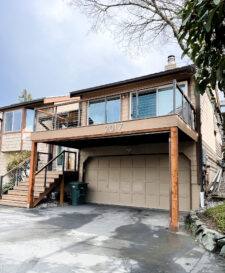
What a Correctly Built Deck Needs in This Area
A deck that holds up in La Conner's conditions isn't about a fancier finish — it's about getting the details underneath right. The things a homeowner sees are only part of what determines whether a deck lasts 10 years or 25.
- Ledger flashing installed and sealed correctly at the house connection, with a code-compliant standoff or moisture barrier where the ledger meets the siding
- Footings sized and set below frost depth, appropriate for the soil conditions on the specific lot
- Joist and beam spacing rated for the actual decking material and expected loads, not the minimum allowed
- Stainless or coated structural hardware throughout — joist hangers, post bases, and ledger bolts included, not just visible fasteners
- Adequate airflow and drainage underneath the deck so moisture doesn't sit against framing
- Proper board spacing and, where needed, gapping adjustments for the decking material chosen
Skipping any one of these doesn't usually cause an immediate problem — it shows up two, five, or ten years later as soft framing, failed fasteners, or a deck that needs to be pulled apart to fix something that should have been done right the first time.
Choosing Decking Material for La Conner Conditions
There's no single "best" decking material for every home — it depends on how much upkeep you want to take on, your budget, and how much sun or shade the deck gets. Here's how the common options actually perform in this climate.
| Material | How it handles salt air and rain | Moss/algae behavior | Maintenance |
|---|---|---|---|
| Pressure-treated wood | Good if properly sealed and re-sealed; end grain and fastener points are the weak spots | Prone to moss in shaded areas without regular cleaning | Annual cleaning and re-sealing every 2-3 years |
| Cedar | Naturally rot-resistant but still needs sealing near salt air; softer surface | Susceptible to moss/algae if not maintained | Regular sealing, more frequent in shaded spots |
| Composite decking | Handles moisture and salt air well; no rot risk | Can still develop surface algae in shaded, damp areas — cleanable, doesn't damage the board | Occasional washing, no sealing or staining |
| PVC/capped decking | Best moisture resistance of the group; fully sealed surface | Least prone to moss taking hold, still benefits from occasional cleaning | Lowest maintenance; periodic washing |
We'll walk through these trade-offs honestly based on your budget and how the deck will be used — a lot of homeowners in this area land on composite or PVC decking specifically because they're tired of the annual sealing routine that real wood requires near the water, but a well-maintained wood deck is still a perfectly good choice if you're willing to keep up with it.
Our Deck Building Process
Design and Permitting
We start by looking at how you actually want to use the space — dining, grilling, a quiet spot off a bedroom, connection to a hot tub — and design the layout, size, and rail configuration around that. Skagit County and the City of Anacortes both have permitting requirements for new decks and major deck replacements depending on size and height; we handle that process rather than leaving it to you.
Structural Framing
This is where the coastal-specific decisions get made: footing depth and placement, ledger flashing detail, joist spacing, and hardware selection. We don't cut corners here because this is the part that determines whether the deck is still solid in fifteen years, not just whether it looks good on day one.
Decking, Railing, and Stairs
Once framing is inspected and approved, we install the decking surface, railing system, and any stairs. Board spacing and fastening method are adjusted based on the material — composite and PVC boards, for example, use hidden fastener systems that affect spacing and expansion differently than wood decking does.
Final Grading and Drainage Check
Before we call a job finished, we confirm water drains away from the house and away from the deck's footings rather than pooling underneath. This step gets skipped more often than it should on decks built by crews unfamiliar with how much rain this area actually sees.
Railings, Stairs, and Code Considerations
Railing height, baluster spacing, and stair geometry are governed by building code, and inspectors in this area check them closely — for good reason, since these are the components most tied to safety. We build railings and stairs to code as a baseline, then work with you on style: horizontal cable rail, traditional baluster rail, or a mixed material approach using metal and wood or composite. Near the water, we lean toward stainless or powder-coated hardware on any metal railing components for the same corrosion reasons that apply to structural fasteners.
Maintenance Expectations by Material
Every deck needs some upkeep in this climate — the question is how much and how often. Here's a realistic checklist depending on what you're working with.
- Wood decking: Clean and inspect for moss annually, re-seal every 2-3 years, check fastener heads for corrosion or lifting
- Composite decking: Wash surface once or twice a year to prevent algae buildup in shaded spots, check hidden fasteners at the annual inspection
- PVC/capped decking: Occasional washing, minimal else required
- All decks: Keep gutters and downspouts near the deck clear so runoff isn't dumping extra water onto or under the structure
- All decks: Clear leaves and debris from between boards before wet weather sets in to reduce moisture trapping
- All decks: Have the substructure checked every few years, especially the ledger connection and any framing near grade
Common Problems We Fix on Existing Decks
A large part of our deck work in this area isn't new builds — it's repairing or replacing decks that were built without the coastal details in mind. The patterns repeat: corroded joist hangers and fasteners that were never rated for salt exposure, soft or rotted framing near a poorly flashed ledger, moss buildup that's made the surface unsafe, and railings that no longer meet current code. Sometimes a deck just needs targeted structural repair; other times the framing has degraded enough that a full rebuild is the more honest recommendation. We'll tell you which situation you're in rather than selling a bigger job than you need.
Why Hire a Crew That Already Works in La Conner
A deck built by a crew with no coastal experience can look identical to one built correctly — until the hardware starts to corrode or the ledger starts to soften a few years in, well after the crew is gone. Working regularly in La Conner and around Anacortes means we already know which fastener and hardware grades hold up here, how deep footings need to go in the soil conditions typical to this area, and how much drainage and airflow a deck needs underneath to handle a Skagit County winter. That local track record is the difference between a deck that needs real repair work in year five and one that's still solid in year twenty.
If you're planning a new deck, replacing an aging one, or just want an honest read on whether an existing deck near La Conner needs repair or replacement, we're happy to take a look. Reach out for a free, no-pressure estimate using the form below — we'll walk the site, talk through material and layout options, and give you a straight answer on what the job actually involves.