 Anacortes Siding
 Why West Anacortes Roofs Wear Differently
West Anacortes sits close enough to the water that salt-laden air is part of daily life for every roof in the neighborhood. That air moves inland on the wind, settles on shingles and metal flashing, and slowly works on fasteners, drip edges, and any exposed metal that wasn't specified for a marine environment. Combine that with Skagit County's long wet season — months of driving rain broken up by heavy fog and shaded, moss-friendly mornings — and you get a roofing environment that's genuinely tougher on materials than what you'd find twenty miles inland.
None of this means West Anacortes homes need exotic materials or premium upgrades across the board. It means the roof has to be installed correctly for this specific climate, with the right underlayment, the right fastener and flashing metal, and enough attention to ventilation and moss resistance that the homeowner isn't fighting the same problems again in five years. That's the whole focus of this page: what a correctly installed new roof looks like for a West Anacortes home, and what separates a roof that holds up here from one that doesn't.
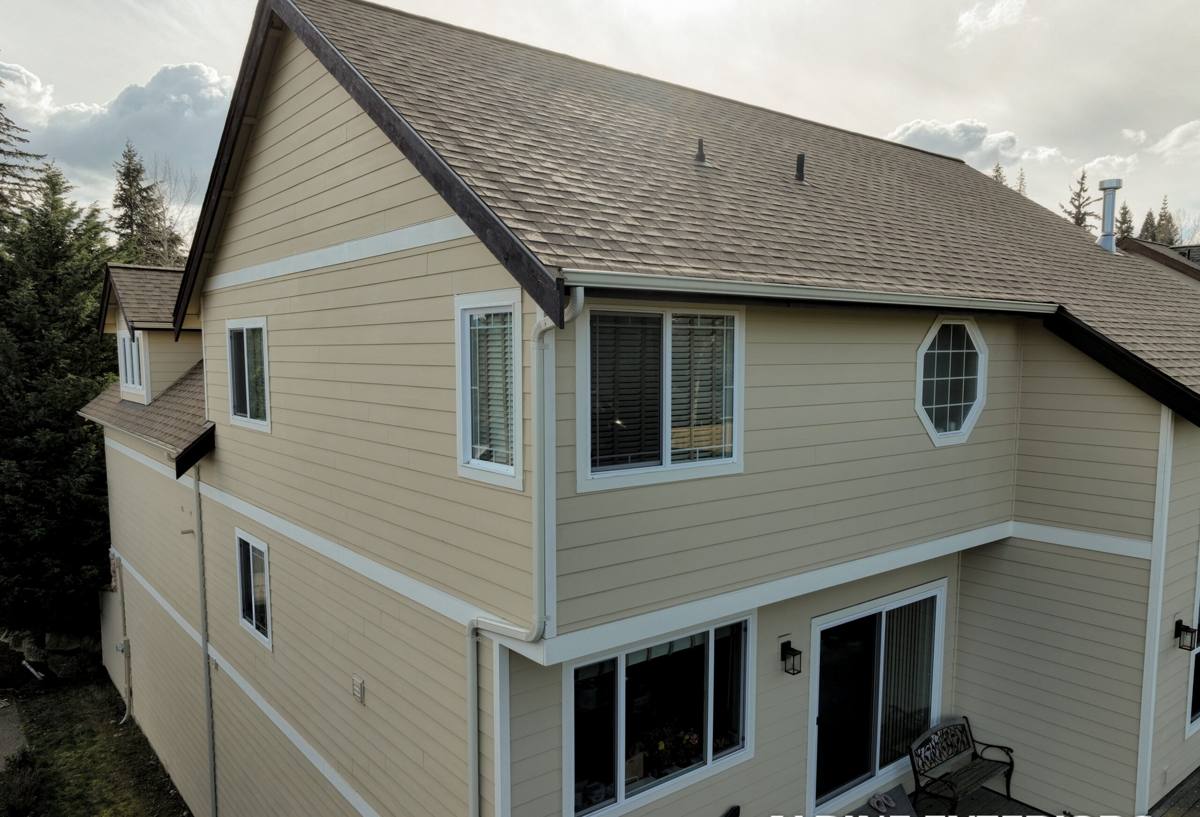
What Salt Air and Driving Rain Actually Do to a Roof
Salt Air and Metal Components
Salt exposure accelerates corrosion on any unprotected or under-specified metal — nail heads, flashing, drip edge, and vent stacks are the usual failure points. Standard electro-galvanized fasteners can start showing rust streaks on a shingle roof well before the shingles themselves are due for replacement. The fix isn't complicated: use fasteners and flashing rated for coastal exposure, and make sure exposed metal is either painted, coated, or made from a naturally corrosion-resistant material.
Driving Rain and Wind-Driven Water
Anacortes storms don't always come straight down. Wind-driven rain off the water can push moisture sideways and up under shingle edges, valleys, and anywhere flashing meets a wall, chimney, or skylight. A roof built for a drier or more sheltered climate can get away with minimal underlayment and loose valley detailing. A roof built for West Anacortes can't — every penetration and transition needs to be treated as a place water will actively try to get in, not just a place it might eventually seep.
Moss and Shaded, Moisture-Retaining Areas
Long wet seasons and tree cover common in Skagit County neighborhoods create ideal conditions for moss growth, especially on north-facing slopes and roof sections shaded by trees or neighboring structures. Moss holds moisture against the roofing material far longer than open, sun-exposed areas, which shortens the life of shingles underneath it and can lift edges enough for water to work its way under them.
What a Correct New Roof Installation Involves Here
A properly installed roof for this area isn't about buying the most expensive materials on the shelf — it's about a handful of details being done right, consistently, across the whole roof.
- Ice-and-water shield or high-quality synthetic underlayment at eaves, valleys, and all penetrations, not just where code minimums require it
- Corrosion-resistant fasteners and flashing suited to coastal exposure, rather than standard-grade hardware
- Proper balanced ventilation (intake at the eaves, exhaust at the ridge) so moisture doesn't build up in the attic and undermine the deck from below
- Shingles or panels rated with algae/moss resistance where the roof has shaded or tree-covered sections
- Tight, correctly lapped valley and step flashing at every wall and chimney intersection
- A sound, dry deck underneath — any soft or water-stained sheathing gets replaced before new material goes down, not covered over
Skip any one of these and the roof may still look fine on installation day. The problems that show up later — rust streaks, moss mats, soft spots near valleys — almost always trace back to a shortcut taken in one of these areas.
Choosing the Right Roofing Material for West Anacortes
There's no single "best" roofing material for every home in the area — the right choice depends on the home's exposure, roof pitch, shading, and budget. The table below covers how the common options actually perform under West Anacortes conditions.
| Material | Salt Air Performance | Moss Resistance | Maintenance |
|---|---|---|---|
| Architectural asphalt shingle (algae-resistant) | Good with coastal-rated fasteners/flashing | Good, especially with copper or zinc strips at the ridge | Periodic moss/debris removal in shaded areas |
| Standard three-tab shingle | Fair — shorter lifespan near the water | Lower — more prone to moss buildup over time | More frequent moss treatment needed |
| Metal roofing (coated steel or aluminum) | Excellent when properly coated and fastened | Excellent — moss struggles to hold on smooth panels | Low; occasional debris clearing |
| Wood shake | Fair — needs regular treatment near salt air | Poor without diligent upkeep in wet, shaded spots | High — regular cleaning and treatment required |
For most West Anacortes homes, a quality algae-resistant architectural shingle installed with coastal-grade hardware is the practical middle ground — solid performance, manageable maintenance, and a reasonable cost. Homes with heavy tree cover or a strong preference for low maintenance often lean toward metal. We'll walk through the trade-offs honestly during your estimate rather than pushing one product line.
Our Installation Process
1. On-Site Assessment
We inspect the existing roof, deck condition, ventilation setup, and any problem areas — shaded slopes, valleys, chimney flashing — before recommending anything. This is also where we talk through material options based on your home's specific exposure.
2. Tear-Off and Deck Inspection
Old roofing comes off down to the deck so we can actually see what's underneath. Any water-damaged or soft sheathing gets identified and replaced — this is the single most important step for a roof that's going to hold up long-term, and it's not something that can be judged from the ground or skipped to save time.
3. Underlayment and Flashing
We install underlayment rated for this climate, with extra protection at eaves, valleys, and penetrations, followed by properly lapped, corrosion-resistant flashing at every wall, chimney, and vent.
4. Ventilation Check
We confirm intake and exhaust ventilation are balanced. Poor attic ventilation is a common, avoidable cause of premature roof failure from the inside out, and it's easy to correct during a full replacement.
5. Roofing Installation
Material goes down to manufacturer specifications, with fastener patterns and spacing that actually meet wind-exposure requirements for this area — not just the minimum for a calmer inland location.
6. Final Walkthrough
We walk the finished roof and the property with you, clean up thoroughly, and go over care and maintenance specific to your new material.
Why a Crew That Already Works West Anacortes Matters
Roofing crews that mostly work drier, inland areas sometimes default to standard-grade materials and installation habits that are fine there but fall short close to the water. A crew that regularly works West Anacortes and the surrounding Anacortes area already knows which slopes tend to hold moss, which fastener and flashing grades actually hold up against the salt air, and how local wind patterns affect valley and edge detailing. That familiarity shows up as fewer callbacks and a roof that performs the way it's supposed to in year eight or ten, not just on installation day.
It also means straightforward answers. If your home doesn't need the most expensive material on the list, we'll say so. If a shaded north slope genuinely benefits from a moss-resistant upgrade, we'll explain why rather than upsell it as a blanket recommendation for the whole roof.
Signs Your West Anacortes Roof May Need Replacement
- Shingles that are curling, cracking, or losing significant granules, especially on sun-exposed slopes
- Persistent moss mats on shaded sections that keep coming back after cleaning
- Rust staining around nail heads, flashing, or vent stacks
- Soft spots, sagging, or visible daylight through the attic decking
- Water stains on interior ceilings after heavy wind-driven rain
- A roof approaching or past its material's expected service life, especially if the original installation predates current coastal-rated hardware standards
Any one of these on its own might just need a repair. Several together, or a roof that's already at the end of its expected lifespan, usually means it's time to talk about full replacement before a small problem becomes water damage to the deck or interior.
Get a Free, No-Pressure Estimate
If you're weighing a new roof for a West Anacortes home, we're happy to take a look, walk you through what your specific roof needs, and give you a straightforward, honest estimate — no pressure, no upsell. Use the form below to get started.