 Anacortes Siding
 Building a new home or a room addition on March Point is a different project than replacing windows in an existing wall, and it calls for a different approach. New-construction windows go in before the siding, before the weather-resistive barrier is fully closed up, and before anyone can see whether the flashing details underneath were done right. That's an advantage if the crew doing the work gets it right the first time — and a real liability if they don't, because those details get buried and stay hidden until a leak shows up years later. On a peninsula like March Point, surrounded by water on more than one side and exposed to salt air, driving rain, and a long moss season, getting new-construction window installation right the first time matters more than it does on a sheltered inland lot.
Why New Construction Is Different From Replacement
Replacement window work has to fit new glass and frame into an existing rough opening, often with limited access to the surrounding wall assembly. New construction is the opposite problem: the rough opening, the weather-resistive barrier, and the flashing sequence are all being built at the same time as the window install, which means there's more opportunity to do it correctly — but also more steps that have to happen in the right order. A missed step in a new-construction opening doesn't get flagged by an old caulk line failing; it just becomes a permanent weak point in a wall that's about to get sided over and lived in for decades.
For a March Point property, that sequencing matters even more than usual. Homes on the peninsula take wind and rain from more directions than a typical inland Anacortes lot, so a new build here needs every window opening treated as a potential water entry point from the design stage forward, not as an afterthought once framing is done.
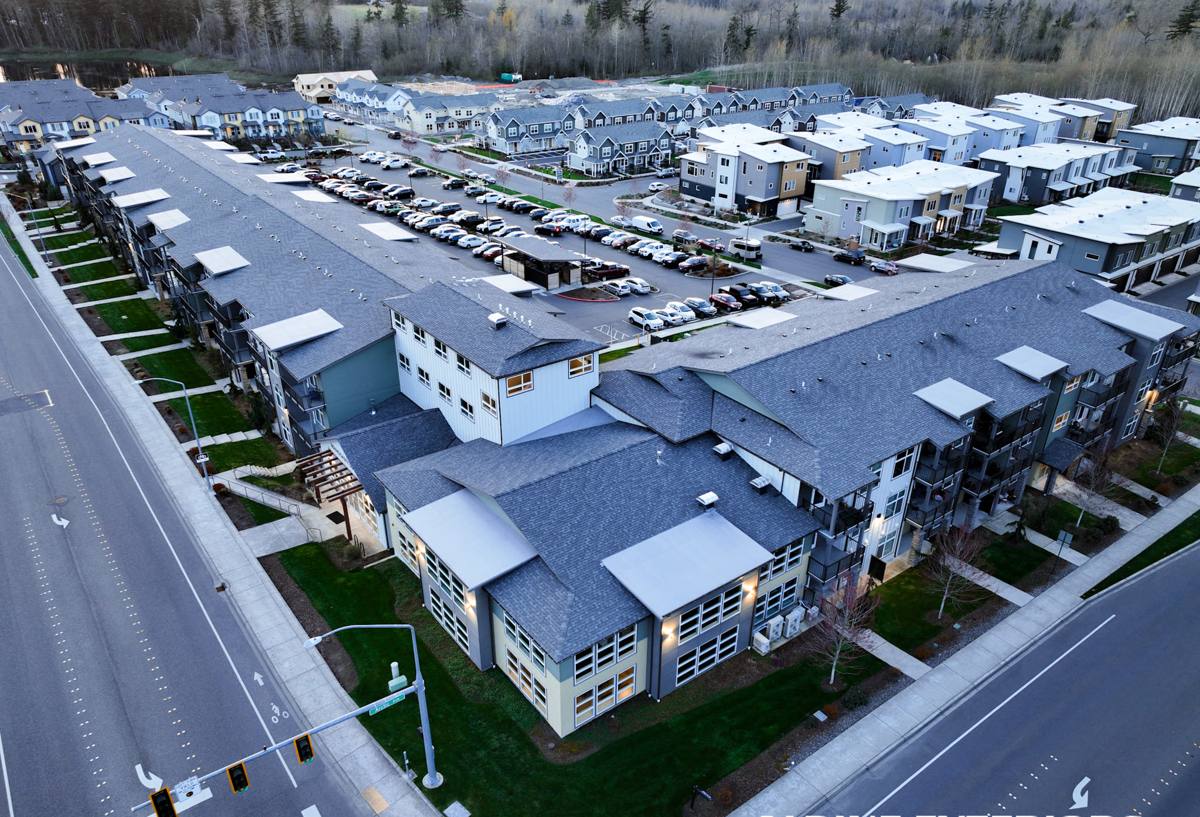
What March Point's Exposure Means for a New Build
March Point sits out on its own peninsula between Fidalgo Bay and Padilla Bay, and that position means new construction here deals with a combination of stressors a lot of standard building practice wasn't written around. Salt-laden air corrodes exposed fasteners and metal flashing faster than it does further inland, driving rain gets pushed sideways by wind and finds any gap in a window opening that wouldn't be a problem in calmer conditions, and the long moss season common to this part of Skagit County keeps exterior surfaces damp for extended stretches of the year. None of that means new construction on March Point is a bad idea — it isn't, and plenty of homes here perform well for decades — but it does mean the window installation details that get glossed over on a sheltered lot need real attention here.
What a Correctly Built Opening Requires on an Exposed Site
- A sloped sill pan that directs any water that gets past the window frame back out, rather than letting it pool at the bottom of the rough opening
- Proper shingle-lap sequencing of the weather-resistive barrier and flashing tape, so every layer sheds water onto the layer below it, not behind it
- Head flashing that extends beyond the trim and integrates with the barrier above the window, not just caulk at the top edge
- Corrosion-resistant fasteners and flashing metal rated for coastal exposure, not standard-grade hardware
- Air-sealing at the interior side of the rough opening, which affects both energy performance and condensation risk once the home is occupied
Window Selection for a Peninsula Build
We install vinyl and fiberglass window systems and walk homeowners through the real trade-offs rather than pushing one brand as the only right answer. What matters most for a new build on March Point is a tight, well-engineered frame, glazing that handles both energy performance and condensation resistance, and hardware rated for sustained marine air exposure — not a name on the label. Vinyl frames are generally the more affordable option and perform well in this region's wet, mild climate. Fiberglass frames tend to be more dimensionally stable through temperature swings and can be painted if a homeowner wants a custom exterior color to match specific siding or trim choices. Both resist the rot that an uncladded wood frame is vulnerable to, which is worth weighing given how much moisture a March Point property sees over a year.
Glazing and Hardware Choices That Matter Here
Low-E glazing coatings help a window perform in both directions — cutting heat loss during Skagit County's cold, wet stretches and reducing unwanted solar gain during the sunnier months — and they also tend to cut down on interior condensation, which shows up more in homes with significant glass exposed to cold, damp air. On new construction specifically, this is also the point to decide on impact resistance or upgraded weatherstripping if the site's wind exposure warrants it, since those choices are far easier to build in at the framing stage than to retrofit later. Hardware — locks, hinges, and operating mechanisms — should be rated for coastal or marine exposure rather than standard-grade, since salt air degrades unprotected metal hardware faster on an open peninsula than it would a few miles inland.
How the Process Works
New-construction window work on a project like this typically follows the same sequence, though the exact order can shift depending on the builder's framing schedule and whether we're coordinating with a general contractor or working directly for the homeowner.
- Review the plans and rough opening sizes before framing is finalized, so window sizes and swing directions are locked in early and don't create change orders later
- Order windows with enough lead time built in — custom sizes and specific glazing packages often take several weeks to arrive, and that lead time needs to be planned around the framing and siding schedule
- Install sill pan flashing and confirm the rough opening is square, level, and properly sized before the window ever goes in
- Set the window, shim and fasten it per manufacturer spec, and confirm it operates correctly before the opening is closed up
- Integrate head, jamb, and sill flashing with the weather-resistive barrier in the correct shingle-lap sequence
- Air-seal the interior side of the rough opening and document the install before siding closes over it
That last step matters more than it sounds like it should. Once siding goes on, nobody — including us, on a future service call — can see what's behind it. Doing it right the first time, and documenting it, is the only real insurance a homeowner has against a hidden problem showing up years down the road.
Comparing Installation Approaches for a March Point New Build
| Factor | Minimum-Code Approach | Approach We Use on March Point New Construction |
|---|---|---|
| Sill flashing | Flat sill, caulk-dependent seal | Sloped sill pan that sheds water regardless of caulk condition |
| Flashing sequence | Basic wrap, inconsistent lapping | Full shingle-lap integration with the weather-resistive barrier |
| Fasteners & hardware | Standard-grade | Corrosion-resistant, rated for coastal/marine exposure |
| Glazing package | Builder-grade default | Low-E glazing selected for this climate's heat loss and condensation profile |
| Documentation | None once siding closes the wall | Photos of flashing and sill details before they're covered |
Why a Local Crew Matters for New Construction Here
March Point doesn't see the volume of new construction that denser parts of Anacortes or Skagit County do, which means it's easy to end up with a crew that's never built on this specific kind of exposed, water-surrounded site before. A crew that regularly works this part of the county knows which elevations take the worst of the wind-driven rain, has seen what a poorly flashed new-construction window looks like five years later on a nearby property, and adjusts the sequencing and material choices accordingly instead of applying the same install approach they'd use on a sheltered inland lot. That familiarity doesn't show up on a bid sheet, but it shows up in whether the walls stay dry.
What to Ask Before Hiring for New-Construction Window Work
- Ask specifically how they handle sill pan flashing and shingle-lap sequencing, not just what window brand they install
- Confirm fasteners and flashing hardware are rated for coastal or marine exposure
- Ask whether they document flashing details with photos before siding covers the opening
- Get a written scope that separates the window manufacturer's product warranty from the contractor's installation warranty
- Confirm current Washington contractor licensing and active liability insurance
Cost Factors on a New-Construction Window Package
Pricing on a new-construction window package depends on the number and size of openings, the frame material and glazing package chosen, and how much coordination is needed with the framing and siding schedule. Broad ranges vary widely project to project, and the honest answer is that a firm number only comes after reviewing the actual plans — window count, sizes, and specification level all move the total more than any single line item. What we can say up front is that upgraded flashing details and coastal-rated hardware add modestly to material cost but are far cheaper to build in now than to fix once the wall is closed and sided.
If you're planning new construction or an addition on March Point and want the window package handled by a crew that already understands what this stretch of Skagit County's shoreline does to a building envelope, we're glad to walk through your plans and put together a free, no-pressure estimate. There's a short form below to get started.