 Anacortes Siding
 Why La Conner Siding Takes a Different Approach
La Conner sits close enough to the water that homes here deal with a version of Pacific Northwest weather that inland Skagit County doesn't fully share. The combination of salt-laden air off the Swinomish Channel, wind-driven rain that comes in sideways instead of straight down, and a long, damp moss season that can run from October through May puts a different kind of stress on exterior siding than you'd see on a house twenty miles inland. Siding that's rated for "Pacific Northwest weather" in general terms isn't always rated for what a waterfront-adjacent home in La Conner actually experiences year after year.
That matters because siding installation isn't just about attaching boards to a wall. It's about managing where water goes when it hits the house, how the wall assembly dries out between storms, and how the material itself holds up to salt exposure and constant moisture without swelling, cupping, or feeding the moss and mildew that thrive in this climate. Get the installation details wrong and even a good product will fail early. Get them right, and the siding does its job for decades with minimal upkeep.
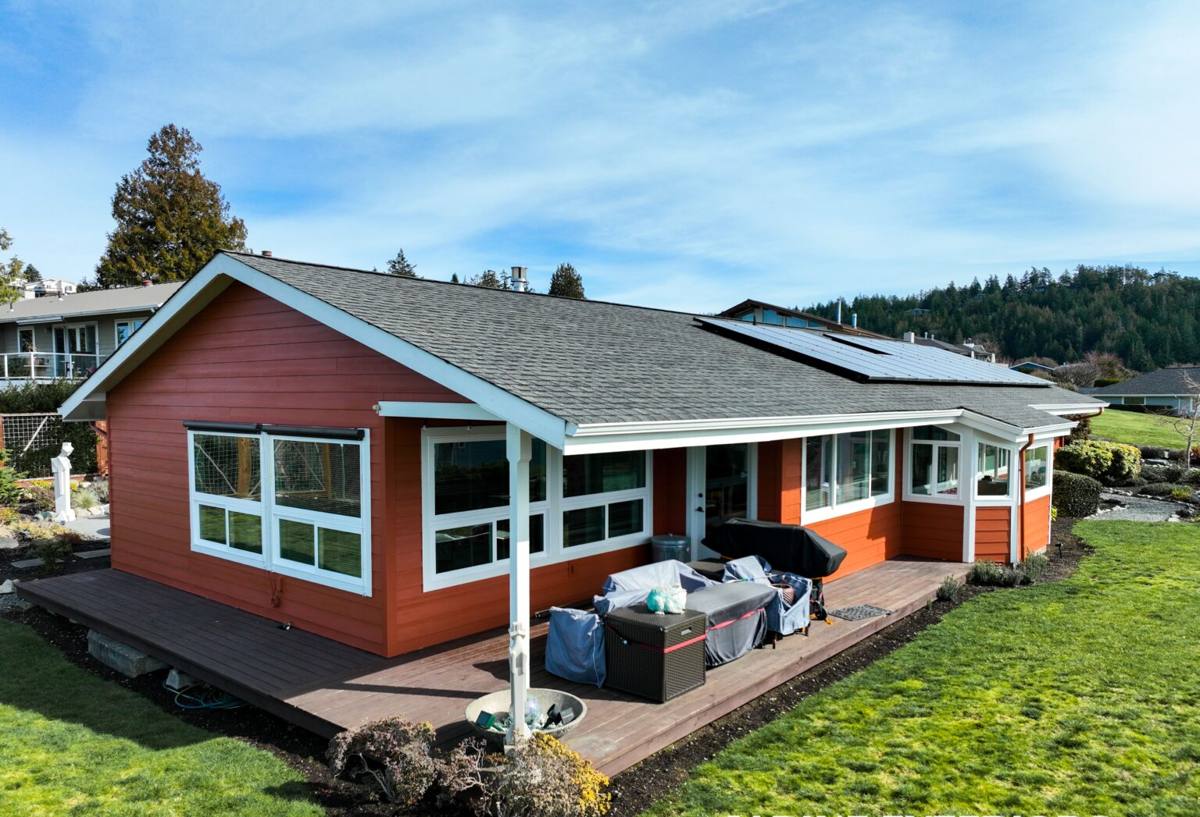
Why We Only Install James Hardie Fiber Cement Siding
We don't install vinyl, LP SmartSide, Cemplank, Allura, primed spruce, or cedar on La Conner homes. That's a deliberate standard, not a lack of options. Each of those products has legitimate uses, but none of them holds up as consistently in a salt-air, high-moisture, moss-prone environment as James Hardie fiber cement does when it's installed correctly.
Vinyl expands and contracts with temperature swings and can warp or crack over time, and it doesn't offer the fire resistance or impact durability that fiber cement does. Engineered wood products like LP SmartSide use wood strand cores that, however well treated, remain more vulnerable to moisture intrusion at cut edges and seams than a cement-based product. Primed spruce and cedar require an ongoing paint and sealing commitment that most homeowners underestimate, especially in a climate where the siding rarely gets a long dry stretch to properly cure a fresh coat. Other fiber cement brands like Cemplank and Allura are closer competitors to Hardie, but we've standardized on Hardie specifically for its ColorPlus factory-baked finish, its HZ5 product engineering for wet climates, and the strength of its transferable warranty when the installation is done to their specification.
None of this means those other products are junk. It means that after years of doing this work in Skagit County's climate, we decided the trade-offs weren't worth it on the homes we put our name on. Hardie fiber cement is non-combustible, dimensionally stable, resists moisture-driven swelling far better than wood-based products, and holds its factory finish without the repainting cycle that cedar and primed wood demand.
What Correct Siding Installation Actually Involves
The siding boards themselves get most of the attention, but the layers underneath them do most of the actual work of keeping a La Conner home dry. A correct installation is really a system, and skipping or rushing any layer undermines the whole thing.
Weather-Resistive Barrier
Every wall gets a continuous weather-resistive barrier installed over the sheathing before any siding goes up. In a driving-rain environment like La Conner's, laps and seams in this barrier have to be shingled correctly — upper courses overlapping lower ones — so water is directed out and down rather than behind the barrier.
Flashing at Every Penetration
Windows, doors, hose bibs, light fixtures, and any other wall penetration need proper flashing integrated with the weather barrier. This is where most siding failures actually start — not in the field of the wall, but at these transition points where water can find a way behind the cladding if the flashing was skipped or installed out of sequence.
Rainscreen Gap
On a home taking this much wind-driven rain and humidity, a ventilated rainscreen gap between the weather barrier and the siding gives any moisture that does get past the outer layer a path to drain and dry out, rather than sitting trapped against the sheathing. This also helps interrupt the damp, shaded conditions that moss and mildew need to establish themselves on a wall.
Fastening and Clearances to Hardie Spec
James Hardie publishes specific fastener types, spacing, and minimum clearances — from grade, roofing, decks, and other surfaces — and those specs exist because they've been tested against real failure modes. Installing to spec is what keeps the manufacturer's warranty intact and is also simply what makes the siding perform the way it's designed to.
Our Installation Process
Every La Conner project follows the same sequence, whether it's a full re-side or a section of a home.
- On-site inspection and measurement — we look at the existing siding, sheathing condition, trim, and any problem areas (moss buildup, staining, soft spots) before quoting anything.
- Tear-off and sheathing check — old siding comes off and the sheathing underneath gets inspected for rot or water damage before we cover it back up. Any compromised sheathing gets repaired, not sided over.
- Weather-resistive barrier and flashing installation — installed and integrated at every window, door, and penetration before siding starts.
- Rainscreen and furring where called for — to give the wall assembly a drainage and drying path.
- Hardie siding installation to manufacturer spec — correct fastener placement, clearances, and seams.
- Trim, caulking, and touch-up — factory ColorPlus finish means minimal field painting, but cut edges and seams get properly sealed per Hardie's guidelines.
- Final walkthrough — we go over the finished work with the homeowner before calling the job done.
Choosing a Hardie Product Line for a La Conner Home
James Hardie makes several siding profiles, and the right one depends on the home's style and exposure, not just personal preference.
| Product Line | Look | Best Suited For |
|---|---|---|
| HardiePlank Lap Siding | Traditional horizontal lap | Most La Conner homes; the most common re-side choice |
| HardieShingle | Staggered or straight-edge shingle look | Craftsman and cottage-style homes common in the area |
| HardiePanel | Vertical panel | Accent walls, gables, and modern-style builds |
| HardieTrim | Smooth or textured trim boards | Window, door, and corner trim to match the siding system |
All of these are available in Hardie's HZ5 formulation, engineered specifically for wetter, harsher climates like ours, rather than the HZ10 formulation built for hot, dry regions. That distinction matters more in a place like La Conner than it does further inland.
Cost Factors for Siding Installation
Every home is different, so we don't quote broad numbers without seeing the job, but the same handful of factors drive the cost on most La Conner projects.
| Factor | Why It Affects Cost |
|---|---|
| Sheathing condition | Rot or water damage found during tear-off requires repair before new siding goes on |
| Home size and wall complexity | More corners, dormers, and cutouts mean more labor and material waste |
| Product line and profile | Shingle and panel profiles generally take more labor than standard lap siding |
| Trim and accent work | Custom trim details add material and installation time |
| Access and site conditions | Waterfront lots, tight setbacks, or difficult staging areas can affect labor time |
Signs a La Conner Home Needs New Siding
Homeowners often wait too long on siding because the damage is happening behind the surface, not on it. Watch for:
- Persistent moss or algae growth that comes back quickly after cleaning
- Soft, spongy, or bubbling spots when you press on the siding
- Visible warping, cupping, or gaps between boards
- Paint that's peeling or blistering repeatedly in the same areas
- Staining or streaking that suggests water is tracking down or behind the siding
- Interior signs like musty smells, peeling interior paint, or damp drywall near exterior walls
Any one of these on its own isn't necessarily an emergency, but a home showing more than one of them is usually telling you the current siding or its underlying moisture barrier has failed.
Why a Crew That Works in La Conner Matters
Siding installation isn't a one-size-fits-all trade. A crew that mostly works dry, inland climates can do a technically correct install and still miss details that matter specifically here — how tight to make clearances near a marine-influenced yard, how aggressively to plan for moss with rainscreen ventilation, or how to sequence work around La Conner's rain patterns so the weather barrier isn't exposed longer than it should be. A crew that already works Skagit County's coastal communities has already made those judgment calls on other homes nearby and knows what actually holds up here versus what looks fine on paper.
Keeping Hardie Siding Performing After Installation
One advantage of a correctly installed Hardie system is how little ongoing maintenance it asks for compared to wood siding. That said, a few habits go a long way in this climate:
- Rinse siding periodically to keep salt residue and organic buildup from accumulating, especially on north- and shade-facing walls
- Keep gutters clear so overflow isn't running down the siding face
- Trim back vegetation and landscaping that's holding moisture or shade against the wall
- Address caulking or trim issues early rather than letting a small gap become a water entry point
If you're weighing a siding replacement or repair in La Conner, we're happy to walk the property, look at what's there now, and give you a straight assessment — no pressure, no upsell into a product we wouldn't put on our own homes. Reach out for a free estimate and we'll go from there.