 Anacortes Siding
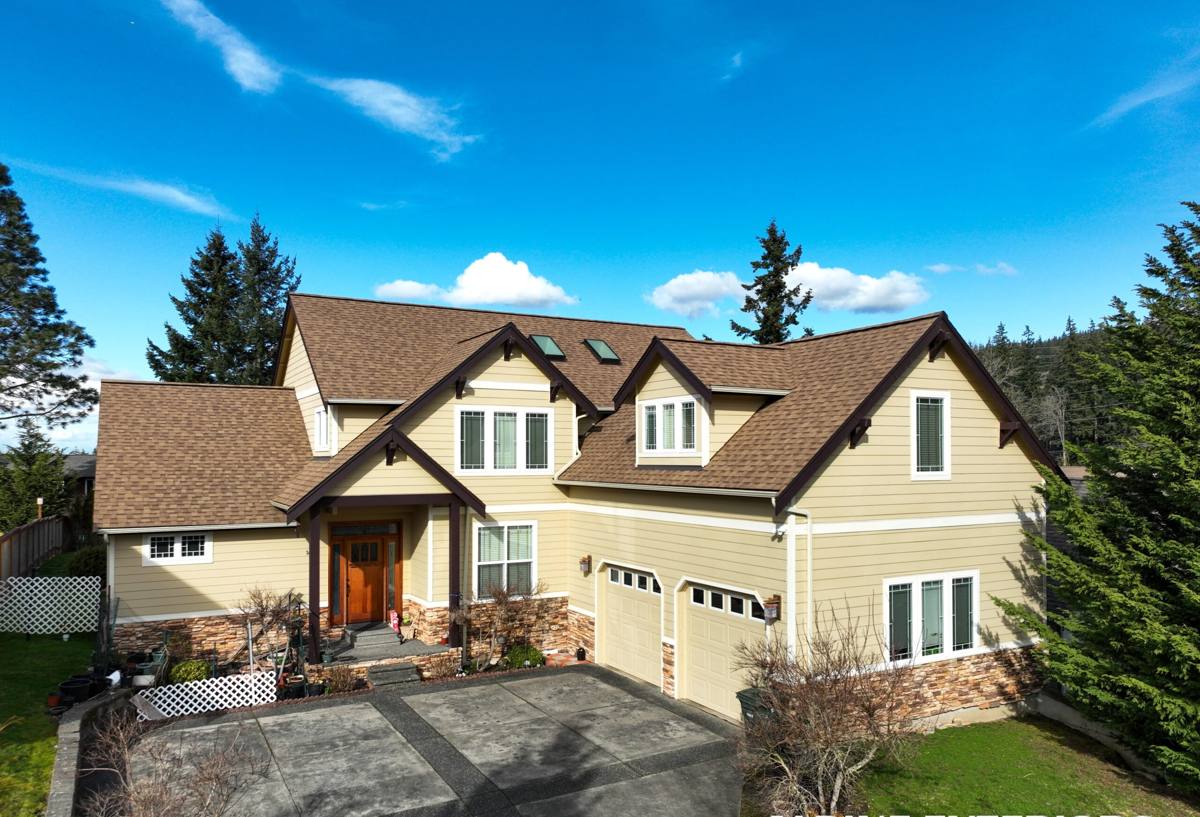
 Custom Windows for Skyline Homes
Skyline sits close enough to the water and the tree line that its homes take a specific kind of weather beating: salt-laden air off the Salish Sea, driving rain that comes in sideways during winter storms, and a moss season that seems to stretch longer every year in Skagit County. Windows here don't fail the way they do in drier inland climates. They fail at the seams, at the sills, and at the seals — slowly, quietly, until a homeowner notices fogging between panes or a draft that wasn't there last winter.
"Custom" in this context doesn't mean fancy shapes or oversized picture windows, though we do plenty of that too. It means windows sized, flashed, and specified to fit the actual opening in your actual wall, in a house that was very likely built before today's energy codes and moisture-management standards existed. Skyline has a real mix of housing stock — older post-and-beam homes, mid-century ranches, and newer infill construction — and each one needs a slightly different approach to get a window that performs for the next 20-plus years instead of the next five.
What Local Climate Does to Windows Over Time
Anacortes and the surrounding Skagit County shoreline get a combination of conditions that's harder on window assemblies than most people realize:
- Salt air corrosion — airborne salt accelerates the breakdown of untreated aluminum hardware, cheap fasteners, and some lower-grade vinyl components, especially on west- and south-facing elevations.
- Driving rain — wind-driven rain off the water doesn't just hit glass, it pushes water sideways into gaps around the frame that would stay dry in a calmer climate. Flashing and sealant details matter more here than in most parts of the country.
- Moss and mildew — the long damp season keeps wood sills and trim wet for extended stretches, which is exactly the environment moss and mildew need to take hold, especially on north-facing or shaded walls.
- Temperature swings — mild but persistent cold, paired with indoor heating, creates condensation cycles that punish older single-pane and early double-pane units.
None of these are dramatic, one-time events. They're slow, cumulative pressure — which is why window failure in this area tends to show up as rot, seal failure, or hardware corrosion rather than sudden breakage.
Frame Material: What Actually Holds Up
We get asked constantly which frame material is "best." The honest answer is that it depends on the wall it's going into, the home's style, and the budget — but some materials clearly have an edge in a marine climate like Skyline's.
| Frame Material | Salt Air / Moisture Behavior | Maintenance | Typical Fit |
|---|---|---|---|
| Vinyl (quality-grade) | Doesn't corrode; welded corners resist water intrusion well | Low — occasional cleaning | Most Skyline homes, best value |
| Fiberglass | Excellent — dimensionally stable, resists moisture and corrosion | Low | Higher-end replacements, larger openings |
| Wood-clad | Good if cladding and flashing are done correctly; interior wood needs protection from condensation | Moderate — exterior clad, interior finish upkeep | Older or historic-style homes where wood interior look matters |
| Aluminum (uninsulated) | Prone to corrosion and thermal transfer near salt air; not our recommendation for this climate | Moderate to high | We generally steer clients away from this option locally |
We don't install uninsulated aluminum frames on Skyline homes as a matter of professional standard — not because the product is inherently bad everywhere, but because in a coastal, high-moisture, high-salt environment it tends to develop corrosion and condensation problems faster than the alternatives, and that's a maintenance burden we'd rather steer clients away from up front.
Glass Package Considerations
Frame material gets most of the attention, but the glass package matters just as much for comfort and condensation control. For this climate, we typically recommend:
- Double-pane, low-E coated glass as the baseline — helps with both heat retention and glare off the water.
- Argon gas fill between panes for better insulation performance in our shoulder-season temperature swings.
- Warm-edge spacer systems, which resist condensation at the glass edge better than older aluminum spacers — a real difference during damp Skagit County winters.
Getting the Installation Right — Where Most Failures Actually Start
In our experience, window failures in this area are rarely about the window unit itself. They're about the installation — specifically, how the opening was prepped and how the window was flashed and sealed into the wall. A correct install in Skyline's climate involves:
- Removing the old unit carefully and inspecting the rough opening for hidden rot, especially at the sill, before anything new goes in.
- Repairing or rebuilding the opening if there's water damage — installing a new window into a compromised opening just hides the problem for a few more years.
- Installing a sloped sill pan so any water that does get past the frame drains back out instead of pooling against wood framing.
- Layering flashing tape correctly — sides, then head, then integrating with the house wrap or building paper in the right shingle-lap order so water sheds downward and outward.
- Sealing and integrating with the siding so the window and the cladding work as one weather-resistant system rather than two separate elements butted together.
- Interior air-sealing around the frame to control condensation and drafts from the inside.
That last point matters more than most homeowners expect. A window is only as good as the wall it's set into, which is part of why it helps to work with a crew that handles both siding and window integration — the flashing details at that junction are exactly where leaks tend to start.
Signs a Skyline Home's Windows Need Attention
Not every window problem calls for full replacement. Here's a practical checklist for what to look for before deciding:
- Fogging or a milky look between panes of double-glazed units — a sign the seal has failed and the gas fill or desiccant has been compromised.
- Visible gaps or soft, spongy wood at the sill or trim, especially on north- or west-facing windows.
- Difficulty opening, closing, or latching, particularly after a wet winter.
- Noticeable draft near the frame edge on windy days.
- Moss or persistent green staining building up on sills or exterior trim.
- Rising heating bills without a clear other cause.
- Visible corrosion on hardware, hinges, or cranks.
If you're seeing one or two of these, it may just be a resealing or hardware fix. Several at once, especially paired with soft wood, usually points to replacement being the more cost-effective long-term call.
Our Process, Start to Finish
We keep the process straightforward because homeowners have enough to juggle already:
- On-site assessment — we look at the actual openings, check for hidden moisture damage, and take real measurements rather than working off assumptions.
- Honest recommendation — we'll tell you if a window needs full replacement, or if a repair will genuinely hold up, based on what we find.
- Clear, written estimate — frame material, glass package, and installation scope spelled out before any work starts.
- Opening prep and any needed repairs — addressed before the new window goes in, not glossed over.
- Installation with proper flashing and sealing — using the sequencing described above, matched to your siding type.
- Final walkthrough — we check operation, seals, and finish work with you before calling the job done.
Cost Factors to Expect
Every job is different, but the main variables that move price on a Skyline window project are consistent:
| Factor | Why It Affects Cost |
|---|---|
| Number and size of openings | More or larger windows means more material and labor |
| Frame material chosen | Vinyl, fiberglass, and wood-clad carry different material costs |
| Condition of the existing opening | Rot repair or reframing adds labor beyond a straight swap |
| Access and elevation | Upper-story or hard-to-reach windows take more time and equipment |
| Custom shapes or sizes | Non-standard openings often require special-order units |
We'd rather walk your property and give you real numbers than throw out a broad estimate that doesn't match your home. Most straightforward window replacements land in a wide range depending on these factors, and we'll break that down clearly once we've actually seen the job.
Why a Crew That Works Skyline Regularly Makes a Difference
Anacortes and the broader Skagit County coastline aren't a generic climate zone — they have a specific combination of salt exposure, wind-driven rain, and shaded, moss-prone conditions that reward experience. A crew that installs windows here regularly already knows which elevations tend to take the worst weather, how the local housing stock was typically built, and where flashing tends to get skipped on lower-quality installs. That familiarity shows up in fewer callbacks and windows that are still performing well a decade or two later, instead of needing attention again in five years.
If you're noticing drafts, fogged glass, or soft trim around your windows, or you're just planning ahead for a siding or exterior project and want windows handled as part of the same scope, we're happy to take a look. Reach out for a free, no-pressure estimate — we'll walk the property, give you a straight answer, and let you decide from there.