 Anacortes Siding
 Building Decks for Skyline's Particular Conditions
Skyline sits up on the hill above the water, which means the homes there get some of the best views in Anacortes — and some of the toughest exposure. Elevation and proximity to the Sound bring a steady mix of salt-laden air, wind-driven rain, and shaded, moss-prone spots under mature trees and roof overhangs. A deck built for a more sheltered lot inland doesn't hold up the same way here. We've built and repaired decks throughout Skyline long enough to know which details matter on this hill and which ones are just extra cost.
This page is specifically about deck building for Skyline homes — not a general overview of decks everywhere in Skagit County. If you're planning a new deck, replacing a failing one, or trying to figure out why your current deck is graying, cupping, or growing moss faster than it should, this is written for that situation.
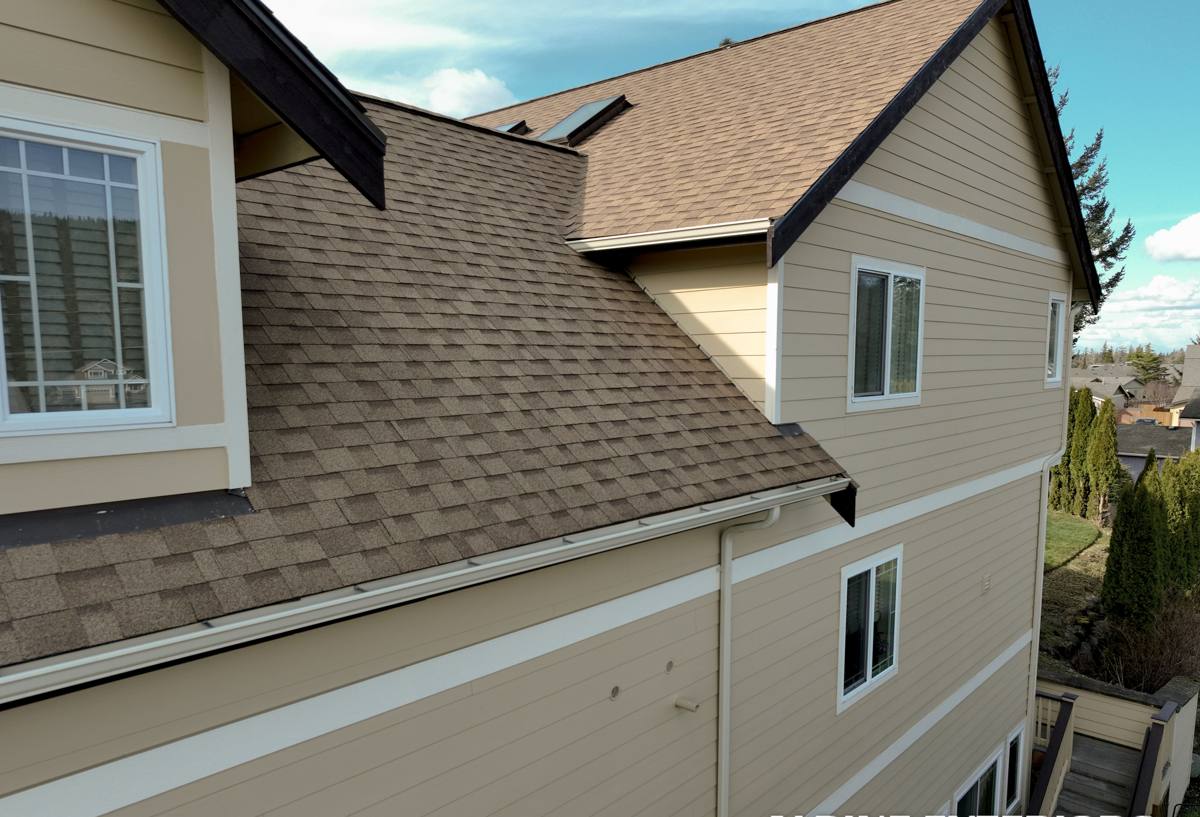
What Anacortes Weather Actually Does to a Deck
Three things drive almost every deck problem we see on Skyline properties:
Salt Air
Being close to Puget Sound means airborne salt settles on exposed surfaces year-round, not just during storms. Salt accelerates corrosion on fasteners, hinges, and any exposed metal hardware. It also speeds up the breakdown of lower-grade finishes and sealants, which is why hardware selection matters more here than it would twenty miles inland.
Driving Rain
Anacortes doesn't just get rain — it gets wind-driven rain that hits decking and railing posts at an angle, working its way into joints, fastener holes, and end grain that a vertical rain would never reach. This is the number one cause of hidden rot in ledger boards and post bases that look fine from the top.
Moss and Shade
Many Skyline lots have mature trees and northern exposure that keep parts of a deck shaded and damp well into the afternoon, even on dry days. Moss and algae take hold fastest in these spots, and beyond being slippery, they trap moisture against the wood or composite surface far longer than sun-exposed boards ever see.
None of this means a deck can't last for decades on Skyline — it means the build has to account for these conditions from the ground up, not just at the finish coat.
Choosing Decking Material for a Skyline Lot
There's no single "best" decking material — the right choice depends on how much shade your lot gets, how much maintenance you want to do, and your budget. Here's how the common options actually perform under Skyline's conditions:
| Material | How It Handles Salt Air & Rain | Moss/Algae Resistance | Maintenance |
|---|---|---|---|
| Pressure-treated fir/hem-fir | Good if properly sealed and re-sealed on schedule | Needs regular cleaning in shaded areas | Annual inspection, re-sealing every 1-3 years |
| Cedar | Naturally rot-resistant, but still needs finish maintenance near the coast | Moderate — still grows moss if shaded and neglected | Sealing/staining every 2-3 years |
| Composite (capped) | Handles salt exposure very well, doesn't absorb moisture | Better resistance, but still needs washing in shaded spots | Occasional washing, no sealing |
| PVC decking | Excellent — fully impervious to moisture | Best resistance of the common options | Occasional washing |
For sunnier Skyline lots with good airflow, a well-maintained wood deck is a perfectly reasonable choice and often the most budget-friendly. For shaded lots or homeowners who don't want a recurring maintenance chore, we'll usually steer the conversation toward a capped composite or PVC board — not because wood is a bad product, but because the maintenance burden in a shaded, damp spot is a real cost that's easy to underestimate up front.
What's Underneath Matters More Than What's On Top
The decking surface is what you see, but the framing underneath is what determines whether the deck is still safe in fifteen years. On Skyline's hillside lots, we pay close attention to a few things that are easy to skip:
- Ledger board flashing — the connection where the deck attaches to the house is the single most common source of hidden water damage, and it needs proper flashing, not just caulk
- Post base connections that keep wood off standing water and allow drainage
- Joist spacing and sizing appropriate to the board material and expected loads, including snow load where relevant
- Proper slope away from the house so water sheds instead of pooling under the decking
- Ventilation underneath low-clearance decks so moisture doesn't get trapped against framing
A deck that looks great on top but was framed with shortcuts underneath is the most common repair call we get — and by the time it shows on the surface, the fix is usually bigger than it needed to be.
Hardware and Fasteners: Where Salt Air Wins If You Cheapen Out
This is the detail that separates a deck that lasts on a hill like Skyline from one that starts showing rust streaks and loose connections within a few years. We use fasteners and structural hardware rated for coastal exposure — stainless steel or heavy hot-dip galvanized, matched to the connector manufacturer's specification for the material being used. Mixing incompatible metals (for example, the wrong fastener in a treated-lumber connector) can actually accelerate corrosion through galvanic reaction, which is a mistake worth avoiding from day one rather than fixing later.
Railings and Guards Built for Wind and Wet Hands
Elevated Skyline lots often mean elevated decks, which brings code-required guardrails into play, along with wind exposure that a sheltered lot wouldn't see. We build railing systems that meet current guard height and baluster spacing requirements, use hardware rated for the same coastal exposure as the rest of the structure, and choose railing materials that won't become slick or hard to grip when wet — a real consideration on a deck that gets rained on as often as this one will.
Our Deck Building Process
We keep the process straightforward and communicate at each stage:
- On-site assessment — we walk the lot, check sun/shade exposure, drainage, and how the deck will tie into the house
- Design and material selection — sized to your space, budget, and how you'll use it, with honest trade-offs explained for each material option
- Permitting — we handle the permit application and inspections required for the scope of work
- Demo (if replacing an existing deck) — including a check of the ledger and framing for hidden rot before rebuilding
- Framing and structural work — built to code with coastal-rated hardware throughout
- Decking, railing, and finish work — installed to manufacturer specifications so warranties stay valid
- Final walkthrough — we go over care and maintenance specific to the material you chose
Permits and Skagit County Requirements
Most new decks and many deck replacements in Anacortes require a building permit, and elevated decks typically need engineered or code-compliant guardrails and stair details. Requirements can vary depending on deck height, size, and attachment to the house, so we pull the appropriate permits and coordinate inspections as part of the job rather than leaving that step to the homeowner. Skipping this isn't a shortcut worth taking — it can create real problems at resale or with insurance down the road.
Keeping a Skyline Deck in Good Shape Year to Year
Whatever material you choose, a little seasonal attention goes a long way in this climate:
- Sweep debris and needles out of gaps between boards so moisture doesn't sit trapped
- Rinse shaded and north-facing sections more often — that's where moss and algae take hold first
- Check and re-tighten railing connections annually, since coastal air is harder on hardware over time
- Inspect the ledger board flashing area yearly for any sign of staining or softness
- Re-seal wood decking on schedule rather than waiting until it visibly grays
- Keep gutters and downspouts near the deck clear so runoff isn't dumping extra water onto or under it
Why It Matters That We Already Work in Skyline
A crew that's worked on Skyline's hillside lots already understands the site conditions before they show up — the exposure patterns, the shaded pockets, the way wind-driven rain behaves at elevation. That means fewer surprises during the build and a deck that's specified correctly the first time, rather than adjusted after the fact. It also means we're a known, findable crew in the neighborhood if you ever need a warranty question answered or a maintenance question down the road, not a company you found once and can't reach again.
If you're planning a new deck or need an honest look at whether your current one needs repair or replacement, we're glad to come take a look. The estimate is free, there's no pressure, and you'll get a straight answer about what your Skyline lot actually needs — not an upsell.