 Anacortes Siding
 Fiber Cement Siding Built for Skyline's Marine Climate
Skyline sits close enough to the water that homes here take a different kind of weathering than siding fifteen minutes inland in Mount Vernon or Burlington. Salt-laden air off the Guemes Channel and Rosario Strait settles on exterior walls year-round, driving rain comes in sideways during winter storms, and the shaded, moisture-heavy stretches of the neighborhood grow moss and algae faster than almost anywhere else in Skagit County. Siding that isn't engineered for that combination shows it early — chalking, swelling, soft trim, and streaked green-black growth on north- and west-facing walls within a few years of installation.
This page is about one product, in one place: James Hardie fiber cement siding installed on homes in the Skyline neighborhood of Anacortes. We don't sell vinyl, LP SmartSide, cedar, or primed spruce here, and we're not going to pretend those products perform the same way fiber cement does in a salt-air, high-moisture environment. What follows is what Skyline homes actually need from their siding, what a correct installation looks like, and how our process is built around the conditions specific to this part of Anacortes.
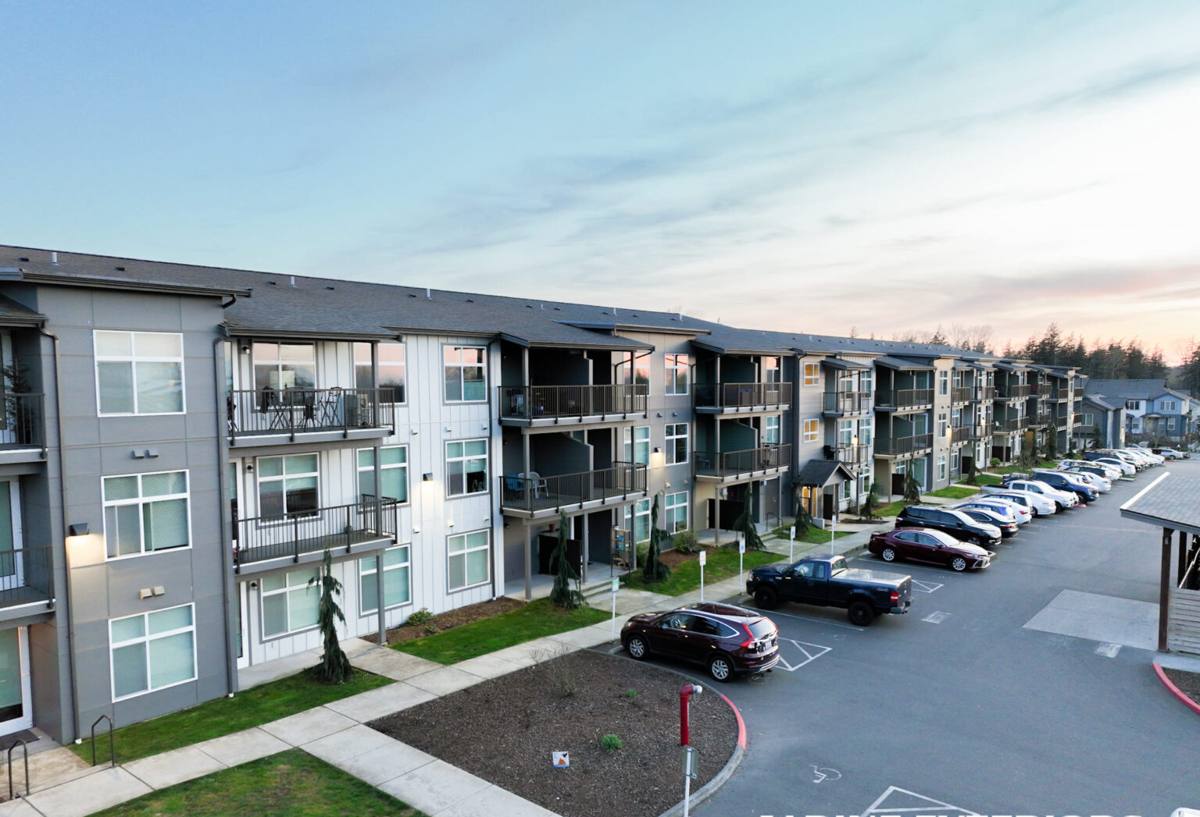
What Salt Air, Rain, and Moss Season Actually Do to a House
Salt air
Airborne salt is corrosive to fasteners, flashing, and any metal trim components on the exterior of a home. It also accelerates the breakdown of coatings that aren't formulated to resist it — paint film that would last eight to ten years inland can start failing in five near the water. Salt exposure doesn't damage fiber cement the way it does wood or some composite products, but it makes the quality of the factory finish and the corrosion resistance of the fasteners and flashing that surround it far more important than they'd be in a drier, inland location.
Driving rain
Anacortes gets weather off the strait that pushes rain horizontally into west- and south-facing walls, not just straight down. That means water finds its way into any gap in flashing, any unsealed penetration, and any siding joint that wasn't lapped or caulked correctly. A siding system's water-shedding detail work — not just the panel material itself — is what keeps a wall assembly dry during a real winter storm.
Moss and algae season
Skagit County's long wet season, combined with tree cover and shaded exposures common in Skyline, creates ideal conditions for moss and algae growth on exterior surfaces for much of the year. Once growth establishes on a wall, it holds moisture against the surface underneath it, which is exactly the wrong thing to happen to any siding material, painted or not.
Why We Install Only James Hardie Fiber Cement Here
Fiber cement is dimensionally stable, non-combustible, and doesn't rot, swell, or attract insects the way wood-based siding can. James Hardie specifically engineers its HZ product lines for regional climate zones, and Western Washington — including Skagit County — falls under the wetter HZ5 specification, which is formulated with moisture and humidity exposure in mind rather than a one-size-fits-all national product.
The factory-applied ColorPlus finish is the other piece that matters in a salt-air environment. It's baked on under controlled conditions and backed by its own finish warranty, which means the color and coating are far less likely to fade, chalk, or peel prematurely compared to field-applied paint on wood or engineered wood siding. In a location where UV, salt, and moisture are all working against a painted surface at the same time, a factory finish that's built to hold up under those specific conditions isn't a luxury — it's the reason the siding still looks right in year twelve instead of year five.
| Factor | Why It Matters in Skyline |
|---|---|
| Non-combustible core | Reduces exterior fire risk during dry summer/fall stretches and wildfire smoke events |
| Dimensionally stable | Doesn't swell or shrink with the constant humidity swings off the water |
| HZ5 climate engineering | Formulated for the Pacific Northwest's wet, humid conditions specifically |
| Factory ColorPlus finish | Resists fading and coating failure better than field-applied paint in salt air |
| Rot and insect resistant | Doesn't feed moss root systems or attract carpenter ants the way wood trim can |
What a Correct Installation Looks Like in This Climate
The siding panel is only part of the system. Most premature siding failures we see in Skagit County homes trace back to installation details, not the product itself. For a Skyline home, that means paying close attention to:
- Clearances: Maintaining proper gaps between siding and roofing, decking, and grade so water has somewhere to go instead of wicking into the bottom edge of the panel
- Flashing at every penetration: Windows, doors, hose bibs, light fixtures, and vents all need correctly lapped flashing so wind-driven rain can't work its way behind the siding
- Fastener corrosion resistance: Using fasteners rated for the exposure, not standard interior-grade hardware that will streak and corrode in salt air
- Proper panel overlap and joint treatment: Correctly lapped horizontal joints and sealed vertical joints so driving rain doesn't push past the seams
- A functioning drainage plane behind the siding: Weather-resistant barrier and rainscreen detailing that let any moisture that does get past the cladding drain and dry out instead of sitting against the sheathing
- Painted or factory-finished cut edges: Every field cut needs to be sealed before installation, or that raw edge becomes the first place moisture gets in
Skip any one of these and you can end up with a callback within a few years — regardless of how good the siding material itself is. This is where installation experience matters as much as product choice.
How We Approach a Skyline Job
Every project starts with a walk-around of the existing exterior, not just a measurement of wall area. We're looking at current moisture damage, moss growth patterns tied to shade and drainage, existing flashing condition, and any trim or sheathing that needs repair before new siding goes up. Covering a wet or already-damaged wall assembly with new siding doesn't fix the underlying problem — it just hides it for a while.
Typical project sequence
- On-site assessment of the existing siding, trim, flashing, and any moisture or moss damage
- Removal of failing siding and inspection of the sheathing underneath for rot or water damage
- Repair of any compromised sheathing or framing found during tear-off
- Installation of a weather-resistant barrier and drainage plane appropriate for the wall's exposure
- Installation of James Hardie HZ5 panels or lap siding with correctly lapped flashing at every penetration
- Trim, caulking, and touch-up of any field-cut edges
- Final walk-through before we consider the job done
Why a Crew That Already Works Skyline Matters
A crew that's worked other homes in this neighborhood already knows which exposures take the worst of the weather off the water, where moss tends to establish first, and what the older housing stock in this part of Anacortes typically has going on behind the existing siding before it's opened up. That's not something a contractor coming from outside the area picks up on the first job. It shows up in small decisions — where to add extra flashing attention, which walls need a closer look at the sheathing, how much overlap makes sense given the direction a wall faces relative to the water — that add up to a siding job that actually holds up through a Skagit County winter rather than one that just looks good on installation day.
Cost Factors for a Skyline Fiber Cement Project
Every home is different, and we'll give you an actual number after we've looked at your walls, but the factors that typically move the price on a project like this are:
| Factor | Why It Affects Cost |
|---|---|
| Extent of tear-off | Removing and disposing of existing siding adds labor beyond a straightforward install |
| Sheathing/framing repair | Water damage found during tear-off has to be fixed before new siding goes on |
| Home complexity | Number of corners, penetrations, and roof lines affects flashing and trim labor |
| Siding profile | Lap siding, panel siding, and shingle-style profiles carry different material and labor costs |
| Trim and accessory scope | Fascia, soffit, and trim replacement alongside the siding changes total project scope |
Signs Your Skyline Home May Need Siding Attention
You don't need to wait for visible failure to have your siding looked at. Common early indicators we see on homes in this area include:
- Persistent moss or algae staining on north- or west-facing walls that comes back shortly after cleaning
- Soft or spongy trim boards, especially around windows and at the base of walls
- Paint that's chalking, peeling, or fading noticeably faster on one side of the house
- Visible gaps or separation at siding joints and around window and door trim
- A musty smell or visible staining on interior walls that back up to exterior siding
If you're seeing any of that on a Skyline home, or you're planning ahead for a siding replacement before it becomes an urgent repair, we're happy to take a look and walk you through what we find. Fill out the form below for a free, no-pressure estimate — we'll tell you honestly what your siding needs, not just what's easiest to sell.