 Anacortes Siding
 Building Decks for Old Town Anacortes Homes
Old Town Anacortes is one of the older parts of the city, sitting close to the water with a mix of long-standing homes and newer builds packed onto smaller, often sloped lots. Decks here don't live an easy life. Between the marine air rolling off the water, the long wet season, and the shade thrown by mature trees and tight lot lines, a deck in this neighborhood works harder than one built ten miles inland. Building or replacing a deck here isn't just a carpentry job — it's a decision about materials, drainage, and fasteners that has to account for what Skagit County weather does to wood and metal over time.
This page is about one thing: deck building done right for this specific neighborhood. Not a generic list of decking options, but what actually holds up here, what a correct build looks like from the footings up, and how we approach the job when we already know the conditions before we show up.
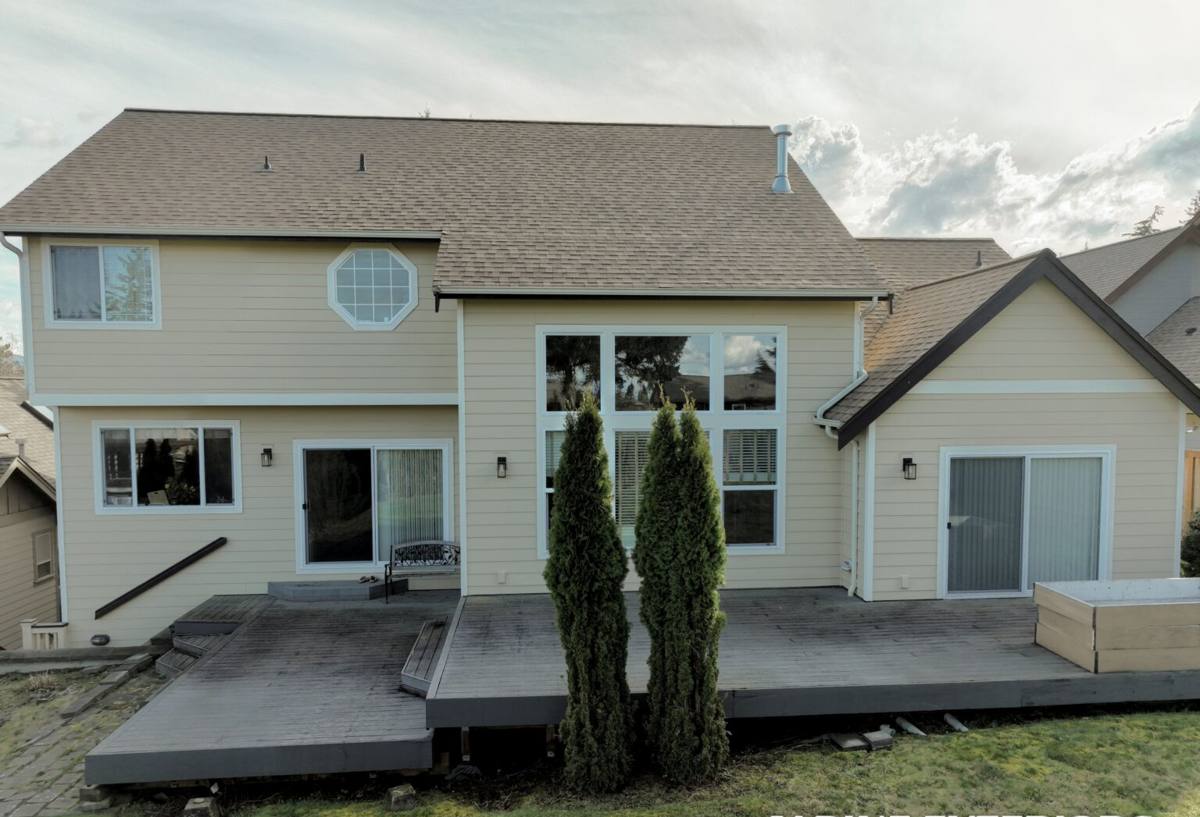
What Salt Air, Rain, and Moss Do to a Deck Over Time
Anacortes sits on the water, and that means airborne salt is a fact of life for anything built outdoors. Salt-laden air accelerates corrosion on exposed metal — fasteners, joist hangers, railing hardware — faster than most manufacturers' generic warranty language accounts for. A deck built with standard hardware can start showing rust streaks and weakened connections years before it should, especially on the side of the house that faces the water or catches the prevailing wind.
Then there's the rain. Western Washington's driving, sideways rain finds its way into places vertical rain never would — under railing posts, behind ledger boards, into end-grain cuts that weren't sealed. Wood that stays damp for weeks at a stretch through fall and winter is wood that rots from the inside before it ever looks bad on the surface.
And moss. Anacortes gets a long moss season, and a deck in partial shade — which describes a lot of Old Town lots with mature trees and close-set houses — will grow moss on any surface that stays damp and doesn't get airflow or sun. Beyond looking bad, moss holds moisture against the decking surface and turns boards slick, which is a real slip hazard on stairs and landings.
None of this means a deck can't hold up here. It means the design and material choices have to plan for it instead of ignoring it.
The Practical Result
- Fasteners and hardware need real corrosion resistance, not just a coating rated for average conditions.
- Drainage and airflow under and around the deck matter as much as the decking material on top.
- Board spacing, orientation, and shade exposure all affect how fast moss and mildew take hold.
- Ledger board flashing has to be correct the first time — it's the single most common source of hidden rot on older decks.
What a Correctly Built Deck Actually Involves
A deck that lasts in this climate is built in layers, and every layer has a job:
Footings and Framing
Footings need to be sized and set to local frost depth and soil conditions, not guessed at. On the sloped or uneven lots common in Old Town Anacortes, that sometimes means deeper or additional footings just to get a level, stable frame — cutting corners here shows up years later as a bouncy deck or a railing that's come loose from racking.
Ledger Attachment and Flashing
Where the deck attaches to the house is the single most water-exposed connection in the whole structure. Correct flashing — installed in the right order, lapped correctly with the house's existing water barrier — is what keeps that joint from becoming a slow, hidden leak into the rim joist and framing behind it. This is also the spot we see done wrong most often on older decks we're asked to replace.
Fasteners and Hardware
Given the salt air, we don't treat hardware as an afterthought. Stainless steel or high-grade coated fasteners and connectors cost more up front than standard galvanized hardware, but on a coastal build the difference shows up as years of extra service life before anything needs attention.
Decking Surface
Proper board spacing lets water drain through instead of pooling, and it lets air move underneath so the underside of the boards can actually dry out between rain events. This single detail has a bigger impact on moss growth than the decking material itself.
Choosing a Decking Material for This Climate
There's no universally "best" decking material — there's the right one for your budget, your maintenance appetite, and how much sun or shade your specific deck actually gets. Here's how the common options compare for a wet, salt-air, moss-prone site like Old Town Anacortes:
| Material | Moisture & Moss Behavior | Maintenance | Typical Lifespan |
|---|---|---|---|
| Pressure-Treated Lumber | Resists rot when properly finished; still needs airflow to shed moisture and discourage moss | Needs re-staining or sealing every 2-3 years | 15-20 years with upkeep |
| Cedar | Naturally rot-resistant, ages to a gray patina; can still host moss in deep shade if not maintained | Periodic cleaning and sealing to preserve color and resistance | 15-20 years with upkeep |
| Composite Decking | Doesn't rot, but can still grow surface moss/mildew in shaded, damp spots without cleaning | Occasional washing; no staining or sealing | 25-30+ years, brand-dependent |
We install all three depending on what a homeowner wants. Composite tends to make sense for shaded, low-maintenance-desired decks where moss is a recurring fight. Cedar and pressure-treated lumber remain solid, honest choices for homeowners who don't mind the upkeep and prefer a natural look — the key in either case is getting the framing, drainage, and fasteners right underneath, since that's what actually determines how long the deck lasts, regardless of what's on top.
Permits and Structural Basics
Most new decks and many deck replacements in Anacortes require a building permit, particularly if the deck is attached to the house, elevated above a certain height, or involves structural changes. Requirements are set by the City of Anacortes and Skagit County, and they exist for a real reason — a deck that isn't framed or attached correctly can fail, and railing height and guard spacing requirements exist specifically to prevent falls. We handle the permitting process as part of the job rather than leaving it to the homeowner to sort out.
On older Old Town lots, we also commonly run into existing decks that were never permitted or were built to older code. When we're replacing a deck like that, we flag anything that's out of step with current requirements up front, before it becomes a surprise mid-project.
How We Approach a Deck Project
- Site visit and assessment. We look at sun/shade exposure, drainage, existing structure (if there is one), and how the deck will be used, before talking materials.
- Design and material selection. We walk through the tradeoffs honestly — cost, maintenance, and how the site's specific moss and moisture exposure should factor into the decision.
- Permitting. We handle the paperwork with the city or county so the project is built to code from the start.
- Demolition (if replacing). Old decking, and any framing found to be compromised, gets removed and disposed of.
- Framing, footings, and flashing. This is where the deck's real lifespan gets decided, and where we don't cut corners.
- Decking and railing installation. Installed with proper spacing and fastener choice for the site's exposure.
- Final walkthrough. We go over the finished deck and what maintenance it will need going forward.
What to Watch for on an Existing Deck
If you're not sure whether your current deck needs repair or full replacement, these are the signs worth checking before winter sets in:
- Soft or spongy spots in the decking boards, especially near the house or stair stringers
- Rust streaking around fasteners or visible corrosion on brackets and hangers
- Persistent moss or algae that comes back within weeks of cleaning
- Gaps, cracks, or separation where the deck meets the house (ledger board area)
- Railings or posts that feel loose or move when pushed
- Standing water that doesn't drain within a few hours of rain stopping
Any one of these on its own might just need a repair. Several together, especially on a deck that's more than 15-20 years old, usually means it's time to talk about replacement rather than patching.
Why It Matters That We Already Work This Neighborhood
A deck built to a generic spec sheet doesn't account for the fact that a lot in Old Town Anacortes might sit in partial shade most of the day, catch salt-laden wind off the water, and have soil or slope conditions different from a newer subdivision lot across town. Working this neighborhood regularly means we're not guessing at any of that — we know what fastener corrosion looks like on a five-year-old deck near the water, we know which spots on a shaded lot will fight moss no matter what decking you choose, and we design around it instead of finding out the hard way after the fact.
That local knowledge doesn't replace good craftsmanship, but it does mean fewer surprises during the build and a deck that's set up to handle this specific climate from day one, not just an average one.
Get a Straightforward Estimate
If you're planning a new deck or need to replace one that's showing its age, we're happy to come take a look and give you an honest read on what it needs — no pressure, no upsell. Use the form below to request a free estimate.