 Anacortes Siding
 Window Replacement for Skyline Homes
Skyline sits up on the bluff above Anacortes, with views over the water that come at a price: the same exposure that makes the view worth having also means the homes up there take a beating from wind-driven rain and salt-laden air off Rosario Strait and the Guemes Channel. Windows here don't fail the way they do in a sheltered inland neighborhood. They fail faster, and they fail in specific, predictable ways tied to the local climate. If you're looking at foggy glass, soft trim, or a window that won't latch anymore, there's usually a straightforward explanation rooted in where you live, not just how old the house is.
This page covers what window replacement actually looks like for a Skyline home — what the climate does to windows here, what a correct installation involves, and how we approach the work when we're already familiar with this part of Anacortes.
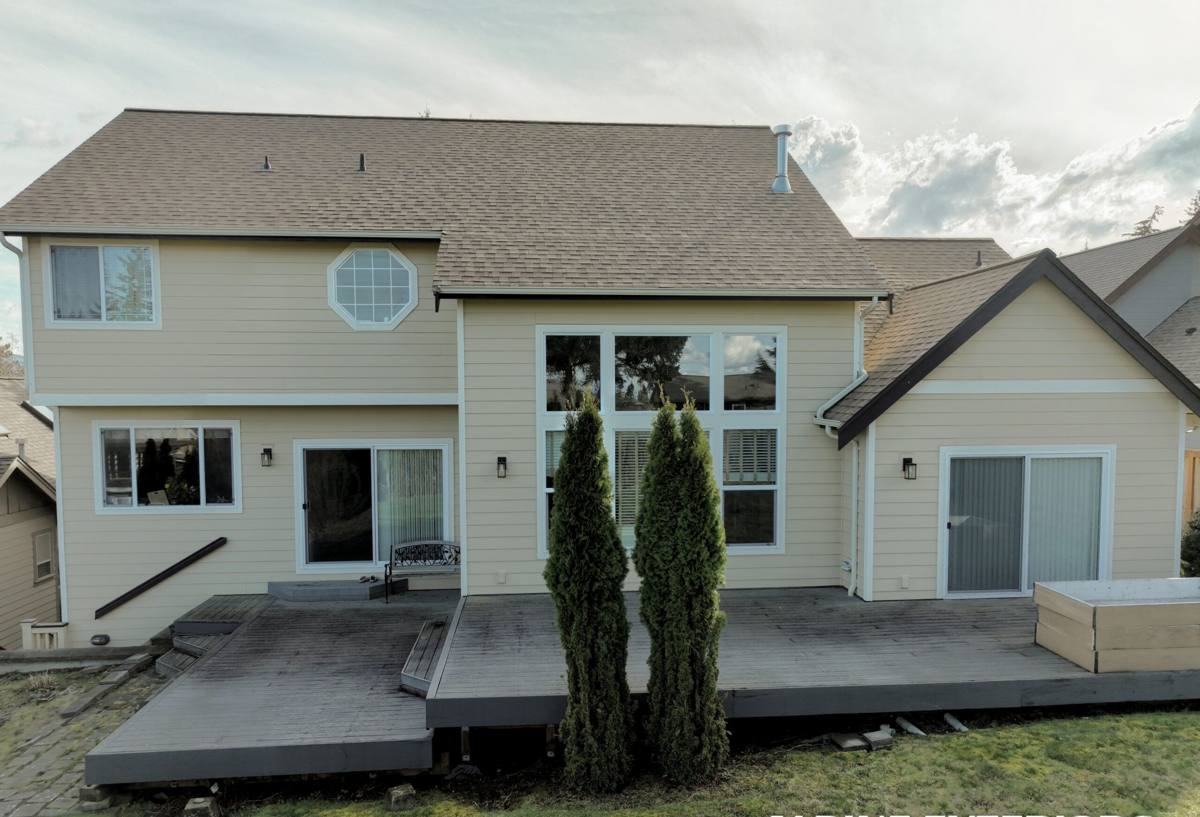
What Anacortes' Marine Climate Does to Windows
Skagit County's marine climate is mild compared to a lot of the country, but "mild" doesn't mean easy on building materials. Three things work against windows on the bluff in particular:
- Salt air — airborne salt accelerates corrosion on hardware, screws, and metal window components, and it degrades cheaper seals and finishes faster than they'd wear inland.
- Driving rain — wind off the water doesn't just fall, it pushes rain sideways into vertical siding and window assemblies, which means flashing and sealant details matter more here than in a calm-air location.
- A long moss season — persistent damp and shade on north- and west-facing walls keeps wood trim and sills wet for extended stretches, and moss holds moisture against surfaces long after a storm has passed.
Individually, none of these is dramatic. Together, over years, they're why a window that would last two more decades in a drier climate starts failing here in half that time — especially if it was installed without much attention to flashing and sealing in the first place.
How to Tell a Skyline Window Actually Needs Replacing
Not every issue means a full replacement. But these are the signs worth taking seriously, especially on a bluff-exposed home:
- Fogging or a visible haze between panes of a double-pane window — the seal has failed and the gas fill is gone
- Soft, spongy, or discolored wood at the sill or bottom corners of the frame
- Windows that are difficult to open, close, or lock, especially after rain
- Visible gaps between the frame and the siding or trim, or daylight visible around the sash
- A noticeable draft or cold spot near the window even when it's fully closed
- Paint or finish that's peeling specifically around the window opening, while the rest of the wall looks fine
- Moss or algae growth on the sill or lower frame that keeps coming back
Any one of these on its own might just need a repair. Several together, especially on a window facing the prevailing weather, usually mean the assembly has been letting water in for a while.
What a Correct Window Replacement Job Involves
Window replacement looks simple from the outside — old window out, new window in — but the part that determines whether it lasts happens underneath what you can see.
Removing the old window without damaging the opening
We take out the old sash and frame carefully and inspect the rough opening underneath. This is where a lot of hidden problems show up: soft framing, missing or degraded flashing, or water staining that tells us moisture has been getting in around the old window for longer than anyone realized.
Repairing what's underneath before anything new goes in
If we find rot or water damage in the framing, that gets addressed before the new window goes in — not covered over. Installing a new window over a compromised opening just means the same problem resurfaces a few years later, and on a bluff-facing wall it tends to resurface faster.
Flashing and sealing correctly for wind-driven rain
This is the step that matters most for houses that take rain sideways. Proper flashing directs water that gets behind the siding back out and away from the framing, using a shingled, overlapping order — building paper, flashing tape, window flange, then more flashing — so water always sheds downward and outward instead of finding a path inward. A window that's sealed only with a bead of caulk around the outside edge, with no real flashing underneath, is the single most common reason we see premature failures on this kind of exposure.
Setting the window level, plumb, and square
A window that's slightly out of square will bind, won't seal fully, and puts uneven stress on the frame — which shows up later as drafts or operating problems. This is basic technique, but it's the kind of step that gets rushed on a fast job.
Finishing and insulating the gap
The gap between the new window frame and the rough opening gets filled with low-expansion foam or backer rod and sealant — not stuffed with fiberglass insulation alone, which does nothing to stop air and moisture movement. Interior and exterior trim gets reset or replaced, and all exterior seams get sealed with a product rated for exterior exposure.
Choosing a Window Type for a Bluff-Exposed Home
There's no single "best" window material — the right choice depends on how much direct weather exposure your particular wall gets and how much upkeep you want to do. Here's how the common options hold up under Skyline's conditions specifically:
| Material | How it handles salt air & moisture | Maintenance | Notes for this area |
|---|---|---|---|
| Vinyl | Won't corrode or rot; unaffected by salt air | Low — occasional cleaning | Good all-around choice for exposed walls; some homeowners prefer a different look for older or higher-end homes |
| Fiberglass | Very stable in temperature swings and moisture; strong resistance to warping | Low | Handles wind load and driving rain well; usually a step up in cost from vinyl |
| Aluminum | Metal frame is more exposed to salt-air corrosion over time unless well-coated | Moderate | We're selective about where we use it on directly exposed walls for this reason |
| Wood-clad | Exterior cladding protects the wood, but any breach in the seal lets moisture reach bare wood | Higher — needs the cladding and seals monitored | Best suited to more sheltered walls rather than the most exposed, weather-facing sides |
We'll walk through this with you based on which walls of your specific house take the brunt of the weather — a window on a sheltered south wall doesn't need the same spec as one facing straight into the wind off the water.
Glass Options Worth Understanding
Beyond the frame material, the glass package affects comfort, energy use, and how much condensation you'll see:
- Double-pane vs. triple-pane — double-pane is standard and adequate for most Skagit County homes; triple-pane adds cost and weight but can help on the coldest, most wind-exposed walls
- Low-E coatings — a low-emissivity coating reflects heat back into the room in winter and blocks some solar heat in summer, without noticeably changing how the glass looks
- Gas fill — argon or krypton gas between panes improves insulation over plain air fill, and is standard on most quality replacement windows now
- Condensation resistance — better-sealed, better-insulated glass runs less risk of interior condensation, which matters in a damp climate where excess indoor humidity is already common
What Window Replacement Typically Costs
Every house and every window is different, so we won't quote a number without seeing the job — but these are the main factors that move the price up or down:
| Factor | Effect on cost |
|---|---|
| Number of windows replaced at once | Doing several together typically lowers the per-window cost versus one-off jobs |
| Frame material chosen | Vinyl is generally the most affordable; fiberglass and wood-clad cost more |
| Extent of hidden rot or framing repair needed | Framing repairs add labor and material cost, and can't be known until the old window is out |
| Window size and configuration | Large picture windows, bays, or custom shapes cost more than standard operable sizes |
| Glass package | Triple-pane, upgraded low-E coatings, or specialty glass increase cost over standard double-pane |
| Access and site conditions | Second-story or hard-to-reach windows add labor time |
The only way to get an accurate number is an in-person look at the windows and the framing behind them, which is what a free estimate is for.
Our Process, Start to Finish
- Walkthrough and assessment — we look at each window you're considering, check the condition of the framing where we can, and talk through what's realistic given your budget and priorities
- Written estimate — a clear, itemized quote with no pressure to decide on the spot
- Scheduling — we plan around weather where we can, since flashing and sealing work needs a reasonably dry window to do correctly
- Removal and inspection — old windows come out, and we check the rough opening for hidden damage before anything new goes in
- Installation — proper flashing, sealing, and setting of the new window, with attention to the details that determine whether it lasts
- Finish work — trim, interior and exterior sealant, and cleanup
- Final walkthrough — we go over the finished work with you before calling the job done
Why a Crew That Already Works Skyline Matters
A lot of window problems on the bluff trace back to installs that were done correctly for a calmer climate but not for this one — caulk instead of real flashing, standard details on a wall that takes rain sideways, or a material choice that wasn't matched to the exposure. A crew that regularly works in Skyline and the surrounding Anacortes neighborhoods has already seen how these particular houses behave in this particular weather, which means fewer surprises and fewer callbacks. It also means we're not guessing at how a given wall orientation or elevation handles wind and rain — we've worked on homes nearby with the same exposure.
Get a Free Estimate
If your windows are fogging, sticking, drafting, or just showing their age, it's worth having someone look before winter's driving rain finds every weak seal. We'll give you a straightforward, no-pressure estimate on what your Skyline home actually needs — use the form below to get started.