 Anacortes Siding
 Why Mount Vernon Homes Need Windows Built for This Climate
Mount Vernon sits in the Skagit Valley, close enough to the water and the marine air pattern that moves through Anacortes and the rest of Skagit County to feel its effects year-round. That means homes here deal with a specific combination of stresses that windows in drier inland climates never have to handle: salt-laden air that accelerates corrosion on hardware and fasteners, long stretches of driving rain that tests every seal and sightline, and a moss and algae season that runs longer than most homeowners expect. Add in the humidity that settles into the valley overnight and the temperature swings between damp mornings and warmer afternoons, and you have a climate that is genuinely hard on window assemblies over time.
Older or poorly installed windows don't fail all at once. They fail slowly, through fogged glass, soft spots in the surrounding trim, drafts that show up first in a cold snap, and heating bills that creep upward every year. Energy-efficient windows, installed correctly, address both sides of that problem: they cut the energy loss and they hold up to the specific weather Skagit County throws at them.
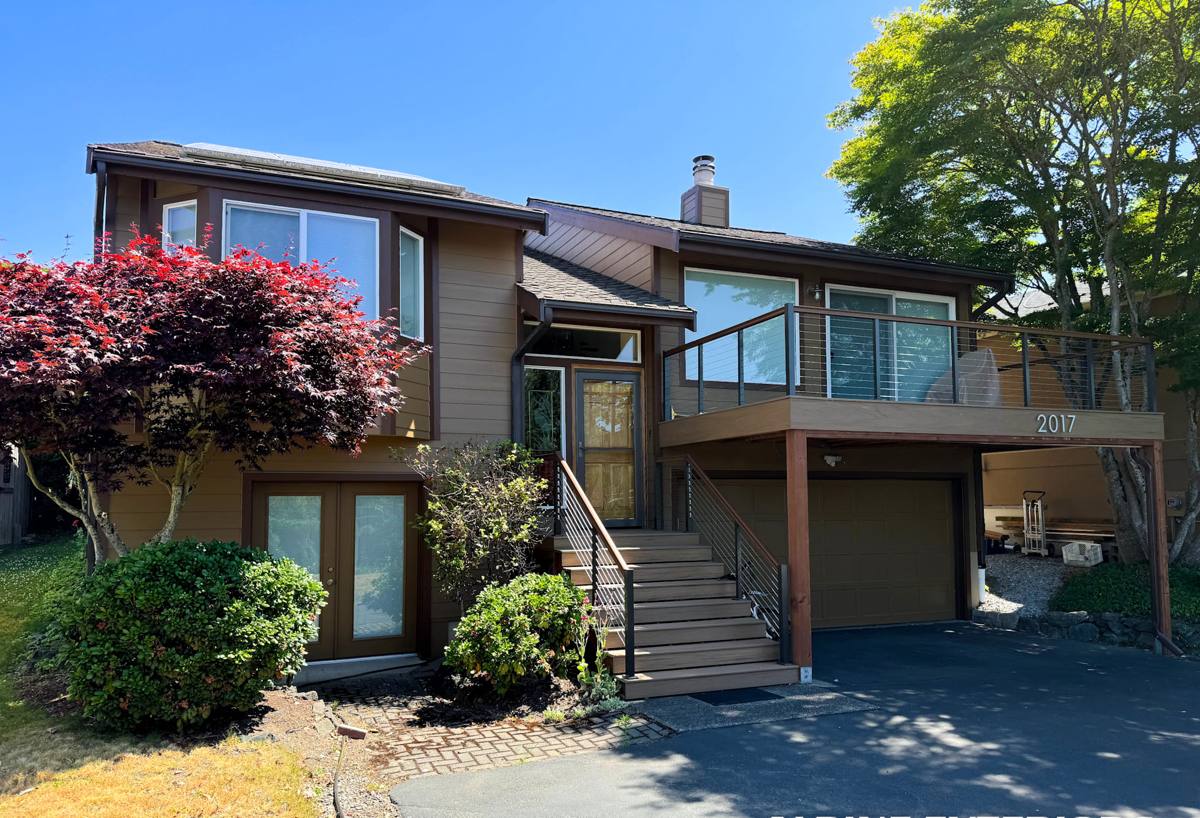
What "Energy-Efficient" Actually Means for This Area
Energy efficiency in a window isn't one feature — it's a combination of frame material, glass package, and installation quality working together. For Mount Vernon homes, we weigh these against local conditions, not just a national efficiency rating.
Frame Materials Compared
Vinyl frames are the most common choice for good reason: they don't rot, they don't need repainting, and modern multi-chambered vinyl performs well thermally. Fiberglass frames cost more but expand and contract less than vinyl across temperature swings, which matters here given how much the valley's temperature and humidity shift through the day. Wood-clad windows offer a traditional look but require more attention to keep the exterior cladding sealed against the rain we get — we're honest with homeowners that wood-clad is a higher-maintenance choice in this climate, not because the product is flawed, but because any gap in the cladding seal becomes an entry point for moisture over a wet Skagit winter.
Glass Packages That Matter Here
Double-pane glass with a low-E coating and argon gas fill is the baseline we recommend for this area. The low-E coating reflects heat back into the home in winter and blocks excess solar heat in summer, while the argon fill slows heat transfer between panes. For homes with more direct sun exposure, a different low-E coating tuned for solar control can help avoid overheating rooms in the warmer months without giving up winter performance.
Signs Your Current Windows Are Working Against You
Homeowners usually notice one of these first, and it's worth paying attention before the problem spreads to the surrounding wall assembly:
- Visible fog or moisture trapped between panes — the seal has failed and the insulating gas is gone
- A noticeable draft near the frame, especially during wind-driven rain
- Windows that stick, won't stay open, or don't latch tightly
- Soft, discolored, or spongy trim or sill material around the window
- Condensation forming on the inside of the glass regularly
- A heating bill that's climbed without a clear reason
- Visible moss or algae staining building up around the frame edges faster than the rest of the siding
Any one of these on its own might just mean it's time to replace that window. Several of them together, especially soft trim combined with drafts, usually means moisture has already worked its way into the wall around the window — and that's a bigger job than swapping glass.
Why the Installation Matters More Than the Window Brand
This is the part of window replacement that gets the least attention and causes the most long-term damage when it's rushed. A high-efficiency window installed with a poor moisture seal will underperform — and can actively cause rot — no matter how good the glass package is. In a climate with as much driving rain as Skagit County sees, the flashing and sealing details around the window are what actually keep water out of the wall.
What a Correct Job Involves
A proper installation starts with the opening itself, not the window. We check the sill and framing for existing damage before anything new goes in — installing a new window into a compromised opening just traps the problem behind new trim. From there, correct flashing integration is what protects the wall: a sloped sill pan to direct any water that gets past the glass back outside, house wrap or weather-resistive barrier integrated properly with the window flange (not just taped over), and flashing sequenced so water is always shedding downward and outward, never trapped behind a layer. The window is then shimmed level and plumb, fastened per the manufacturer's specifications, and insulated around the frame without over-packing, which can bow the frame and affect how the window operates.
Because we work on siding as much as windows, we pay particular attention to how the window opening ties into the surrounding wall system — the same moisture management principles that keep siding performing well apply directly to window flashing, and getting that intersection right is what prevents callbacks years down the road.
Our Process for Mount Vernon Window Replacements
We keep the process straightforward and put the decisions in your hands, with our recommendations based on what we see at your home, not a standard package.
1. On-Site Assessment
We look at each window opening individually — condition of the existing frame and sill, sun exposure, and any signs of past moisture intrusion — rather than assuming every window on the house needs the same solution.
2. Product Selection
We walk through frame material and glass package options based on that assessment, your budget, and how the window is used (a bedroom window has different priorities than a large picture window facing prevailing weather).
3. Precise Measurement
Every opening gets measured individually. Older homes in particular often have openings that are slightly out of square, and ordering to exact measurements avoids gaps that are hard to seal correctly later.
4. Installation Day
Old windows are removed carefully to check the condition of the framing underneath. Any damaged wood is addressed before the new window goes in — we don't install over a problem and hope it doesn't resurface. New flashing and sealing is done to the standard described above, and each window is tested for smooth operation before we move to the next.
5. Cleanup and Walkthrough
We clean up debris and old materials, then walk through the finished work with you so you know how to operate and maintain the new windows.
Comparing Your Options
| Feature | Vinyl (Standard) | Vinyl (Multi-Chamber) | Fiberglass | Wood-Clad |
|---|---|---|---|---|
| Upfront Cost | Lowest | Moderate | Higher | Highest |
| Maintenance | Low | Low | Low | Higher — exterior cladding seals need periodic inspection |
| Performance in Driving Rain | Good with correct install | Very good | Very good | Good, if seals are maintained |
| Dimensional Stability | Moderate | Good | Best — minimal expansion/contraction | Good |
| Typical Lifespan (well installed) | 20–30 years | 25–35 years | 30+ years | 20–30 years, cladding-dependent |
These are general guidelines, not guarantees — actual performance depends heavily on installation quality and how exposed a given wall is to wind-driven rain.
What to Check Before Hiring Anyone for Window Work
- Ask specifically how they flash and seal the window opening — a vague answer is a red flag
- Confirm they inspect and address existing framing or sill damage rather than installing over it
- Check that they carry proper licensing and insurance for work in Washington state
- Ask whether they've worked in Mount Vernon or elsewhere in Skagit County and understand the local rain and moisture patterns
- Get the glass package and frame material specified in writing, not just "energy-efficient" as a vague label
- Ask what happens if they find rot or damage once the old window is out
Why Local Experience in Skagit County Matters
A crew that regularly works in and around Mount Vernon and Anacortes knows how differently a west-facing wall behaves compared to one that's more sheltered, how much moss buildup to expect on north-facing trim, and how the region's humidity affects drying time during an install. That local knowledge shapes real decisions — like scheduling around wet weather to keep an opening from sitting exposed longer than necessary, and choosing flashing details that account for the amount of driving rain this area sees compared to drier parts of the state. It also means we're familiar with the building department processes in Skagit County, so permitting and inspections, where required, don't slow the project down.
If your windows are drafty, fogged, or just past their prime, we're glad to take a look and give you a straightforward, no-pressure estimate for energy-efficient replacement windows built for Mount Vernon's climate. Use the form below to get started.