 Anacortes Siding
 Fidalgo Island's Climate Is Harder on Siding Than It Looks
Fidalgo Island sits where the Salish Sea meets the mainland, and that location shapes everything about how a home's exterior ages here. Homes close to the water deal with salt-laden air that settles on siding, trim, and fasteners year-round. Move a few blocks inland and the salt exposure drops, but the rest of the marine climate is still working against the building envelope: long stretches of driving rain pushed sideways by wind off Rosario Strait or Guemes Channel, short daylight winters that keep north- and west-facing walls damp for days at a time, and a moss and algae season that can run from late fall through spring in the shaded, tree-lined lots common across the island.
None of that is unusual for Anacortes or the rest of Skagit County. What's specific to Fidalgo Island is the combination — salt exposure layered on top of the same driving rain and moss pressure the whole region deals with. Siding that would hold up fine in a drier inland town can fail faster here if it wasn't chosen or installed with that combination in mind.
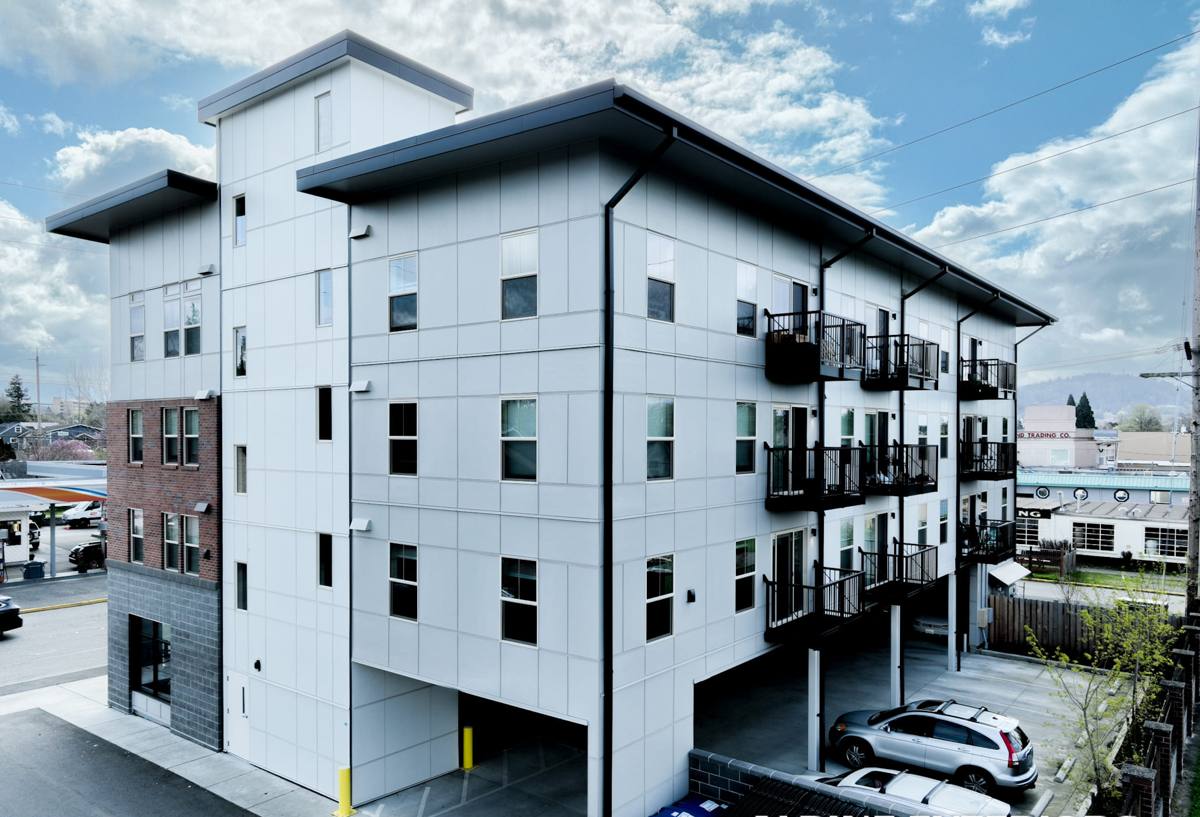
What Salt Air, Rain, and Moss Actually Do to a Wall
Salt Air
Airborne salt is corrosive to exposed metal — fasteners, flashing, hose bibs, light fixtures — and it accelerates the breakdown of finishes that aren't built to resist it. On siding specifically, a weak factory finish will chalk, fade, or lose adhesion faster in a salt-air environment than the same product would inland. This is one of the reasons finish quality matters more here than in most parts of the state.
Driving Rain
Wind-driven rain doesn't just wet a wall — it forces water sideways and upward under laps, around trim, and into any gap in the siding or flashing that a calmer rain would never reach. A siding system depends on gravity to shed water downward and outward; driving rain tests every seam, joint, and penetration in a way that vertical-only rain doesn't.
Moss and Algae
Shade, moisture, and mild temperatures are exactly what moss and algae need to establish themselves, and much of Fidalgo Island offers all three. Moss holds moisture against a surface long after the rain stops, which is bad news for any siding material that can absorb water or swell. It also tends to colonize north-facing walls, roof-adjacent trim, and anywhere airflow is limited — areas that are easy to overlook during a routine walk-around.
Why We Install Only James Hardie Fiber Cement
We standardized on James Hardie fiber cement siding and don't install vinyl, LP SmartSide, Cemplank, Allura, primed spruce, or cedar. That's a deliberate call, not a sales preference, and it comes down to how each of those products behaves under the exact conditions Fidalgo Island produces.
Wood-based products — cedar and primed spruce — have real appeal: natural grain, a warm look, and a long track record in the Pacific Northwest. But they're also organic material, and organic material in a moss-prone, high-moisture climate needs consistent maintenance to avoid rot, cupping, and coating failure. Engineered wood products like LP SmartSide improve on raw wood in some ways, but they're still wood-strand composites with an OSB-like core, and their long-term performance depends heavily on the cut edges, seams, and fastener penetrations staying sealed — every one of which is a place water can get in during a driving rainstorm.
Vinyl siding is low-maintenance in the sense that it doesn't rot, but it's a thin plastic product that flexes with temperature, can crack in impacts, and relies on lap seams and J-channels that aren't designed to be a true water barrier — they depend on the house wrap behind them doing the real work. In a climate with this much wind-driven rain, we don't think that's the right primary defense.
Other fiber cement brands — Cemplank, Allura — are legitimate products in the same general category as Hardie, but we standardized on one manufacturer so our crews master one installation system, one set of flashing details, and one warranty structure, rather than switching specs from job to job. James Hardie is non-combustible, holds its shape and finish far better than wood-based sidings in wet, salty conditions, and backs its ColorPlus factory finish with a real transferable warranty. When it's installed to the manufacturer's spec — which is the part that actually determines how it performs — it's the product we're comfortable standing behind on this island.
Choosing the Right Hardie Product for a Fidalgo Island Home
James Hardie makes several product lines, and picking the right one depends on the home's exposure, style, and existing trim.
- HardiePlank lap siding — the most common choice for traditional and craftsman-style homes; available in several exposure widths and textures.
- HardiePanel vertical siding — used for board-and-batten looks or as an accent alongside lap siding, common on garages, gables, and modern designs.
- HardieShingle — a shingle profile for homes that want a shake look without the maintenance burden of real cedar shingles.
- HardieTrim — matched trim boards that keep the whole exterior on one consistent, non-combustible material rather than mixing fiber cement field siding with wood trim.
Hardie also engineers its siding by climate zone, and homes in our region use the HZ5 formulation, built for wetter, more humid climates rather than the drier HZ10 formulation used in the Southwest. That distinction matters more on Fidalgo Island than in a lot of places, since the product's moisture resistance is being tested by both rain and salt air, not just rain alone.
What a Correct Installation Actually Involves
The siding itself is only part of the system. Most of the failures we get called out to inspect on the island trace back to water management details that were rushed or skipped — not the siding material failing on its own. A correct installation includes:
- Tear-off and substrate inspection — removing old siding and checking the sheathing underneath for rot, soft spots, or prior water damage before anything new goes up.
- Weather-resistive barrier — a properly lapped and taped house wrap installed shingle-style so water is directed down and out, not trapped behind the siding.
- Flashing at every penetration — windows, doors, hose bibs, vents, and any other wall penetration get individual flashing, not just caulk. Caulk is a maintenance item, not a water barrier.
- Correct fastening — Hardie specifies fastener type, spacing, and placement, and salt-air exposure makes corrosion-resistant fasteners non-negotiable on parts of the island close to the water.
- Proper clearance — siding held back from grade, roof lines, decks, and other surfaces per Hardie's minimum clearances, so moisture and debris (including moss-friendly organic buildup) can't sit against the bottom edge.
- Caulking and paint at cut edges — factory ColorPlus finish is engineered to resist moisture intrusion, but field-cut edges need to be sealed per spec so they don't become the weak point.
Our Process, Start to Finish
We keep the process straightforward and give you a clear idea of what's happening and when:
- On-site assessment — we walk the exterior, check current siding condition, note moisture or moss problem areas, and measure for material.
- Product and color selection — we go over Hardie product lines, profiles, and ColorPlus color options suited to the home's style and exposure.
- Written estimate — a clear scope of work and cost, with no pressure to sign on the spot.
- Tear-off and prep — removal of existing siding, substrate inspection and repair, and house wrap installation.
- Installation — siding, trim, and flashing installed to Hardie's specification, with attention to every penetration and clearance.
- Final walkthrough — we review the finished work with you before calling the job done.
What Drives the Cost of a Siding Installation Here
| Factor | Why It Matters on Fidalgo Island |
|---|---|
| Home size and wall complexity | More corners, gables, and dormers mean more cutting, flashing, and labor time. |
| Substrate condition | Moss and driving rain both increase the odds of hidden sheathing damage that needs repair before new siding goes on. |
| Product line and profile | HardiePlank, HardiePanel, and HardieShingle carry different material and install costs. |
| Exposure and proximity to water | Homes with direct salt-air exposure may warrant upgraded fasteners and more careful sealing at penetrations. |
| Trim and detail work | Matching HardieTrim around windows, corners, and fascia adds cost but keeps the whole exterior on one durable system. |
| Access and site conditions | Sloped lots, mature trees, and tight setbacks — all common on the island — can affect staging and labor time. |
Every home is different, which is why we give a written, itemized estimate after seeing the property rather than a number over the phone.
Signs a Fidalgo Island Home Needs New Siding
- Persistent moss or algae staining that comes back within a season or two of cleaning
- Soft, spongy, or discolored siding, especially near the bottom edge or around windows
- Paint or finish that's chalking, peeling, or fading unevenly, particularly on walls facing the water or prevailing wind
- Visible gaps, cracking, or warping at seams and corners
- Rising energy bills that suggest the wall assembly isn't performing the way it should
- Interior signs — musty smells, peeling interior paint, or visible staining on walls that back up to exterior siding
Living with Hardie Siding in a Marine Climate
One advantage of fiber cement over wood-based siding in this environment is how little ongoing maintenance it asks for. It won't rot, and it isn't a food source for moss the way untreated wood can be, but moss and algae can still grow on any exterior surface exposed to enough shade and moisture — Hardie siding included. A simple annual rinse-down, especially on north-facing and tree-shaded walls, keeps organic growth from taking hold and keeps the ColorPlus finish looking the way it should. Keeping gutters clear and vegetation trimmed back from the siding also goes a long way, since both trap moisture against the wall and speed up moss colonization. Compared to the scraping, sanding, and repainting cycle that cedar or primed wood siding demands in this climate, it's a modest amount of upkeep for a lot of durability.
Why Hiring a Crew That Already Works This Island Matters
Siding installation isn't a generic skill that transfers identically from one climate to the next. A crew that mostly works drier inland projects may not default to the flashing details, fastener choices, or clearance standards that a marine, salt-air environment actually requires — not because they're careless, but because it isn't the environment they usually build in. A crew that regularly works Fidalgo Island and the greater Anacortes area already knows which walls take the worst of the driving rain, where moss tends to establish itself, and how much salt exposure a given property realistically faces based on its distance from the water. That familiarity shows up in the details — the ones you can't see once the siding is up, but that determine whether it performs for decades or starts showing problems in five years.
If you're weighing a siding replacement or new install for a home on Fidalgo Island, we're happy to take a look and walk you through what we'd recommend and why. There's no pressure and no obligation — just a straightforward assessment and a written estimate you can use to make the decision on your own timeline. Use the form below to request your free estimate.