 Anacortes Siding
 Roofing in March Point: A Different Kind of Wear
Homes in the March Point area sit close to open water on Fidalgo Island, which means the roof over your head is doing more work than a roof in a typical inland Skagit County neighborhood. Salt-laden air moves through constantly, driving rain comes in sideways off the Salish Sea during winter storms, and the shade and moisture that blanket this part of Washington keep moss and algae active for most of the year. None of that is dramatic on its own, but stacked together over years, it changes how an asphalt shingle roof should be built, installed, and maintained here compared to a roof going up somewhere drier and further from the coast.
A shingle roof that would hold up fine in a low-humidity climate can fail early in March Point if it's installed with shortcuts that don't account for constant moisture and salt exposure. That's the gap we focus on closing: not a generic shingle install, but one built for the specific conditions this stretch of Anacortes deals with every year.
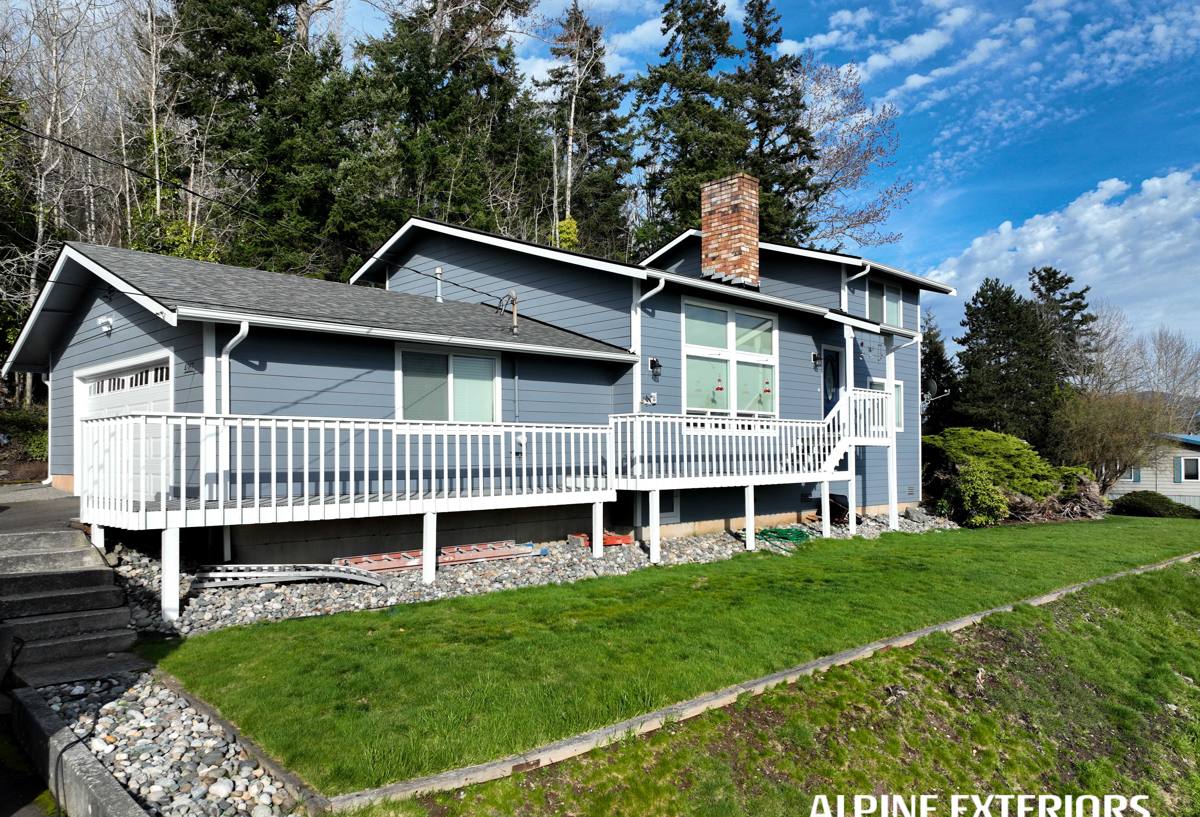
What Correct Asphalt Shingle Roofing Looks Like Here
"Correct" isn't just nailing shingles in rows. In a coastal Skagit County climate, several details matter more than they would elsewhere, and skipping them is where most premature roof failures start.
Underlayment and Water Barrier
We use a synthetic underlayment rated for extended exposure, with self-adhered ice-and-water barrier at eaves, valleys, and any low-slope transitions. Driving rain in this area doesn't just fall straight down — it gets pushed under shingle tabs by wind, so the underlayment layer is your real second line of defense, not a formality.
Ventilation
Balanced intake and exhaust ventilation keeps moisture from building up in the attic. In a damp coastal climate, poor ventilation traps humid air against the underside of the roof deck, which softens sheathing and shortens shingle life from the inside out — long before the shingles themselves show visible wear.
Flashing and Transitions
Chimneys, skylights, vent pipes, and roof-to-wall transitions are where the majority of leaks actually start, not the open field of shingles. We replace flashing rather than reuse it whenever a roof comes off, and we detail step flashing and counter-flashing so water sheds outward instead of finding a seam to work into.
Fasteners and Materials
Salt air accelerates corrosion on lower-grade fasteners and metal components. We use corrosion-resistant nails and flashing metals suited to a marine-influenced environment rather than standard-grade hardware that's fine inland but wears faster this close to the water.
Signs Your March Point Roof Needs Attention
Most roofing problems in this area develop slowly, so it helps to know what to look for before a small issue becomes a ceiling stain. Walk your property periodically and watch for:
- Dark streaking or green-black patches on shingles, which usually signal algae growth rather than dirt
- Visible moss buildup, especially on north-facing slopes or areas shaded by trees
- Granules collecting in gutters or at downspout outlets, a sign shingles are wearing thin
- Curling, cupping, or cracked shingle edges, common after repeated wet-dry cycles
- Rusted or lifted flashing around chimneys, vents, and skylights
- Soft or spongy spots when walked on, which can indicate a compromised deck underneath
- Daylight visible through the attic roof deck, or damp insulation after a storm
- Sagging along the roofline, which points to structural or long-term moisture issues
Catching any of these early is almost always cheaper than waiting for an interior leak to show up.
Choosing Shingles for Coastal Skagit County Homes
Not every asphalt shingle product is a good fit for a marine climate. The table below compares the general categories homeowners in the March Point area typically choose between.
| Shingle Type | Typical Lifespan | Wind Resistance | Best Fit |
|---|---|---|---|
| 3-Tab Asphalt | 15–20 years | Lower — thinner profile | Budget-conscious projects, outbuildings, rental properties |
| Architectural / Laminate | 25–30 years | Higher — heavier, layered construction | Most primary homes exposed to wind and driving rain |
| Algae-Resistant (AR) Laminate | 25–30 years | Higher | Shaded or north-facing roofs prone to moss and algae staining |
| Impact-Rated (Class 4) | 30+ years | Highest | Homes wanting extra durability and potential insurance credit |
For most March Point homes, we lean toward algae-resistant architectural shingles. The copper- or zinc-infused granules slow algae growth on the shaded, moisture-prone slopes that are common here, and the heavier construction handles wind-driven rain better than a lighter 3-tab product. It costs more up front than the cheapest option, but it directly addresses the two things that age roofs fastest in this climate: moss and wind-blown moisture.
Our Roofing Process
Every roof replacement or major repair follows the same sequence, whether it's a full tear-off or a targeted repair job:
- On-site inspection of the existing roof, decking, flashing, and attic ventilation
- Written estimate outlining shingle options, scope of work, and timeline
- Tear-off of old roofing material and inspection of the deck for rot or soft spots
- Repair or replacement of any compromised sheathing before new material goes down
- Installation of ice-and-water barrier and synthetic underlayment
- New flashing at all penetrations, valleys, and wall transitions
- Shingle installation per manufacturer specifications for wind and nailing pattern
- Ventilation check and correction if intake or exhaust airflow is inadequate
- Full site cleanup, including magnetic sweep for stray fasteners
- Final walkthrough so you can see the finished work before we consider the job done
Ventilation and Moisture: The Overlooked Half of the Job
A lot of roofing conversations focus entirely on the shingles themselves, but in this climate the attic underneath matters just as much. When intake vents (usually at the soffit) and exhaust vents (ridge or roof-mounted) aren't balanced, warm moist air gets trapped against the underside of the deck. Over a wet Skagit County winter, that trapped moisture can lead to soft sheathing, mold growth, and premature shingle aging from beneath — problems that won't show up as an obvious leak until they're already advanced. Any time we replace a roof, checking and correcting ventilation is part of the job, not an upsell.
Living With Moss, Algae, and Salt Air After Installation
Even a well-installed roof needs some ongoing attention in this environment. Moss spores are present in the air here year-round, and shaded roof sections stay damp longer than sections that get regular sun. A few habits go a long way toward protecting your investment:
- Keep gutters clear so water doesn't back up under the shingle edge
- Trim overhanging branches to reduce shade and debris buildup on the roof
- Have moss and algae growth treated before it spreads, rather than after
- Avoid high-pressure washing, which strips granules and shortens shingle life — a gentle soft-wash approach is safer
- Schedule a periodic visual inspection, especially after major windstorms
None of this is intensive work, but skipping it is one of the more common reasons a roof that should last 25-plus years starts showing problems well before that.
What Affects the Cost of a March Point Roof
Every roof is different, so exact pricing depends on a site visit, but the factors below are what typically drive cost up or down on a project in this area.
| Factor | Why It Matters |
|---|---|
| Roof pitch and access | Steeper roofs and limited access require more labor time and safety setup |
| Number of existing layers | Tearing off multiple old layers adds disposal cost and labor |
| Decking condition | Rotted or soft sheathing found during tear-off needs replacement before shingles go down |
| Shingle class chosen | Algae-resistant and impact-rated products cost more than standard architectural shingles |
| Ventilation upgrades | Adding or correcting soffit and ridge venting affects both cost and long-term roof health |
| Roof size and complexity | Valleys, dormers, and multiple roof planes increase material and labor needs |
We walk through these factors with you during the estimate so there are no surprises once work starts — and we flag any deck damage before we proceed, not after it's already replaced.
Why Hire a Crew That Already Works March Point
Roofing crews unfamiliar with this stretch of Anacortes sometimes underestimate how much salt exposure and moisture affect material choices and long-term performance. A crew that already works in March Point knows which slopes tend to hold moss, how wind off the water behaves against certain roof orientations, and what ventilation setups actually perform well here versus on paper. That local pattern recognition shows up in fewer callbacks and a roof that's built for the conditions it will actually face, not generic conditions from a manufacturer spec sheet. It also means straightforward communication about Skagit County permitting requirements and realistic timelines shaped by our actual weather windows, not a national average.
Ready to Talk About Your Roof?
If your March Point home's roof is showing moss, wear, or you're just planning ahead, we're glad to take a look and walk you through honest options — no pressure, no upsell. Fill out the form below to schedule a free estimate.