 Anacortes Siding
 Windows Built for Burlington's Weather, Not Just Its Style
Burlington sits in the flat, damp middle of Skagit County, close enough to the water that salt-laden air reaches window frames even on homes that never see the shoreline. Add in months of driving rain off the Sound and a moss season that seems to start earlier every year, and you have a climate that is quietly hard on windows. It's not dramatic weather. It's persistent weather, and persistent weather finds every weak seal, every soft sill, and every gap in flashing over time.
Most Burlington homeowners don't replace windows because one broke. They replace them because the house has started telling them something: a draft that wasn't there five years ago, condensation between the panes, a sill that feels soft when you press on it, or a bedroom that's noticeably colder than the rest of the house in January. Those are all signs the seal or the frame has given up, and once that happens, the fix isn't caulk or weatherstripping. It's a new window, installed correctly.
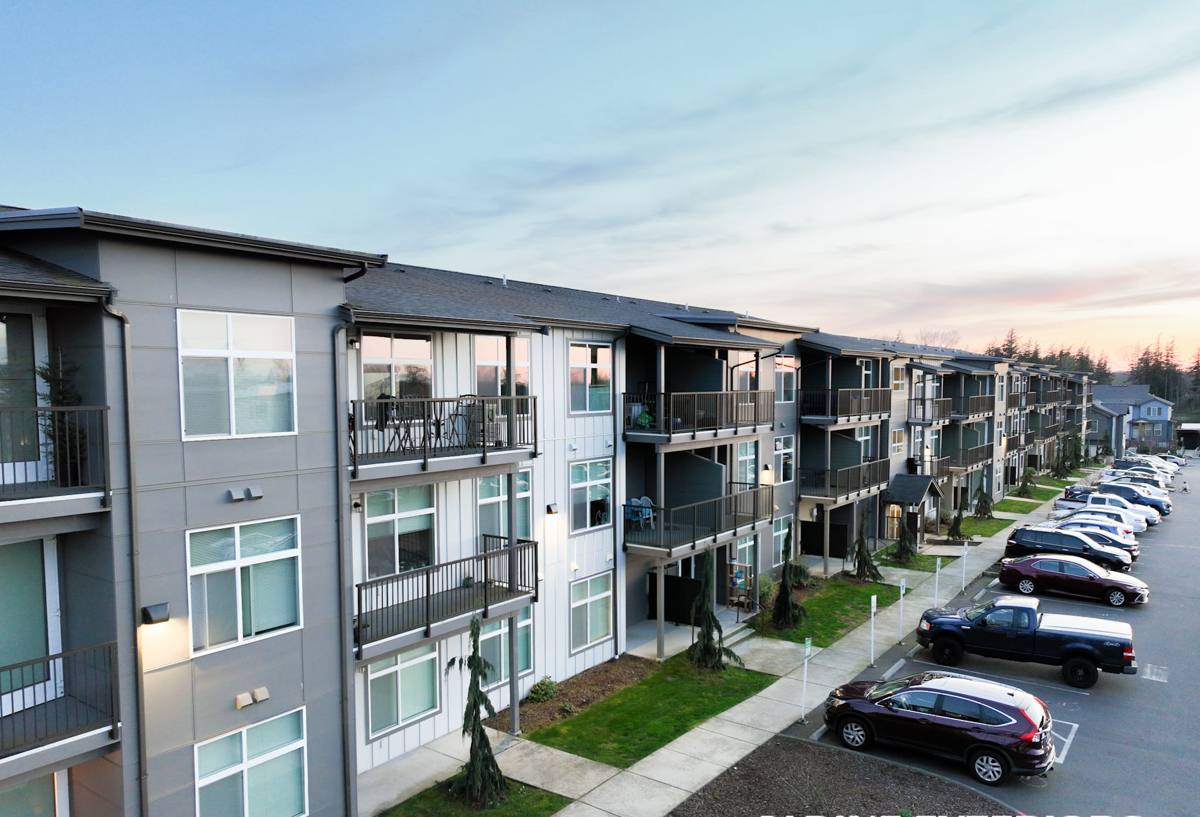
What Burlington's Climate Actually Does to a Window
It helps to understand the specific ways local conditions wear on windows, because it changes what "correct installation" means here compared to a drier inland climate.
Salt Air and Metal Fatigue
Even a few miles inland from Padilla Bay or the Sound, airborne salt settles on window hardware, screens, and aluminum components. Over years, it accelerates corrosion on hinges, locks, and cheaper aluminum frames. Vinyl and fiberglass frames don't corrode the same way, which is one reason they've become the standard choice for homes in this part of the county.
Driving Rain and Wind-Driven Water
Skagit County rain rarely falls straight down. Wind off the water pushes it sideways, which means water gets tested against window flashing and sill pans in ways a fair-weather climate never would. A window that's watertight in a showroom can still leak on a real Burlington house if the flashing and sill pan underneath it aren't installed to shed water outward and downward, every time, with no shortcuts.
Moss, Shade, and Trapped Moisture
Many Burlington lots carry mature trees and long shade lines, which is good for privacy and bad for drying time. Moss doesn't just grow on roofs — it establishes on window sills, tracks, and the wood trim around older windows, holding moisture against the frame far longer than open sun would allow. That trapped moisture is often what turns a slow leak into rotten sill framing.
Signs a Burlington Home Needs Window Replacement
Not every problem window needs full replacement, but several signs reliably point that direction rather than toward a repair:
- Fogging or a visible haze between panes — the seal has failed and the gas fill is gone, so the insulating value is gone with it
- Soft, spongy, or discolored wood at the sill or lower frame corners
- Windows that are difficult to open, close, or lock, especially after they've swelled with moisture
- Noticeable drafts at the frame edge even with the window fully latched
- Condensation forming on the inside of the glass regularly through fall and winter
- Visible gaps, cracked caulking, or daylight showing around the frame from outside
- Rising heating bills without any other explanation
If you're only seeing one of these and the frame is otherwise solid, a repair or reseal might buy you more time. If you're seeing two or three together, that's usually the window telling you it's past the point where patching makes sense.
What a Correct Window Replacement Actually Involves
Window replacement gets sold like a product swap, but the product is the easy part. The work that determines whether a window performs for the next twenty years happens in the details around it.
Removal Without Hidden Damage
Old windows come out carefully so we can see what's actually happening in the wall cavity — whether there's rot, whether prior flashing was done correctly, and whether the rough opening is square and sound. This is often the first time a homeowner learns whether a past leak did more damage than the window itself showed.
Flashing and Sill Pan First
Before a new window ever goes in, the opening gets a proper sill pan and flashing sequence — the layers that direct any water that gets past the window itself back outside the wall, rather than into the framing. Given how much wind-driven rain this area sees, this step matters more here than it would in a dry climate, and it's the step that's most often rushed or skipped by installers trying to move fast.
Air Sealing and Insulation
The gap between the new window frame and the rough opening gets sealed and insulated correctly — not overpacked with expanding foam that can bow the frame, and not left loose enough to draft. This is where a lot of the comfort improvement homeowners notice actually comes from.
Fastening, Shimming, and Squaring
A window that isn't shimmed level and square will operate poorly and stress its own seals prematurely, even if every other step was done right. This is slow, careful work, and it's not optional.
Exterior Trim and Weatherproofing
The final exterior seal — trim, caulking, and any cladding tie-in — is what stands between the new window and Skagit County weather for the next two or three decades. It needs to be done with materials rated for constant moisture exposure, not just whatever caulk is on the truck.
Choosing Windows for This Climate
Frame material and glass package both matter, and the right choice depends on the home, its exposure, and the homeowner's priorities.
| Factor | Vinyl Frames | Fiberglass Frames | Wood Frames |
|---|---|---|---|
| Moisture resistance | Very good — won't rot or corrode | Excellent — dimensionally stable in wet swings | Good if properly maintained; vulnerable if not |
| Maintenance | Low — occasional cleaning | Low | Higher — repainting/resealing needed over time |
| Upfront cost | Lowest | Mid to higher | Higher |
| Best fit | Most Burlington homes, straightforward replacements | Larger openings, higher wind/moisture exposure | Historic or architecturally specific homes where wood trim is part of the character |
Glass packages matter just as much as frame material. Double-pane windows with a low-E coating and argon fill are the practical baseline for this climate — they cut heat loss and reduce condensation risk. Triple-pane can make sense for north-facing rooms or homes right along colder wind corridors, but it's not always worth the added cost for a typical Burlington house. We'll walk through what actually fits your home rather than defaulting to the most expensive option.
Our Process for Burlington Window Replacement
- On-site assessment — we look at every window being considered, check for hidden rot or flashing issues, and measure openings precisely
- Honest recommendation — which windows need replacement now, which can wait, and what frame/glass options fit the home and budget
- Written estimate — clear scope and pricing before any work begins, no surprise add-ons
- Careful removal and inspection — checking the rough opening and framing before anything new goes in
- Correct installation — sill pan, flashing, air sealing, shimming, and exterior weatherproofing done in the right order
- Final walkthrough — every window opens, closes, locks, and seals the way it should before we call the job done
Why Hire a Crew That Already Works Burlington
Window installation isn't identical everywhere, and a crew that mostly works drier inland climates can miss details that matter here. A contractor who regularly works Burlington and the surrounding Skagit County towns already knows which exposures take the worst wind-driven rain, which older neighborhoods tend to have moisture issues hiding behind trim, and how to sequence flashing so it actually holds up through a wet Pacific Northwest winter — not just pass a dry-day inspection.
There's also a practical accountability angle. A local crew is easy to reach if a question comes up after the job, and has a reputation in the community worth protecting. That tends to show up in the quality of the work, not just the sales pitch.
A Few Things to Check Before You Hire Anyone
- Do they inspect the rough opening and framing, or just measure and install a box?
- Do they explain sill pan and flashing details, or brush past that part of the process?
- Is the estimate written and specific, or vague on materials and scope?
- Do they carry proper licensing and insurance for exterior work in Washington?
- Can they explain, in plain terms, why they'd recommend one frame material over another for your specific home?
If a contractor can't answer those clearly, that's worth noticing before you sign anything.
Get a Straight Answer for Your Home
Every Burlington home wears its weather a little differently depending on shade, exposure, and age. If you're noticing drafts, fogged glass, or windows that just don't feel right anymore, we're happy to take a look and give you an honest read on what's actually needed — no pressure, no inflated scope. Use the form below to request a free estimate, and we'll walk the windows with you and talk through real options for your home.