 Anacortes Siding
 Roofing on the Cap Sante Side of Anacortes
Cap Sante sits close to the water, and that proximity shapes everything about how a roof ages here. Homes on and around the hill catch wind and moisture straight off Fidalgo Bay and the surrounding waterways, which means roofing materials work harder here than they do a few miles inland in Skagit County. Salt-laden air accelerates corrosion on metal fasteners and flashing. Driving rain, especially in the fall and winter storm cycles, finds every gap in a roof system that would otherwise sit dry for years elsewhere. And the long, wet moss season that defines the Pacific Northwest hits west-facing and shaded slopes on Cap Sante roofs especially hard.
We work on roofs in this neighborhood regularly, and the repair calls we get tend to follow a pattern tied directly to that exposure. This page covers what actually goes wrong on Cap Sante roofs, what a correct repair looks like, and how we approach the work.
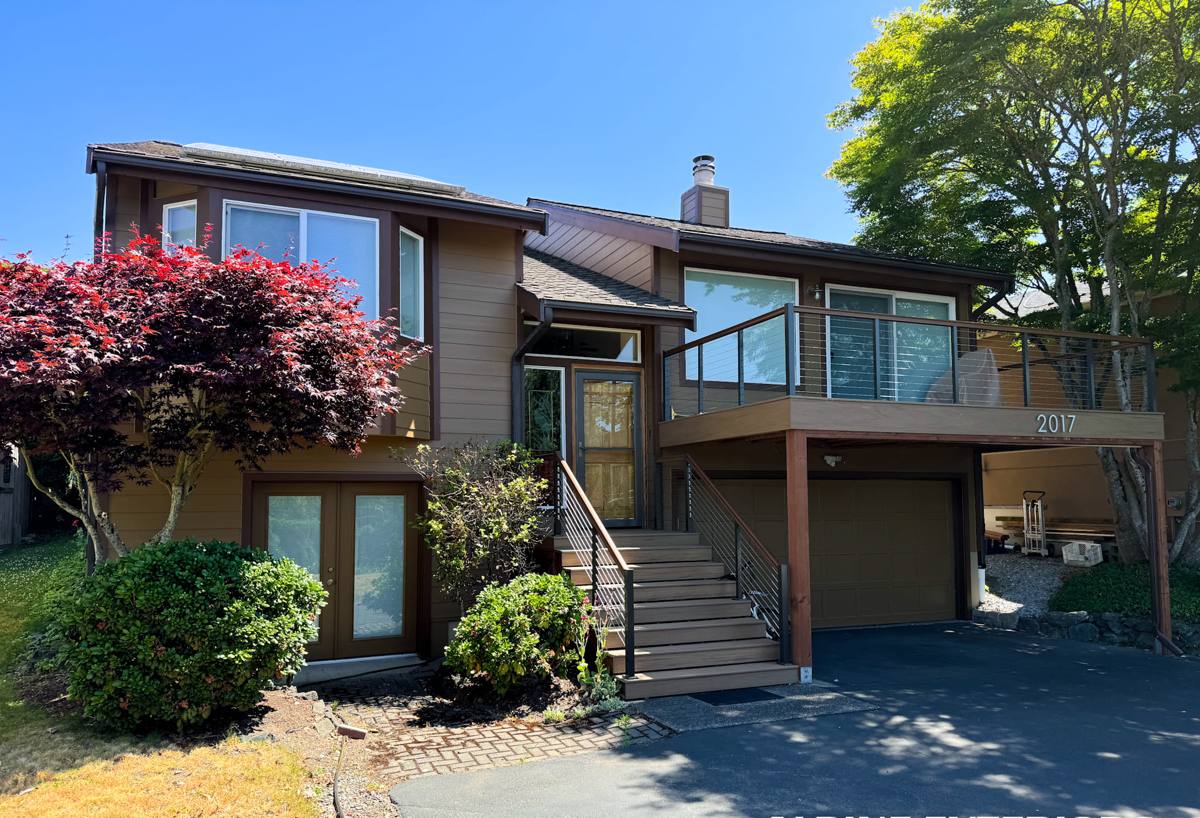
What the Climate Actually Does to a Cap Sante Roof
Salt Air and Corrosion
Roofing systems rely on small metal components — nails, flashing, drip edge, valley metal, vent boots with metal collars — to stay watertight. Salt air speeds up corrosion on all of these, particularly on roofs with a direct line to the water. Once a fastener or flashing seam starts corroding, it loses its grip and its seal well before the shingles or panels around it show any wear. That's why a roof that still "looks fine" from the ground can already be leaking at a flashing point.
Driving Rain and Wind-Driven Water
Anacortes gets weather systems that push rain sideways, not just straight down. On exposed Cap Sante rooflines, that wind-driven rain gets forced up under shingle tabs, around chimney flashing, and into any seam that isn't properly lapped or sealed. Standard installation practices that work fine in calmer inland areas sometimes aren't enough on a roof that takes wind off open water.
Moss, Algae, and Trapped Moisture
The long moss season in this part of Skagit County isn't just a cosmetic issue. Moss holds moisture against the roofing material, keeps shaded areas from drying out between storms, and over time lifts shingle edges as it grows. On roofs with mature tree cover — common in parts of Cap Sante — moss and algae buildup is usually the single biggest driver of premature roof failure we see.
Common Repair Issues We See in This Neighborhood
- Corroded or lifted flashing around chimneys, skylights, and roof-to-wall transitions
- Failed pipe and vent boot seals, usually from cracked rubber collars or rusted metal ones
- Moss-lifted shingles on north- and west-facing slopes, especially under tree cover
- Wind-driven leaks at valleys and eaves during fall and winter storms
- Granule loss and accelerated aging on roofs with direct water-facing exposure
- Gutter and downspout backups that push water under the roof edge instead of off it
Most of these show up as a small stain on a ceiling or a damp spot in the attic long before they become a major leak. Catching them at that stage is the difference between a targeted repair and a much bigger job.
What a Correct Repair Actually Involves
A roof repair done right isn't just patching the spot where water is showing up inside the house. Water travels — it can enter at a flashing seam and run along the roof deck before dripping somewhere else entirely. A proper repair starts with tracing the leak back to its actual source, not just its symptom.
Our Assessment Process
- Inspect the interior damage point and attic (if accessible) to identify the water path
- Walk the roof to check flashing, penetrations, valleys, and shingle or panel condition in that area
- Check for moss, debris, or gutter issues contributing to the problem
- Determine whether the issue is isolated or a sign of broader wear across the roof
Doing the Repair Itself
Once we know the actual source, the repair matches the cause. Failed flashing gets replaced, not caulked over. Damaged shingles or panels get pulled and replaced with matching material, properly lapped with the surrounding roofing so water sheds correctly. Vent boots get swapped for new ones rather than resealed, since a cracked rubber collar will crack again. Where moss has lifted material, we clear it, assess the shingles underneath for damage, and replace anything that's compromised.
We avoid shortcuts like heavy sealant application over a failing component. Sealant can buy a little time, but it isn't a repair — it's a delay, and on a roof already dealing with salt air and constant moisture, it tends to fail faster than it would elsewhere.
Repair vs. Replacement: Cost Factors to Understand
Not every leak means a new roof, and not every roof issue is a quick fix. The table below outlines what actually drives cost and scope on a repair job, so you know what to expect before we're on the roof.
| Factor | Why It Matters | Typical Impact on Scope |
|---|---|---|
| Age of the roofing material | Older shingles or panels are more brittle and harder to match or tie into cleanly | Can push a spot repair toward a larger section replacement |
| Number and location of penetrations | Each chimney, vent, or skylight is a potential leak point | More penetrations generally mean more inspection and repair time |
| Extent of moss or moisture damage | Trapped moisture can rot the roof deck underneath, not just the surface layer | May require deck repair in addition to roofing material |
| Roof exposure and pitch | Steeper or more exposed sections on Cap Sante take more direct wind and rain | Can affect how much flashing detail is needed to do the job right |
| Accessibility | Tree cover, steep pitch, or tight roof lines affect labor time | Influences overall repair timeline |
We'll walk you through where your situation falls on this list before any work starts, in plain terms — not a vague estimate with no explanation behind it.
Signs Your Roof Needs Attention
- Water stains or discoloration on ceilings, especially after a storm
- Visible moss growth, particularly on shaded or north-facing slopes
- Missing, curling, or cracked shingles
- Rust streaks near metal flashing or vent boots
- Granules collecting in gutters or at downspout outlets
- Daylight visible through the roof deck from inside the attic
- Sagging or soft spots anywhere on the roof surface
If you're seeing any of these, it's worth having someone look at it before the next storm cycle rather than after.
Why a Roofing Crew That Already Works Cap Sante Matters
Roof repair isn't a one-size-fits-all trade, and a crew that mostly works dry, inland roofs approaches problems differently than one that regularly deals with salt air and wind-driven rain. Working this neighborhood consistently means we already know which flashing details tend to fail first on water-facing homes, which slopes hold moss longest through the wet months, and how the local weather pattern loads a roof compared to other parts of Skagit County.
That familiarity shows up in small but real ways: knowing to check a corroded vent boot before assuming a shingle is the culprit, or recognizing when a "small leak" is actually a sign of deck rot from months of trapped moss moisture. It also means faster response when storm season hits and a repair can't wait.
Our Approach to Every Repair Job
We keep the process straightforward:
- Inspection first — we look at the actual roof and attic, not just take a phone description at face value
- Honest scope — we tell you if it's a simple fix, a larger repair, or something that's genuinely approaching end-of-life
- Written estimate — clear about what's being done and why, before work begins
- Correct materials and technique — matched to your existing roofing and built for this climate, not a generic patch
- Clean job site — debris and old material removed, gutters checked before we leave
We're not going to recommend a full roof replacement when a repair will genuinely hold up, and we're not going to keep patching something that needs a real fix. Our standard is doing the job that actually solves the problem, given what the salt air, rain, and moss in this area put a roof through.
Get a Free Estimate
If you're dealing with a leak, moss buildup, or damaged flashing on a Cap Sante home, we're happy to take a look and give you a straight answer on what it needs. There's no pressure and no obligation — just an honest assessment from a crew that knows this neighborhood's roofs. Fill out the form below to schedule a free estimate.