 Anacortes Siding
 Decking on Guemes Island Is a Different Job Than Decking in Town
Guemes Island sits just across the ferry channel from Anacortes, but the deck-building conditions out there are not the same as building three miles inland. Homes on the island tend to be more exposed — more waterfront and view-lot siting, more open wind runs, and more direct salt spray off the water. Add in Skagit County's long wet season and the shaded, moss-friendly microclimates common on wooded island lots, and a deck out here takes a harder beating than a comparable deck built in a sheltered mainland neighborhood.
That doesn't mean composite decking is a bad fit for Guemes Island — it's usually a very good fit. It means the build has to account for salt air, sustained moisture, and moss growth from day one, not as an afterthought. A deck that's simply "installed to code" will often disappoint an island homeowner within a few seasons if the framing, fastening, and drainage details weren't chosen with this specific environment in mind.
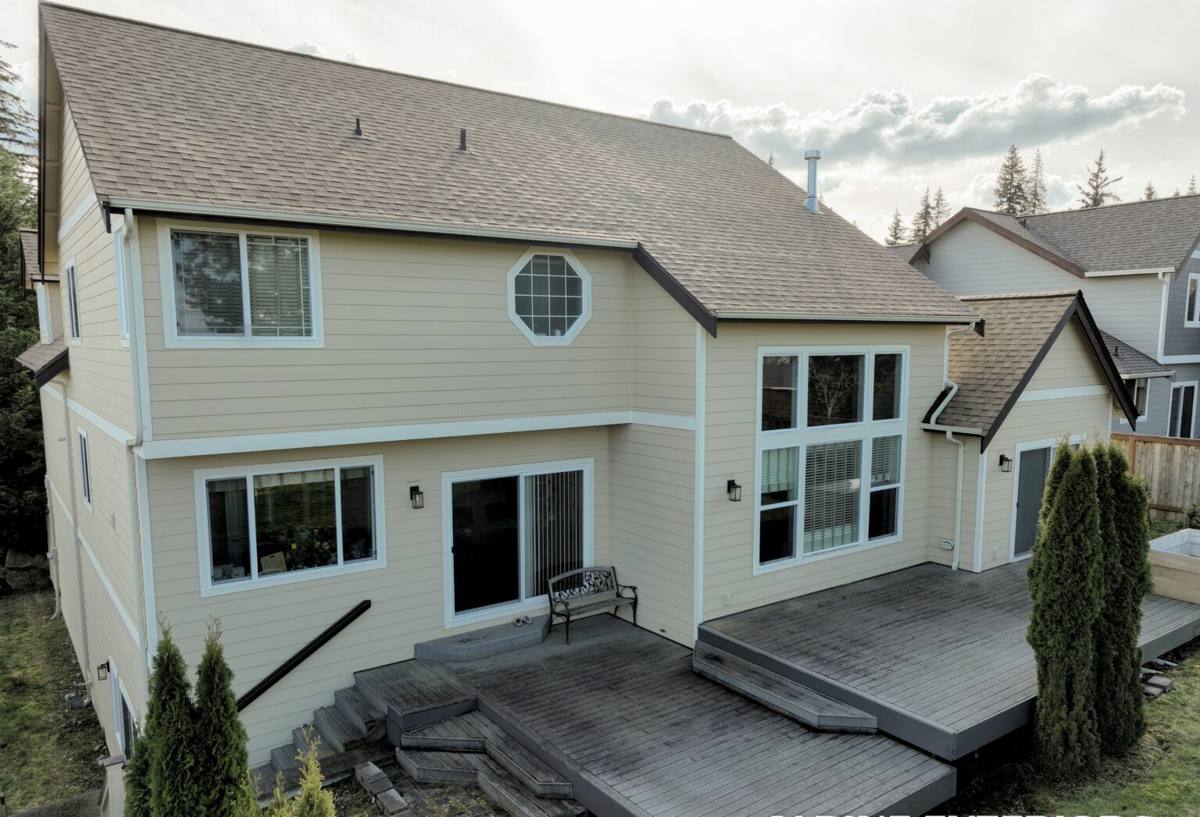
What the Local Climate Actually Does to a Deck
Salt Air
Salt-laden air corrodes unprotected or under-rated metal hardware over time — screws, joist hangers, post bases, and structural connectors. On composite decks the boards themselves are largely immune to rot, but the fasteners and hidden framing hardware holding the whole structure together are not, unless they're rated for coastal exposure.
Driving Rain
Wind-driven rain off the water doesn't just fall straight down — it gets pushed sideways into railing posts, ledger connections, and any gaps in flashing. Water that would simply run off a sheltered deck can get forced into joints and end grain on an exposed island lot, which is exactly where hidden rot and hardware corrosion start.
Moss and Prolonged Dampness
Shaded, tree-covered sections of island property stay damp longer after a storm than open, sunny yards. That extended damp period is what lets moss and algae establish on decking surfaces, especially composite boards with a heavier surface texture or on the north side of a house where sun exposure is limited. Moss isn't just cosmetic — a moss-covered board stays wet longer and gets slicker underfoot.
What a Correctly Built Composite Deck Involves Here
A composite deck that's going to hold up on Guemes Island needs a few things done right that a generic install sometimes skips:
- Coastal-rated fasteners and hardware — stainless steel or a hot-dip galvanized/coated hardware rated for marine or coastal exposure, not standard interior-grade hardware.
- Proper ventilation under the deck — enough air gap and clearance below the framing so moisture doesn't sit trapped against joists, which matters more here given the extended wet season.
- Flashing at the ledger board — the connection where the deck meets the house is the single most common point of hidden water damage on any deck, and it deserves more attention on a wind-exposed lot, not less.
- Correct joist spacing for the composite brand used — composite boards have manufacturer-specified span and spacing requirements that are stricter than typical wood decking; skipping this shows up later as flex, sag, or fastener pull-through.
- Board orientation and drainage slope — a slight, consistent slope away from the house so water sheets off rather than pooling, which also reduces the standing moisture that feeds moss growth.
Getting Materials and a Crew to the Island
Building on Guemes Island adds a logistics layer that doesn't exist on a typical Anacortes lot: everything — crew, tools, and material — has to cross on the ferry. That has real consequences for how a project gets planned and run.
Material deliveries have to be scheduled around ferry sailings rather than dropped off whenever a supplier truck is available. Crews working the island plan their day around ferry timing so they're not burning half a workday waiting for a crossing. And because a forgotten fastener or tool isn't a quick trip back to the shop, a crew that doesn't already work the island regularly is more likely to lose time — or cut a corner — simply because getting back to fix it is a much bigger deal than it would be on the mainland.
A crew that already does regular work on Guemes Island has this dialed in: material lists get double-checked before the crossing, ferry schedules are built into the project timeline up front, and homeowners aren't paying for delays caused by logistics nobody planned for.
Composite vs. Other Decking Materials for This Environment
| Material | Behavior in Salt Air / Rain | Moss Resistance | Long-Term Maintenance |
|---|---|---|---|
| Composite decking | Does not rot or absorb water into the board core; performance depends on hardware and framing quality | Better than wood in most cases; still needs periodic cleaning in shaded areas | Occasional washing; no staining or sealing required |
| Pressure-treated wood | Absorbs moisture, prone to warping and checking with repeated wet/dry cycles | Moss and algae establish more readily on rougher, more porous wood surfaces | Regular staining/sealing needed to maintain protection |
| PVC decking | Fully moisture-resistant board, similar corrosion concerns with hardware as composite | Smooth surface sheds moss fairly well | Low maintenance; can show heat expansion/contraction more than composite |
We install composite as our standard recommendation for most Guemes Island decks because it strikes the best balance of moisture tolerance, moss resistance, and long-term maintenance for this specific climate — not because other materials are unusable, but because composite gives homeowners fewer ongoing upkeep tasks in a place where getting a contractor back out for touch-up work is genuinely harder than on the mainland.
Substructure Considerations for Island Lots
Many Guemes Island properties are waterfront, sloped, or wooded, and the substructure work under the visible decking often matters more than the decking material itself.
Sloped and Waterfront Sites
Sloped lots typically need taller posts, additional bracing, and sometimes helical piers or deeper footings depending on soil conditions near the water. This is engineering and permitting territory, not a place to guess — footing depth and post spacing get reviewed against Skagit County requirements for the site.
Wooded, Shaded Lots
On tree-covered lots, we pay closer attention to under-deck airflow and joist spacing that allows debris (needles, leaves) to clear rather than mat down and hold moisture against the framing. A deck built low to the ground in deep shade needs more deliberate ventilation planning than an open, sunny deck would.
Our Process, From Estimate to Finished Deck
- On-site walkthrough — we look at sun/shade exposure, wind exposure, existing structure (if replacing a deck), and access for materials and equipment.
- Design and material selection — board profile, color, and railing system chosen based on the site's exposure and the homeowner's maintenance preferences.
- Permitting — structural plans submitted where required under Skagit County permitting rules for the scope of work.
- Logistics planning — material delivery and crew scheduling built around ferry sailings so the project isn't held up mid-build.
- Demo and framing — old decking removed if applicable, framing built or reinforced with coastal-rated hardware and correct flashing at the ledger.
- Decking installation — composite boards installed to manufacturer spacing and fastening specs, with attention to drainage slope.
- Railing, stairs, and finish work — completed to code for the specific site conditions (height, guard spacing, stair geometry).
- Final walkthrough — we go over care and cleaning with the homeowner before we leave.
Keeping a Composite Deck Clean in a Moss-Prone Climate
Composite decking is genuinely low-maintenance compared to wood, but "low-maintenance" doesn't mean "no maintenance" — especially in shaded areas on the island. A simple seasonal routine keeps a deck looking good and staying safe underfoot:
- Sweep debris (needles, leaves, seed pods) off the deck regularly, especially under trees where it collects and holds moisture.
- Wash the deck surface with a soft-bristle brush and mild soap-and-water or a composite-safe cleaner a couple of times a year, more often in shaded sections.
- Avoid pressure washing at close range or high PSI, which can damage the board surface texture over time.
- Check railing posts and stair connections annually for any signs of loosening, especially after a stretch of high winds off the water.
- Keep gutters and downspouts near the deck clear so runoff isn't dumping extra water onto the decking surface.
What Drives the Cost of a Guemes Island Composite Deck
| Cost Factor | Why It Matters Here |
|---|---|
| Deck size and layout | Straightforward rectangular decks cost less per square foot than decks with multiple levels, curves, or built-in seating |
| Substructure condition | Sloped, waterfront, or wooded lots often need additional footings, bracing, or piers |
| Board and railing selection | Composite board lines and railing systems (composite, aluminum, cable) vary in price |
| Access and logistics | Ferry scheduling and site access can affect labor time compared to a mainland job of the same size |
| Permitting scope | Structural review requirements depend on height, attachment to the house, and site conditions |
We don't quote a job without seeing the site — a waterfront lot with a sloped approach and limited staging space is a different estimate than a flat, easy-access backyard, even at the same square footage.
Why Hiring a Crew That Already Works Guemes Island Matters
A contractor who only occasionally makes it out to the island is learning the ferry schedule, the local permitting contacts, and the site-access quirks on your dime. A crew that already works Guemes Island regularly has that groundwork done — material lists get planned around the crossing instead of guessed at, coastal-rated hardware is already the default rather than an upcharge someone has to think to ask for, and the framing and drainage decisions reflect what actually happens to a deck out here over a few wet winters, not just what passes a basic inspection.
If you're planning a new composite deck or replacing an aging one on Guemes Island, we're glad to come take a look and walk the site with you. There's no cost and no pressure for an estimate — just a straightforward look at what your property needs and what it would take to build it right.