 Anacortes Siding
 Why Mount Vernon Homes Need Windows Built for This Climate
Mount Vernon sits inland from the salt water of Fidalgo Bay and the Sound, but it still gets the full weather package that defines Skagit County: long stretches of driving rain off the water, damp air that lingers into a moss season that can run half the year, and enough wind-driven moisture to work its way into any gap a window doesn't seal properly. Homes here aren't dealing with hurricane-force events. They're dealing with something slower and more damaging — near-constant moisture exposure that finds every weak seal, every degraded gasket, and every spot where a frame was never flashed correctly to begin with.
That's a different problem than what a window has to survive in a dry climate, and it changes what "correct installation" actually means. A window that looks fine and even operates fine can still be letting water into the wall cavity behind it, where you won't see the damage until it shows up as soft trim, stained drywall, or a musty smell in a room that never used to have one.
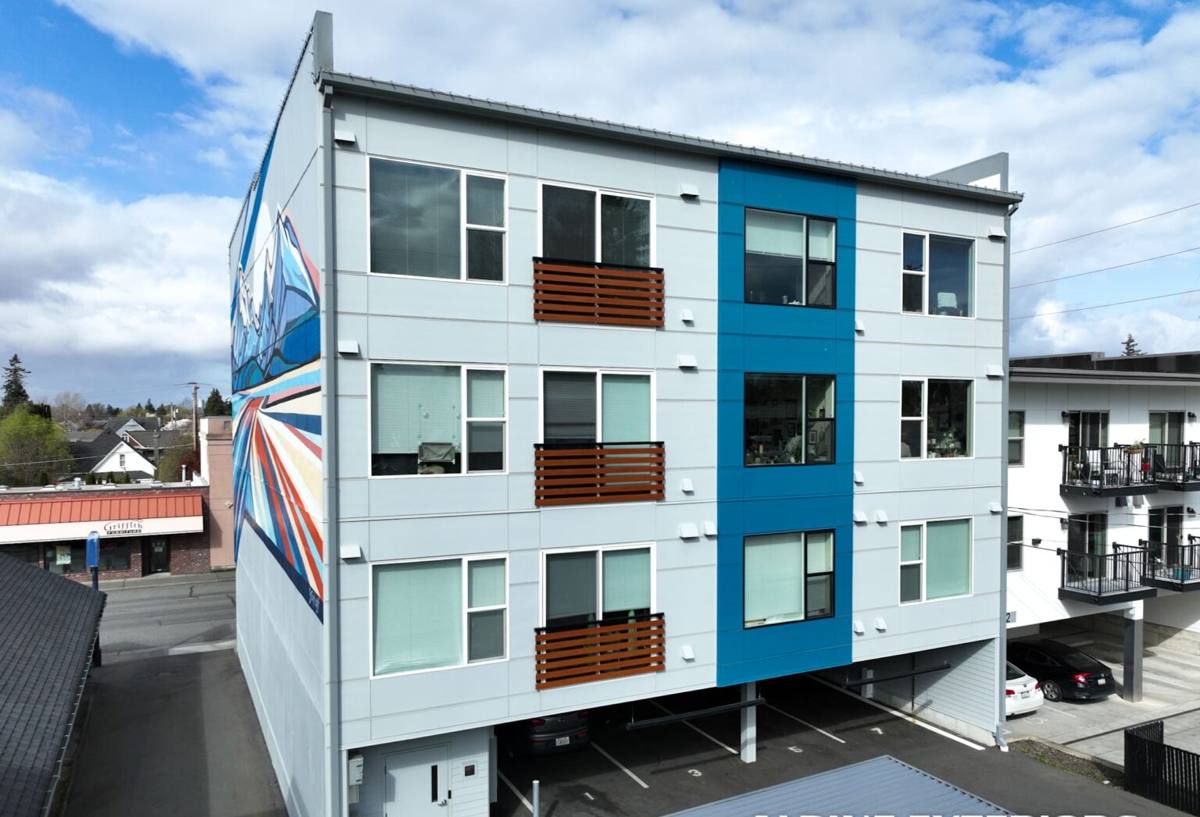
Common Window Problems We See on Local Homes
Working this area regularly, the same failure patterns show up over and over. None of them are unusual or embarrassing — they're just what happens to window systems that sit in a wet marine climate for years without attention.
- Failed seals on older dual-pane units — condensation fogging between the panes means the seal is gone and the insulating gas has escaped; the glass itself is fine, but the unit needs replacing.
- Wood frame rot at the sill — the bottom of a wood-framed window sits where water collects, and once paint or finish cracks, moisture gets into the wood and doesn't fully dry out between storms.
- Moss and algae staining below the sill — a cosmetic sign, but often a clue that water is sheeting down the wall in a pattern that's also reaching the window's flashing.
- Drafts around older aluminum frames — aluminum conducts cold and, without a thermal break, can sweat on the inside during cold, damp stretches, which then feeds mold growth on nearby trim.
- Poorly flashed replacement windows — a common issue with past "quick" replacements where the new window was set into the old opening without redoing the flashing, leaving a hidden path for water behind the siding.
What a Correct Installation Actually Involves
Custom windows are only as good as the opening they're installed into. A well-built window in a poorly prepared opening will still leak, and a modest window installed correctly will outperform it. For our climate, that means treating flashing and water management as the actual job, not a formality on the way to setting the window.
The details that matter most here
- Sill pan flashing that directs any water that gets past the window back out, not into the wall
- Proper head flashing integrated with the house wrap or building paper, lapped correctly so water sheds outward
- Backer rod and quality exterior sealant at the perimeter — sized and applied correctly, not just caulked over
- Shimming and squaring the unit so the sash operates smoothly and the seals compress evenly for years, not just on install day
- Interior air sealing with low-expansion foam or backer rod, separate from the exterior water barrier
Skip any one of these and the window can still look right for a season or two before problems surface. That lag is exactly why so many local homes end up with hidden rot behind windows that were "replaced" a few years back.
Frame Material: What Holds Up in a Wet Marine Climate
| Material | Moisture Behavior | Maintenance | Best Fit |
|---|---|---|---|
| Vinyl | Won't rot; handles constant damp well | Low — occasional cleaning | Most Mount Vernon homes, budget-conscious replacements |
| Fiberglass | Excellent — dimensionally stable in wet/cold swings | Low | Homes wanting higher performance and paintable finish |
| Wood (clad exterior) | Interior wood look with a protected exterior shell | Moderate — exterior clad, interior wood needs periodic care | Homeowners wanting a wood interior without exposing wood to weather |
| Solid wood | Attractive but vulnerable to rot without diligent upkeep | High — repainting/resealing on a schedule | Historic or period-accurate projects where owners commit to maintenance |
| Aluminum (no thermal break) | Prone to condensation and cold transfer in our damp winters | Low, but performance issues persist | Generally not our recommendation for this climate |
We steer most Mount Vernon homeowners toward vinyl or fiberglass, not because other materials don't have their place, but because those two hold up the best against our specific combination of rain, damp air, and temperature swings with the least ongoing maintenance. Solid wood windows can be beautiful and we'll install them if that's what a project calls for, but we're upfront that they come with a real maintenance commitment in this climate — skipping a repaint cycle here does more damage than it would somewhere drier.
Glass Packages: What's Worth Paying For
Glass is where a lot of the real performance difference lives, and it's also where it's easiest to overspend on options that don't matter much for a Skagit County home.
Generally worth it
- Double-pane with argon fill and low-E coating — the practical baseline for this region; noticeably better than older single or basic dual-pane units for both comfort and condensation control
- Warm-edge spacers — reduce condensation risk at the glass edge, which matters given how much damp air we get
Situational
- Triple-pane — better insulating value, but the marginal gain over a good double-pane low-E unit is modest in our relatively mild (not extreme-cold) winters; worth it for north-facing rooms or homeowners prioritizing comfort over cost
- Tinted or specialty coatings — useful for west-facing rooms with strong afternoon sun exposure, less necessary elsewhere
Our Process for Mount Vernon Projects
- On-site assessment — we look at the existing windows, sills, and surrounding siding/trim to catch hidden moisture damage before it's part of a surprise change order
- Accurate measurement and product selection — matched to the opening, the home's exposure (which sides take the most weather), and your budget
- Old window removal with a check of the opening — this is where we find rot or bad flashing from a previous installation, if it's there
- Flashing and water management done first — before the new window ever goes in
- Installation, shimming, and sealing — set square, sealed correctly, operating smoothly
- Interior and exterior trim finish — matched to the home
- Walkthrough — we show you the operation, answer questions, and point out anything worth watching over the first year
What Affects the Cost
| Factor | Why It Matters |
|---|---|
| Number and size of windows | Larger openings and full-home replacements have more material and labor cost, but often better per-window pricing |
| Frame material | Vinyl is typically the most budget-friendly; fiberglass and clad-wood cost more upfront |
| Glass package | Low-E, argon fill, and triple-pane options add cost in exchange for performance |
| Condition of existing openings | Rot repair or re-flashing adds labor beyond a straightforward swap |
| Custom shapes or sizes | Non-standard openings (arched, oversized, odd angles) require custom manufacturing |
| Access and site conditions | Second-story windows, tight landscaping, or limited access affect labor time |
We'll walk through these factors with you during the estimate and give you real numbers for your specific home, not a generic per-window price that doesn't account for your siding condition or window count.
Why a Crew That Already Works This Area Matters
Window installation isn't just a product decision — it's a judgment call on flashing details, sealant choice, and how to handle whatever your specific opening looks like once the old window comes out. A crew that works Skagit County regularly has already seen how local siding types, older flashing methods, and this climate's moisture patterns interact. That's not something you can fully substitute with a generic install crew working from a manual, even a good one. It shows up in fewer callbacks, fewer surprises mid-project, and a finished install that's actually sealed for the weather it's going to face.
We also know this area well enough to set realistic expectations — which sides of a Mount Vernon home typically take the worst weather, when moss and algae staining is a maintenance issue versus a sign of something behind the wall, and how long materials realistically need to acclimate before installation in our humidity.
Questions worth asking any contractor before you sign
- Will you inspect and address the condition of the opening, not just swap the window?
- What flashing method do you use, and does it integrate with my existing house wrap or siding?
- What's the warranty on the product versus the warranty on your installation labor?
- Can you show me examples of similar homes or opening types you've worked on locally?
- What happens if you find rot or damage once the old window is out?
If you're weighing a full window replacement or just a few problem units around your Mount Vernon home, we're happy to take a look and give you an honest, no-pressure estimate — including telling you if a repair makes more sense than a full replacement. Use the form below to get started.