 Anacortes Siding
 Siding Repair Built for Edison's Climate, Not a Generic Checklist
Edison is a small community, and homes here take on a specific combination of weather that doesn't match what a contractor sees working in a subdivision twenty miles inland. You've got open farmland exposure, nearby bay waters that keep salt and moisture in the air year-round, and long stretches of the year where siding simply doesn't get enough sun or wind to dry out between rain events. That combination is what drives most of the siding repair calls we get out here — not one big storm, but slow, steady weathering that eventually shows up as a soft spot, a stain, or a section that's started to pull away from the wall.
A repair page that just says "we fix siding" doesn't help you much. What actually matters is understanding what's failing on your specific siding, why it's failing in this specific location, and whether a repair is the right call or a warning sign of something bigger underneath.
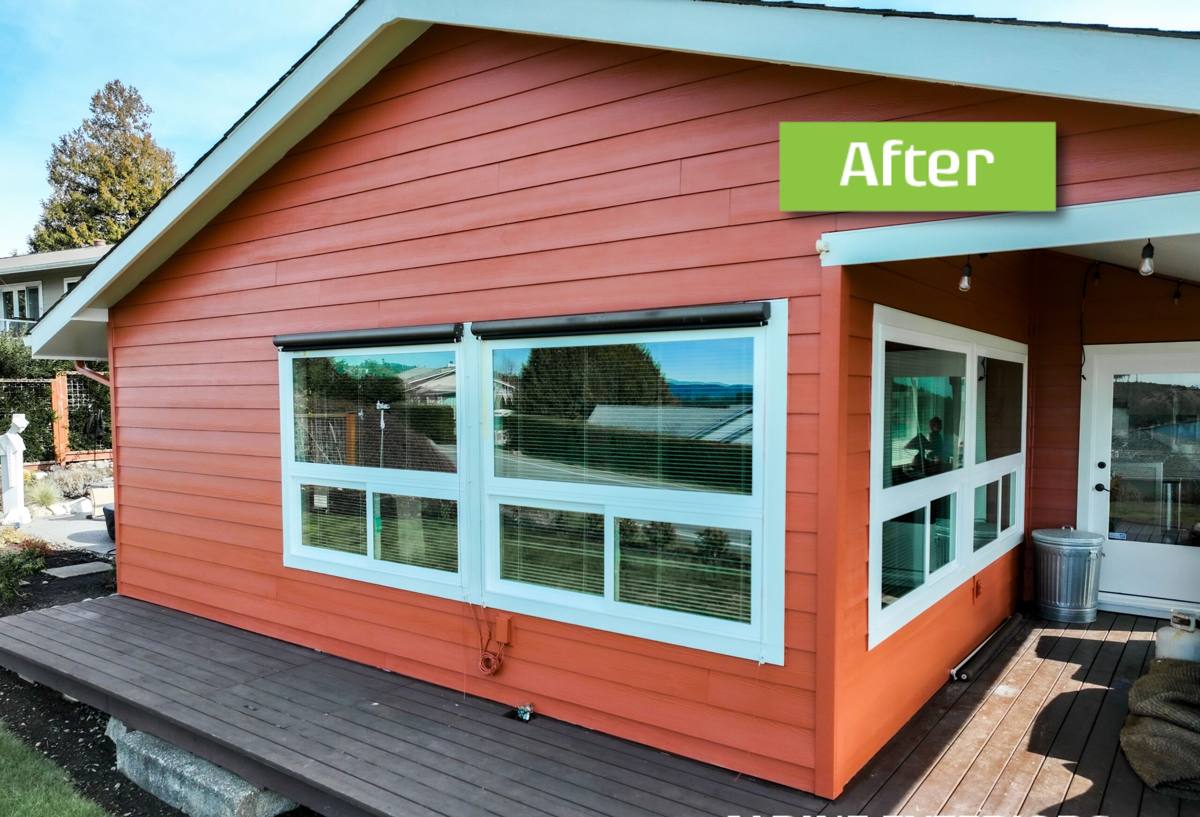
What Edison's Climate Does to Siding Over Time
Salt Air and Corrosion
Proximity to open bay waters means airborne salt settles on exterior surfaces even when there's no visible storm activity. Salt is hygroscopic — it pulls moisture out of the air and holds it against whatever it lands on. Over years, that accelerates corrosion of fasteners, trim flashing, and any exposed metal components, and it keeps painted or coated surfaces damp longer than they'd otherwise be. Siding materials that rely on surface paint film to stay protected are the most exposed to this cycle, because once the coating starts to chalk or crack, salt-laden moisture gets underneath it faster than in a drier inland location.
Driving Rain
Skagit County doesn't just get rain — in Edison's open, low-lying terrain it often arrives sideways, driven by wind off the water with little to break it up before it hits a house. Wind-driven rain doesn't behave like a gentle vertical shower; it gets pushed up under laps, into seams, and behind trim that would stay dry in calmer weather. This is why siding failures out here so often start at horizontal joints, butt seams, and around window and door trim rather than in the middle of a flat wall section.
Moss and Algae Season
Shaded sides of the house, north-facing walls, and anywhere siding stays damp longer than it dries get a long moss and algae season here — often eight months or more of conditions that favor growth. Moss holds moisture directly against the siding surface, and its root structure works into seams, joints, and any surface texture, which both traps water and physically stresses the material underneath. Left alone, what starts as a cosmetic green tint becomes a moisture problem hiding behind it.
Signs Your Edison Home Needs Siding Repair
Most siding damage doesn't announce itself. It shows up as small, easy-to-dismiss details that add up. Walk your exterior and look for:
- Soft or spongy spots when you press on siding, especially near the bottom courses and around windows
- Visible gaps, cracks, or separation at horizontal seams and corner boards
- Peeling, bubbling, or chalky paint that keeps coming back after repainting
- Persistent moss or algae growth that returns within a season of cleaning
- Staining or dark streaking below trim, flashing, or window sills
- Warping, cupping, or visible board movement that wasn't there a year or two ago
- Rust bleeding from fastener heads or trim flashing
- A musty smell or visible interior staining on the wall directly opposite a damaged exterior section
Any one of these on its own might be minor. Two or three together, especially in the same area of the house, usually means moisture has been getting behind the siding for a while.
What a Correct Repair Actually Involves
A lot of "siding repair" in this region amounts to caulking over a crack and repainting — which hides the symptom without addressing why water got in. A correct repair starts with finding out how far the damage actually extends, because siding that looks fine six inches away from a bad spot can already be compromised underneath.
Our repair process
- Inspect beyond the visible damage. We check the framing, sheathing, and house wrap behind the affected siding, not just the surface, since salt air and driving rain both push moisture past the first layer of defense.
- Identify the entry point. Damage rarely originates where it's most visible. We trace it back to the failed seam, flashing, or caulk joint that let water in, so the same spot doesn't fail again in a year.
- Remove and replace damaged material. Anything soft, delaminated, or structurally compromised gets cut out — patching over compromised material just delays the eventual full failure.
- Rebuild flashing and moisture management correctly. This is the step that's skipped most often on quick patch jobs, and it's usually why the same spot fails again within a couple of seasons.
- Match and finish. Where the existing siding is still sound, we match the repair to blend with the surrounding material and color.
Patch Job vs. Correct Repair
| Step | Typical Quick Patch | Correct Repair |
|---|---|---|
| Inspection | Surface only | Surface plus framing and moisture barrier check |
| Root cause | Often skipped | Identified and addressed |
| Flashing/seams | Caulked over | Rebuilt to shed water correctly |
| Material removal | Minimal, cosmetic | All compromised material removed |
| Expected result | Looks fixed short-term | Addresses the actual failure |
Repair or Replace? How We Make That Call
Not every damaged section needs a full re-side, and we're not going to tell you it does. But there's a point where repeated repairs on the same wall cost more over time than addressing the whole elevation once. A few factors that shift the math:
| Factor | Favors Repair | Favors Replacement |
|---|---|---|
| Extent of damage | Isolated section(s) | Spread across multiple walls |
| Underlying material condition | Sound outside the damaged area | Widespread softness or delamination |
| Repair history | First repair needed | Same area repaired more than once |
| Age of existing siding | Newer, well within service life | Nearing or past expected lifespan |
| Moisture behind siding | Contained, localized | Found at multiple points during inspection |
If a wall has been patched more than once in the same spot, that's usually a sign the underlying moisture path was never actually fixed — and continuing to patch it is spending money without solving the problem.
Where James Hardie Fits Into a Repair
We install James Hardie fiber cement exclusively, and that shapes how we approach repairs even on homes with other siding materials already on them. If your existing siding is vinyl, LP SmartSide, primed wood, or another fiber cement brand, we can perform sound, honest repair work to buy time and stop active damage. What we won't do is replace a failed section with mismatched or lower-performing material just to patch a hole, because that section becomes the next failure point.
When damage has spread far enough that replacement makes more sense than continued repair, we replace with Hardie board — factory-cured fiber cement with a ColorPlus finish that's engineered for exactly the conditions Edison deals with: it doesn't absorb moisture the way wood-based products can, it isn't fuel for moss the way porous or textured surfaces can be, and its factory finish holds color and resists the chalking and peeling that salt air accelerates on field-painted surfaces. On homes that already have Hardie siding, repairs are usually more straightforward — we can typically match ColorPlus finishes closely and replace individual boards without redoing an entire wall.
Why a Crew That Already Works Edison Matters
Siding repair done by someone unfamiliar with this specific stretch of Skagit County often misses the actual cause. A crew that hasn't dealt with salt air corrosion patterns might caulk a seam and call it done, not realizing the fasteners underneath are already compromised. A crew unfamiliar with how far moss establishes itself on north-facing walls in this climate might clean the surface without addressing what's growing into the seams below it.
We work Anacortes and the surrounding Skagit County communities regularly, which means we're not learning the local weather patterns on your dime. We know which parts of a wall take the worst of the driving rain, how long moss season actually runs here, and what a repair needs to hold up through another wet winter rather than just look finished for the walk-through.
A Straightforward Checklist Before You Call Anyone
- Note which side(s) of the house show damage — this tells a contractor a lot before they even arrive
- Check whether the same area has been repaired before
- Look for interior signs (staining, softness in drywall) opposite exterior damage
- Ask whether the quote includes inspecting behind the siding, not just patching the surface
- Ask what material will be used for the repair and whether it will match the rest of the wall
- Get a clear answer on whether this is a true repair or a stopgap
Get an Honest Look Before You Decide Anything
If you're seeing soft spots, recurring moss, staining, or seams that have opened up, it's worth having someone look at it before it gets further behind the siding. We'll tell you plainly whether it's a repair, and what that repair actually needs to include — no pressure toward a full re-side if that's not what the house needs. Reach out for a free, no-obligation estimate and we'll walk the exterior with you.