 Anacortes Siding
 Oak Harbor sits just across Deception Pass from our home base in Anacortes, and it gets its own version of the same marine climate that shapes every exterior decision on this stretch of the Salish Sea. A deck built here has to deal with salt-laden air coming off the water, rain that drives in sideways during winter storms, and a moss season that can run most of the year on shaded or north-facing sites. Composite decking has become the default choice for a lot of Oak Harbor homeowners specifically because it handles that combination better than wood does — but "composite" covers a wide range of products and installation quality, and getting it right here takes more than just swapping boards. This page covers what a composite deck actually needs to hold up in Oak Harbor, what a correct installation involves, and how we approach that work.
Why Composite Makes Sense for Oak Harbor Specifically
Composite decking is made from a blend of wood fiber and plastic (usually polyethylene or polypropylene), which gives it a moisture resistance that untreated or even pressure-treated wood can't match. It doesn't absorb water the way solid wood does, so it doesn't swell, cup, or splinter from repeated wetting and drying the way a wood deck will after a few Pacific Northwest winters. That matters more here than in a drier inland climate, because an Oak Harbor deck rarely gets a long stretch of dry weather to fully dry out between rain events, especially from late fall through spring.
It also resists the two things that do the most cosmetic damage to wood decking on Whidbey Island and the surrounding islands: moss and mildew. Composite doesn't feed mold and algae growth the way organic wood fiber does, so a shaded deck under fir or cedar canopy stays cleaner longer without the annual scrubbing and re-staining a wood deck demands. That doesn't mean composite is maintenance-free — it isn't — but the maintenance burden shifts from "protect the wood from itself" to "keep the surface clean and manage moisture at the structure below," which is a meaningfully smaller job over a 20-plus year span.
What the Climate Actually Does to a Deck
Three things do most of the work against a deck here, and they don't act independently — they compound each other:
- Salt air: Corrodes exposed fasteners, hardware, and any unprotected metal flashing or joist hangers faster than an inland site would see, even when the board surface itself is unaffected.
- Driving rain: Wind off the water pushes rain sideways and under board edges and stair nosings, so water finds its way into fastener holes, board ends, and ledger connections that a purely top-down design assumes stay dry.
- Moss and sustained dampness: Shaded decks, decks under tree canopy, and decks on the north or west side of a house stay damp longer after a storm passes, which is exactly the condition moss and mildew need to take hold on any surface that will support them, including the substructure underneath composite boards.
Composite boards themselves shrug off most of this. What doesn't automatically shrug it off is everything underneath and around them — the framing, the fasteners, the flashing, and the ledger connection to the house. A composite deck built with wood-grade attention to those details will still develop problems in this climate, just more slowly and less visibly than a wood deck would, which can actually make failures harder to catch early.
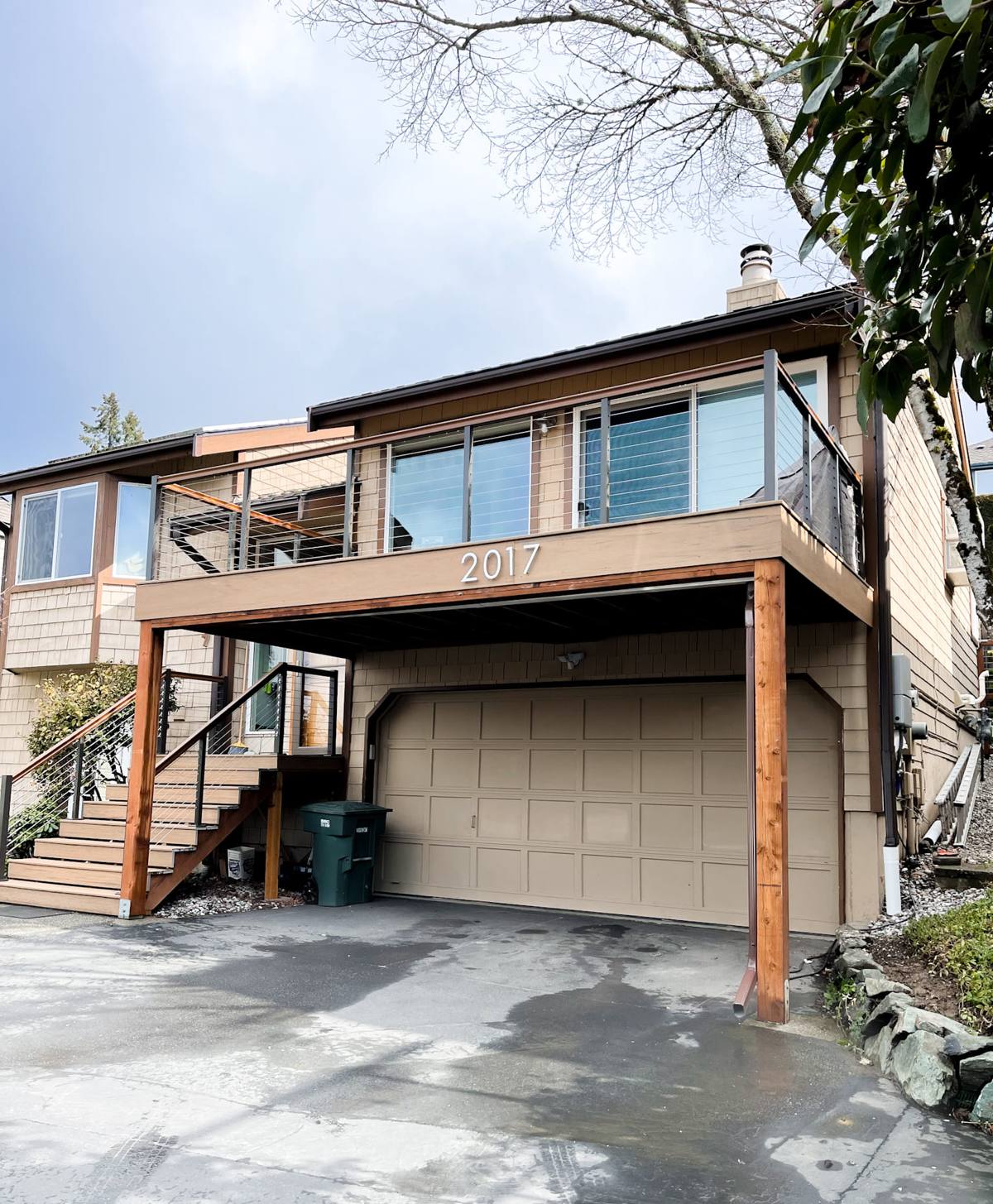
Composite vs. the Alternatives
Homeowners in Oak Harbor typically weigh composite against pressure-treated wood, cedar, and PVC decking. Here's how they actually compare for this climate, not in the abstract:
| Material | Moisture behavior here | Maintenance | Typical lifespan in this climate |
|---|---|---|---|
| Pressure-treated wood | Absorbs water; prone to cupping, splitting, and fastener pop over repeated wet cycles | Annual cleaning, re-staining every 2-3 years | 10-15 years before major repair or replacement |
| Cedar | Better rot resistance than treated pine but still organic and moisture-absorbent | Re-staining every 2-4 years, ongoing moss treatment on shaded sections | 15-20 years with consistent upkeep |
| Composite | Does not absorb water into the board itself; resists cupping and splintering | Periodic surface cleaning; no staining or sealing required | 25-30 years, often backed by a manufacturer warranty of similar length |
| PVC (cellular vinyl) | Fully moisture-resistant, including at cut ends | Lowest maintenance of the group; surface cleaning only | 25-30+ years, generally at a higher upfront cost than composite |
Composite tends to be the balance point for Oak Harbor homeowners: meaningfully better moisture and moss resistance than wood without the higher material cost of full PVC systems. The right call still depends on your specific site — sun exposure, proximity to the water, budget, and how the deck ties into the rest of the house.
What a Correct Composite Installation Actually Involves
The board itself is only part of a deck. Most of the problems we get called out to fix on composite decks — soft spots, board movement, staining around fasteners, or a deck that feels spongy after a few years — trace back to substructure and detail work that got rushed, not to the decking material failing.
Framing and Joist Spacing
Composite boards flex differently than solid wood, and manufacturers publish specific joist spacing requirements for their products — often tighter than what's acceptable for a wood deck board, especially at angled or picture-frame layouts. Building to the manufacturer's spec, not just a generic 16-inch layout, is what keeps a composite deck from developing a bounce or sag over time, and it's also what keeps the manufacturer's warranty valid if something does go wrong.
Fasteners and Hardware
In salt air, standard fasteners corrode faster than they will inland, and a corroding fastener under a composite board can stain the surface around it or eventually fail structurally. We use fasteners and hidden fastening systems rated for coastal exposure, and we make sure joist hangers, structural screws, and any exposed hardware at stairs and railings are rated the same way — not just the fasteners visible from the top.
Ledger Attachment and Flashing
The ledger board — where the deck attaches to the house — is the single most common point of water intrusion on any deck, composite or wood. Correct flashing here means metal flashing integrated with the house's existing water-resistive barrier, not just caulk sealing a gap, so wind-driven rain off the water can't work its way behind the ledger and into the wall framing or rim joist over time.
Drainage and Airflow Underneath
A deck built low to the ground or over an enclosed area needs real airflow and a way for water to drain out from underneath, not just off the top. Without it, the space beneath the boards stays damp long after a storm, which is exactly the environment that promotes mold, mildew, and eventual decay of the framing lumber even when the composite decking above shows nothing.
Board Spacing and Expansion
Composite expands and contracts with temperature more than wood does. Board-end gaps and spacing have to account for that movement, particularly at picture-frame borders and stair stringers, or boards can buckle or gap unevenly as temperatures swing through an Oak Harbor summer and winter.
How Our Process Works
- On-site assessment: We look at sun exposure, drainage, proximity to salt spray, existing structure (if this is a replacement or a rebuild on existing framing), and how the deck ties into the house.
- Design and product selection: We walk through composite product tiers and board profiles with you based on your budget, sun exposure, and how much upkeep you want to do, and design the layout including railings, stairs, and any picture-framing.
- Permitting: Most deck work in this area requires a permit, particularly for anything attached to the house or above a certain height. We handle that process rather than leaving it to you.
- Demolition (if applicable): Removal of the existing deck, with an inspection of the ledger connection and any framing underneath for rot or damage before we build on it.
- Framing and structural work: Built to the composite manufacturer's spacing specs, with coastal-rated fasteners and hardware and correct ledger flashing.
- Decking, railing, and trim installation: Boards, fascia, stairs, and railing systems installed to manufacturer spec, with attention to expansion gaps and drainage.
- Final walkthrough: We go over the finished deck with you, including what maintenance it does and doesn't need going forward.
What Composite Actually Needs From You Afterward
Composite is marketed as low-maintenance, and relative to wood, that's accurate — but "low" isn't "none," especially in a climate that pushes moss and organic buildup onto every outdoor surface. A realistic maintenance routine here includes:
- Periodic surface cleaning with soap and water or a manufacturer-approved deck cleaner to prevent organic buildup from becoming embedded, particularly on shaded sections prone to moss
- Keeping gutters and downspouts near the deck clear so runoff doesn't pool against the ledger or framing
- Checking that under-deck drainage and ventilation gaps stay clear of leaves and debris, especially heading into fall
- An occasional look at fasteners, railing posts, and stair connections for any sign of movement or corrosion staining
- Prompt attention to any soft spots or discoloration, since catching a substructure issue early is a small repair and catching it late usually isn't
None of that is a defect in composite as a product — it's the realistic upkeep any exterior surface needs on a site that gets this much salt air, rain, and shade. It's just a shorter, simpler list than what a wood deck requires.
Why Hiring a Crew That Already Works Oak Harbor Matters
Oak Harbor's building requirements, typical soil and drainage conditions, and exposure to Salish Sea weather aren't identical to an inland job forty miles away, and a crew that works this area regularly already knows the details that matter locally — what inspectors here look for, how exposed a given site typically is to wind and salt spray, and what framing and flashing choices actually hold up on this coastline over the long run rather than just on paper. That local pattern-recognition is the difference between a deck that's built to a generic spec and one that's built for the site it's actually going on.
Questions Worth Asking Before You Hire
| Ask about | Why it matters |
|---|---|
| Manufacturer certification | Confirms the crew is trained on that specific product's spacing, fastening, and warranty requirements |
| Fastener and hardware rating | Standard hardware corrodes faster in salt air; coastal-rated hardware protects the structure long-term |
| Ledger flashing method | The most common source of hidden water damage on any deck attached to a house |
| Permit handling | Confirms the deck will meet local code and won't create problems at resale or inspection |
| Written warranty | Covers both the manufacturer's product warranty and the contractor's workmanship warranty separately |
What Affects the Cost of a Composite Deck Here
Composite decking generally costs more upfront than pressure-treated wood and less than full PVC systems, but the total project cost depends on more than the board price. Deck size and layout complexity (picture-framing, curves, multiple levels) affect labor significantly. Railing style — cable, glass, or composite baluster systems — can shift the budget as much as the decking itself. Height above grade changes structural and code requirements, and site access on a sloped or waterview lot can add cost to both demolition and construction. We give straight, itemized estimates rather than a single number, so you can see where the budget is actually going and adjust the parts of the design that matter less to you.
If you're weighing a new composite deck or a rebuild in Oak Harbor, we're glad to come take a look at your site, talk through sun exposure, drainage, and product options, and give you a straightforward estimate. There's no pressure and no obligation — just an honest read on what your property needs.