 Anacortes Siding
 Roofing in Conway Is a Different Job Than Roofing Inland
Conway sits low in the Skagit River delta, surrounded by farmland, sloughs, and tidal flats, with Puget Sound and Skagit Bay close enough that damp, salt-tinged air is a daily fact of life rather than an occasional weather event. Combine that with Skagit County's long, gray stretch of fall-through-spring rain and the fog that settles over the flats on still mornings, and you get a set of conditions that are genuinely harder on a roof than what a home fifteen miles inland deals with. Moss gets a longer growing season here. Moisture has more opportunities to find its way under shingles that are past their prime. Metal fasteners and flashing see more corrosive exposure. None of this means a Conway roof needs anything exotic — it means the replacement has to be done with those specifics in mind, not treated like a generic re-roof.
What "Salt Air, Driving Rain, and Moss Season" Actually Does
Salt-laden air accelerates corrosion on exposed fasteners, flashing, and any metal roofing components that aren't rated for coastal exposure. Driving rain — the kind that comes in sideways during a fall or winter blow off the Sound — finds every gap in flashing, every under-driven nail, and every place where underlayment laps the wrong direction. And moss, which thrives in the shaded, moisture-retentive conditions common on north-facing slopes and tree-lined lots throughout this part of Skagit County, doesn't just look bad — its root structure lifts shingle edges and holds water against the roof deck long after the rest of the roof has dried out.
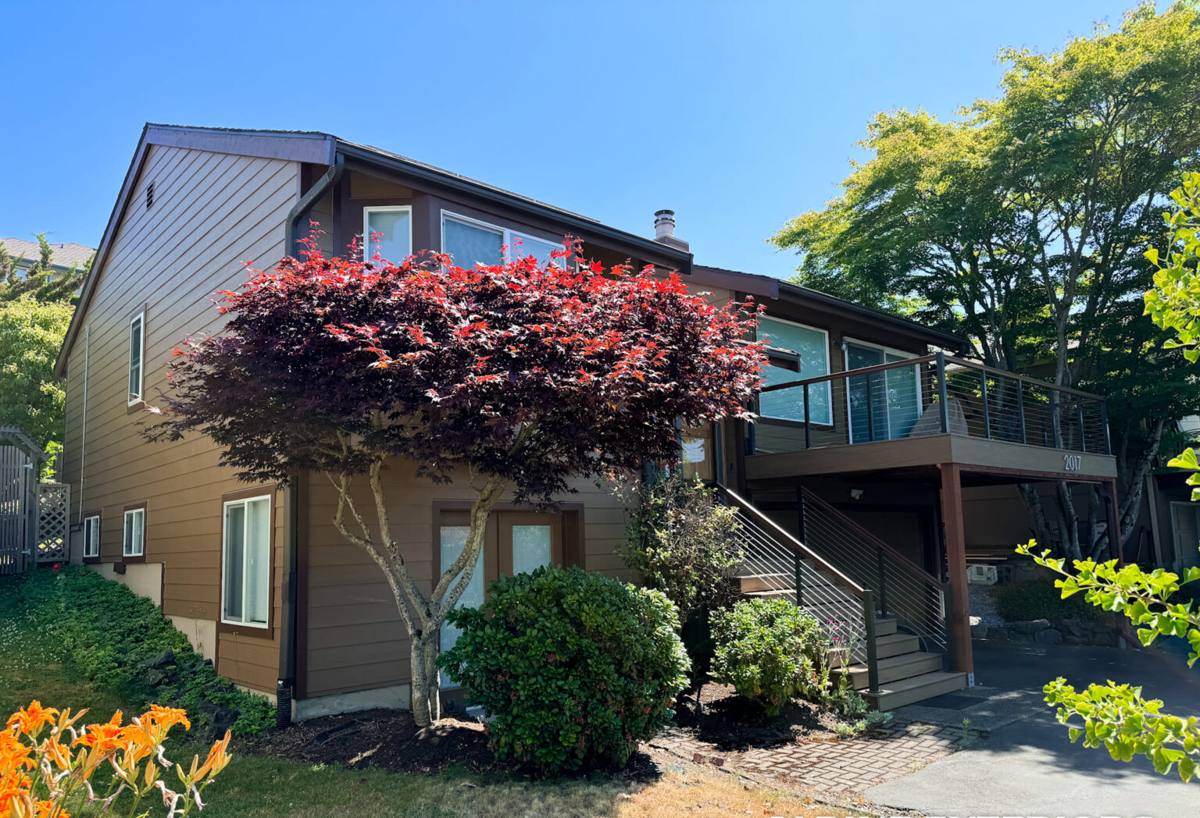
Signs a Conway Roof Needs Replacement, Not Another Repair
Most homeowners call about a specific leak or a missing shingle, but the real question is whether the roof as a whole has reached the point where patching stops making financial sense. A few patterns we look for on delta-area homes:
- Granule loss heavy enough that you can see bare asphalt mat in multiple spots, not just one worn patch
- Shingles that are cupping, curling at the edges, or cracking when lightly flexed
- Moss or dark algae streaking across more than a third of the roof surface, especially on shaded slopes
- Soft spots or slight sponginess underfoot on the roof deck, which usually points to trapped moisture below the surface
- Daylight visible through the roof deck from inside the attic, or water staining on rafters and sheathing
- A roof that's already 18-25+ years old (for standard asphalt shingle) and has never had ventilation or underlayment upgrades
Any one of these on its own might still be repairable. Two or three together, especially on a roof already past the midpoint of its expected life, usually means the smarter move is a full replacement rather than chasing leaks one at a time.
What a Correct Roof Replacement Involves
Tear-Off and Deck Inspection
We don't roof over existing layers. A full tear-off is the only way to actually see the deck — and in a low-lying, moisture-heavy area like Conway, deck condition is where problems hide. Any soft, delaminated, or water-stained plywood or plank sheathing gets identified and replaced before anything new goes down. Skipping this step is the single most common reason a "new roof" starts leaking again within a few years.
Underlayment and Ice-and-Water Protection
Given the volume of driving rain this area sees, we run a synthetic underlayment across the full deck rather than older felt products that degrade faster under sustained moisture. Ice-and-water shield membrane goes at eaves, valleys, and any roof-to-wall transitions — the exact spots where wind-driven rain and ponding are most likely to find a way in.
Flashing
Flashing around chimneys, skylights, vent penetrations, and sidewalls is where the majority of roof leaks actually originate, not in the field of the shingles themselves. We use corrosion-resistant flashing material and step-flash every wall intersection correctly rather than relying on caulk or sealant to do a metal detail's job. Caulk fails; properly lapped flashing doesn't need to.
Ventilation
An underventilated attic traps warm, moist air against the underside of the roof deck, which accelerates rot, promotes mold, and — in this climate — feeds the same conditions that let moss establish itself on the outside. We check intake (soffit vents) and exhaust (ridge or box vents) as a balanced system, not just tack on more roof vents without checking that air can actually get in from below.
Final Layer and Fastening
Shingles or metal panels go down to the manufacturer's nailing pattern and exposure spec — not tightened up to save material. In an area exposed to salt air and wind, correct fastening is what keeps a roof performing through its warranty period instead of losing shingles in the first hard blow.
Choosing a Roofing Material for a Conway Property
There's no single "best" material — the right choice depends on the home's structure, the owner's budget and maintenance appetite, and how exposed the site is to wind and salt air. Here's how the common options actually compare for this location:
| Material | Typical Lifespan Here | Moss/Moisture Behavior | Considerations for Conway |
|---|---|---|---|
| Architectural asphalt shingle | 25-30 years | Algae-resistant granules help; still needs periodic moss treatment on shaded slopes | Best cost-to-performance balance for most homes; wide color range |
| Standing-seam metal | 40-50+ years | Sheds moss and moisture very well due to smooth, sloped surface | Higher upfront cost; needs coastal-rated fasteners and coatings near the water |
| Wood shake/shingle | 20-25 years, highly maintenance-dependent | Most susceptible to moss and rot in this humidity; needs regular treatment | We're upfront that this is the highest-maintenance option in a delta climate — worth knowing before committing |
| Synthetic composite shingle | 30-40 years | Resists moisture absorption well; less organic material for moss to grip | Good middle ground on maintenance, higher material cost than standard asphalt |
For most Conway homes, a quality architectural asphalt shingle with the underlayment, flashing, and ventilation details done correctly delivers the best long-term value. Metal earns its higher price tag on homes with steeper pitches, simpler rooflines, or owners who want to minimize maintenance for decades. We'll walk through the actual trade-offs for your specific roof rather than push one product across the board.
Moss and Ventilation: The Two Issues That Come Back If Ignored
A new roof installed without addressing ventilation, or without a plan for moss on shaded north slopes, will show the same problems the old roof had — just on a newer surface. Zinc or copper strips near the ridge can help suppress regrowth over time on moss-prone slopes, and we'll flag whether that's worth adding based on the tree cover and orientation of your specific roof. On the ventilation side, we measure intake and exhaust rather than guessing, because an imbalance shows up as trapped moisture whether the roof itself is brand new or twenty years old.
Our Process, Start to Finish
- On-site inspection — we walk the roof and attic, check the deck where accessible, and note flashing, ventilation, and moss conditions specific to your property
- Written estimate — material options, scope, and a clear price, with the trade-offs of each material explained rather than assumed
- Scheduling around the weather — we plan tear-off and dry-in around forecast windows so your home isn't left exposed during a rain system, which matters more here than in drier parts of the state
- Tear-off and deck repair — full removal, deck inspection, and replacement of any compromised sheathing
- Underlayment, flashing, and ventilation installed correctly — the details that determine whether the roof performs for its full expected life
- Final layer installed to spec — proper nailing pattern, exposure, and manufacturer requirements followed for warranty coverage
- Site cleanup and walk-through — magnetic sweep for debris, gutters checked, and a final review with the homeowner before we call the job done
What Drives Cost on a Conway Roof Replacement
| Factor | Why It Matters Here |
|---|---|
| Roof size and pitch | Steeper or more complex rooflines take longer and need more safety setup |
| Deck condition | Delta-area moisture means deck repair needs are often higher than inland homes of the same age |
| Material choice | Asphalt, metal, and composite options span a wide cost range, as shown above |
| Layers to remove | Homes with multiple existing layers require more tear-off labor |
| Access and site conditions | Rural lots, long driveways, or septic/well systems can affect staging and equipment placement |
| Ventilation upgrades needed | Adding or correcting soffit and ridge ventilation is often worth bundling into the same job |
We'd rather walk your roof and give you real numbers than throw out a broad range that doesn't mean much for your specific home.
Checklist: Vetting a Roofing Contractor for a Conway Home
- Do they do a full tear-off and deck inspection, or offer to roof over the existing layer?
- Do they explain flashing and ventilation details, or only talk about shingle brand and color?
- Are they licensed and insured in Washington, and willing to show proof without being asked twice?
- Do they have experience with this area's moisture and moss conditions specifically, not just general roofing experience?
- Is the estimate written and itemized, or a vague verbal number?
- Do they talk about scheduling around weather windows, or treat timing as an afterthought?
Why Local Experience in This Area Matters
A roofing crew that already works Anacortes and the surrounding Skagit County communities has already seen how this delta and coastal environment ages a roof — which slopes moss up first, which flashing details fail under driving rain off the Sound, and how long a weather window actually needs to be before it's safe to tear off a section of roof. That's not something you get from a crew driving in from outside the region for a single job. It also means we're a known, reachable local business if a warranty question or follow-up comes up years down the line, not a name that disappears after the invoice is paid.
Get a Straight Answer About Your Roof
If your Conway home's roof is showing granule loss, moss buildup, or age past the 20-year mark, it's worth having someone look at it before a small issue turns into deck damage. We offer free, no-pressure estimates — walk the roof with us, ask the questions above, and get a straight answer about whether repair or replacement makes sense for your home. Use the form below to get started.