 Anacortes Siding
 Why Siding Installation in Conway Is Its Own Job
Conway sits in the low, flat delta country where the Skagit River meets Skagit Bay, and that location shapes everything about how siding performs here. Homes in this part of Skagit County deal with a damp, saltwater-influenced air mass, heavy seasonal rain driven sideways by wind off the water, and long stretches of shade from mature evergreens that keep exterior walls wet far longer than homes just a few miles inland. Siding that would hold up fine in a drier climate can start failing early here if it isn't installed with this environment in mind.
That's the reason we treat siding installation in Conway as a local specialty, not a generic swap-the-old-boards-for-new-ones job. The product matters, but so does the flashing, the fastening, the drainage plane, and a dozen other details that determine whether a wall stays dry for the next thirty years or starts rotting from the inside in five.
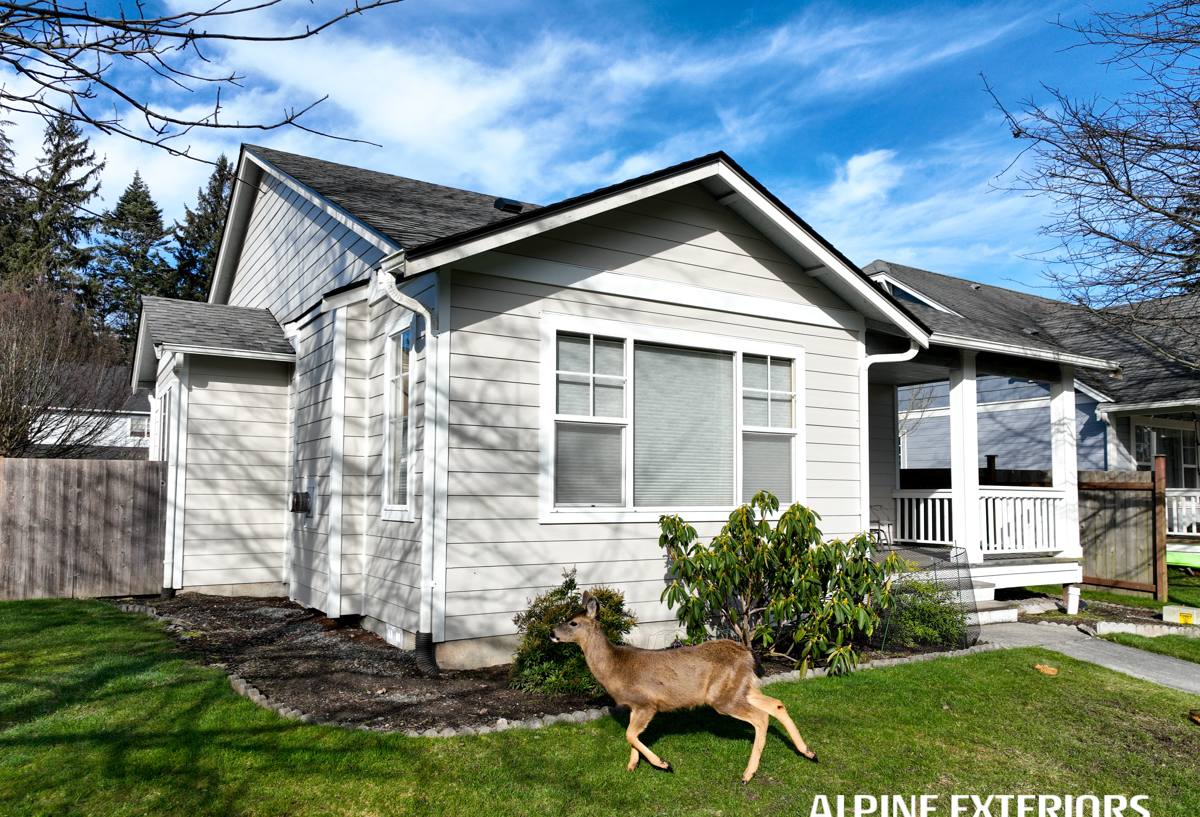
What Conway's Climate Actually Does to Exterior Walls
Salt Air and Coastal Moisture
Conway's proximity to Skagit Bay and the tidal sloughs around the Skagit River delta means homes here sit in an air mass with more salt content and more ambient humidity than a home in Sedro-Woolley or Burlington. Salt-laden moisture is harder on fasteners, trim, and paint film than plain rain. Over years, it accelerates corrosion on anything not rated for coastal exposure and breaks down lower-grade coatings faster than the manufacturer's warranty timeline assumes.
A Long, Wet Moss Season
Between the tree cover common in this part of the county and the sheer number of overcast, drizzly days typical of a Pacific Northwest fall, winter, and spring, north-facing and shaded walls in Conway can stay damp for weeks at a time. That's exactly the condition moss and algae need to establish. Once organic growth gets a foothold on siding, it holds moisture against the wall surface, which is a problem for any material but especially for products that aren't dimensionally stable when wet.
Driving Rain and Wind
Storms moving in off the water don't just drop rain straight down — wind pushes it sideways into wall assemblies, seams, and trim joints. A siding system with weak seams, insufficient overlap, or gaps at penetrations will let that wind-driven water find its way behind the cladding, where it does the most damage and is hardest to spot until the problem is already serious.
What a Correct Siding Installation Actually Requires
The siding board itself is only part of the system. A correct installation is really a layered assembly designed to manage water, and every layer has to be right for the whole system to work.
The Water-Resistive Barrier and Flashing
Behind every board, there should be a continuous, properly lapped water-resistive barrier. Every window, door, and penetration needs flashing installed in the correct shingle-style sequence — upper layers overlapping lower ones — so any water that gets past the siding drains down and out, not into the wall cavity. This is the single most common place we find shortcuts on older installations in this area.
Fastening and Clearances
Fiber cement siding has specific fastener spacing, embedment depth, and clearance requirements from the manufacturer, and those requirements exist for a reason — get them wrong and you get cracking, popped nails, or water intrusion at the fastener holes. Siding also needs proper clearance from grade, roof lines, decks, and hardscaping so it never sits in standing water or gets constant splash-back.
Rainscreen Drainage
In a climate as wet as Conway's, a drainage gap between the siding and the water-resistive barrier gives any moisture that does get behind the boards a path to escape instead of sitting trapped against the wall sheathing. This detail matters more here than it would in a drier region, and it's one we don't skip.
Why We Install James Hardie Fiber Cement, and Nothing Else
We made a decision a while back to install only James Hardie fiber cement siding — not vinyl, not LP SmartSide, not primed spruce or cedar, not other fiber cement brands. That's not a marketing angle; it's a standard we hold to because of what we've seen these products do in exactly this kind of climate over time.
Vinyl siding is affordable and low-maintenance in the sense that it doesn't need painting, but it's a thin plastic product that expands, contracts, and can warp with temperature swings, and it doesn't hold up as well against wind-driven debris. Engineered wood products like LP SmartSide use real wood fiber with resin treatments, which makes them vulnerable at cut edges and fastener penetrations if the field-applied sealants aren't maintained — a real risk in a climate where walls stay wet for extended periods. Primed spruce or cedar is a beautiful, traditional look, but solid wood siding needs an ongoing maintenance commitment — inspection, caulking, and repainting on a real schedule — that most homeowners don't want to sign up for indefinitely, and gaps in that maintenance show up fast near saltwater air.
James Hardie fiber cement is a cement, sand, and cellulose fiber composite. It doesn't absorb water the way wood-based products can, it won't rot, and it's non-combustible. Hardie also engineers specific product lines for different climate zones — the HZ5 line is built for regions with freeze-thaw cycles and heavy moisture exposure, which describes Skagit County's marine climate well. Add in the factory-applied ColorPlus finish, which is baked on under controlled conditions rather than field-painted, and you get a finish that resists fading and holds up to UV and salt air far better than a job-site paint job.
Our Installation Process for Conway Homes
- On-site assessment. We walk the exterior, check the existing wall assembly, look for signs of past moisture damage, and evaluate drainage, tree cover, and sun exposure on each elevation.
- Tear-off and sheathing inspection. We remove the old siding and inspect the sheathing underneath for rot or damage before anything new goes on — no covering up a problem that's already there.
- Water-resistive barrier and flashing. We install a continuous barrier and flash every window, door, and penetration in the correct sequence so water sheds outward at every layer.
- Rainscreen gap. We install a drainage gap behind the siding so any incidental moisture has somewhere to go.
- Hardie installation to manufacturer spec. Fastener spacing, embedment, clearances from grade and roofline, and joint treatment all follow James Hardie's published installation guidelines — not shortcuts.
- Trim, caulking, and final inspection. We finish trim details, seal appropriately (not everywhere — over-caulking can trap water just as badly as under-caulking), and do a final walk-through.
Common Problems We Find on Older Conway Siding
When we're called out to assess existing siding on homes in this area, a handful of issues come up again and again:
| Issue | What Causes It | Why It Matters in Conway |
|---|---|---|
| Moss and algae staining on north walls | Shade, tree cover, and prolonged dampness | Trapped moisture accelerates decay underneath, especially on wood-based siding |
| Cracked or delaminating boards | Wrong fastener spacing or embedment on the original install | Cracks let wind-driven rain straight into the wall assembly |
| Corroded fasteners or trim hardware | Non-coastal-rated hardware in a salt-influenced air mass | Rust staining and weakened fastening over time |
| Soft or rotted sheathing near grade | Insufficient clearance between siding and ground or hardscaping | Low-lying delta terrain means less natural drainage away from foundations |
| Faded, chalky paint film | Field-applied paint breaking down under UV and salt exposure | Factory-cured finishes hold up longer in this exposure than site-applied ones |
Cost Factors for Siding Installation in Conway
Every project is different, but the same handful of factors drive most of the cost variation we see on Conway homes:
| Factor | Why It Affects Cost |
|---|---|
| Home size and wall complexity | More square footage, corners, and roof intersections mean more material and labor |
| Condition of existing sheathing | Rotted sheathing found during tear-off needs repair before new siding goes on |
| Siding profile and trim package | Lap width, shingle-style accents, and trim detail level change material and labor cost |
| Access and site conditions | Tree cover, tight lot lines, and low-lying ground can affect staging and drainage work |
| Scope of moisture repair needed | Homes with existing water damage need remediation before new siding is installed |
We won't quote a number without seeing the home, but we're always upfront about what's driving the estimate and won't pad a bid with work that isn't needed.
Why a Crew That Already Works Conway Matters
Siding installers who mostly work drier, more sheltered parts of the county can get away with skipping details that don't cause visible problems for years in that setting. Those same shortcuts show up fast on a home exposed to Skagit Bay's air and Conway's tree-shaded, low-lying terrain. A crew that already understands this specific environment knows to prioritize the water-resistive barrier and flashing sequence, to use coastal-appropriate fasteners and hardware, and to plan drainage and clearance details around the reality of a wet, flood-plain-adjacent site — not a generic checklist written for a drier region.
That local familiarity also shows up in smaller, practical ways: knowing which elevations on a Conway home are going to stay damp the longest, planning installation around the wetter months instead of fighting them, and recognizing early signs of moisture problems that a less experienced crew might miss entirely.
Caring for Your New Siding After Installation
James Hardie siding installed correctly needs far less upkeep than wood or vinyl, but "less" isn't "none." A short annual routine keeps it performing the way it's designed to:
- Rinse the exterior gently once or twice a year to clear salt residue, pollen, and organic buildup before it can take hold
- Check caulked joints and trim seams for cracking or separation, especially after winter storm season
- Keep tree branches and shrubs trimmed back from wall surfaces to reduce shade, moisture retention, and physical contact damage
- Clear debris from where siding meets grade, decks, or hardscaping so water doesn't pool against the bottom edge
- Watch shaded, north-facing walls for early moss growth and address it before it spreads
- Have any impact damage or visible cracking inspected promptly rather than waiting for a scheduled repaint
If you're weighing a siding replacement on a Conway home, we're happy to walk the property, look at what your walls are actually dealing with, and put together a straightforward, no-pressure estimate for a James Hardie installation built for this specific climate. There's a form below — reach out and we'll get you scheduled.