 Anacortes Siding
 Window Replacement Built for Conway's Wet, Low-Lying Climate
Conway sits in the Skagit River delta, a flat, low-lying stretch of Skagit County where moist air off the water settles into the valley and doesn't leave in a hurry. Homes here deal with a longer wet season than a lot of inland Washington towns, more humidity sitting against exterior walls, and the kind of driving, wind-pushed rain that finds every gap a window was never sealed to handle. Add in a moss season that can stretch across most of the year on shaded elevations, and you've got a climate that is genuinely harder on window openings than people expect.
None of that means Conway homes need exotic materials or gimmicks. It means the installation details that get skipped on an easy job in a dry climate can't get skipped here. Flashing, sealants, sill pans, and drainage paths aren't optional extras — they're the difference between a window that lasts twenty-plus years and one that's letting water into your wall cavity within five.
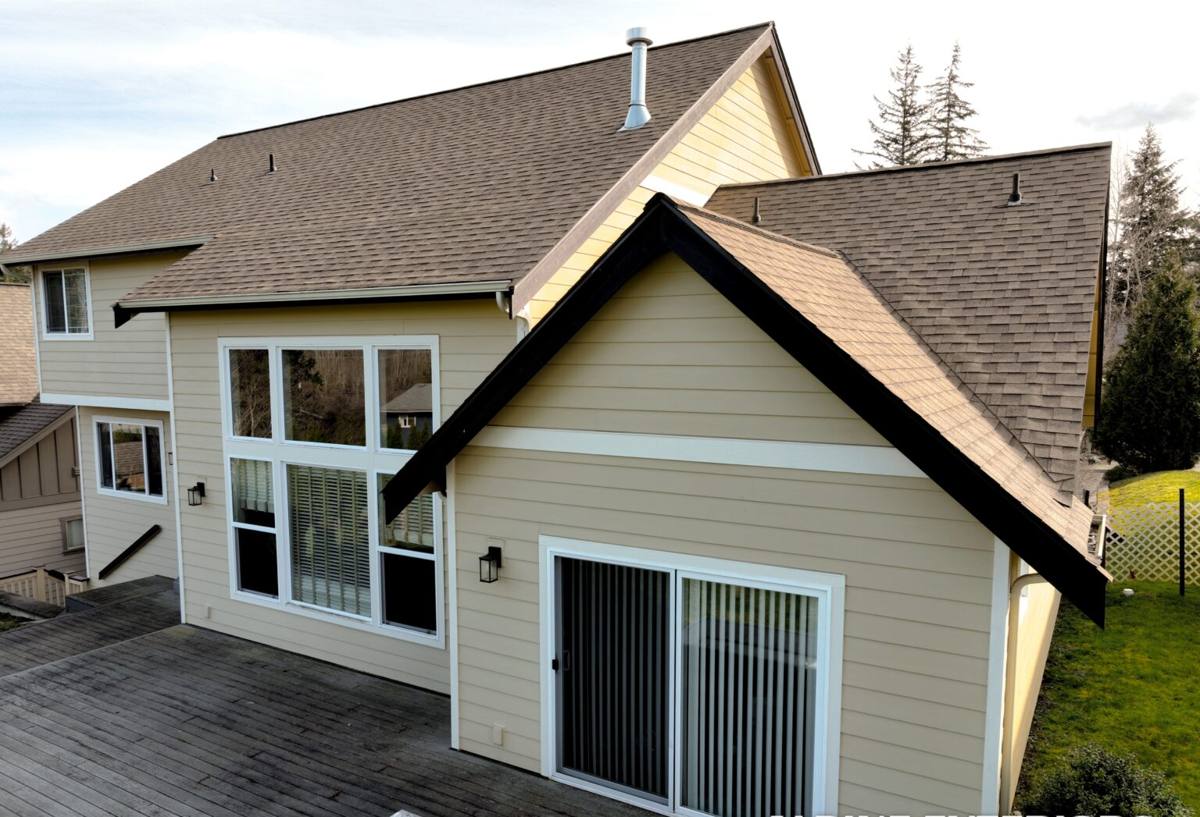
Signs a Conway Home's Windows Are Past Due for Replacement
Older windows don't usually fail all at once. They give off warning signs for a season or two before the damage spreads past the window itself. Homeowners in this part of Skagit County should watch for:
- Fogging or a hazy film between panes — the seal on the insulated glass unit has failed and moisture is trapped inside
- Soft, discolored, or spongy wood on the sill or the trim around the frame
- Visible black or green growth on the frame, sill, or the siding directly around the window
- Drafts you can feel with a hand near the frame on a windy day, even with the window latched
- Windows that are hard to open, close, or lock — frames swell and warp when they've been absorbing moisture
- A musty smell near the window that doesn't go away with cleaning
- Condensation forming on the inside of the glass regularly through fall and winter
Any one of these on its own might just mean the window needs attention. Several at once, especially soft wood or visible growth, usually means moisture has already gotten past the glass and into the framing — and that's a problem that gets more expensive the longer it sits.
What a Correct Window Replacement Actually Involves
A window replacement is really a moisture-management project that happens to have a window in the middle of it. The window itself is often the easy part. Getting the opening right is what determines whether the job holds up through a Skagit County winter or starts failing again in a few years.
Full-Frame vs. Insert Replacement
There are two basic approaches, and the right one depends on the condition of what's already there, not on which is generally "better."
- Insert (pocket) replacement — the new window is installed into the existing frame, which stays in place. Faster, less disruptive to interior trim and exterior siding, and appropriate when the existing frame is still sound and dry.
- Full-frame replacement — the entire window unit, including the old frame, is removed down to the rough opening. This is the right call when there's any sign of rot, water staining, or soft framing, because it's the only way to actually inspect and fix what's underneath.
We check the condition of the framing before recommending either one. On a home that's already showing moss, discoloration, or soft trim, an insert replacement just seals a problem behind a brand-new window — it doesn't fix it.
The Details That Actually Keep Water Out
In a climate that gets sustained, wind-driven rain, the water-management layer around a window matters more than the window brand does. A correct installation includes:
- A sloped sill pan that directs any water that does get past the window back outside, rather than letting it pool against the sill
- Properly lapped flashing tape integrated with the home's existing weather-resistive barrier, so water sheds down and over, never behind
- Backer rod and quality exterior sealant at the perimeter, sized and placed correctly rather than just caulked over gaps
- Shimming that keeps the window square and properly supported, so it operates smoothly and doesn't stress the seals over time
- Insulation in the gap between the window frame and the rough opening — an often-skipped step that affects both energy loss and condensation risk
Skip any one of these and the window can look fine for a year or two while moisture quietly works its way into the wall assembly behind it.
Choosing Materials for a Marine-Influenced Climate
There's no single "best" window material — every option is a set of trade-offs, and the right pick depends on your home's exposure, budget, and how much upkeep you want to take on. Here's how the common choices stack up for a Conway property dealing with sustained moisture and humidity.
| Material | Moisture Performance | Maintenance | Typical Lifespan |
|---|---|---|---|
| Vinyl | Won't rot; handles humidity well | Low — occasional cleaning | 20–30 years |
| Fiberglass | Excellent; very stable in moisture and temperature swings | Low | 30–40 years |
| Wood | Attractive but vulnerable without diligent upkeep | High — regular painting/sealing required | Varies widely with maintenance |
| Wood-clad | Exterior clad layer protects the wood core if installed and sealed correctly | Moderate — cladding is low-maintenance, interior wood still needs care | 20–30 years with proper install |
We install vinyl and fiberglass windows as our standard recommendation for homes in this part of Skagit County, simply because both shed moisture without the ongoing maintenance a wet climate demands. Solid wood windows can still work here, but only for owners who are genuinely committed to repainting and resealing on schedule — skip a year or two in a climate like this and the wood pays for it. That's a maintenance trade-off, not a knock on wood as a material.
How We Handle a Conway Window Replacement Project
- On-site assessment — we inspect each window opening, check for hidden moisture or soft framing, and measure for accurate ordering.
- Straightforward proposal — you get a clear breakdown of scope, materials, and pricing before any work starts, including whether we're recommending insert or full-frame replacement and why.
- Protecting the home — landscaping, flooring, and interior finishes near the work area get covered before removal begins.
- Removal and inspection — old windows come out, and on full-frame jobs we inspect the rough opening for rot or damage before anything new goes in.
- Repair as needed — any compromised framing gets addressed before the new window is set, not covered up.
- Installation — sill pan, flashing, insulation, shimming, and sealant go in per manufacturer specification and sound building practice, not shortcuts.
- Interior and exterior finish work — trim, casing, and siding tie-ins are finished to match the surrounding home.
- Final walkthrough — every window gets tested for smooth operation and a proper seal before we call the job done.
Why It Matters That We Already Work in Conway and Skagit County
A crew that mostly works drier inland climates can install a technically fine window and still get the flashing details wrong for this area, because the consequences of a shortcut don't show up right away here — they show up eighteen months later as a soft sill or a stain on the interior wall. Working regularly in Anacortes and the surrounding Skagit County towns means we're used to building for a longer wet season and a climate that doesn't forgive skipped steps.
It also means we're realistic with homeowners about timing. Certain window replacement work goes more smoothly outside the heaviest stretch of the rainy season, and we'll talk through scheduling honestly rather than just booking whatever slot is open.
What to Expect After Your New Windows Are Installed
Correctly installed windows are genuinely low-maintenance, but a few habits help them perform well for the long haul in this climate:
- Rinse pollen, salt-tinged residue, and grime off the exterior glass and frames a couple of times a year
- Check that weep holes on the exterior sill track stay clear of debris so water can drain out
- Wipe down interior sills during the wettest months if you notice condensation building up
- Keep an eye on the exterior sealant line where the frame meets the siding, and let us know if you ever see it separating
That's about the extent of it. If something doesn't seem right — a draft, a sticking sash, condensation that wasn't there before — that's worth a call sooner rather than later, since catching it early is a lot simpler than dealing with hidden water damage later.
Get a Straight Answer About Your Windows
If your Conway home has windows showing any of the signs above, or you're just tired of drafts and fogged glass every winter, we're happy to come take a look. The estimate is free, there's no pressure attached to it, and you'll get an honest read on whether you need a full replacement, a partial fix, or nothing at all yet. Use the form below to get started.