 Anacortes Siding
 Windows Built for Old Town's Older Homes
Old Town Anacortes is one of the older residential pockets in the city, and it shows in the housing stock — homes with original or long-replaced window openings that don't always match today's standard sizes, older wall assemblies, and a mix of architectural styles from different eras of the neighborhood's growth. That's a different job than swapping windows in a newer subdivision house with square, standard-sized openings. In Old Town, "custom" isn't a marketing word. It's usually a practical requirement, because the rough openings, trim details, and wall depths don't line up with off-the-shelf sizing.
We approach every Old Town project as a measure-first job, not a catalog-first job. That distinction matters more here than almost anywhere else in Anacortes, because forcing a stock-sized window into an out-of-square older opening is one of the most common causes of air leaks, water intrusion, and premature failure we see when we're called in to fix someone else's install.
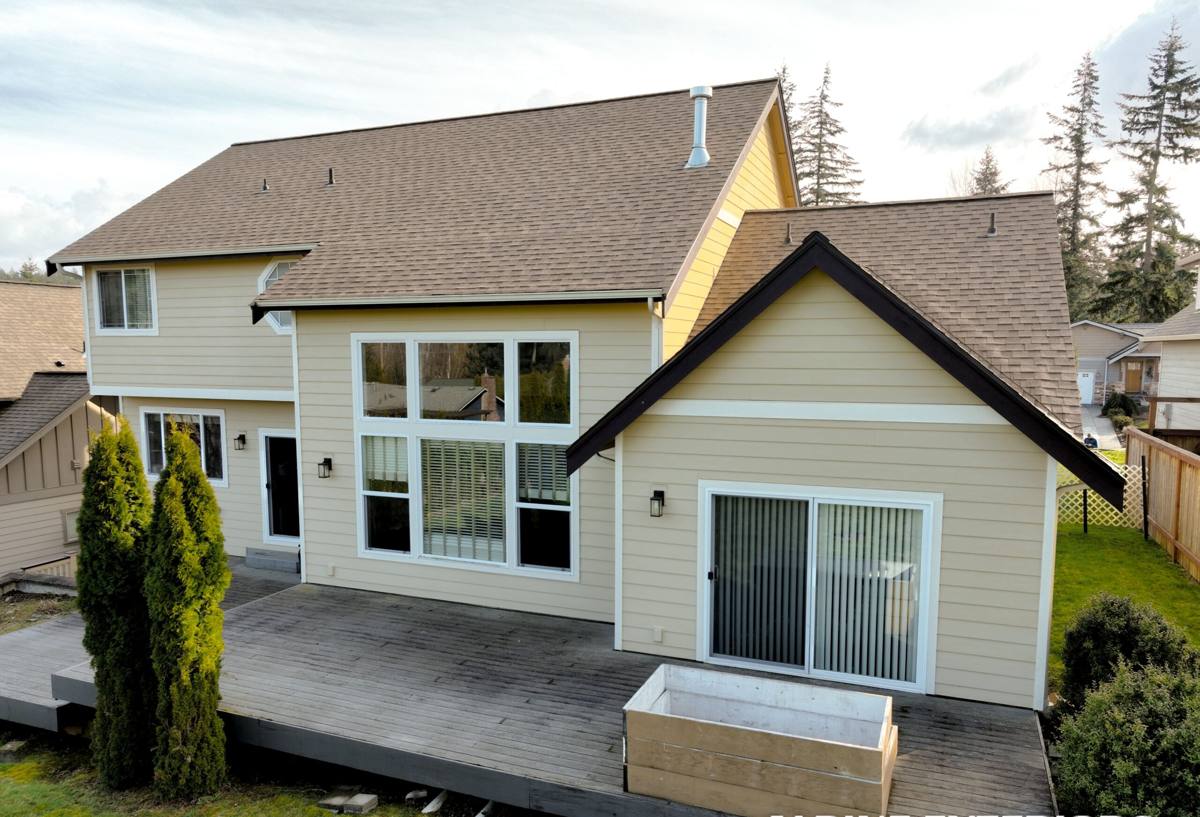
What Anacortes' Marine Climate Actually Does to Windows
Anacortes sits right on the water, and Old Town is close enough to it that salt air is a constant factor, not an occasional one. Combined with the driving rain typical of Skagit County winters and the long stretch of damp, low-light months that support moss and mildew growth on north- and shade-facing walls, windows here take on more moisture exposure than the same product would face twenty miles inland.
Three climate factors matter most for window performance and longevity in this neighborhood:
- Salt-laden air — accelerates corrosion on hardware, fasteners, and unprotected metal components, and can degrade certain finishes faster than manufacturers' inland warranty testing accounts for.
- Wind-driven rain — Anacortes storms don't just fall straight down; wind pushes rain sideways against west- and south-facing walls, which puts real pressure on flashing details and sealant joints, not just the window unit itself.
- Extended damp season — moss and mildew thrive in the shaded, moisture-retaining conditions common on many Old Town lots, and any trim or sill wood that stays wet too long is at risk of rot regardless of how good the window itself is.
None of this means windows fail quickly here. It means the installation details — flashing, sealant, drainage, material selection — carry more weight in this climate than they would in a drier part of the state.
Signs an Old Town Home's Windows Need Attention
Because many Old Town homes have gone through at least one prior window generation, we're often called to evaluate windows that look fine from the street but are quietly failing. Common signs worth checking for:
- Fogging or a permanent haze between panes of double-pane glass — the seal has failed and the gas fill is gone.
- Soft or discolored wood at the sill or bottom corners of the trim, often the first place rot shows.
- Visible daylight or a noticeable draft around the sash when the window is closed.
- Paint that keeps failing in the same spot year after year, which usually points to moisture getting in behind the finish.
- Windows that are difficult to open, close, or lock — a sign the frame has shifted or swollen.
- Noticeably higher heating bills in a home whose windows haven't been touched in decades.
Any one of these is worth a look. Several together usually means it's time to plan a replacement rather than keep patching.
Choosing a Window Style That Fits the Home
Old Town's housing mix means there's no single "right" window style for the neighborhood — a bungalow-era home and a mid-century home call for different choices. What matters is matching the new window's proportions, sightlines, and grille pattern to the character of the house rather than defaulting to whatever's easiest to install.
Common styles we work with in this area
- Double-hung — the most common fit for older homes, especially where the original openings were tall and narrow; both sashes tilt in for cleaning.
- Casement — cranks outward for a tighter seal against wind-driven rain, a real advantage on exposed walls facing the water.
- Sliding — a practical option for wider openings, particularly on additions or rear-facing walls.
- Picture/fixed — often paired with operable units to preserve a view without adding a seam that has to seal.
We'll walk through what fits the house's existing lines before talking about brands or budget — the style decision should come first.
Frame Material: The Trade-Offs That Matter Near the Water
Frame material selection matters more in a salt-air, high-moisture environment than it does in most parts of the state. Every material has real trade-offs — there's no single "best" answer, only the best fit for a given home, exposure, and budget.
| Material | Coastal/moisture performance | Maintenance | Typical trade-off |
|---|---|---|---|
| Vinyl | Won't corrode or rot; performs well in salt air | Low — occasional cleaning | Can't be painted to match trim changes down the road |
| Fiberglass | Very stable, resists moisture and temperature swings well | Low | Higher upfront cost than vinyl |
| Aluminum | Durable but conducts heat/cold and can corrode without a quality finish | Moderate | Less energy-efficient unless thermally broken |
| Wood-clad | Exterior clad protects the wood, but any breach in the cladding invites rot | Higher — exterior clad protects, interior wood still needs care | Best appearance-match for historic-style homes, but least forgiving of installation errors near the water |
For homes closest to the water or on the most exposed walls, we're generally cautious about full solid-wood exteriors unless the homeowner understands and is prepared for the maintenance commitment. That's not a knock on wood as a material — it's a matter of matching maintenance tolerance to exposure. We'll give you the honest trade-offs for your specific walls rather than steering everyone toward one product.
What "Custom" Means in Practice
On a lot of Old Town projects, "custom" simply means the new window is built to the actual opening rather than the opening being reframed to fit a stock size. That matters for a few reasons:
- Preserves original proportions — reframing an opening to accept a cheaper stock size often changes the look of the house from the street.
- Reduces disruption — building to the existing opening usually means less demolition of interior trim, siding, and wall finishes around the window.
- Avoids gap-filling shortcuts — a stock window in an oversized or irregular opening gets packed with shims and foam to make it fit, which is exactly where future leaks start.
Custom sizing costs more than a stock window off a shelf, but on an older Old Town home it's usually the difference between a clean, correctly sealed install and one that needs revisiting in a few years.
How We Handle a Custom Window Job, Start to Finish
- On-site evaluation — we look at the existing windows, the wall assembly where accessible, and any signs of past moisture problems before recommending anything.
- Precise measurement — every opening is measured individually; older homes rarely have two openings that are exactly identical, even when they look it.
- Material and style selection — we go over frame material, glass package, and style options against your budget and the wall's actual sun/wind/rain exposure.
- Removal and opening prep — old units come out carefully to protect interior and exterior trim we're not replacing, and we check the framing underneath for hidden rot before installing anything new.
- Flashing and weatherproofing — this is the step that determines whether the window performs for twenty years or leaks in five; we detail it the same way regardless of which product line you choose.
- Setting and sealing the window — shimmed level and plumb, fastened per manufacturer spec, and sealed with products rated for the exposure.
- Interior and exterior trim finish — trim is reinstalled or replaced to match the home's existing lines as closely as possible.
- Final walkthrough — every window is opened, closed, and locked in front of you before we call the job done.
Why the Flashing Detail Matters More Than the Window Itself
Homeowners understandably focus on glass and frame options, but in a wind-driven-rain climate like Anacortes, the flashing and sealant details around the window are what actually keep water out of the wall. A premium window installed with poor flashing will leak. A modest window installed with correct flashing, proper sill pan drainage, and the right sealant in the right locations will hold up for decades. We treat the flashing package as non-negotiable on every job, whether it's one window or a whole-house replacement — it's not an upsell, it's the part of the job that determines whether you're back here in five years with a rot problem.
Maintaining Custom Windows in a Coastal, Mossy Climate
New windows still need some seasonal attention in this climate to get their full service life. A simple annual routine goes a long way:
- Rinse salt residue off exterior frames and hardware a few times a year, especially after storms.
- Clear moss and debris from sills, tracks, and weep holes so water can drain instead of pooling.
- Check and refresh exterior caulking where it meets siding or trim if you notice any separation.
- Lubricate hardware on operable windows (locks, hinges, cranks) to prevent salt-air corrosion from seizing them up.
- Inspect interior sills after heavy storms for any sign of moisture getting past the seal.
None of this is heavy maintenance — it's a once- or twice-a-year check that catches small issues before they become sill or framing repairs.
Why It Matters to Hire a Crew That Already Works Old Town
Old Town Anacortes homes have enough quirks — non-standard openings, older wall assemblies, mixed architectural eras, and a shared exposure to salt air and wind-driven rain — that experience in this specific neighborhood is worth something. A crew that regularly works these homes has already seen the common opening sizes, the typical hidden framing conditions, and the exposure patterns particular to different streets and orientations in the area. That translates into fewer surprises mid-project and a flashing and sealing approach that's already proven against this exact climate, not a generic install pulled from a manufacturer's national installation guide.
We're a Skagit County-based crew, and Old Town is a neighborhood we know from repeat work, not a one-off job we're driving in for. If you're weighing whether your current windows need replacing or just want a straight answer on what a custom job would actually involve for your specific house, we're happy to take a look and give you an honest read — no pressure, no hard sell. Fill out the form below for a free estimate.