 Anacortes Siding
 Building a Deck That Actually Holds Up in Burlington
Burlington sits close enough to the water and to the marine weather patterns that move through Anacortes and the rest of Skagit County that a deck here faces a different set of demands than one built inland or in a drier climate. Salt-laden air, long stretches of driving rain, and a moss season that can run from fall through spring all work on wood, fasteners, and finishes in ways that show up years before most homeowners expect. A deck built without those conditions in mind will still look fine on installation day. The problems show up later, in loose railings, soft boards, rust streaks, and a surface that stays slick long after the rain stops.
We build decks for Burlington homeowners the way we'd want one built for our own house: with materials, fasteners, and framing details chosen for this specific climate, not generic best practices pulled from a catalog written for a different part of the country.
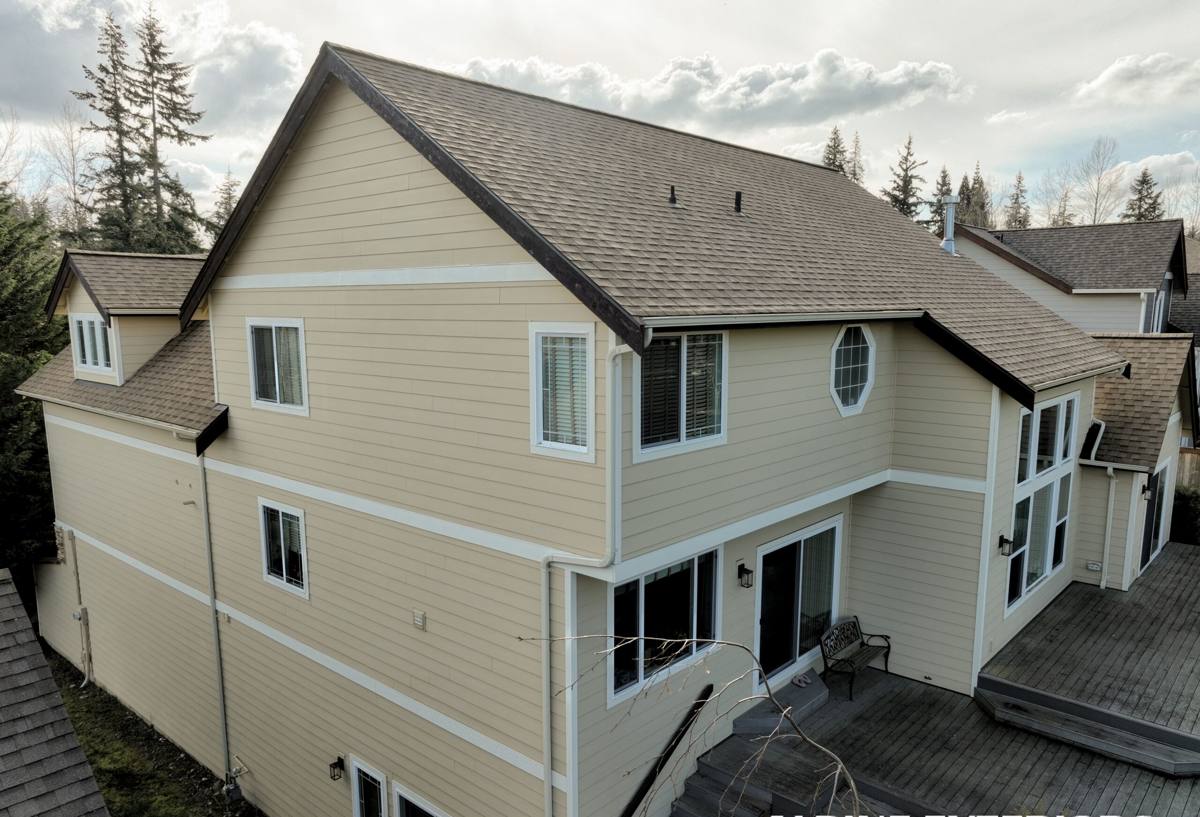
What Skagit County Weather Does to a Deck Over Time
It helps to understand the specific mechanisms at work, because they drive every material and construction decision that follows.
Moisture That Never Fully Dries Out
Western Washington's version of rain isn't usually heavy downpours — it's long, low-intensity soaking that keeps wood surfaces damp for days at a stretch. Combined with our short window of strong summer sun, deck boards and framing members here get far less total drying time per year than the same structure would get in a drier climate. Wood that stays damp longer is wood that rots, cups, and hosts mold and moss longer.
Moss and Algae Growth
Moss doesn't just grow on roofs. On a deck, it takes hold in the grain of horizontal wood surfaces, in fastener heads, and in any spot where water sits instead of shedding. Beyond looking bad, moss holds moisture directly against the wood and turns a dry-looking deck surface into a standing hazard the moment it gets wet.
Salt Air and Corrosion
Anacortes and the surrounding Skagit County shoreline communities, including Burlington, sit close enough to Puget Sound that airborne salt is a real factor for exterior metal. Standard interior-grade or even basic exterior fasteners can start showing rust bleed and streaking within a few seasons in this environment. That corrosion isn't cosmetic — it weakens the connection between structural members over time.
Choosing the Right Decking Material for This Climate
There's no single "best" decking material for every home — the right choice depends on budget, how much upkeep a homeowner wants to take on, and how the deck will be used. Here's how the common options actually perform under our conditions.
| Material | How It Handles Our Climate | Maintenance Reality |
|---|---|---|
| Pressure-treated lumber | Good rot resistance when properly installed and sealed; still absorbs moisture at cut ends and fastener holes | Needs re-sealing every 1-2 years; higher moss susceptibility if not maintained |
| Cedar | Naturally rot- and insect-resistant, ages well visually, but softer surface | Needs periodic sealing/staining to hold color and resist moisture uptake |
| Composite decking | Excellent moisture resistance, doesn't rot or splinter, more consistent surface | Low maintenance; still needs regular cleaning to prevent moss and algae film on the surface |
| PVC/capped composite | Best moisture and mold resistance of the common options; fully sealed surface | Lowest maintenance; higher upfront cost |
We don't push one product over another as a default. What we do insist on is honesty about trade-offs: composite and capped-composite boards cost more up front but remove most of the moisture-related maintenance burden that wood carries in this climate. Wood costs less initially and looks great, but only if the homeowner is realistic about the sealing and cleaning schedule it needs here.
What We Steer Clients Away From
We're cautious about uncapped composite boards on fully exposed, low-airflow decks — early-generation composite products in wet marine climates can develop surface mold if they don't get enough sun and airflow to dry between rain events. It's not that the material is defective; it's a mismatch between product and site conditions. We'll tell you plainly if your yard's shade pattern makes a given product a poor fit before we build with it.
Framing and Foundation: The Part Nobody Sees But Everything Depends On
Decking gets all the attention because it's what you see and stand on, but the framing underneath determines whether the whole structure lasts. In our climate, three framing decisions matter more than they would in a drier region.
Footing Depth and Drainage
Skagit County soils vary from sandy to heavier clay-influenced ground depending on the specific lot, and drainage around footings affects how much moisture the post bases sit in year-round. We set footings to the depth required by local code and grade the area around them so water moves away from the structure instead of pooling against it.
Ledger Board Flashing
Where a deck attaches to the house, the ledger board connection is one of the most common failure points in wet climates — not because the framing is weak, but because water gets behind the ledger and rots both the deck framing and the house's rim joist from the inside out, often invisibly for years. Proper flashing, not just fasteners and sealant, is what actually keeps water out of that joint.
Joist Protection
We use joist tape or an equivalent flashing membrane on the tops of framing members before decking goes down. It's a small material cost that prevents water from sitting in fastener holes and cut edges — exactly the spots where rot starts first.
Railings, Fasteners, and Hardware That Belong Near Salt Air
Hardware choice matters as much as decking choice in a marine-influenced climate, and it's the detail most likely to get value-engineered out on a lower-bid job.
- Stainless steel or heavy hot-dip galvanized fasteners rated for coastal/marine exposure, not standard exterior-grade screws
- Hidden fastener systems on composite decking where the product supports it, reducing both exposed metal and surface water traps
- Post bases and structural connectors rated for outdoor exposure, installed with the manufacturer's specified fastener type
- Railing hardware matched to the railing material so dissimilar metals aren't corroding against each other over time
None of this is exotic or unusual — it's simply choosing the hardware tier that matches the environment instead of the cheapest compliant option.
Permits and Local Building Requirements
Most decks above a certain height or attached to the primary structure require a building permit in Skagit County jurisdictions, and requirements can differ slightly depending on whether the property falls under city or county authority near Burlington. Permitted work typically means an inspector reviews the footings before decking goes on and signs off on the finished structure — a useful second set of eyes on the framing and connections that will be invisible once the deck is complete. We handle the permit application and coordinate inspections as part of the build so homeowners aren't navigating that process alone.
Our Process From First Call to Finished Deck
1. On-Site Assessment
We walk the site, look at drainage, sun exposure, existing structure condition if it's a house-attached deck, and talk through how the space will actually be used.
2. Material and Layout Discussion
We go over decking material options with honest cost and maintenance trade-offs for your specific site conditions, plus layout, railing style, and stair placement.
3. Permit and Design Finalization
We prepare the plans needed for permitting and finalize the design before any demolition or excavation starts.
4. Framing and Structural Inspection
Footings, posts, and framing go in first, with flashing and joist protection installed before the structural inspection.
5. Decking, Railings, and Finish Work
Decking is installed with the fastening method appropriate to the material, followed by railings, stairs, and any trim or skirting.
6. Final Walkthrough
We walk the finished deck with the homeowner, cover basic care and cleaning specific to the material installed, and close out the permit.
Deck Maintenance Checklist for Burlington Homeowners
Whatever material you choose, a short annual routine goes a long way toward preventing the moisture and moss problems our climate tends to cause.
- Sweep debris off the surface regularly, especially in fall when leaves and needles trap moisture against boards
- Clean the deck surface at least once a year with a cleaner appropriate to the material to remove early moss and algae growth before it takes hold
- Check fastener heads and railing connections annually for early rust bleed or loosening
- Reseal or restain wood decking on the manufacturer- or product-recommended schedule, not just when it looks worn
- Keep gutters and downspouts near the deck clear so runoff isn't dumping extra water onto the structure
- Inspect under the deck periodically for standing water or blocked drainage paths
Why Hire a Crew That Already Works in Burlington
A deck builder who mostly works in a different climate will default to details that make sense somewhere else — standard fasteners, standard sealing schedules, decking choices that assume more sun and less rain than Skagit County actually gets. A crew that already builds and maintains decks in the Anacortes and Burlington area has already seen which materials and details hold up here and which ones show problems in year three instead of year fifteen. That local track record is worth more than a lower bid built around assumptions that don't fit our weather.
If you're planning a new deck or replacing one that's showing its age, we're happy to come take a look and give you a straightforward, no-pressure estimate — just fill out the form below.