 Anacortes Siding
 Building a Deck That Can Handle Flounder Bay's Marine Climate
Flounder Bay sits close to the water on Fidalgo Island, which means homes here deal with a different set of conditions than a deck twenty miles inland ever will. Salt-laden air moves off the water and settles on everything it touches, wind-driven rain finds its way into joints and seams that would stay dry elsewhere, and the long, overcast stretch of the Pacific Northwest calendar keeps surfaces damp long enough for moss and algae to take hold. A deck built to a generic spec sheet can look fine for a season or two before these conditions start working on it from the inside out.
Building well here isn't about using fancier materials for the sake of it — it's about understanding which parts of a standard deck are most vulnerable to salt air and standing moisture, and building those parts to a higher standard from day one. That's the difference between a deck that needs real repair work in five years and one that's still solid in twenty.
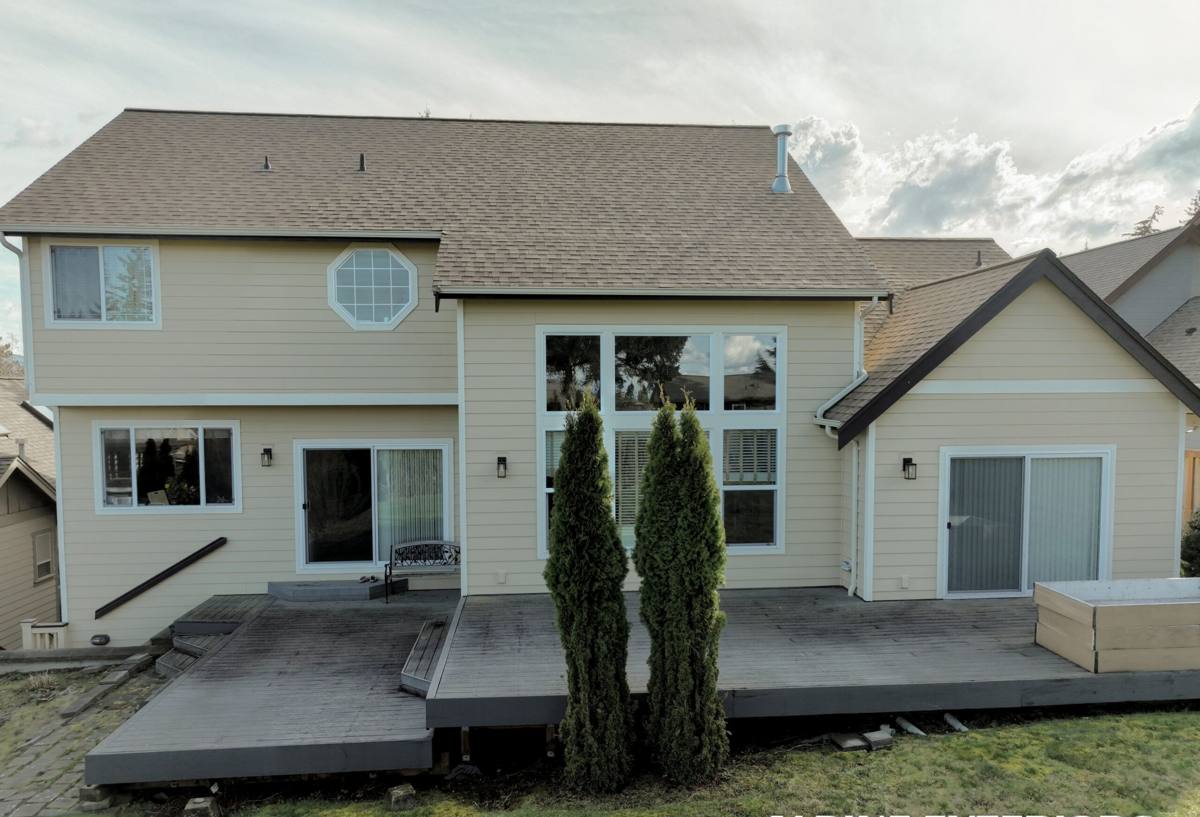
What Salt Air, Rain, and Moss Actually Do to a Deck
Salt Air and Metal Fatigue
Salt in the air accelerates corrosion on anything metal — fasteners, joist hangers, post brackets, and railing hardware all take the hit faster near the water than they would further inland. Once a fastener starts to corrode, it loses holding strength long before it looks obviously bad. Hardware that isn't rated for a marine or coastal environment is one of the most common weak points we find on older decks in this area.
Standing Water and Slow Rot
Driving rain doesn't just fall straight down — wind pushes it sideways into ledger connections, under railing posts, and into any gap where two boards meet. If water has a place to collect and no way to drain or dry out, rot sets in at the end grain and in hidden framing long before it shows on the surface. By the time a soft spot is visible, the damage underneath is usually further along than it looks.
Moss, Algae, and Surface Traction
Shaded decks, or decks near evergreens and shrubs that block afternoon sun, stay damp longer through the fall, winter, and spring. That extended dampness is exactly what moss and algae need to establish themselves, and once they do, deck boards can get genuinely slick underfoot — not just an eyesore, but a real slip hazard on stairs and landings.
Choosing a Decking Material That Fits a Waterfront-Adjacent Lot
There's no single "best" decking material for every home — it depends on your budget, how much upkeep you want to do, and how exposed your specific lot is to wind and salt spray. Here's how the main options actually compare in this kind of climate:
| Material | Moisture Behavior | Maintenance | Typical Lifespan |
|---|---|---|---|
| Pressure-treated wood | Absorbs water; needs sealing to resist swelling and checking | Annual cleaning and re-sealing recommended | 10–15 years with upkeep |
| Cedar | Naturally rot-resistant but still needs sealing near salt air | Regular cleaning, periodic sealing or staining | 15–20 years with upkeep |
| Capped composite | Protective outer shell resists moisture and staining | Occasional washing, no sealing or staining | 25+ years, backed by manufacturer warranty |
| PVC decking | Fully synthetic, does not absorb moisture | Lowest maintenance of the group | 25+ years, backed by manufacturer warranty |
Wood costs less upfront and has a natural look many homeowners still prefer, but it asks for consistent upkeep to keep moisture out — miss a year of sealing in a wet climate and you're playing catch-up. Capped composite and PVC cost more initially but shed water and salt spray without needing that annual attention, which is part of why we steer waterfront-adjacent clients toward them when budget allows. Either path can work well; the honest answer is that it comes down to how much maintenance you actually want to commit to.
The Framing and Substructure Most Homeowners Never See
The decking boards get all the attention, but the framing underneath is what actually determines how long a deck lasts near the water. A few things we treat as non-negotiable on every build here:
Ledger Flashing
Where a deck attaches to the house, proper flashing keeps wind-driven rain from working its way behind the siding and into the wall framing. This is one of the most common failure points on older decks we're asked to repair or rebuild.
Joist Protection
Wrapping or taping the tops of joists before decking goes down keeps water from sitting directly on cut lumber and starting rot from above, where it's hardest to spot.
Fasteners and Hardware
We use stainless steel or coated fasteners and hardware rated for coastal exposure rather than standard-grade hardware. It costs a bit more, but it's the single easiest way to avoid the corrosion problems that show up early on decks built with generic materials in a salt-air environment.
Footings and Drainage
Footings need to be set to the correct depth for our frost line and positioned so water drains away from the post base instead of pooling around it. Getting this wrong is invisible until years later, when a post starts to lean or the deck feels less solid than it used to.
How We Build a Deck in Flounder Bay
Our process doesn't change dramatically from job to job, but the details we pay closest attention to shift based on how exposed a given lot is to wind, salt spray, and shade.
- Site walk and assessment — we look at sun exposure, prevailing wind and rain direction, drainage patterns, and how close the build is to salt spray from the water.
- Design and material selection — we talk through decking material, framing hardware, and layout based on how you'll actually use the space and how much upkeep you want going forward.
- Permitting — we handle the paperwork with the local building department so you don't have to chase it down yourself.
- Framing and construction — ledger flashing, joist protection, coastal-rated fasteners, and correctly set footings, in that order, before any decking goes down.
- Decking, railing, and finish work — installed to manufacturer spec so warranties stay intact.
- Final walkthrough — we go over the finished deck with you and explain what maintenance, if any, it'll need going forward.
Permits, Setbacks, and Local Code Considerations
Most new decks in Anacortes and unincorporated Skagit County need a building permit, particularly if the deck attaches to the house or sits above a certain height off grade. Requirements can also touch on setbacks from property lines, guardrail height and spacing on elevated decks, and stair specifications — and these details can shift depending on your specific lot and zoning. Rather than asking you to research all of this yourself, we handle the permit application and inspection process as part of the job, so the finished deck is built to code from the start rather than something that has to be corrected later.
Keeping a Marine-Climate Deck Looking and Performing Its Best
Whatever material you choose, a little regular attention goes a long way in this climate. A simple seasonal routine helps:
- Sweep debris and standing organic matter off the deck regularly, especially in fall when leaves and needles pile up in corners
- Rinse salt residue off the surface and railings periodically, particularly after storms with strong onshore wind
- Check and clear drainage gaps between boards so water isn't sitting against the framing below
- Wash down shaded areas prone to moss and algae before they get established, rather than after
- Inspect railing posts and stair connections once a year for any looseness or corrosion at the hardware
- Reseal or restain wood decking on schedule if you've chosen a wood surface — don't let it go a season past due
None of this is complicated, but skipping it is how a well-built deck starts to age faster than it should in a marine environment.
Why Local Experience in Flounder Bay Matters
A contractor who mostly builds decks inland, away from salt air and constant marine moisture, can still build something that looks great — but looking great and holding up for twenty years near the water are two different things. Working regularly in and around Flounder Bay means we already know which framing details and hardware choices matter most here, rather than learning it through a callback a few years down the road. That local knowledge is baked into every deck we build, from the flashing behind the ledger to the fasteners nobody sees once the boards go down.
If you're planning a new deck or replacing one that's showing its age, we're happy to take a look and talk through what makes sense for your home and your budget. Reach out for a free, no-pressure estimate using the form below.